16 living room plant decor ideas that look planned

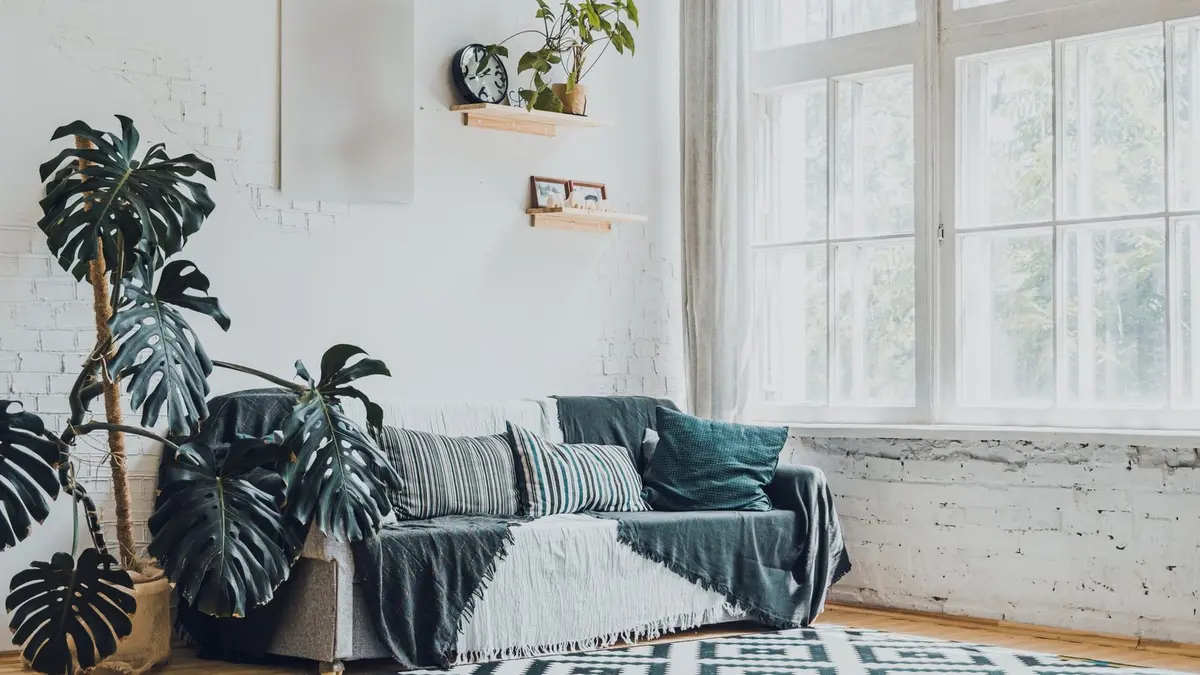
These 16 living room plant decor ideas put each plant where it looks planned and where it can grow: a monstera in a bright corner, a rubber plant at the end of the sofa, a small snake plant on the coffee table, a ZZ plant beside the TV, a peace lily on the side table and pothos on the mantel. The rest dress the windows, the walls and the doorway.
Every idea names a plant that suits the light in that spot. The best place for a plant as decoration isn’t always a place where it can grow, so the light comes first and the styling second.
1. Anchor a bright corner with a monstera
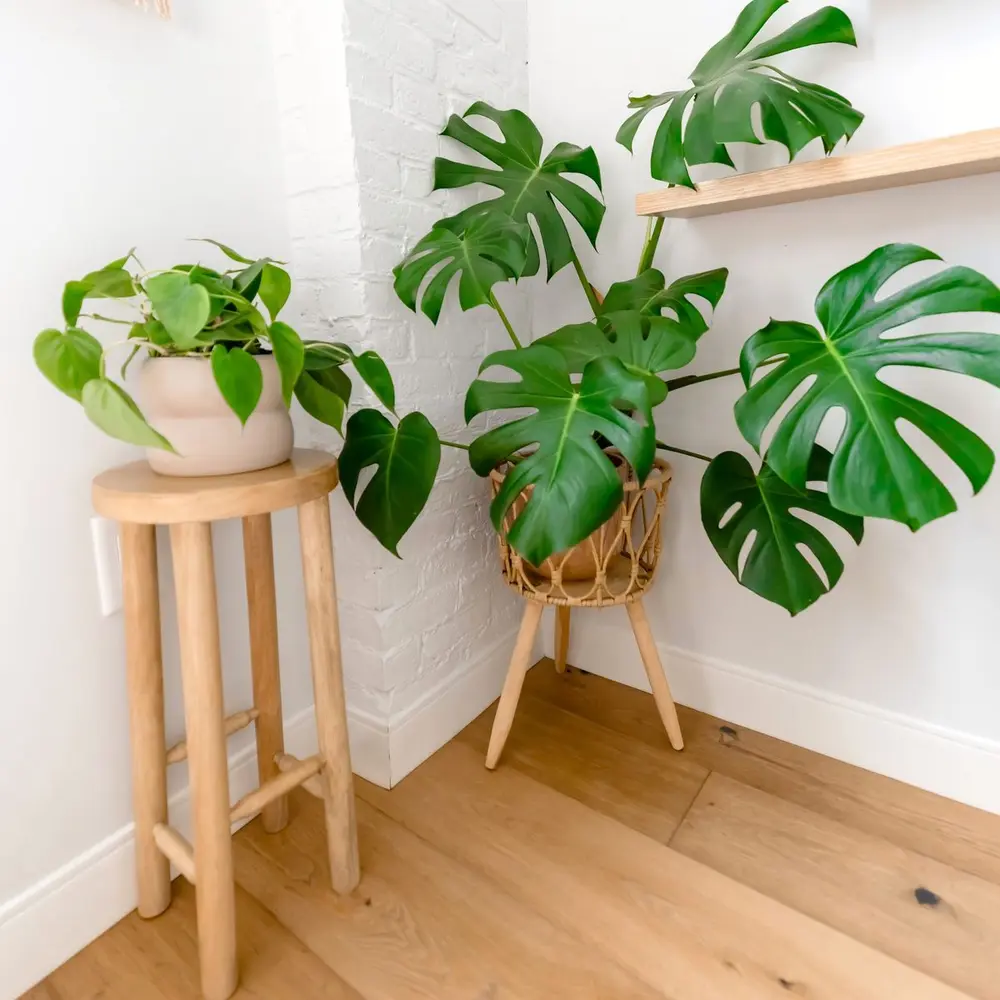
A monstera is the statement plant for a living room corner that gets good light. Its big, split leaves fill the empty space where two walls meet and make the whole corner look finished.
Give it bright light without strong direct sun: near an east window, or a few steps back from a south or west window. Its leaves don’t develop their splits and holes when the light is too low, so a dim corner turns it into a plain green plant.
Indoors it usually reaches 6 to 8 feet, and a single leaf can grow 18 inches wide. A moss pole keeps it upright; without support it grows sideways and takes over the floor.
Raise a smaller plant on a stool beside it, like the heartleaf philodendron in the photo, so the corner has two heights. The philodendron grows well under ordinary room light, so it can sit on the side farther from the window.
Water the monstera when the top 1 to 2 inches of soil are dry. The ASPCA lists the monstera (as cutleaf philodendron) and the heartleaf philodendron as toxic to cats and dogs. The monstera care guide covers poles and pruning.
2. Stand a rubber plant at the end of the sofa
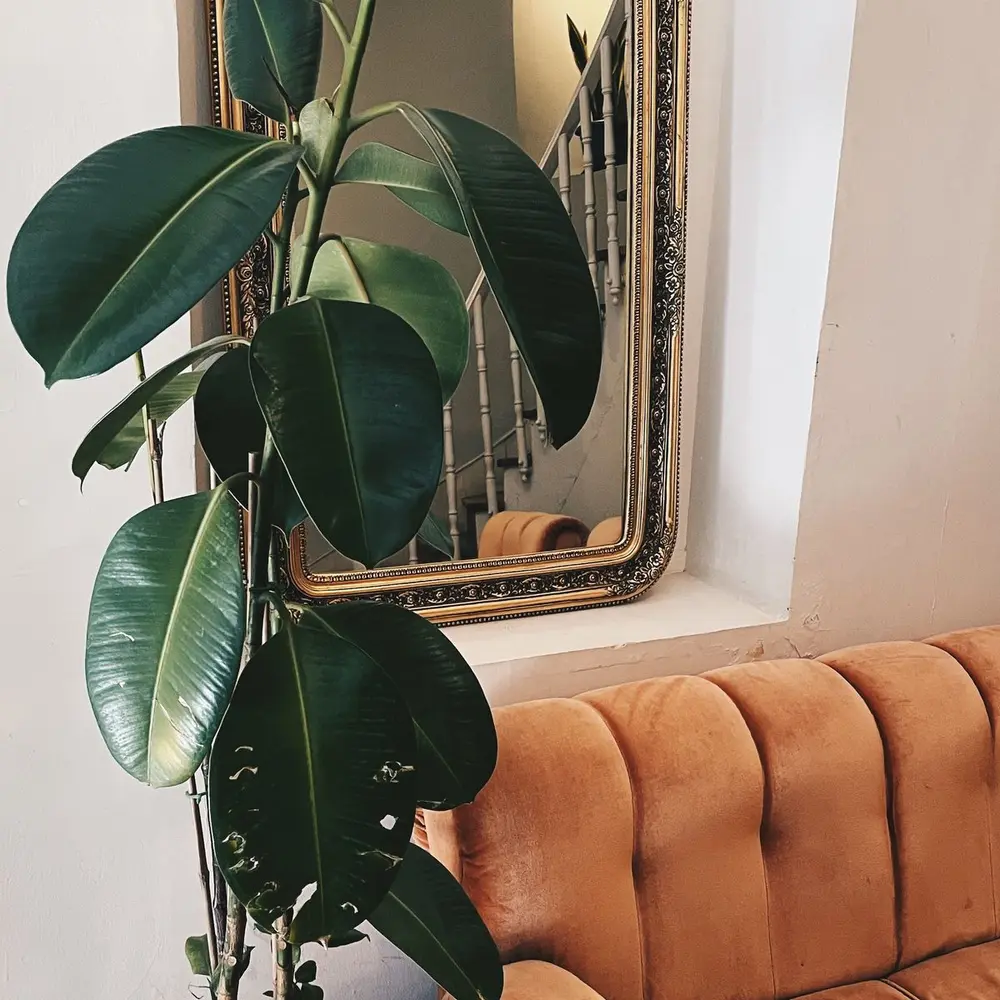
A tall plant at one end of the sofa frames the seating and draws the eye up. A rubber plant does this well: its glossy, dark leaves grow along an upright stem, so it adds height without spreading across the floor.
It prefers bright light but adapts to lower light, and it grows best with morning light from an east window. Shade it from strong afternoon sun. If the sofa sits across the room from the window, expect slower growth and a few dropped leaves.
Indoors it can easily grow 6 to 10 feet tall, and it can turn tall and lanky. Turn the pot every week so it grows straight instead of leaning toward the window.
Water it thoroughly, then let the soil dry slightly to the touch before the next watering. It prefers humid air but tolerates the dry air of most homes, so the living room suits it as it is.
The ASPCA lists rubber plants under its Ficus entry as toxic to cats and dogs.
3. Keep a low plant on the coffee table
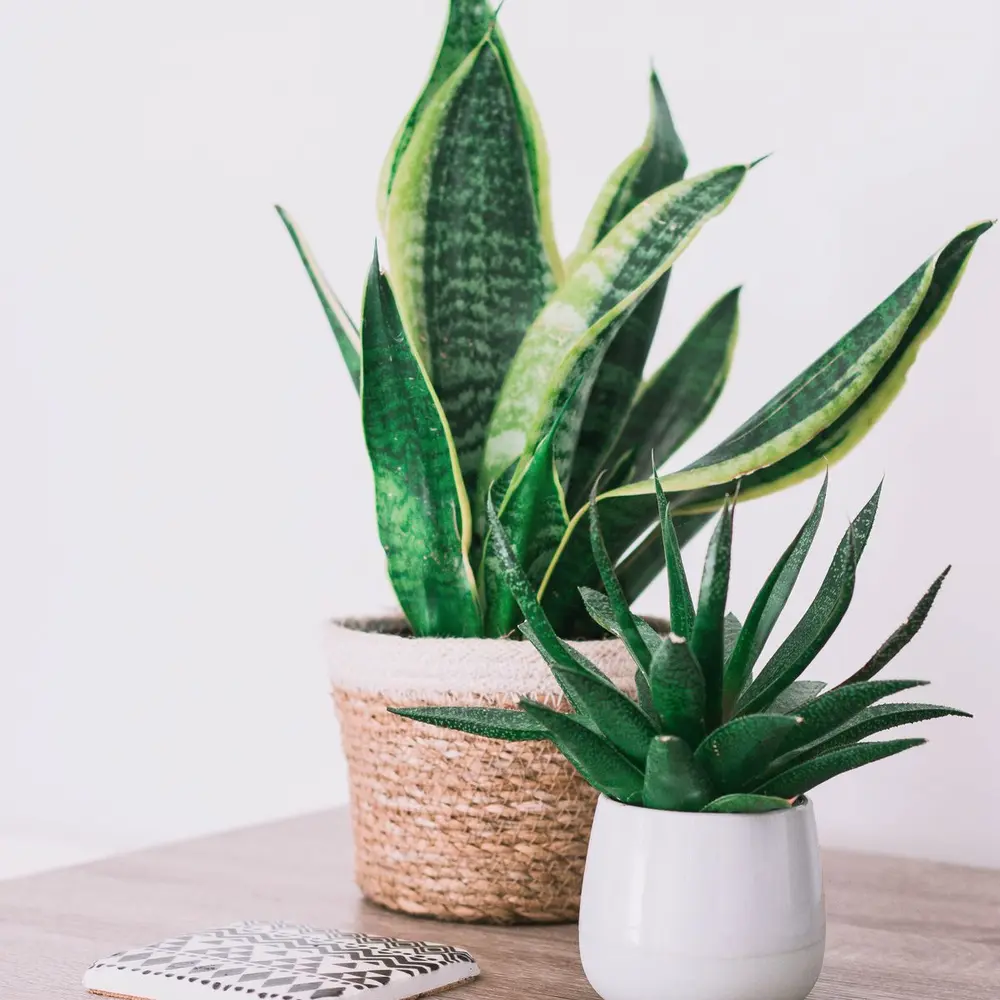
A coffee table plant should stay low enough to see over and small enough to leave room for cups and books. A small snake plant in a woven pot does both, and a compact succulent beside it gives the pair two shapes.
The snake plant tolerates poor light but grows best in medium to bright light, so a table in the middle of the room works. The dwarf ‘Hahnii’ snake plants stay 4 to 8 inches tall, a good size for a table.
Let the soil dry out completely between waterings. A coffee table plant is easy to water out of habit, and snake plants rot when they’re overwatered, so feel the soil first.
Set the pot on a saucer or a small tray to protect the tabletop, and empty any water that collects there. Turn the pot now and then so the leaves don’t all lean toward the window.
The ASPCA lists the snake plant as toxic to cats and dogs, so keep it off a table that pets jump on. The snake plant care guide covers its soil and repotting.
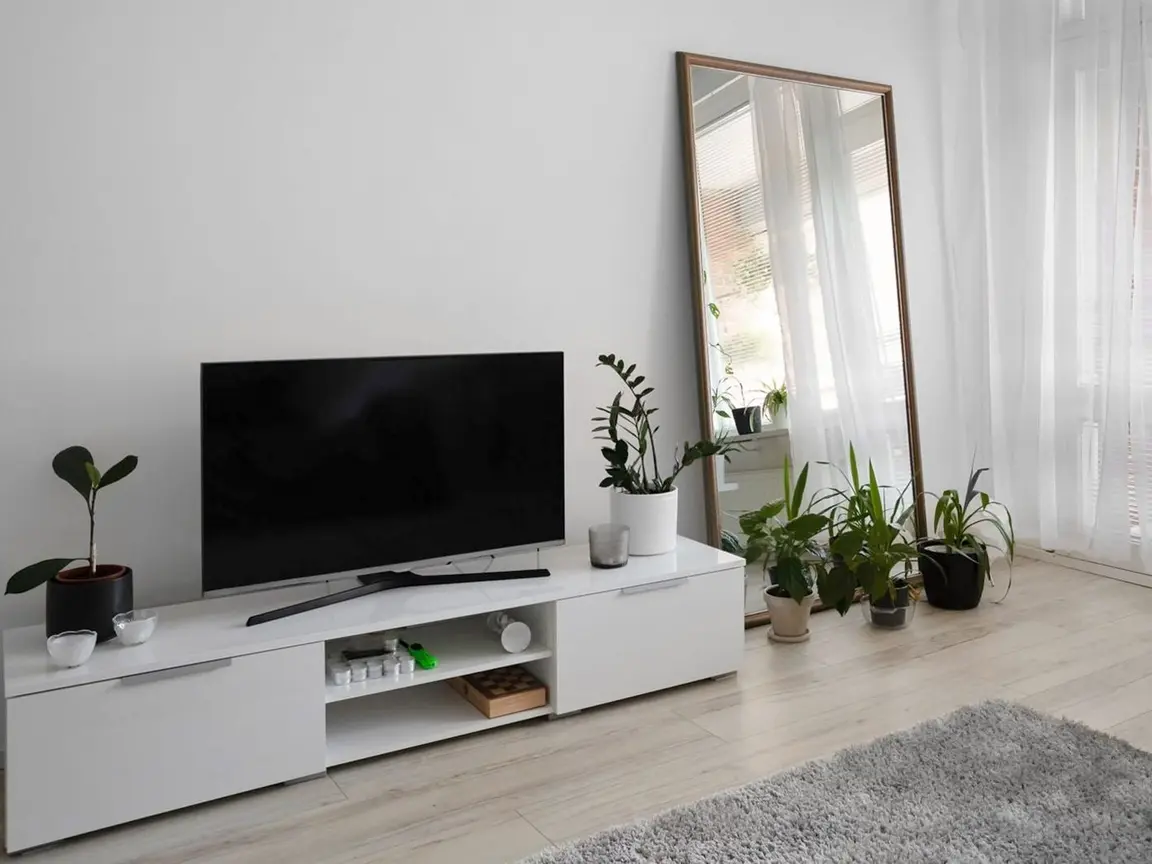
4. Put a ZZ plant beside the TV
The TV wall is often one of the darker walls in a living room, since a screen is usually placed away from window glare. A ZZ plant handles that: it survives in low light, and bright, indirect light only speeds up its slow growth.
Its upright stems of glossy leaves soften the hard lines of a screen and a media console without blocking the picture. Set it at one end of the console or on the floor beside it; its leaves can reach 4 feet over time.
Keep it out of full sun, which can scald and brown the leaves, and out of the path of heat vents. It’s used to dry conditions and thrives at ordinary indoor humidity.
Water only after the potting mix has dried completely. In a dim spot that takes a while, so check the soil before every watering instead of following a calendar.
The ZZ plant isn’t on the ASPCA plant list. Treat it as unsafe for pets and children, and place it where neither can reach it.
5. Set a peace lily on the side table
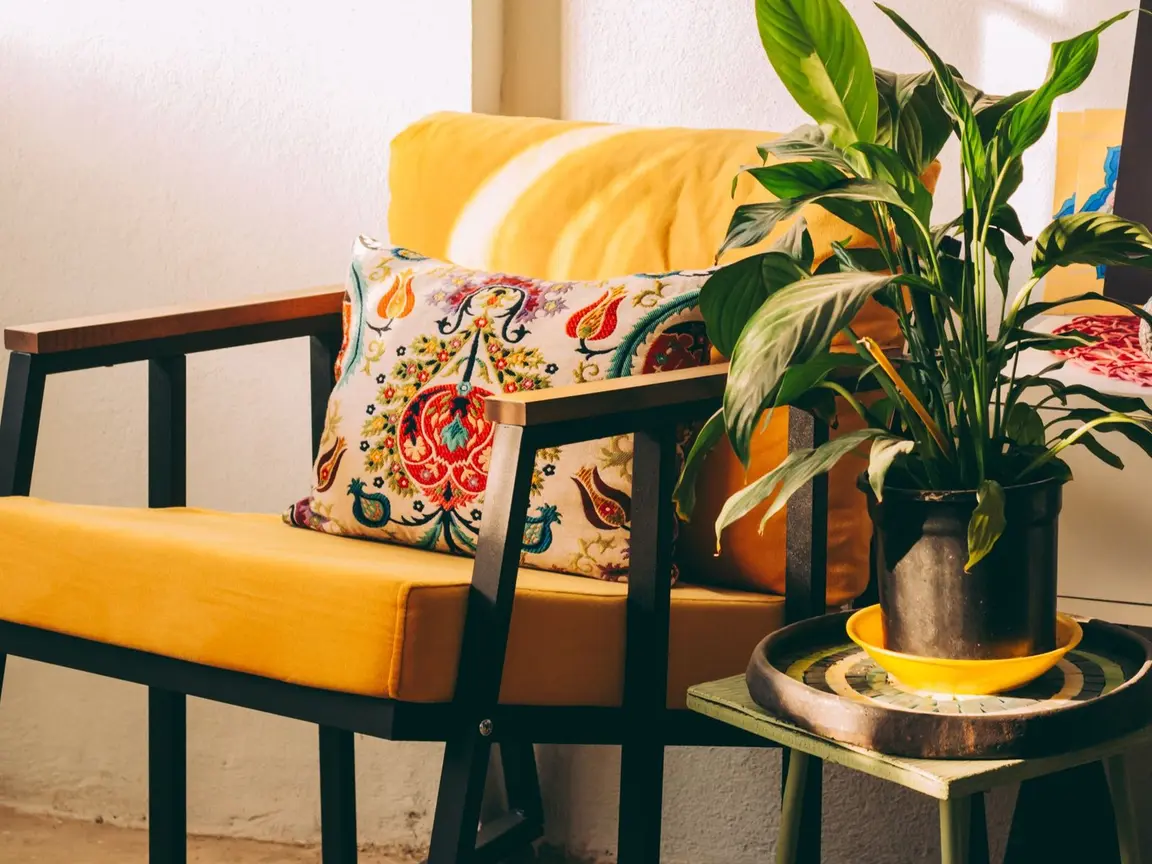
A side table next to an armchair or the sofa puts a plant at eye level when you sit down. A peace lily fits the spot, with broad, glossy leaves and, given enough light, white flowers.
It tolerates low light but grows best in bright, indirect light, and it needs medium light to flower. Keep it out of direct sun, which scorches the leaves; a table a few steps back from a sunny window is ideal.
Choose a compact one for a small table. Most peace lilies grow 1 to 4 feet tall and wide, while compact ones stay 12 to 15 inches tall.
Keep the soil moist but not soggy, letting it dry slightly between waterings. A pot with a drainage hole on a deep saucer keeps the water off the table.
The ASPCA lists the peace lily as toxic to cats and dogs. The peace lily care guide covers getting it to bloom again.
6. Let pothos trail from the mantel
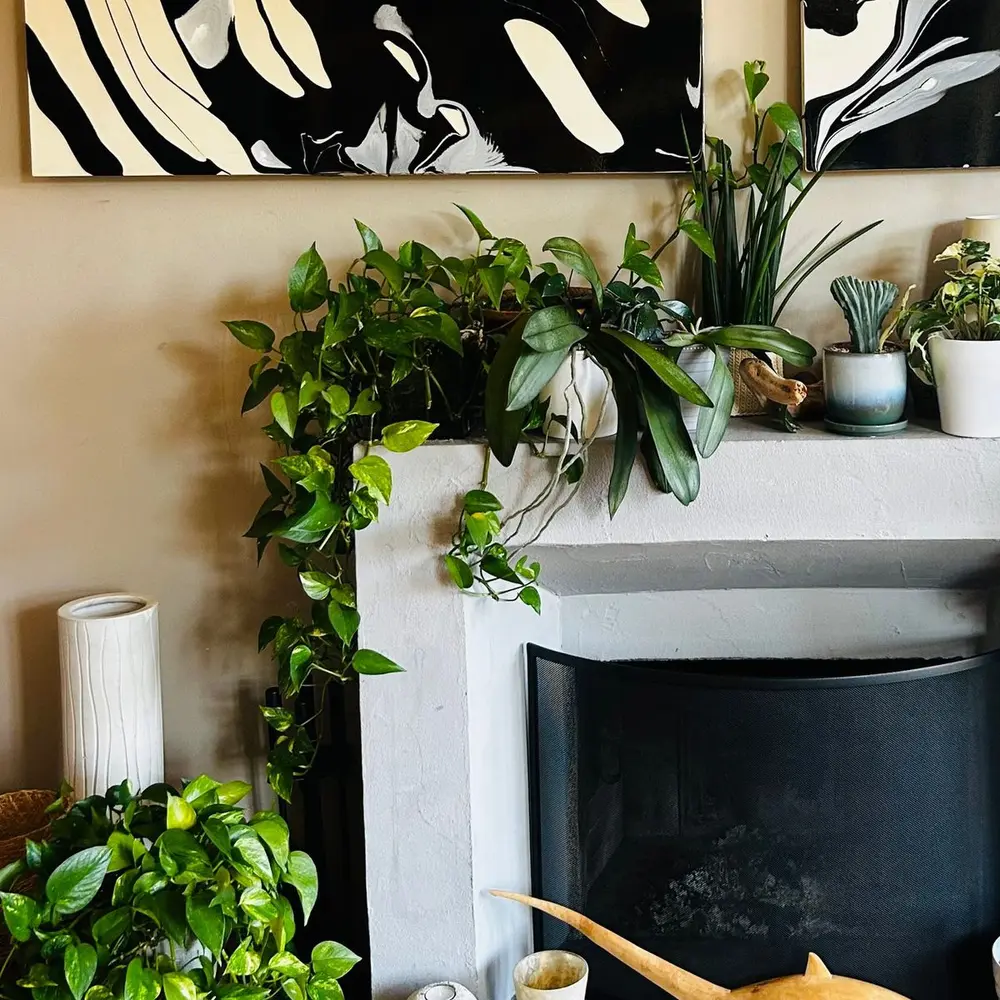
A mantel gives a trailing plant height to fall from. A pothos at one end of the shelf lets its vines spill down the side of the fireplace, which softens the stone or plaster and ties the mantel to any floor plants below.
Pothos prefers bright, indirect light but tolerates lower light, so a mantel across the room from a window works. It doesn’t need the brightest spot in the room.
Mind the heat. Don’t keep plants above a fireplace you light, a radiator or a hot air register: hot air blowing on a plant browns the leaf edges and can make the leaves drop or die.
Indoors its vines grow 8 to 10 feet long, so trim them before they reach the floor. Let the soil dry out between waterings, and check a plant on a high shelf on the same day each week so it isn’t forgotten.
The ASPCA lists golden pothos as toxic to cats and dogs, and low vines are within a pet’s reach. The pothos care guide explains pruning and rooting cuttings, and the plant shelf ideas cover a full shelf of plants.
7. Fill a tiered plant stand by the window
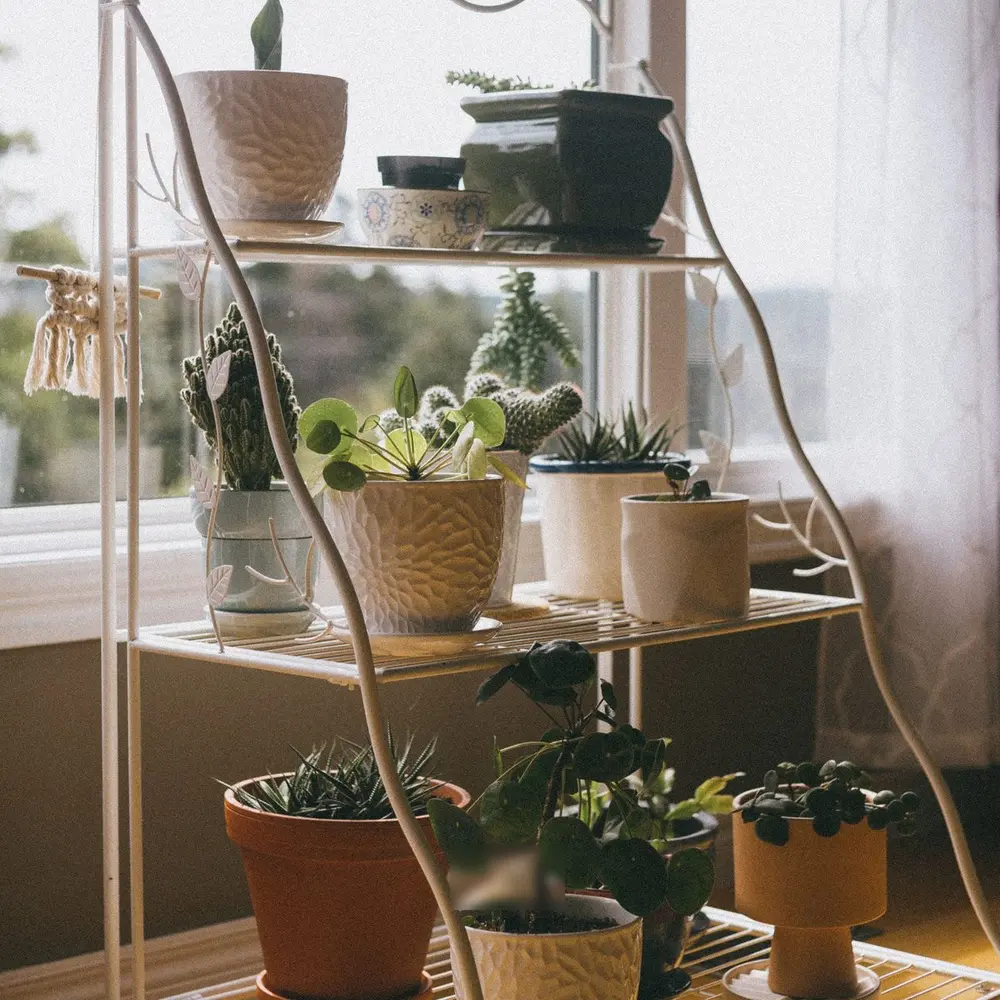
A tiered plant stand puts a whole collection of small plants into the window light while it takes up only one patch of floor. Its shelves turn a dozen small pots into one display instead of clutter along the sill.
Small succulents like zebra haworthia suit it. Zebra haworthia prefers bright, indirect light and is only somewhat tolerant of low light, while direct sun through the glass can scorch its striped leaves.
Put the plants that want the most light on the top shelf and toward the glass, and the ones that take less on the lower shelves, which the shelves above shade. Turn the stand every week so each side of each plant faces the window in turn.
Let a haworthia’s soil dry out completely between waterings. Keep the plants that share a watering routine on the same shelf, so watering day is quick and nothing gets a drink it doesn’t need.
The ASPCA lists the zebra haworthia as non-toxic to cats and dogs, which makes a low stand of them a safer choice in a home with pets.
8. Line the windowsill with small plants
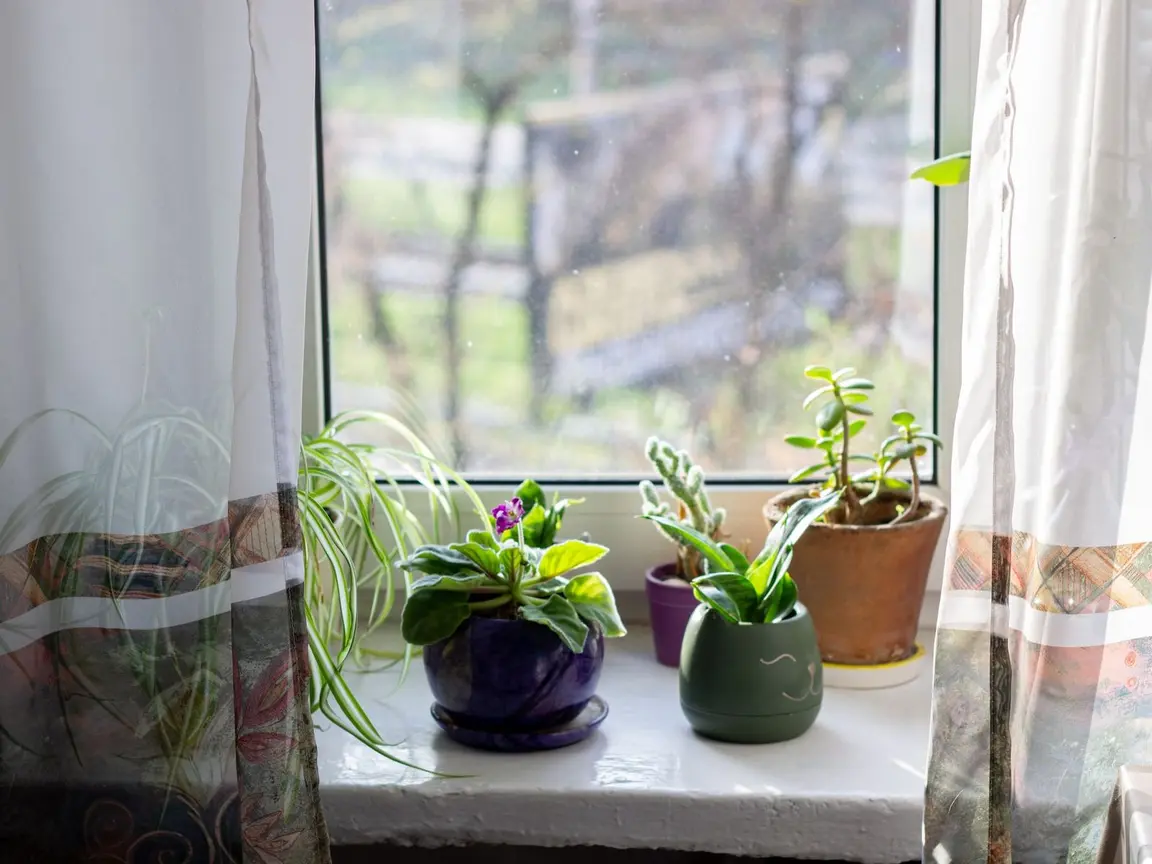
A wide windowsill holds a row of small plants, and the row looks planned when the pots share a color or a material. Mix one arching or trailing plant with a few upright ones, and leave a little space between them so each gets light.
Match the plants to the window. African violets do well at a north or east window, or to the side of a large south window in summer, where the bright sun won’t burn their leaves.
A jade plant wants the opposite: it does best with 4 or more hours of direct sun a day, which a south window gives it. On a north sill, leave the jade out and keep the violets.
Glass gets cold on winter nights, so slide the pots back from it on the coldest nights. Plants do best away from cold windows and drafts. For herbs on a sunny sill, see the kitchen window plants.
The ASPCA lists the African violet and the spider plant as non-toxic to cats and dogs, and the jade plant as toxic.
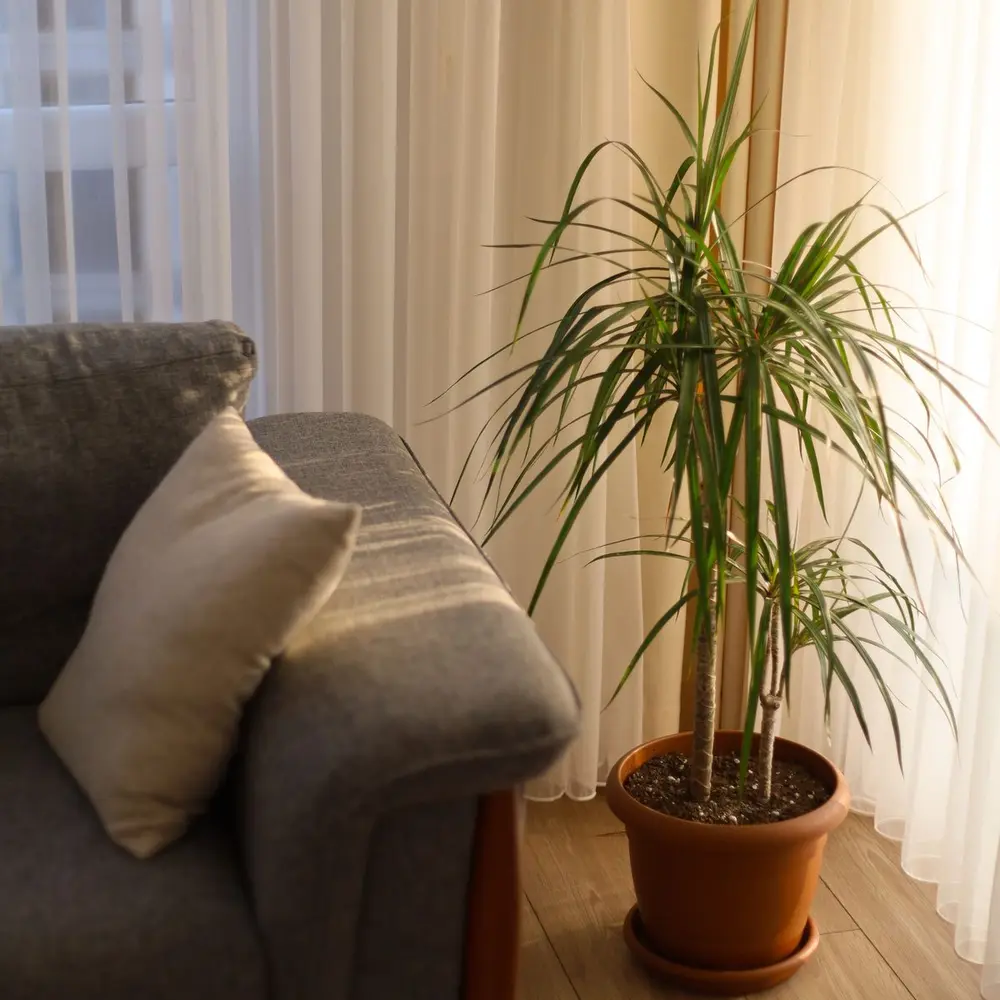
9. Grow a dragon tree behind sheer curtains
Sheer curtains turn harsh sun into soft, filtered light that many foliage plants like. A Madagascar dragon tree, with thin stems topped by tufts of narrow leaves, looks good against the glow, and its shadow moves across the floor through the day.
Bright, indirect light is ideal for it. Most foliage plants do well in sunlight diffused through a lightweight curtain, so a sheer panel lets it stand close to a south or west window.
As a houseplant it grows to 6 feet, and you can prune it shorter. Its narrow shape fits the gap between the sofa arm and the window.
Let the potting mix dry between waterings, but not severely. It’s sensitive to fluoride, which discolors the leaves, so water it with distilled or non-fluorinated water.
The ASPCA lists the Madagascar dragon tree as toxic to cats and dogs.
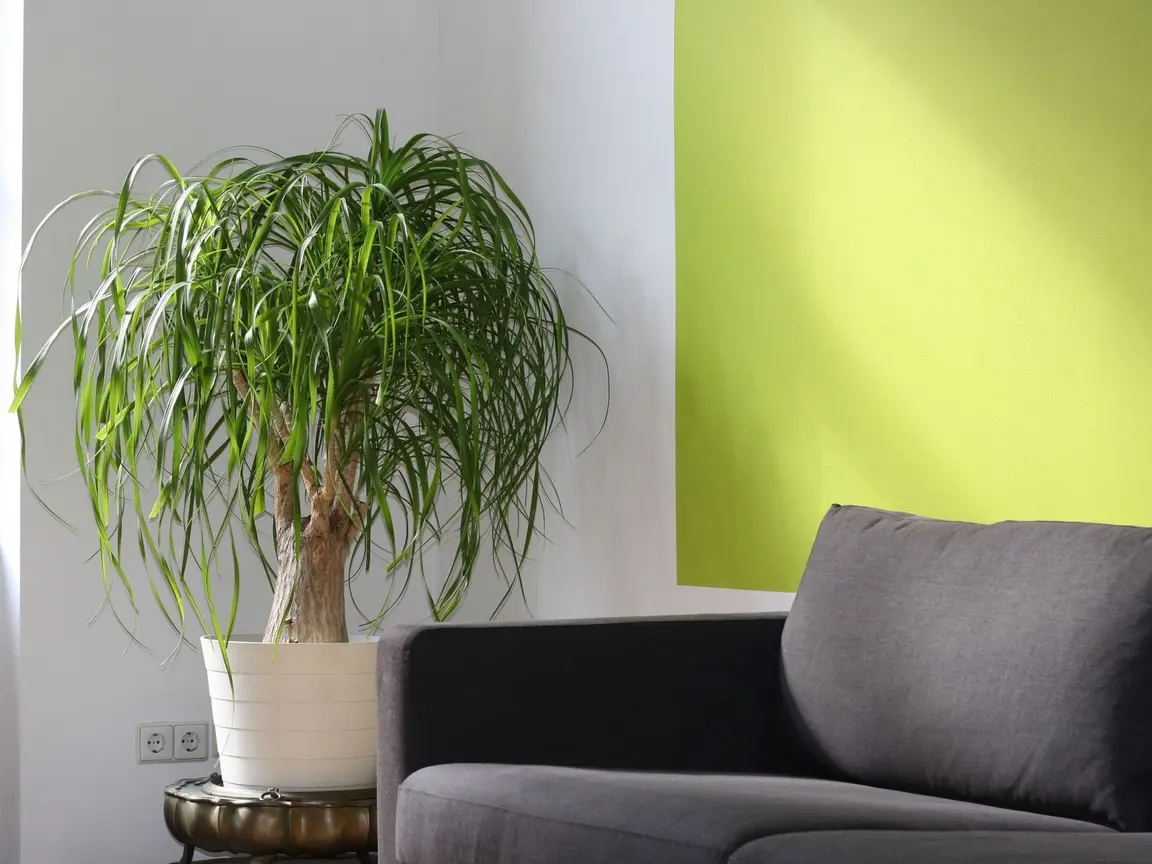
10. Give a ponytail palm the sunniest spot
A ponytail palm is a sculpture as much as a plant: a swollen, trunk-like base topped with long, narrow leaves that spill over like a fountain. Set it beside the sofa where the sun lands, and it holds its own against a bold wall color.
Place it in a sunny window. It likes sunny, warm, dry conditions and gets through winter well in a home with the heat on.
It grows slowly, but in a pot it can reach 6 to 8 feet over the years. Start with a small one on a low stand, as in the photo, and move it to the floor as it grows.
In summer, water deeply and let the soil dry out between waterings. In winter, water much less.
The ASPCA lists the ponytail palm as non-toxic to cats and dogs, which makes it a sun-loving choice for a home with pets.
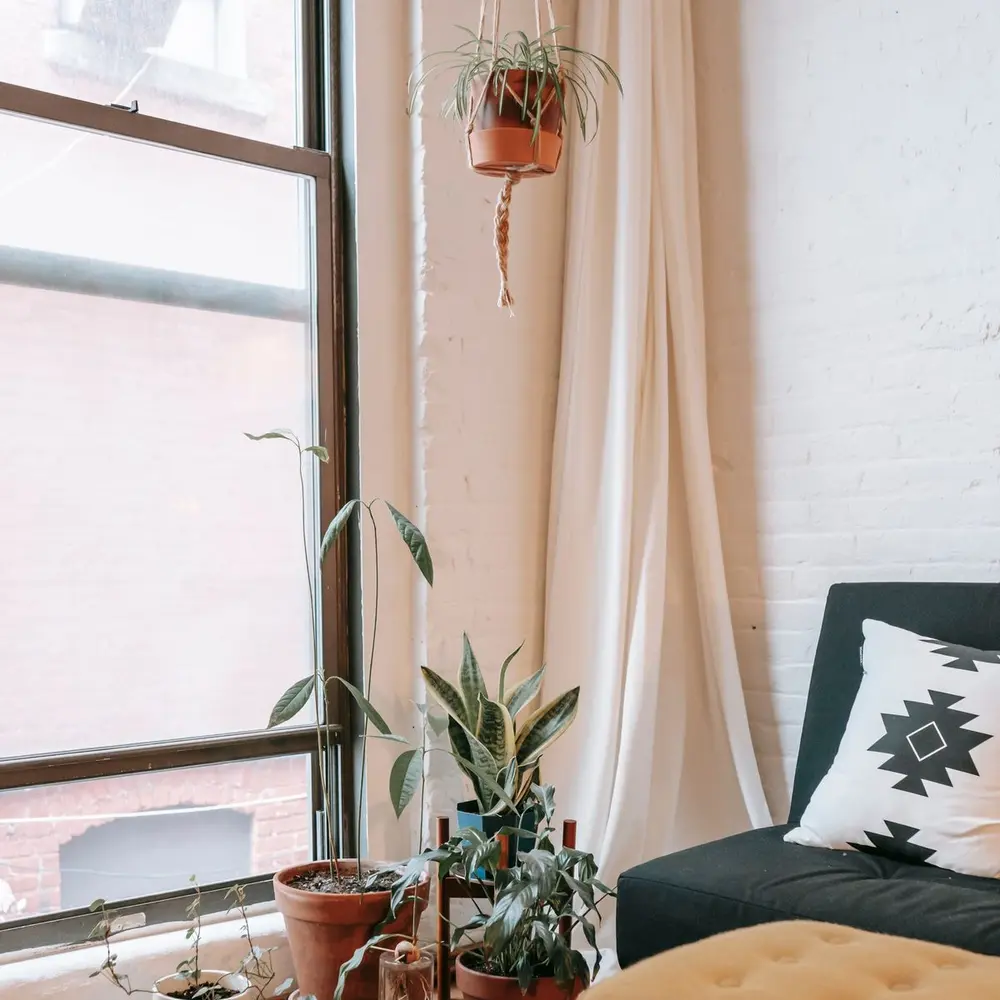
11. Group plants at different heights by a window
A group looks deliberate when it has a tall, a medium and a low layer. In the photo, a snake plant on a stand, potted plants on the floor and a spider plant hanging above fill the space between the window and the sofa.
Keep the tallest plants at the back, toward the wall or the window frame, and the low ones in front, so the group doesn’t shade itself. A plant stand, a stool or a stack of pavers raises a pot to the middle height.
Grouping helps the plants too. Pots placed close together release water into the air around them, and the group shares that slightly more humid air, which helps in winter when heated air is dry.
Pick plants with the same light needs for one group. The snake plant and the spider plant both grow best in bright, indirect light and tolerate less, so they share a window well; a sun-loving jade plant and a shade-loving cast iron plant don’t.
Water the spider plant when the top 1 to 2 inches of soil feel dry. The ASPCA lists the spider plant as non-toxic to cats and dogs and the snake plant as toxic, and the spider plant care guide covers its plantlets.
12. Hang a trailing vine above the end of the sofa
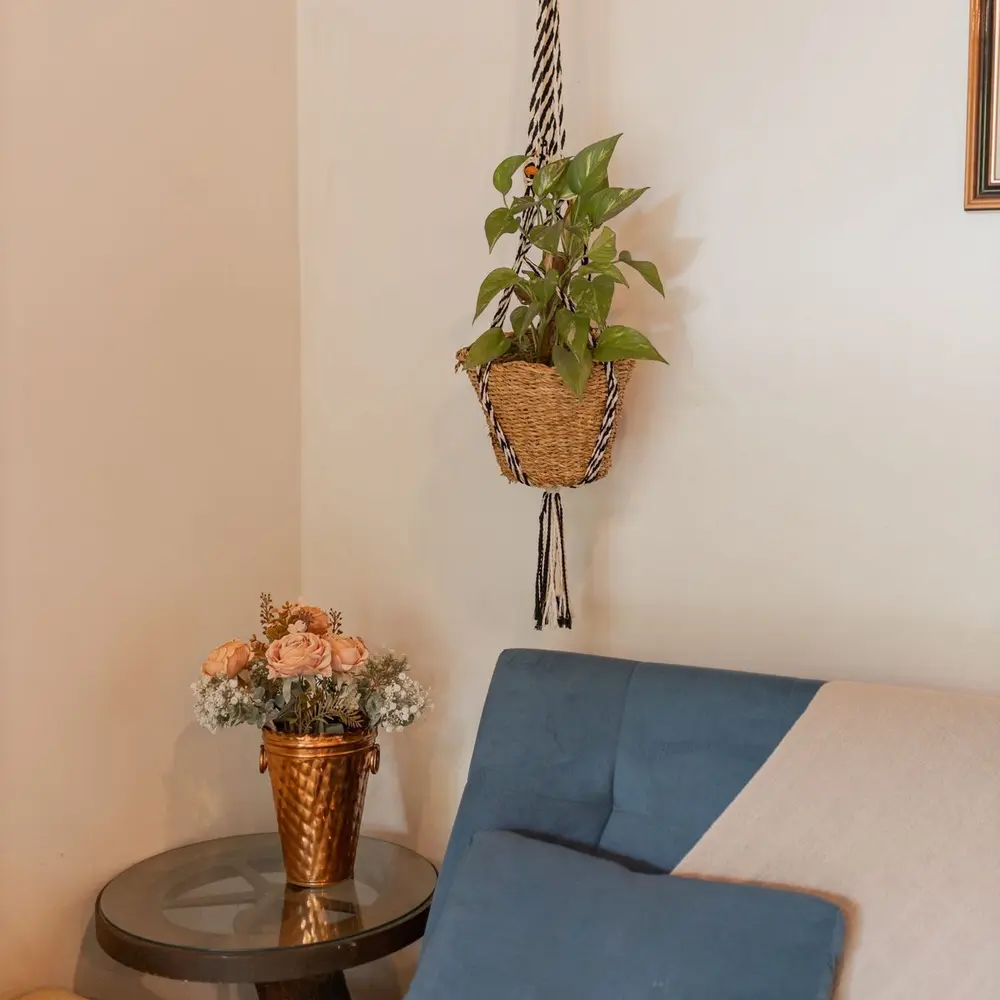
A hanging plant uses the empty wall above a sofa or an armchair, where a floor plant would be in the way. A pothos or a heartleaf philodendron in a basket on a macrame hanger softens the wall and leaves the side table free.
Both are forgiving about light. The heartleaf philodendron grows well under ordinary room light or near a north, east or west window, and pothos tolerates lower light too, so the hanger doesn’t need to be in the window.
Hang it from a ceiling hook or a sturdy wall bracket, high enough that nobody bumps it but low enough to reach with a watering can. A hanging pot is easy to forget, so check the soil with a finger every week, or choose one of the low maintenance indoor plants that forgive a missed watering.
The two vines want different watering. The heartleaf philodendron likes its soil evenly moist but not soggy, while pothos wants its soil to dry out between waterings.
The ASPCA lists both as toxic to cats and dogs. The indoor hanging plants guide has more ideas for hooks and baskets.
13. Line up matching pots behind the sofa
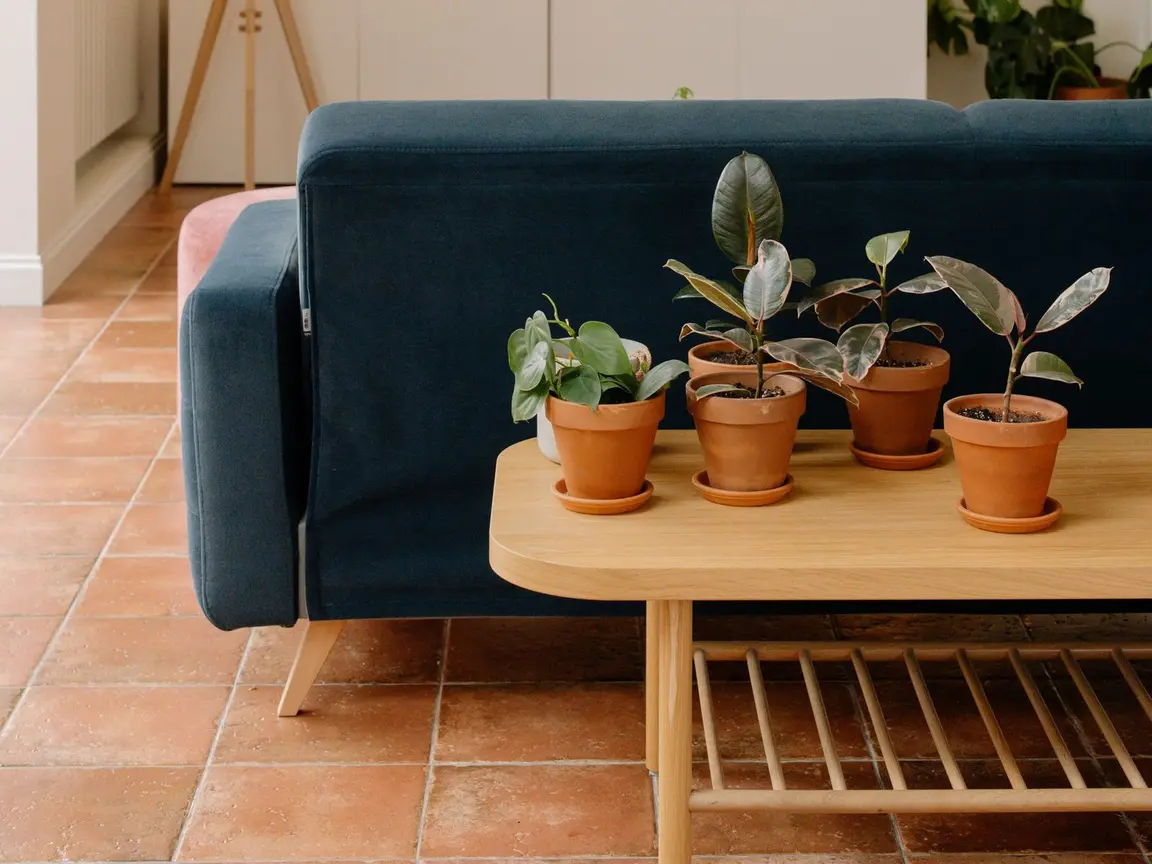
A sofa that floats in the room leaves a gap behind it, and a low bench or console there can hold a row of plants. Matching pots make the row look planned; in the photo, terracotta pots hold young rubber plants in different leaf colors.
Repeat one pot style and vary the plants, or repeat one plant and vary the heights. Either way the eye reads the row as one piece instead of a scatter of pots.
Check the light before you fill the bench. Rubber plants want bright light, so the row works when the bench gets light from a window behind or beside it. In a dimmer spot, use baby rubber plants instead: they tolerate low light for several months without stress and are often grown as desktop plants.
Give every pot a drainage hole and a saucer, since water marks a wooden bench. After watering, empty any water left standing in the saucers.
The ASPCA lists rubber plants under its Ficus entry as toxic to cats and dogs, and the baby rubber plant as non-toxic.
14. Hide a plain pot in a woven basket
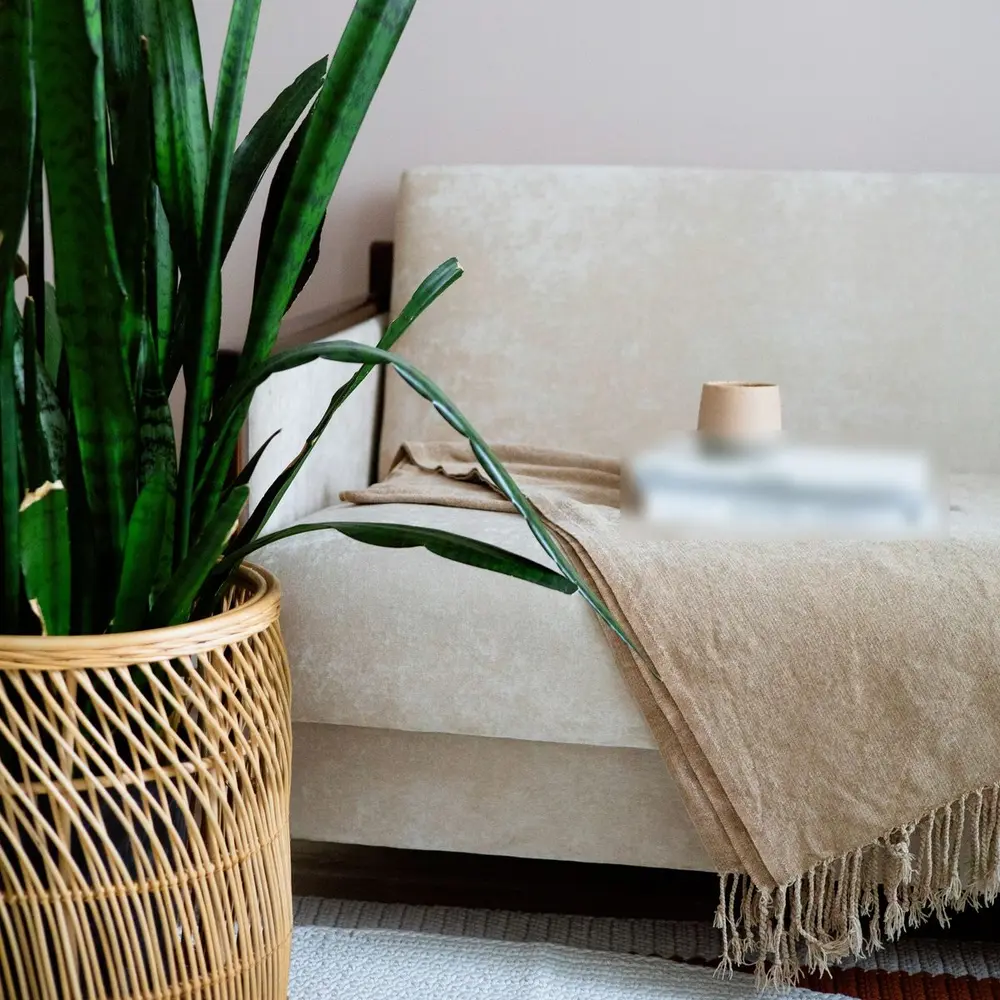
A tall woven basket turns a plastic nursery pot into decor and adds texture next to an upholstered sofa. A snake plant suits a tall basket because its stiff, upright leaves rise well above the rim.
Keep the plant in its nursery pot with drainage holes, and set it inside the basket on a saucer or a liner. Pot coverings can hold water even when the pot itself drains well, so check the bottom of the basket for standing water after you water.
Snake plants tolerate poor light, so a basket beside the sofa works even away from the window. Indoors one often stays near 2 feet tall, though single leaves can grow to 4 feet.
Baskets in one material, repeated around the room, link plants that stand in different spots. The pot size calculator helps you choose the nursery pot; then pick a basket a little wider than it.
The ASPCA lists the snake plant as toxic to cats and dogs.
15. Repeat one plant in two spots
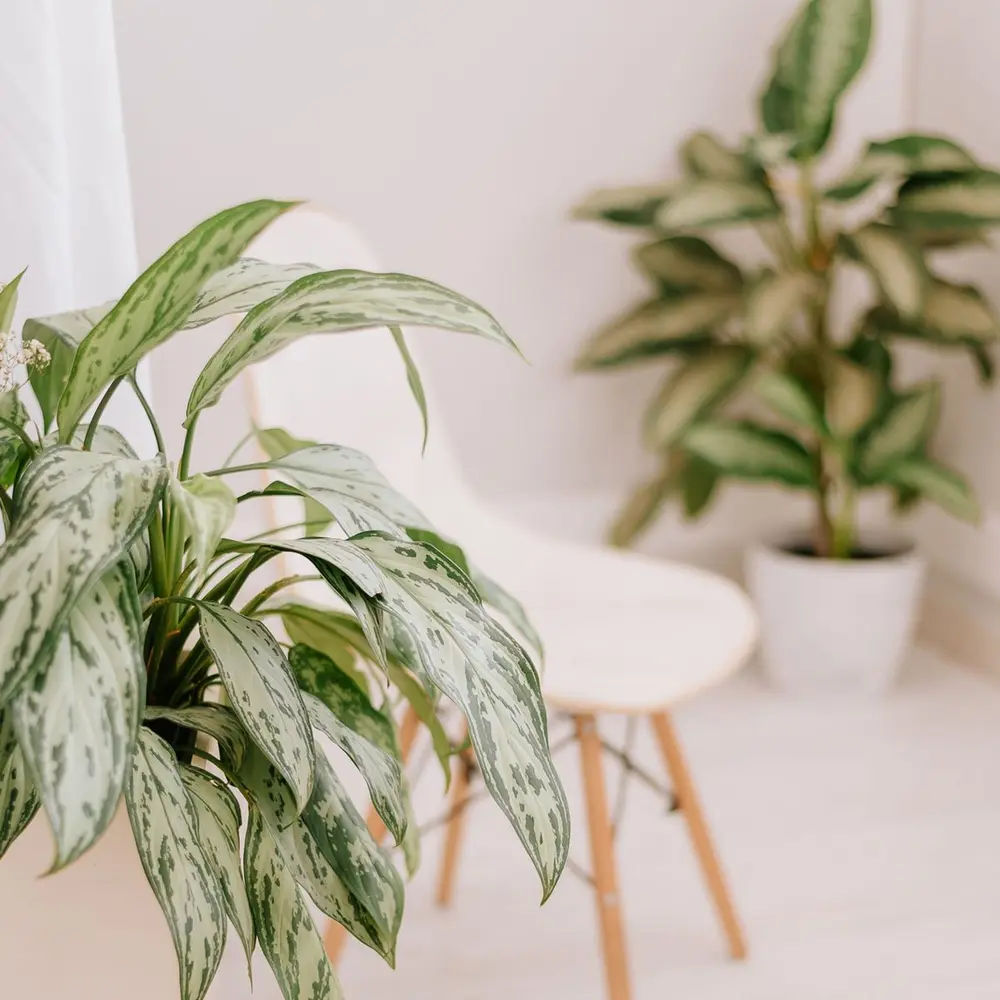
The same plant used twice in a room, one near and one across the room, ties the space together the way a repeated color does. The silver-patterned Chinese evergreens in the photo, one in front and one beside a white chair, read as a set.
Chinese evergreens suit this idea because they handle the darker parts of a living room. The solid green types grow in low light, while variegated ones like these need low to moderate light, meaning bright and indirect.
Keep them out of direct sun, which they don’t like on their leaves. They grow 1 to 3 feet tall and wide, a size that works on the floor beside a chair or on a low stand.
Keep the soil moist, letting the top dry a little before you water again, and water less from fall to late winter.
The ASPCA lists the Chinese evergreen as toxic to cats and dogs.
16. Frame a doorway with a peace lily
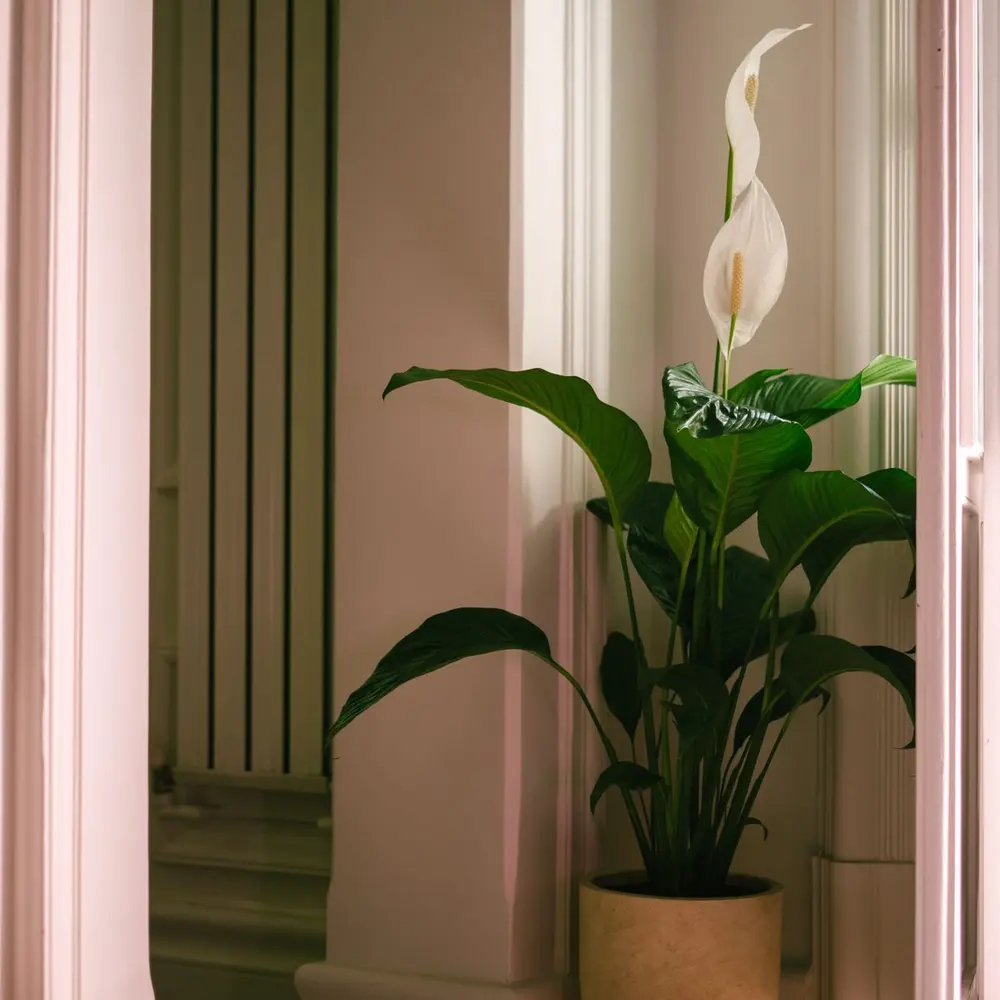
A plant beside a doorway welcomes you into the living room and marks the change from hall to room. The peace lily in the photo stands on a footed pot just inside the frame, where it’s seen from both sides.
Doorways and halls are often dim, and a peace lily adapts to low light, though it needs medium light to flower. If yours stops blooming, move it a little closer to the living room window.
Doorways can also be drafty. Keep plants away from drafts, cold windows and heat vents, and close the door to a cold hall in winter.
A cast iron plant is the other choice for a dim doorway. It’s one of the best plants where only low light exists, its leaves grow 2 to 3 feet tall, and the ASPCA lists it as non-toxic to cats and dogs. The ASPCA lists the peace lily as toxic.
How to choose plants for your living room’s light
Every idea above starts with the light in the spot, not the look. The ideal place for a plant as decoration may not be the ideal place for it to grow, and too little light is the most common thing that holds plants back in a home.
- Find the window direction. An unblocked south window gives the most natural light, and south or southwest windows suit high-light plants like the jade plant and the ponytail palm. East windows, and spots near a west window but out of its direct sun, give medium light. A north window suits only plants that need low light.
- Measure the distance. Large windows let you place plants fairly far back into the room. Even so, low-light plants usually get too little light more than 10 feet from an average window.
- Look for shade. A roof overhang, a tree or the building next door can shade a window for part of the day. A south window under a deep overhang may give indirect light for much of the day.
- Soften strong sun. Most foliage plants do well at a north window, in daylight with no direct sun, or in sunlight diffused through a lightweight curtain. A sheer curtain lets you keep them close to a bright window.
- Keep heat and drafts away. Keep plants away from drafts, cold windows and heat vents, and never set them above a radiator or a hot air register. Most houseplants like a daytime temperature of 65 to 75°F.
- Turn the pots. Turning plants every week keeps them from growing one-sided toward the window.
- Watch the plant. Long, thin stems, smaller new leaves and pale or yellow lower leaves mean a plant needs more light. Move it closer to the window, or swap it for one of the low light plants.
Living room plant ideas at a glance
| Idea | Plant pick | Light it needs | Cats and dogs (ASPCA) |
|---|---|---|---|
| Bright corner | Monstera | Bright, no strong direct sun | Toxic |
| End of the sofa | Rubber plant | Bright, morning sun | Toxic (Ficus) |
| Coffee table | Small snake plant | Low to bright, indirect | Toxic |
| Beside the TV | ZZ plant | Low to bright, indirect | Not on the list |
| Side table | Peace lily | Low to bright, indirect | Toxic |
| Mantel | Pothos | Low to bright, indirect | Toxic |
| Window plant stand | Zebra haworthia | Bright, indirect | Non-toxic |
| Windowsill | African violet, jade plant | North or east (violet), sun (jade) | Non-toxic (violet), toxic (jade) |
| Sheer curtains | Madagascar dragon tree | Bright, indirect | Toxic |
| Sunniest spot | Ponytail palm | Sunny window | Non-toxic |
| Window group | Snake plant, spider plant | Bright, indirect | Toxic (snake), non-toxic (spider) |
| Hanging vine | Pothos, heartleaf philodendron | Low to bright, indirect | Toxic |
| Matching pots | Rubber plant, baby rubber plant | Bright (rubber), low to bright (baby) | Toxic (rubber), non-toxic (baby) |
| Woven basket | Snake plant | Low to bright, indirect | Toxic |
| Repeated plant | Chinese evergreen | Low to moderate, no direct sun | Toxic |
| Doorway | Peace lily, cast iron plant | Low to medium | Toxic (peace lily), non-toxic (cast iron) |
Not sure which plant fits your spot? The plant finder matches plants to your light, your space and how often you water, and the new plant checklist covers the first weeks after you bring one home.
Frequently asked questions
Where should plants go in a living room?
Put the plants that need the most light by the window, on a window stand or at the end of the sofa nearest the glass. Save the darker spots, such as the TV wall or a doorway, for plants that tolerate low light, like a ZZ plant or a cast iron plant.
What is the best plant for a living room with little light?
A ZZ plant, snake plant, Chinese evergreen or cast iron plant. Each one tolerates low light, though all of them grow better with more of it, so keep them within reach of a window.
Which living room plants are safe for cats and dogs?
Of the plants in these ideas, the ASPCA lists the spider plant, zebra haworthia, African violet, ponytail palm, baby rubber plant and cast iron plant as non-toxic to cats and dogs. The ZZ plant isn't on the ASPCA list, so treat it as unsafe.
Can I keep a plant on the mantel or near a radiator?
Only where the heat stays off. Hot air blowing on a plant browns the leaf edges and can make leaves drop, so don't keep plants above a fireplace you use, a radiator or a heat register.
How do I make living room plants look planned?
Give each plant a job, such as framing the sofa or softening the TV wall. Repeat one pot material or one plant across the room, and group plants in tall, medium and low layers instead of scattering single pots.
Save it for later
Pin it to a board so it's there when you need it.
Save to Pinterest(opens in a new tab)Keep reading
Low lightPlant list
15 low light plants that grow away from the window
Houseplants for a north window, a dim hallway or a corner across the room: what low light means, where each plant fits and how to water it with less light.
Plant list
14 plant shelf ideas that look full without crowding
Ladder shelves, open bookcases, corner shelves and metal etageres, each with the plants that suit its light, plus how to keep every pot healthy.
Plant list
15 hanging plants that trail beautifully indoors
Pothos, string of hearts, Boston fern and twelve more plants for a hanging pot or high shelf, where each one hangs best for its light and how to water it.
Care guide
Monstera plant care guide for big, split leaves
How to care for a monstera indoors: the light that brings leaf holes and splits, watering, soil, humidity, a moss pole, repotting, cuttings and common problems.
Try a free tool
Plant Finder
Answer four questions about light, space, pets and watering to see the houseplants that fit your spot.