14 plant shelf ideas that look full without crowding

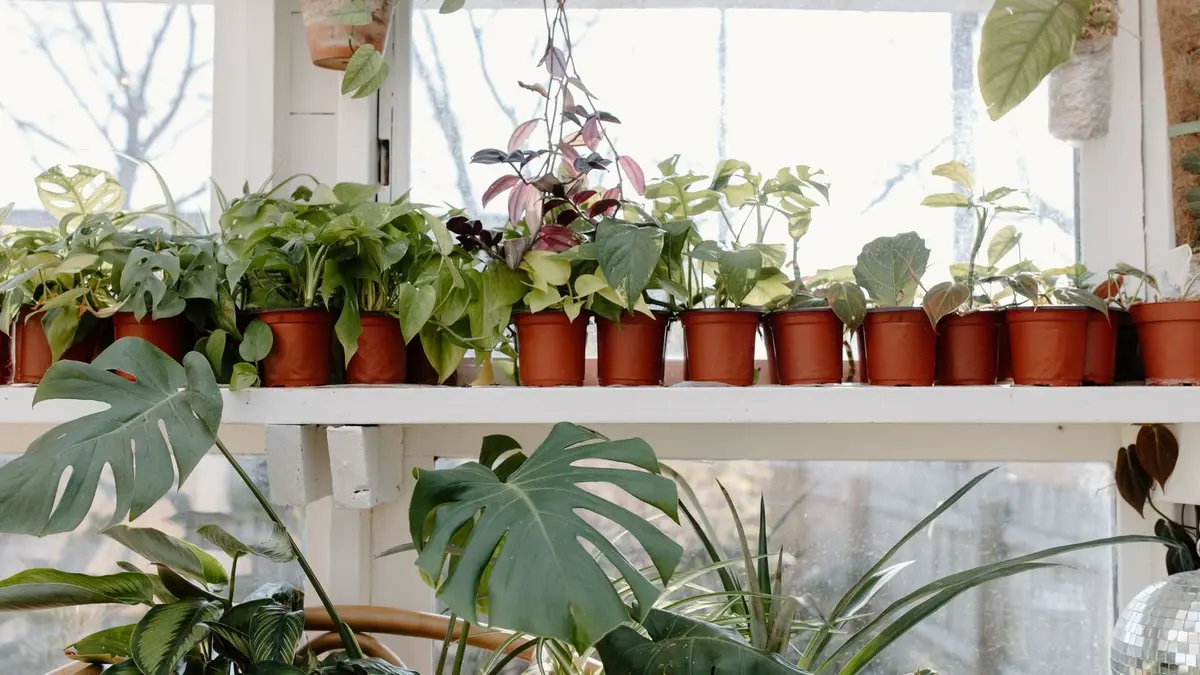
These plant shelf ideas work on freestanding shelves and bookcases in any room: a ladder shelf, an open bookcase, a shelf in front of a window, a corner shelf, a tiered stand, a metal etagere, a narrow shelf for small plants, a bedroom shelf, a kitchen shelf, a DIY crate shelf, trailing and upright plants together, pots in one color family, plants at different heights and shelves with room between the pots.
Each idea comes with plants that suit its light and size. A shelf looks full when every plant fits its spot, not when every inch holds a pot.
Start with the light on each shelf
One shelf holds several kinds of light. Light drops quickly as you move away from a window, and the spots just to the side of a window are darker than they look. Even a low light plant usually gets too little light more than 10 feet from an average window.
The shelves also shade each other. On a tall unit beside a window, the top shelf gets the most light, while the bottom shelf sits farther from the glass and in the shadow of the shelves above it. Put the plants that want the most light up high or closest to the window, and the ones that tolerate low light down low.
The window’s direction sets how bright the best spot is. A south window gives the brightest light for the longest time, east and west windows suit plants that need medium light, and a north window suits only plants that grow in low light.
1. Lean a ladder shelf against the wall
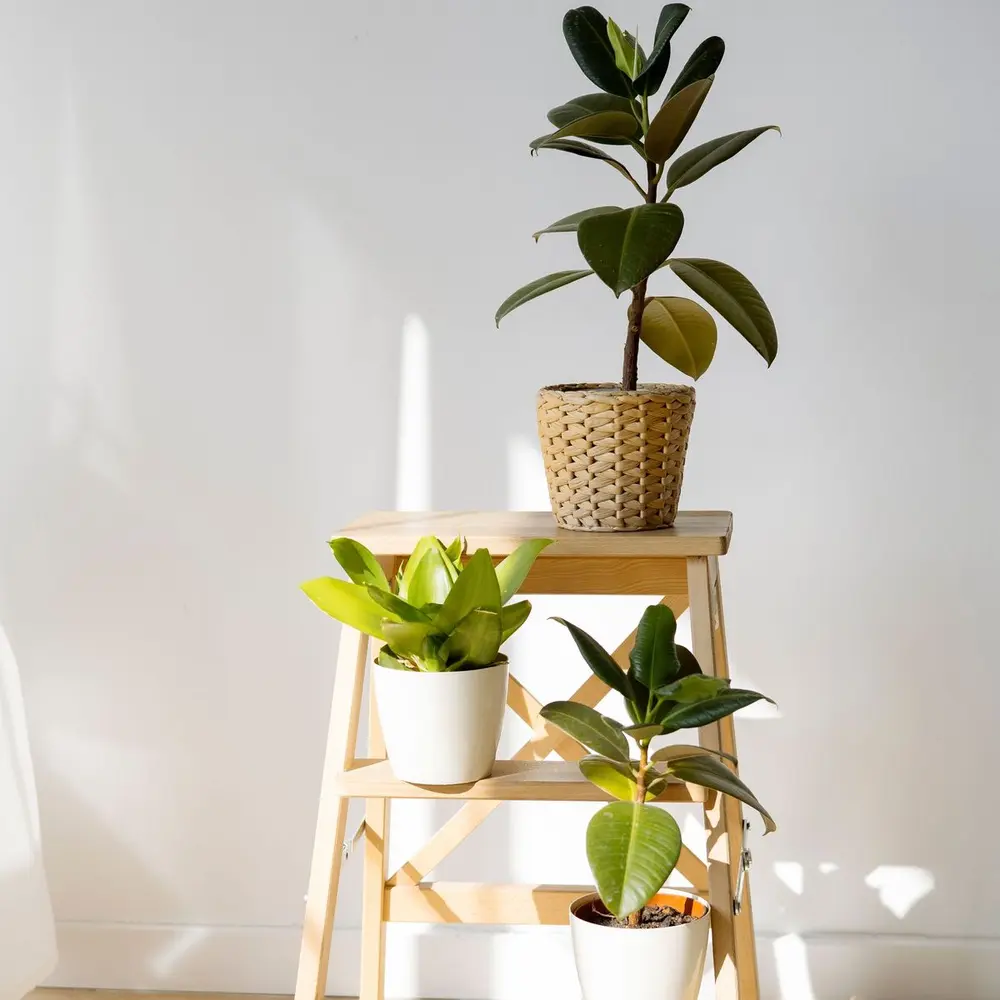
A ladder shelf has narrow steps at the top and deeper ones at the bottom, so it sorts your plants by size for you. Use the narrow top step for a trailing plant, a middle step for a small upright one and the wide bottom step for a heavier pot.
Pothos is the classic choice for the top. It prefers bright, indirect light but survives long periods in low light, and its vines can reach 8 to 10 feet, so trim them before they cover the steps below. A young rubber plant suits a middle step in bright light; it adapts to low light but grows best near an east window, and in time it outgrows a ladder and moves to the floor.
On the bottom step, away from the window, a snake plant or ZZ plant handles the dimmer light.
A ladder shelf leans, so set it on a flat floor and use any wall fixing it comes with. The ASPCA lists pothos, snake plant and rubber plants under Ficus as toxic to cats and dogs, and the ZZ plant isn’t on its list. The pothos care guide covers trimming the vines.
2. Turn an open bookcase into a plant shelf
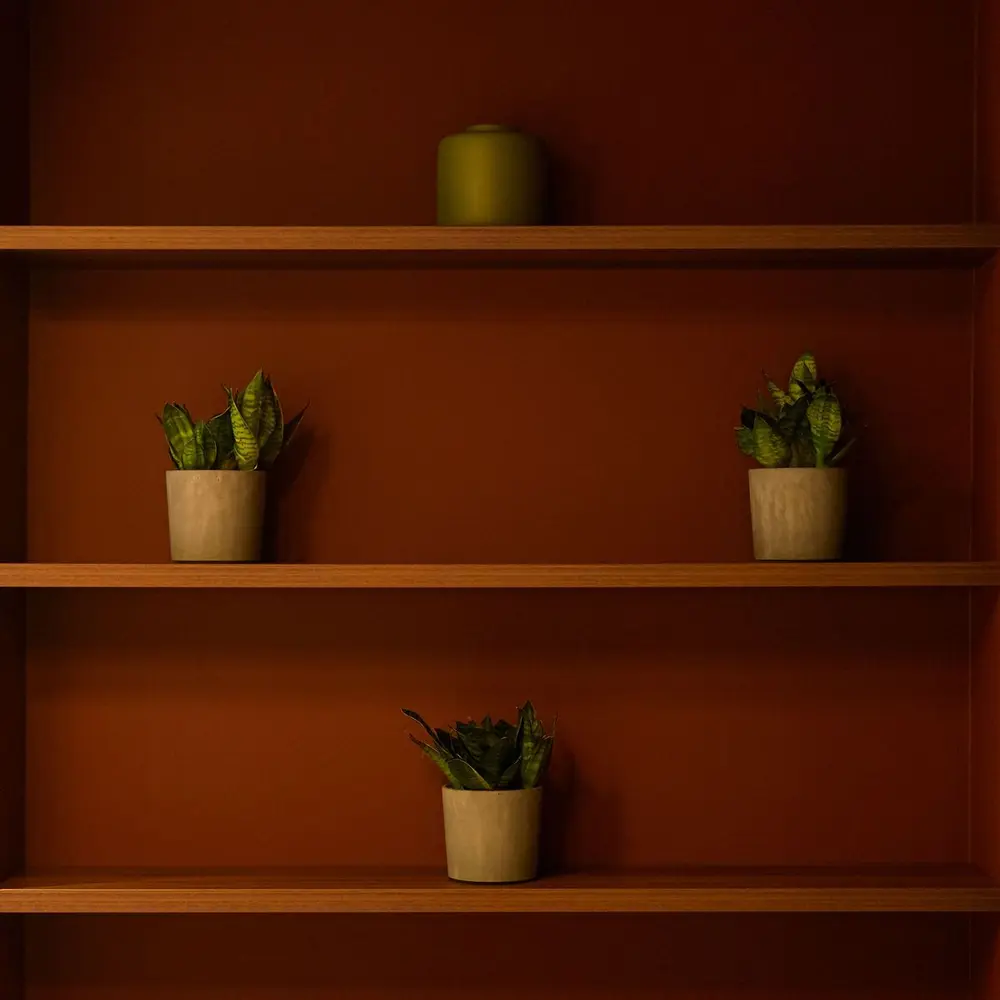
An open bookcase gives every plant its own frame. Leave whole shelves for plants, or alternate them with a few objects, and set the bookcase beside a window rather than across the room, where its deep shelves would get very little light.
A dwarf snake plant such as ‘Hahnii’ stays 4 to 8 inches tall, so it fits even a short shelf. It tolerates low light and needs its soil to dry out between waterings. The snake plant care guide covers watering and repotting.
For a taller, deeper shelf, a Chinese evergreen grows 1 to 3 feet tall and tolerates very low light, which suits the lower shelves of a bookcase. A heartleaf philodendron on the top shelf can trail down the side.
Bookcases are usually wood or veneer, so stand every pot on a saucer and keep water off the shelf. The ASPCA lists the snake plant, Chinese evergreen and heartleaf philodendron as toxic to cats and dogs.
3. Set a shelf in front of a bright window
A freestanding shelf placed right in front of a sunny window is the spot for plants that want the most light. Succulents need lots of light, and a bright, sunny window is where they grow best.
Aloe is best in full sun and grows 2 to 3 feet tall, so give it the top or the end of the shelf. Jade plant also does best with several hours of direct sun a day. String of pearls flourishes in bright, indirect light; set it on the edge of a shelf so its stems trail 1 to 3 feet down.
Zebra haworthia prefers bright, indirect light, and direct sun can scorch its leaves, so tuck it behind a taller plant or at the side of the window. A sheer curtain softens the light for the whole shelf.
In late spring, summer and early fall, a south window can sunburn plants that don’t need bright light, so check the leaves as the sun gets stronger. The ASPCA lists aloe and jade as toxic to cats and dogs and zebra haworthia as non-toxic, and string of pearls isn’t on its list.
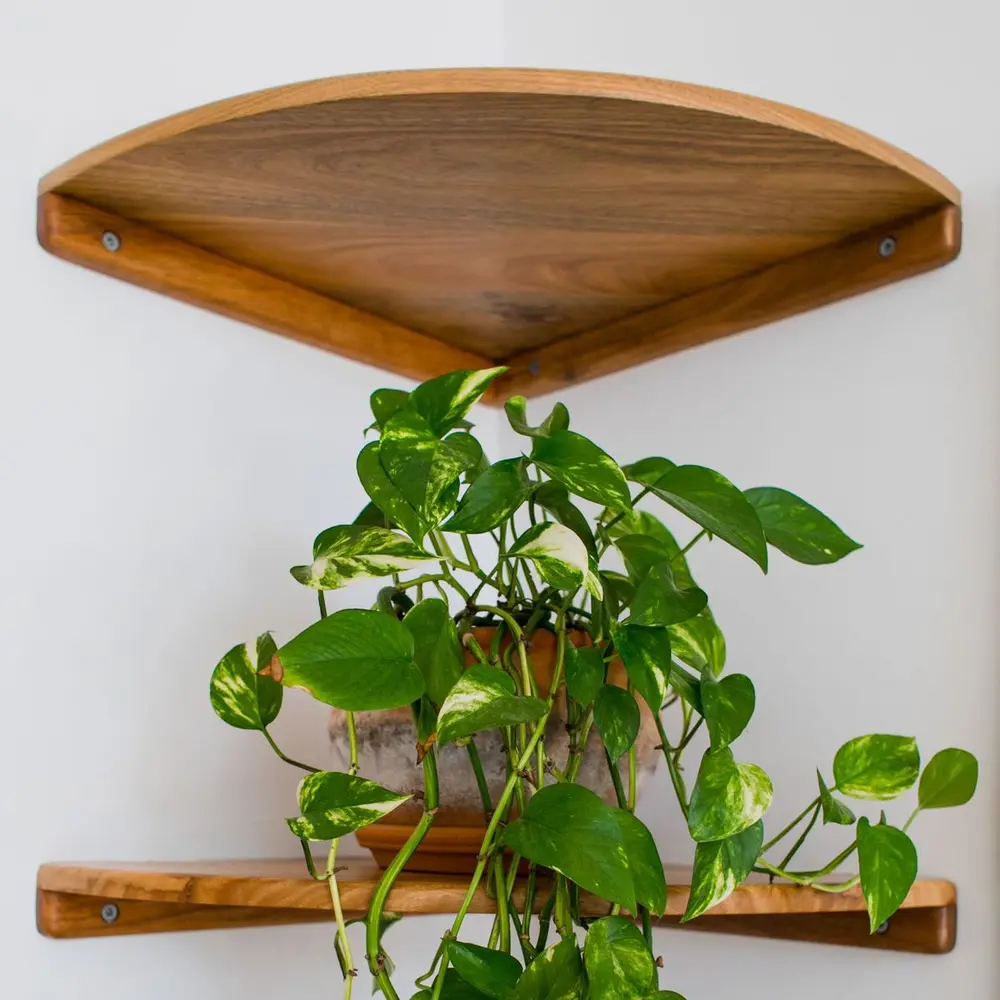
4. Fill an empty corner with a corner shelf
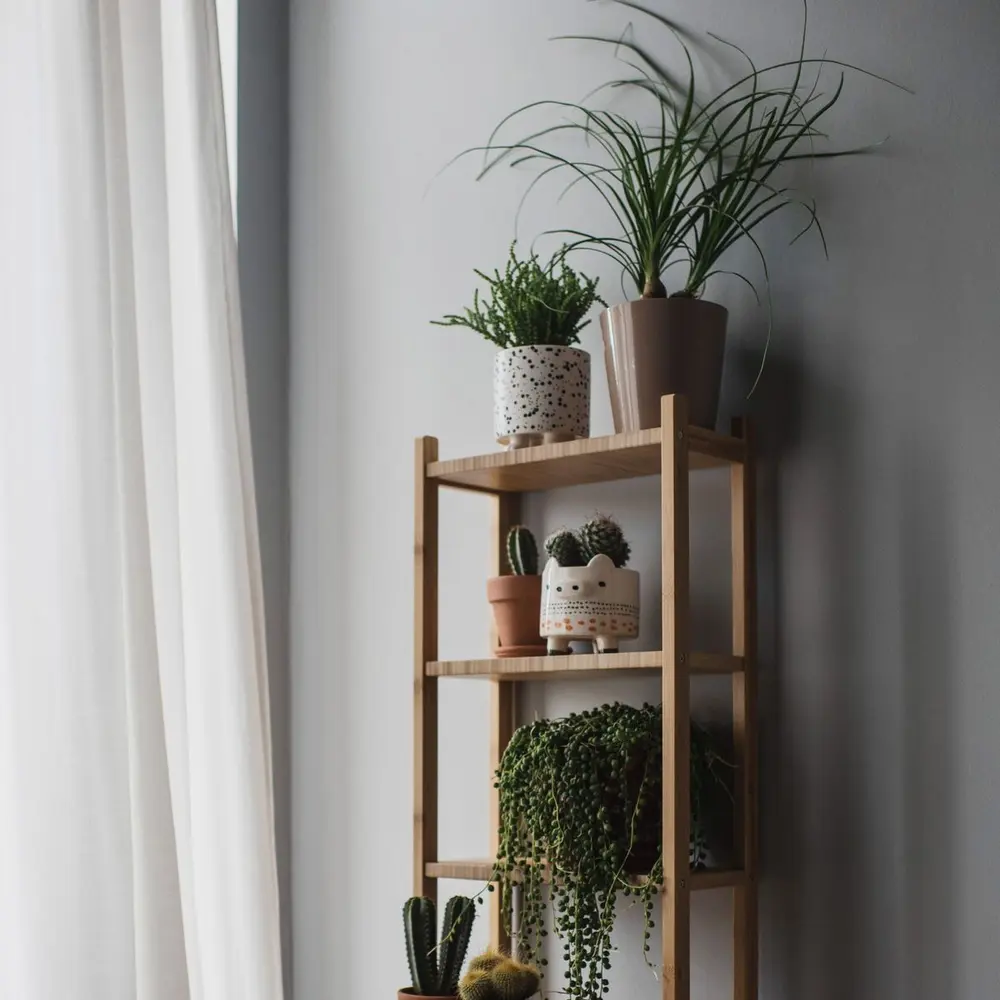
A corner shelf makes use of a spot that usually stays empty. Corners are often the darkest part of a room, though, because they sit to the side of the windows or far from them, so pick plants that tolerate low light.
Golden pothos is the easiest: it trails down from the top shelf, tolerates lower light and needs watering only after its soil has dried. A heartleaf philodendron works the same way and tolerates very low light.
On the floor beside the shelf, a ZZ plant can reach 4 feet and survives in low light for a long time.
If the corner is too far from any window, a grow light can stand in for it. Keep foliage plants about 12 to 24 inches from the light and run it 12 to 14 hours a day on a timer. Shelves make this easier, because you can raise a plant on a shelf to bring it closer to the light.
The low light plants guide has more plants for a dim corner.
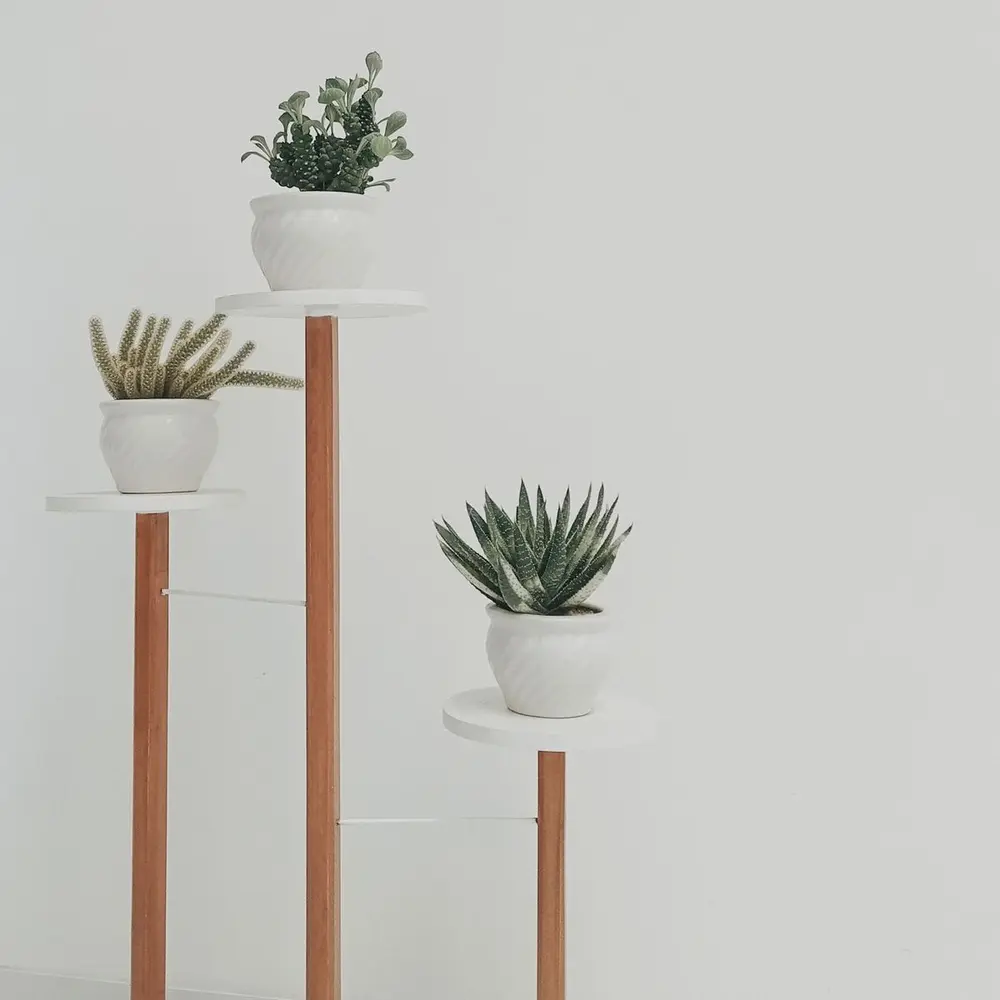
5. Step plants up on a tiered stand
A tiered stand sets each level a little higher and farther back than the one below it, so the plants don’t shade each other. That makes it a good way to show off small plants that would get lost on a deep shelf.
Zebra haworthia reaches only 4 to 6 inches tall and prefers bright, indirect light. A baby rubber plant, a peperomia, is often used as a desktop plant for the same reason: it fits small spots. African violets are low, compact plants; a standard one grows 8 to 16 inches wide, so give it a tier of its own.
These three like bright light without hot afternoon sun. African violets do well within 3 feet of a large south, east or west window, or at a north or east window, so set the stand where the top tier catches that light.
If you have pets, the ASPCA lists the zebra haworthia, baby rubber plant and African violet as non-toxic to cats and dogs.
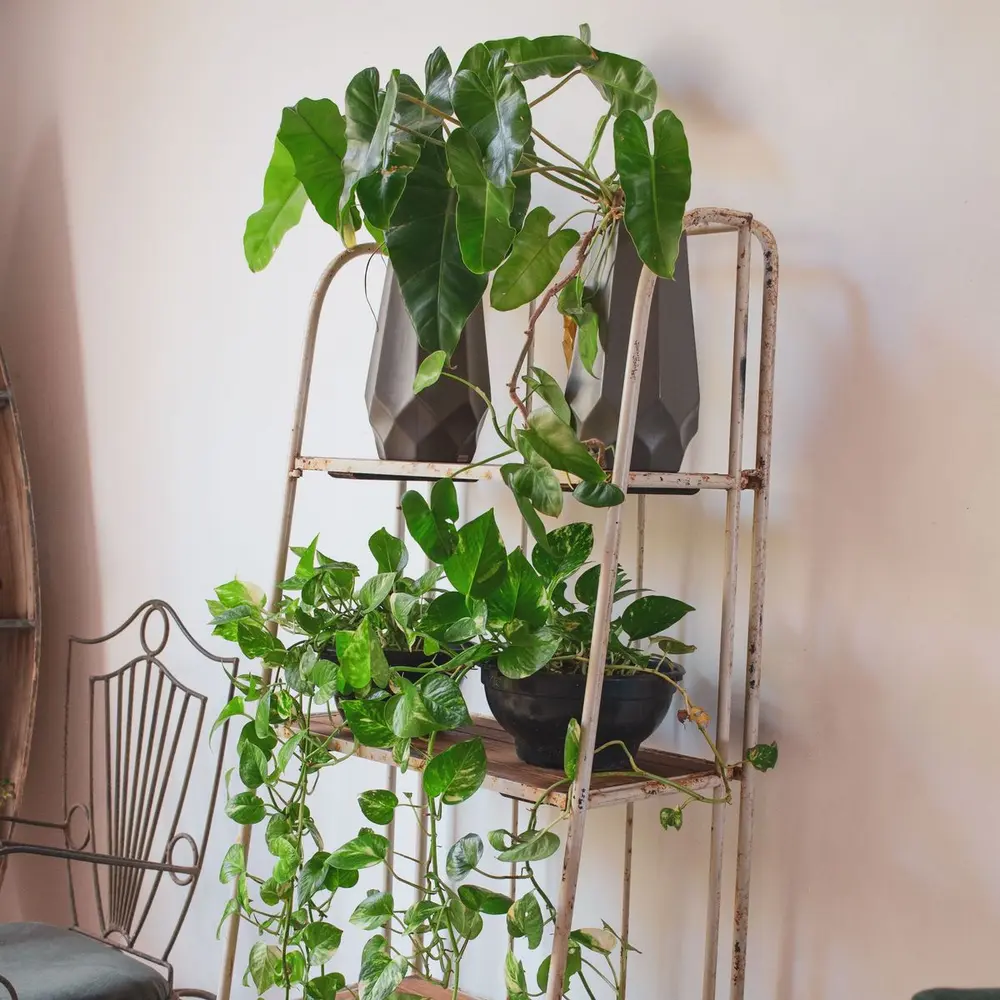
6. Go modern with a metal etagere
A metal etagere is a slim, open shelf unit with a frame and no back panel, which makes it one of the best modern plant shelf ideas. It blocks less of the window than a solid bookcase, and its thin frame keeps the look light even when every level holds a plant.
Climbing and trailing plants suit it well. A heartleaf philodendron’s stems either trail from a pot or climb a support, so they can weave up or down the frame, and its soil should stay evenly moist but not soggy. Golden pothos trails or climbs the same way and needs less even moisture.
Put the heaviest pots on the lowest level and lighter ones up top. For a tall plant, pick a broad, wide-based pot so it is stable and less likely to tip.
Metal and water don’t mix well, so stand every pot on a saucer and wipe up spills. The ASPCA lists the heartleaf philodendron and golden pothos as toxic to cats and dogs, so keep the etagere away from pets that chew leaves.
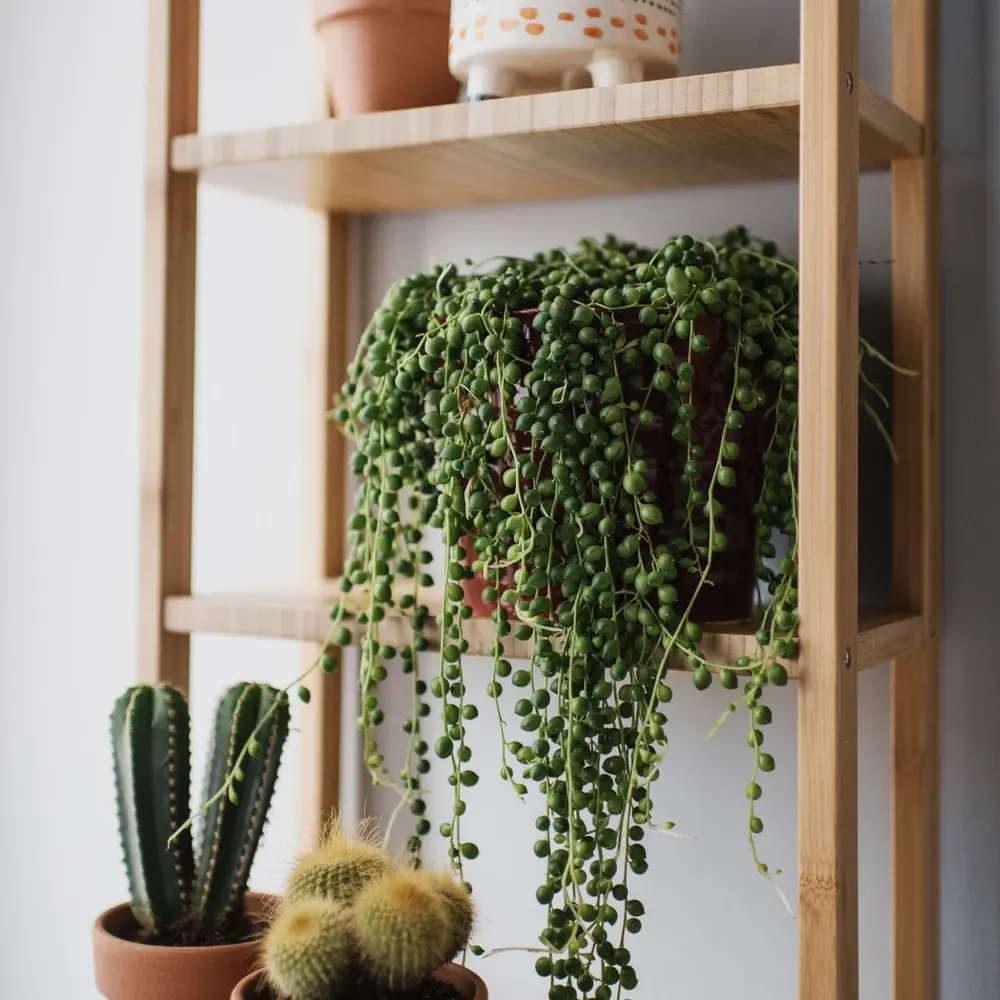
7. Line up small plants on a narrow shelf
A narrow shelf, only a pot or two deep, is one of the best small plant shelf ideas for a hallway, a window wall or the space above a desk. Choose plants that stay small and grow slowly, so the shelf keeps its shape.
Cacti and succulents fit here, as long as the shelf gets lots of light. String of pearls spills over the edge, while small cacti and zebra haworthia stand upright beside it. Let their soil dry out between waterings, and water less in winter.
Terracotta pots suit this shelf. Terracotta is porous and dries out more quickly than plastic or glazed ceramic, which makes it good for plants that like drier soil, such as succulents.
Keep each pot back from the front edge, and use small saucers that fit the shelf’s depth. If the shelf sits away from the window, swap the succulents for a baby rubber plant, which tolerates low light for several months without stress.
8. Give a bedroom shelf easy plants
Bedroom plant shelf ideas start with plants that need little fuss, because a bedroom shelf is easy to forget. Plants that like their soil to dry out between waterings suit a shelf you water less often.
A heartleaf philodendron trailing from a shelf above the nightstand is a soft, easy look. It grows well under existing room light or near a north, east or west window. A snake plant handles a dim bedroom corner and needs water only after its soil dries.
If a cat sleeps in your bedroom, choose from the plants the ASPCA lists as non-toxic to cats and dogs: the spider plant, the baby rubber plant and the prayer plant. The prayer plant tolerates low to medium light but needs high humidity, so set it on a tray of wet pebbles.
Water bedroom plants at the sink when you can and let them drain before they go back up. A shelf above the bed is no place for a pot that drips. The ASPCA lists the heartleaf philodendron and snake plant as toxic to cats and dogs.
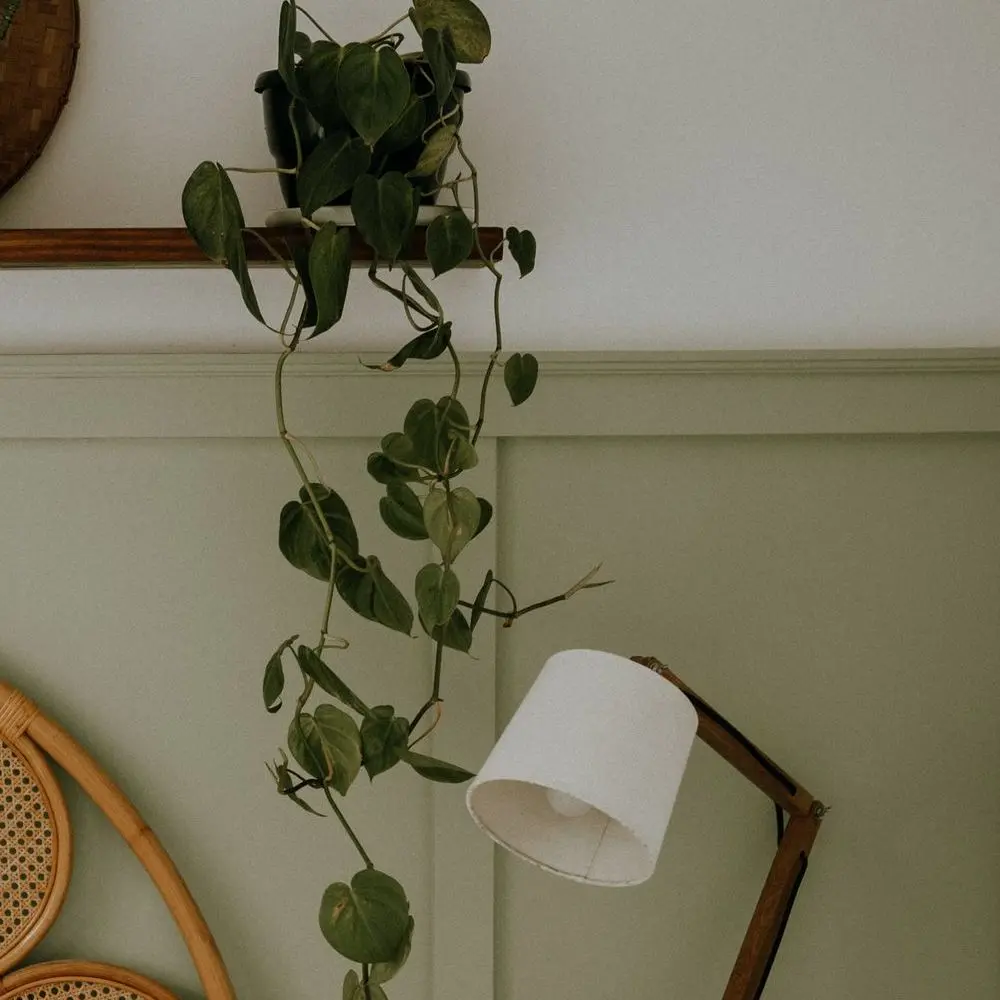
9. Let a kitchen shelf hold a trailing plant
Kitchen plant shelf decorating ideas often begin with one trailing plant. An open kitchen shelf with a golden pothos spilling over the edge looks relaxed, and kitchens often run more humid than the rest of the house, which pothos likes.
Pothos tolerates low to medium light, so it can sit on a shelf away from the window. A spider plant is another good kitchen choice; it prefers medium light and tolerates deep shade, and its arching leaves and plantlets hang over a shelf edge. The spider plant care guide covers its plantlets.
Herbs are different. Culinary herbs need high light, which most kitchen shelves don’t get, so keep them on the sill of your sunniest window. The kitchen window plants guide covers what grows there.
Keep shelf plants away from the stove’s heat and splatter. The ASPCA lists golden pothos as toxic to cats and dogs and the spider plant as non-toxic.
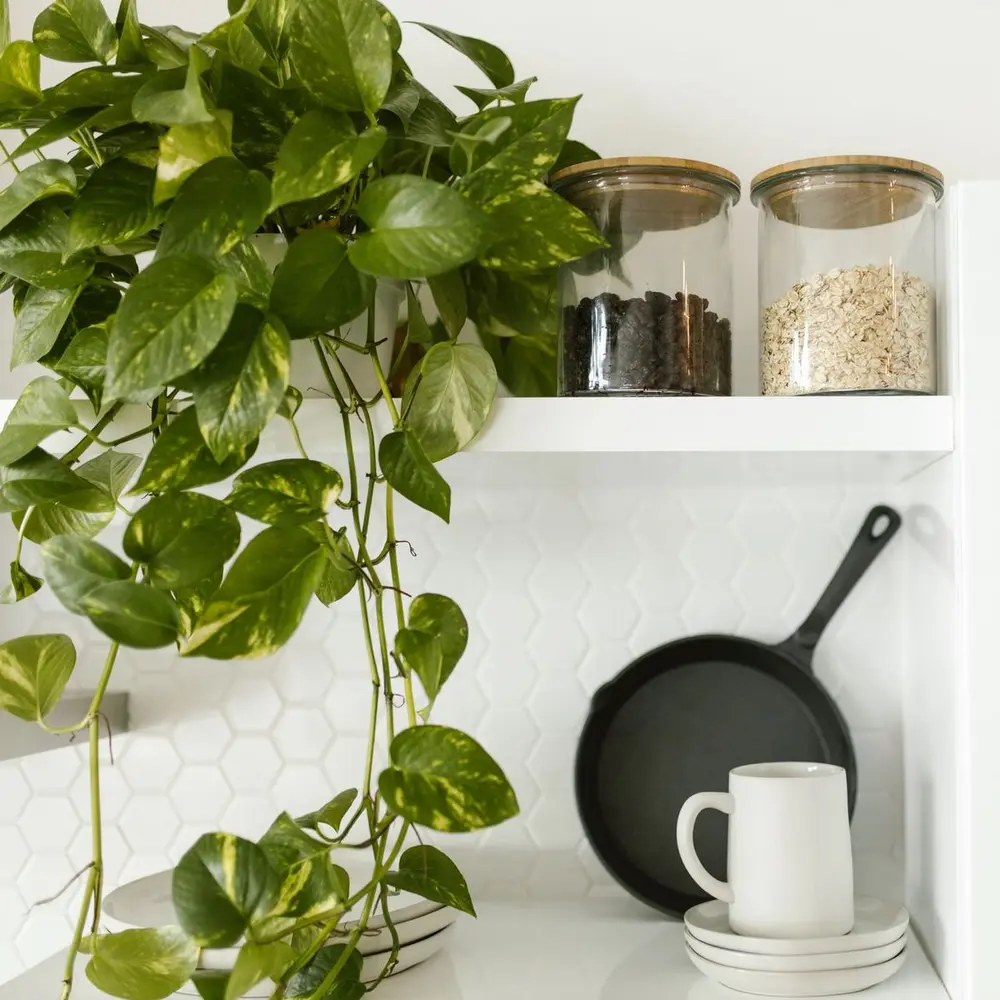
10. Build a simple DIY crate or plank shelf
A DIY plant shelf can be as simple as stacking sturdy wooden crates on their sides, or resting solid planks on stable supports. Each crate becomes a small cubby, and you can rearrange them as your plants grow.
Keep the build low and steady. Set it on a level floor, put the heaviest crate at the bottom and check that nothing rocks before you add plants. Raw wood stains when it gets wet, so line each cubby with a tray or set each pot on its own saucer.
Plant it by light, the same as any shelf. Small cacti and succulents go on the top crate if it catches sun from a window; a baby rubber plant or a pothos suits the lower cubbies, where the crate’s sides cut the light.
A crate shelf is a good first project because nothing is mounted to the wall. If you outgrow it, the crates move to a new spot or a new room.
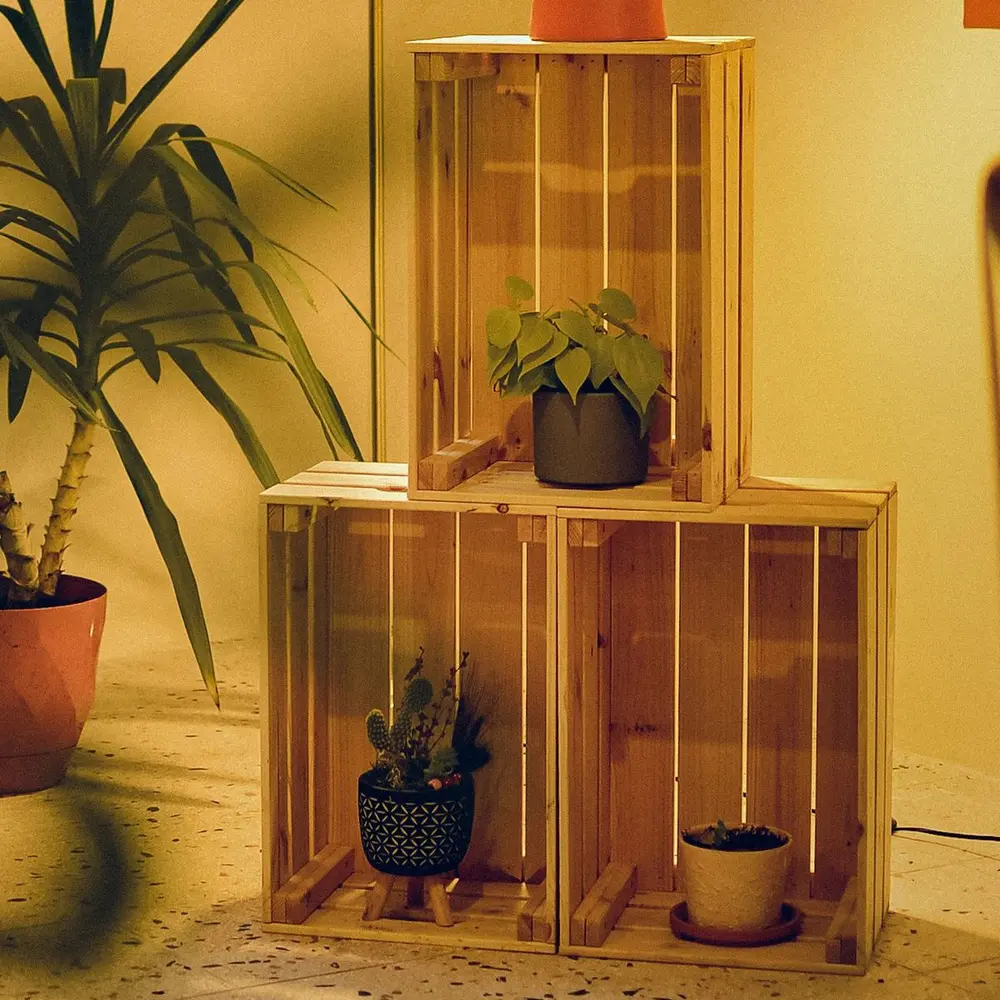
11. Mix trailing and upright plants
A shelf of only upright plants looks stiff, and a shelf of only trailing plants looks messy. Mix the two: an upright plant at the back or the top, and a trailing plant at the front edge where its stems can fall.
A snake plant is the classic upright. Indoors it often stays near 2 feet tall, with stiff leaves that stay out of the way of its neighbors. Pair it with a pothos or a heartleaf philodendron on the shelf below, letting the vines spill over the front.
A spider plant gives you both shapes in one pot. Its arching leaves stand up from the pot, and its plantlets hang on long stems; in a hanging basket it trails 2 to 3 feet.
Trim trailing stems before they cover the plant below, because a vine hanging in front of a leaf shades it. The hanging plants guide has more trailing plants to try.
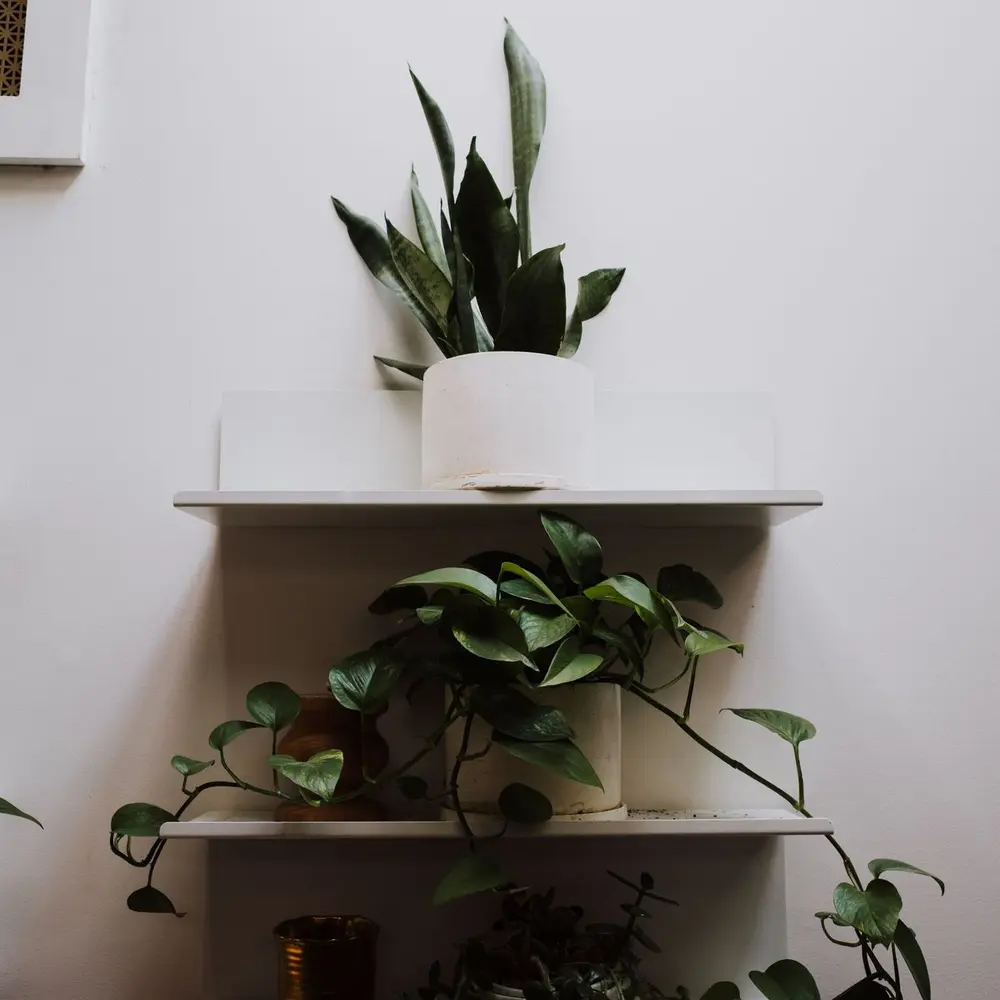
12. Keep pots in one color family
Plant shelf decor looks calm when the pots belong together. Pick one color family, such as terracotta, white or soft earth tones, and let the leaves bring the variety.
Terracotta is the easiest to match, and it has a practical side. Water evaporates from the sides of a clay pot, so it needs watering more often than a glazed or plastic pot. Put plants that like to dry out in terracotta, such as snake plants and succulents, and keep plants that like evenly moist soil, such as a peace lily or a prayer plant, in glazed pots in the same color family.
Every pot needs a drainage hole. Without one, the soil stays wet and the roots rot. If you love a decorative pot without a hole, use it as a cachepot: set a plain pot with a hole inside it.
Match the saucers too, so the trays under the pots look like part of the plan.
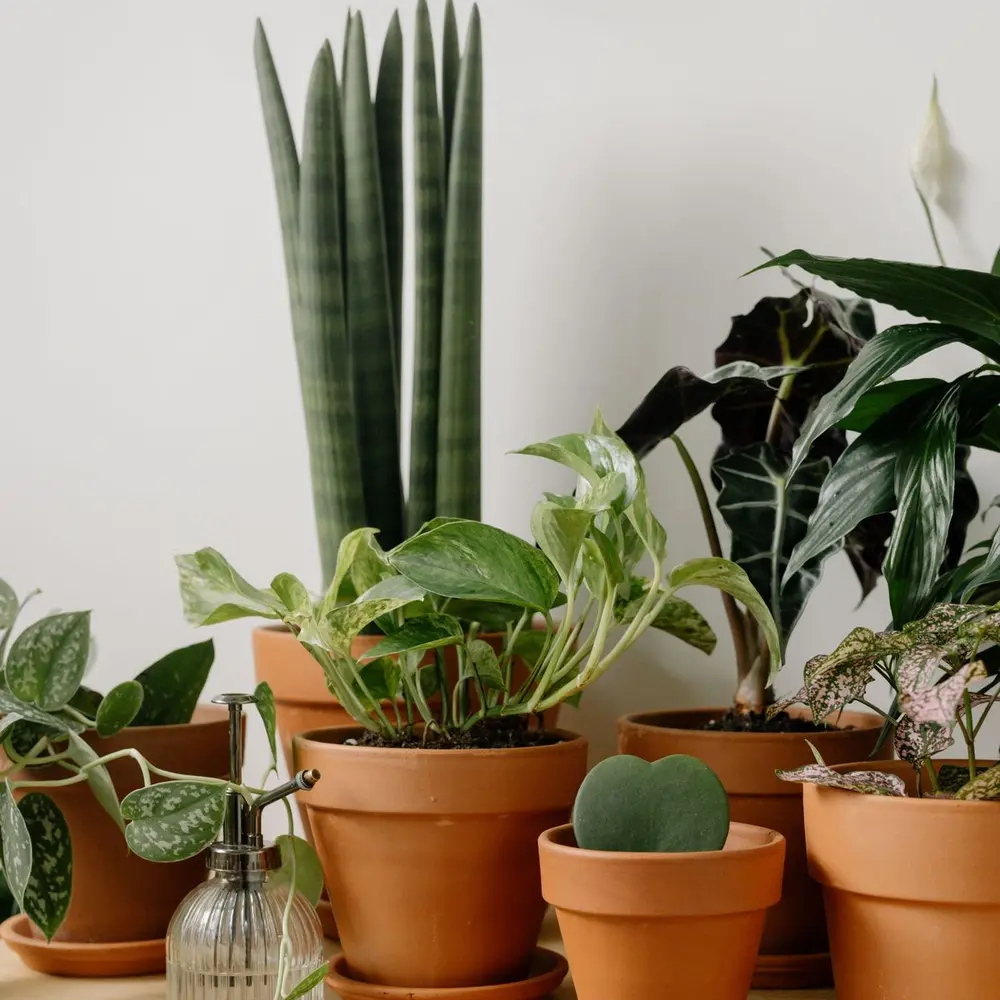
13. Vary the heights
A row of plants that are all the same size reads like a store shelf. Vary the heights instead: a tall plant at one end, a medium plant in the middle and something low at the front.
A snake plant makes a good tall anchor, and a compact peace lily such as ‘Wallisii’ grows only 12 to 15 inches tall for the middle. A small succulent or a zebra haworthia fills the front. To lift a small plant, stand it on an upturned pot or a small block.
Place the tallest plant at the end farther from the window, so it doesn’t shade the smaller plants from the light. On a tall unit, a trailing pothos on the top shelf adds height in the other direction.
Plants lean toward the window as they grow. Many plants can be kept from getting one-sided by turning them once a week, which keeps a shelf of mixed heights looking even.
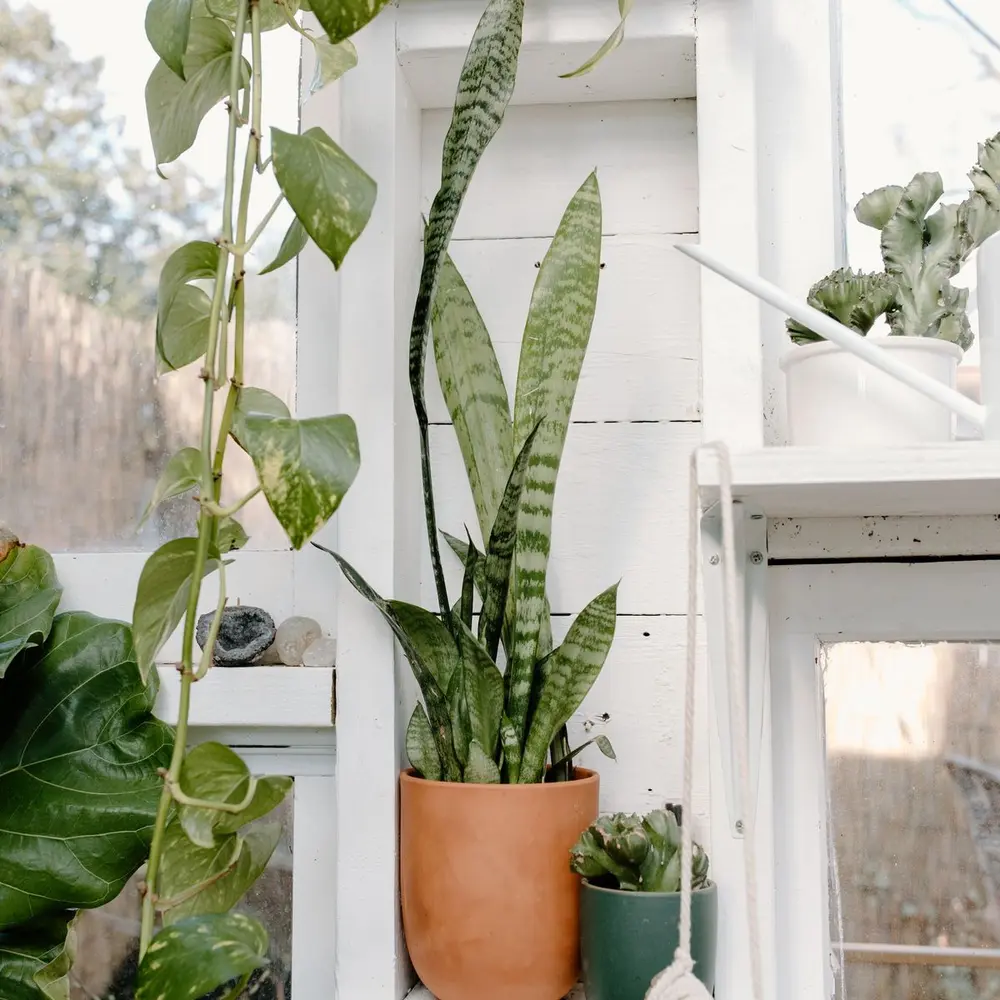
14. Leave gaps so leaves don’t touch
The simplest of all plant shelf ideas: leave space. Space plants far enough apart to let light between them, and arrange them so they don’t shade each other.
A gap also lets you see each plant. You can lift one pot out to water it, check under its leaves and put it back without moving its neighbors. Empty space on a shelf reads as a choice, and the plants you do show stand out.
Plan for growth. A spider plant grows quickly to 12 to 18 inches tall, so the small pot you buy today soon needs a wider spot. A jade plant can live a long time and grow up to 5 feet tall indoors.
When the leaves of two plants start to touch, move one to another shelf or a new spot, rather than squeezing in one more pot.
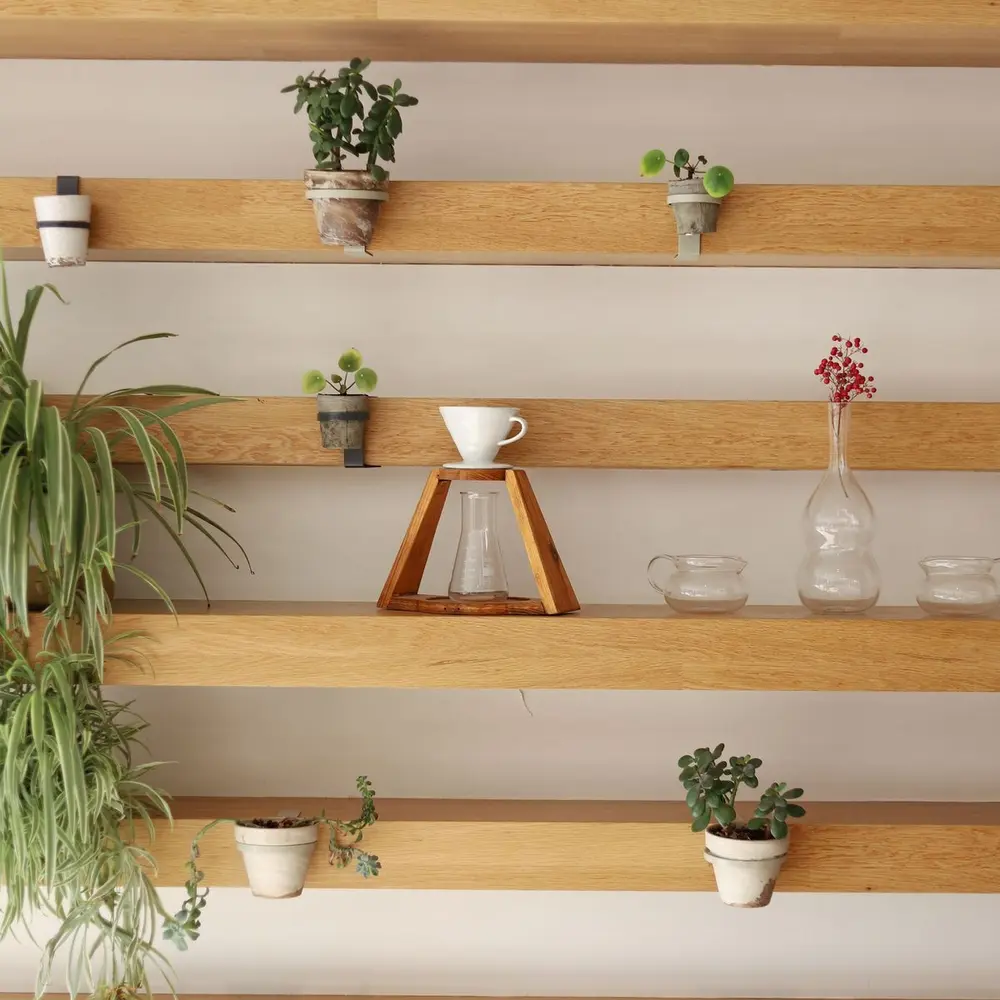
How to care for plants on a shelf
A shelf full of healthy plants takes the same few habits as any houseplant, plus a little care for the furniture.
- Check the light shelf by shelf. Long, thin stems that reach toward the window and pale or yellowing leaves mean a plant needs more light. Move it up or closer to the window.
- Use drainage holes and saucers. Put every pot with a drainage hole on a saucer or tray, and never leave a plant standing in water. Empty the saucer after watering.
- Water at the sink when you can. Let the pot drain fully before it goes back on the shelf, which keeps water off the wood and away from the plants below.
- Feel the soil first. Push a finger about 1 inch into the soil. Plants on the darker lower shelves grow more slowly and use less water, so they usually need it less often.
- Turn each pot once a week. It keeps plants from leaning toward the window and growing lopsided.
- Wipe the leaves. Dust dulls leaves, and clean leaves favor healthy growth. Wipe both sides with a soft, damp cloth.
- Keep the shelf steady. Put the heaviest pots on the lowest shelves, and anchor a tall freestanding shelf to the wall so it can’t tip.
- Repot one size up. When a plant outgrows its spot, move it to a pot only 1 to 2 inches wider. The pot size calculator finds the next size.
Plant shelf ideas at a glance
| Idea | Best plants | Light it needs |
|---|---|---|
| Ladder shelf | Pothos, rubber plant, snake plant, ZZ plant | Medium to bright, indirect |
| Open bookcase | Dwarf snake plant, Chinese evergreen | Low to medium, beside a window |
| Shelf in front of window | Aloe, jade, string of pearls, zebra haworthia | Bright, some direct sun |
| Corner shelf | Golden pothos, heartleaf philodendron, ZZ plant | Low, or a grow light |
| Tiered stand | Zebra haworthia, baby rubber plant, African violet | Bright, indirect |
| Metal etagere | Heartleaf philodendron, golden pothos | Low to bright, indirect |
| Narrow shelf | String of pearls, small cacti, zebra haworthia | Bright, near a sunny window |
| Bedroom shelf | Heartleaf philodendron, snake plant, prayer plant | Low to medium |
| Kitchen shelf | Golden pothos, spider plant | Low to medium |
| DIY crate shelf | Small succulents, baby rubber plant, pothos | Bright on top, lower below |
| Trailing and upright | Snake plant with pothos, spider plant | Low to bright, indirect |
| One color family | Snake plant, succulents, peace lily | Matches the plants in it |
| Varied heights | Snake plant, compact peace lily, haworthia | Tallest plant away from the window |
| Gaps between pots | Spider plant, jade, small succulents | Light reaches every pot |
Not sure which plants fit your shelf? The plant finder matches plants to your light, your space and your pets.
Frequently asked questions
What plants are best for a plant shelf?
Pick by the light each shelf gets. Pothos and heartleaf philodendron trail well from a top shelf and handle low light, while snake plant and ZZ plant sit low and away from the window. Aloe, jade and string of pearls want the shelf nearest a bright window, and zebra haworthia, baby rubber plant and African violet suit small spots in bright, indirect light.
How do you keep a plant shelf from looking cluttered?
Leave space between the pots so the leaves don't touch, keep the pots in one color family, and mix a few upright plants with a few trailing ones. Fewer plants that fit their spots look fuller than many plants squeezed together.
Do plants on the bottom shelf get enough light?
Often less than the top. The bottom shelf sits farther from the window and in the shade of the shelves above it. Put low light plants such as snake plant, ZZ plant and Chinese evergreen down low, and watch for long, thin stems and pale leaves, which mean a plant wants more light.
How do you protect a wooden shelf from water?
Use pots with drainage holes and set each one on a saucer or tray. Empty the saucer after watering instead of leaving the pot standing in water, and water at the sink when you can, then let the pot drain before it goes back on the shelf.
Which shelf plants are safe for cats and dogs?
Of the plants on this page, the ASPCA lists the spider plant, baby rubber plant, prayer plant, African violet and zebra haworthia as non-toxic to cats and dogs. Pothos, heartleaf philodendron, snake plant, aloe and jade are on its list as toxic.
Save it for later
Pin it to a board so it's there when you need it.
Save to Pinterest(opens in a new tab)Keep reading
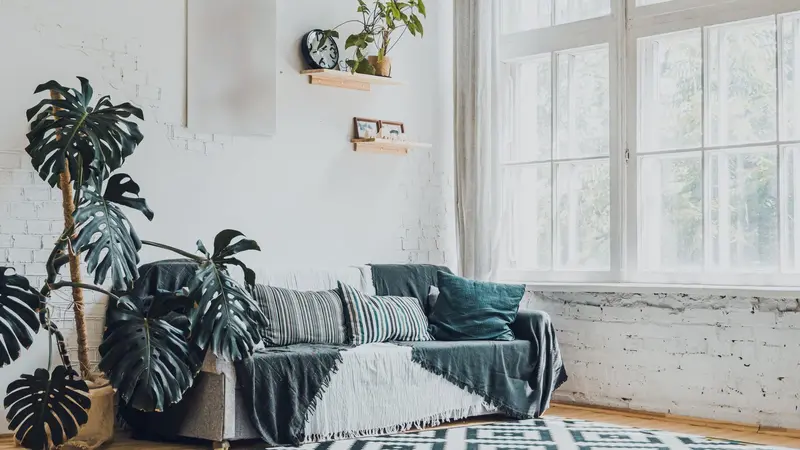
Plant list
16 living room plant decor ideas that look planned
Where to put plants in a living room, from the sofa and coffee table to the mantel and window, with a plant for each spot that suits its light.
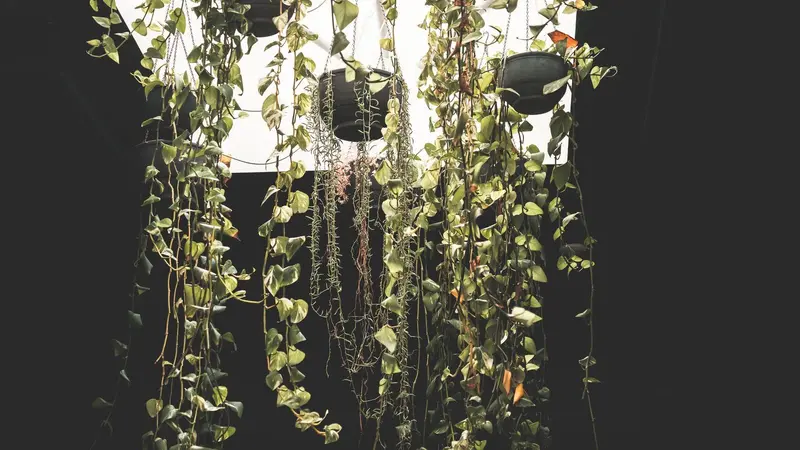
Plant list
15 hanging plants that trail beautifully indoors
Pothos, string of hearts, Boston fern and twelve more plants for a hanging pot or high shelf, where each one hangs best for its light and how to water it.
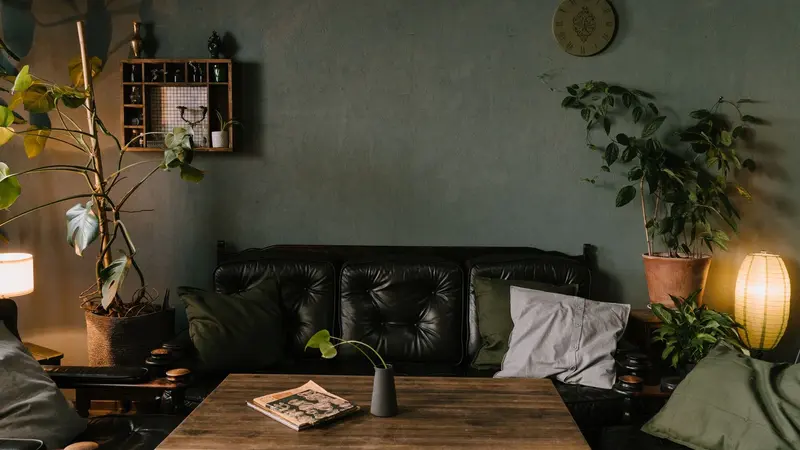
Low lightPlant list
15 low light plants that grow away from the window
Houseplants for a north window, a dim hallway or a corner across the room: what low light means, where each plant fits and how to water it with less light.
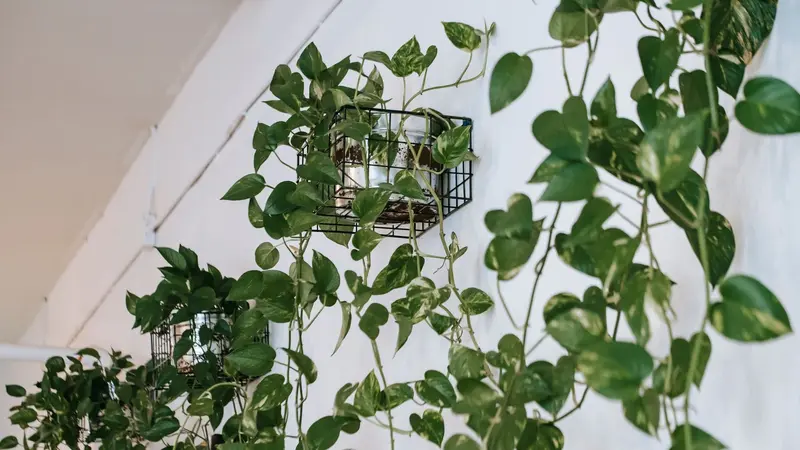
Care guide
Pothos plant care guide for long, full vines
How to care for a pothos plant indoors: light for bright leaves, watering, soil, feeding, pruning for fuller vines, rooting cuttings and fixing yellow leaves.
Try a free tool
Plant Finder
Answer four questions about light, space, pets and watering to see the houseplants that fit your spot.