Plant Finder
Answer four questions about light, space, pets and watering to see the houseplants that fit your spot.
Published
A new plant does best when it suits the light you have, comes home healthy and gets a few quiet weeks to settle in. This new plant checklist walks through 18 steps, from before you buy to the first weeks at home, on one sheet you can print and tick off.
PDF2 pagesUS LetterFree to print at home
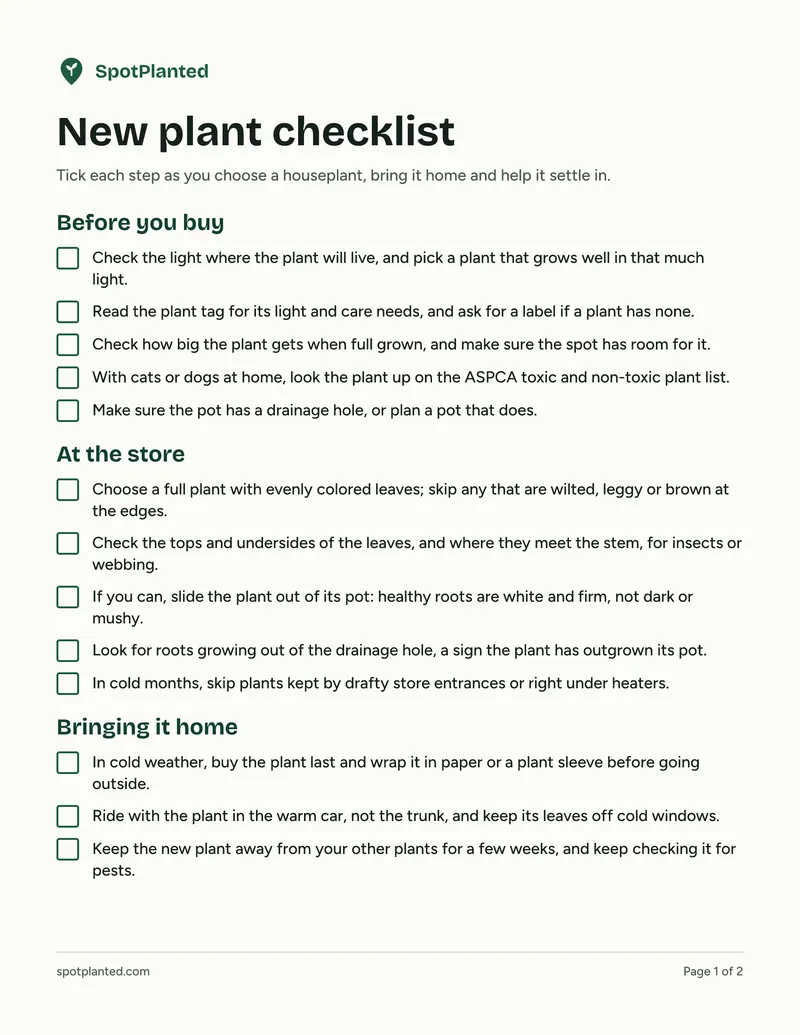
Print the checklist before you shop and take it with you. The first two parts cover the choice and the store, so you can tick them off as you look over a plant.
Keep the sheet near the new plant once it is home. The last two parts cover the trip and the first weeks, when most of the problems with a new plant show up.
Light is the first thing to check, because it decides which plants can thrive in your spot. Stand where the plant will live and notice how bright it is, then pick a plant that grows well in that much light.
The plant tag tells you the light and care a plant needs. If a plant you don't know has no tag, ask for one before you buy it.
Size matters too. Many plants are sold small, but some grow several feet tall over time, so check the full-grown size against the space you have.
With cats or dogs at home, look the plant up on the ASPCA toxic and non-toxic plant list before you buy. Search by both the common name and the botanical name, since one common name can cover several plants.
Finally, plan the pot. Pots with drainage holes suit most plants, because extra water can run out instead of soaking the roots.
Look the whole plant over before you carry it to the checkout. A healthy plant is full and balanced, with leaves of the right color and size, and no pale or yellow leaves low down.
Check for pests next. Turn a few leaves over and look at the undersides and the places where leaves meet the stem, where insects like to hide.
If the store lets you, slide the plant out of its pot. Healthy roots are white; dark, mushy roots with a bad smell are a sign of trouble.
Roots growing out of the drainage hole tell you the plant has outgrown its pot. It can still be a good buy, but plan to repot it once it has settled in.
In cold months, notice where the plant sat in the store. Plants kept near drafty doors or right under heaters may already be stressed.
Cold air can damage a houseplant in the short walk to the car. In cold weather, buy the plant at the end of your trip and wrap it in paper or a plant sleeve before you go outside.
Ride with the plant in the warm part of the car, not the trunk, which gets too cold in winter. Keep its leaves off the windows, since cold glass can damage them.
At home, keep the new plant away from your other plants for a few weeks. Pests you missed at the store show up in that time, and you can deal with them before they spread.
A new home means new light, warmth and humidity, and the plant needs time to adjust. Keep it out of bright sun for the first few days and don't let it dry out.
Expect a few yellow or dropped leaves in this time. It is the plant adjusting, and it should settle down within a few weeks.
Hold off on repotting until the plant has settled in. A new home is enough change for now, unless the roots have badly outgrown the pot.
Water by feel rather than by the calendar. Check the soil before you water, and water only when it is dry enough for that plant.
Skip fertilizer while the plant adjusts. If it comes home in fall or winter, wait until it starts growing again in spring.
A plant that has settled in stops dropping leaves and starts to put out new growth. That is the time to move it into its regular routine.
Once you see these signs, the plant can join your other plants. If its roots fill the pot, this is the time to move it up a size.
The checklist prints on US Letter paper at full size. Print it on plain paper to take shopping, or on card stock if you want to keep it with your plant supplies.
Each item has its own tick box. Print a fresh copy for each new plant, so you can follow its first weeks from start to finish.
Keep each finished sheet with that plant's care card. Together they record how the plant came home and how it settled in.
The free plant printables work as a set: care cards for each plant, a tracker for watering and checklists for the seasons.
A few weeks. Pests can hide on a new plant at first, and keeping it apart gives you time to spot them before they spread.
Yes. A plant often drops or yellows a few leaves as it adjusts to the light and air in your home. It should settle down within a few weeks.
Wait until it has settled in. Moving it to a new home is enough change for now, unless the roots are crowded out of the pot.
Skip fertilizer while the plant adjusts. If you bring it home in fall or winter, wait until it starts growing again in spring.
Pin it to a board so it's there when you need it.
Save to Pinterest(opens in a new tab)Answer four questions about light, space, pets and watering to see the houseplants that fit your spot.
Type the current pot's width and tick the signs you see to get the next pot size for repotting.
Free PDF
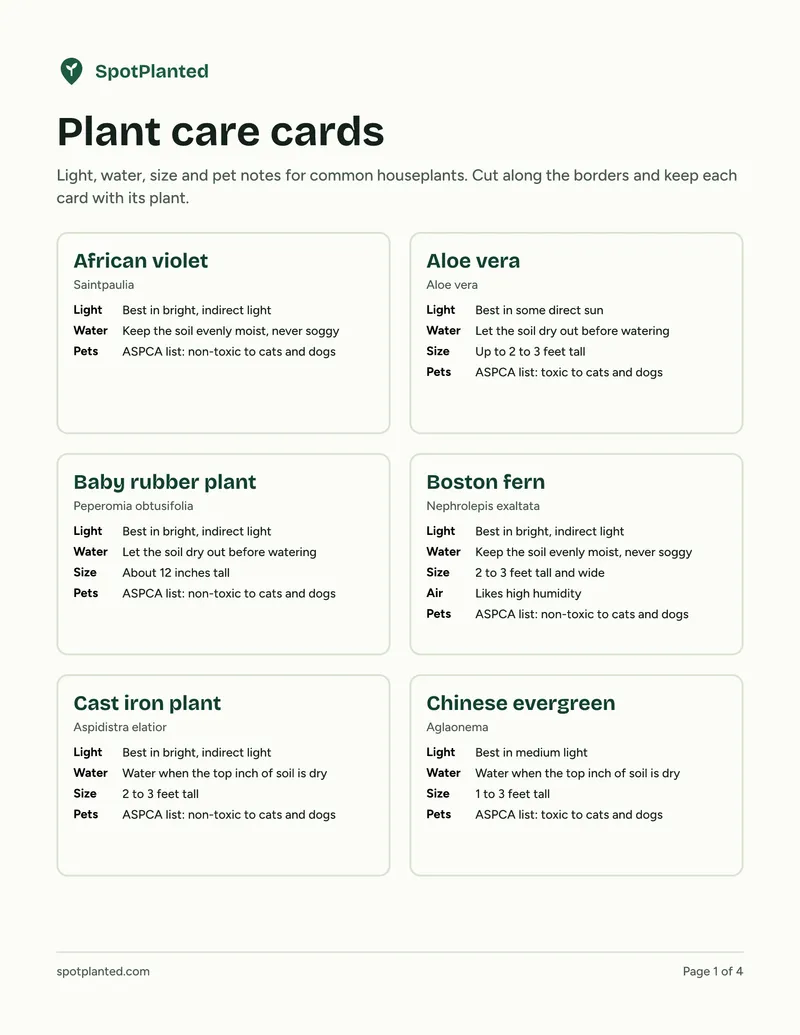
One card per houseplant with its light, watering rule, size and ASPCA pet note, six to a page.