Spider plant care guide for healthy leaves and babies

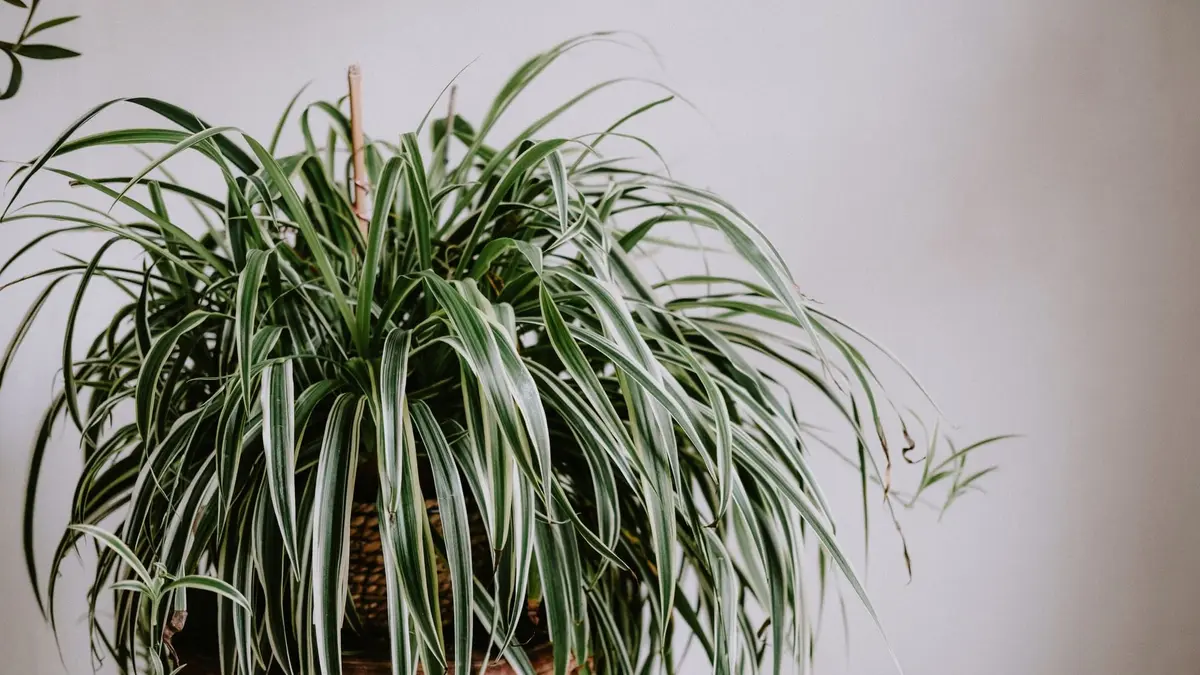
To care for a spider plant, give it bright, indirect light, water when the top 1 to 2 inches of soil feel dry, and keep it in a warm room with average humidity. It grows fast, forgives a missed watering and makes plenty of babies to root and share.
Brown leaf tips are the one problem nearly every spider plant owner meets. Most of this guide’s fixes come down to water, air and fertilizer.
Spider plant care at a glance
| Need | What a spider plant wants |
|---|---|
| Light | Bright, indirect light; adapts to medium light; no midday sun |
| Water | When the top 1 to 2 inches of soil are dry |
| Soil | A general-purpose potting mix that drains well |
| Temperature | 65 to 75°F by day, 50 to 55°F at night |
| Humidity | Average to medium; very dry air browns the tips |
| Feeding | Lightly, in spring and summer |
| Pets | Non-toxic to cats and dogs (ASPCA) |
Light
Bright, indirect light suits a spider plant best. An east window, or a spot near a west window out of the direct sun, works well.
It adapts to medium light, which makes it a good plant for many rooms. Strong direct sun, above all at midday, scorches and bleaches the leaves.
In too little light, the leaves turn pale and a striped plant can lose some of its stripes. Move it closer to the window if that happens.
Watering
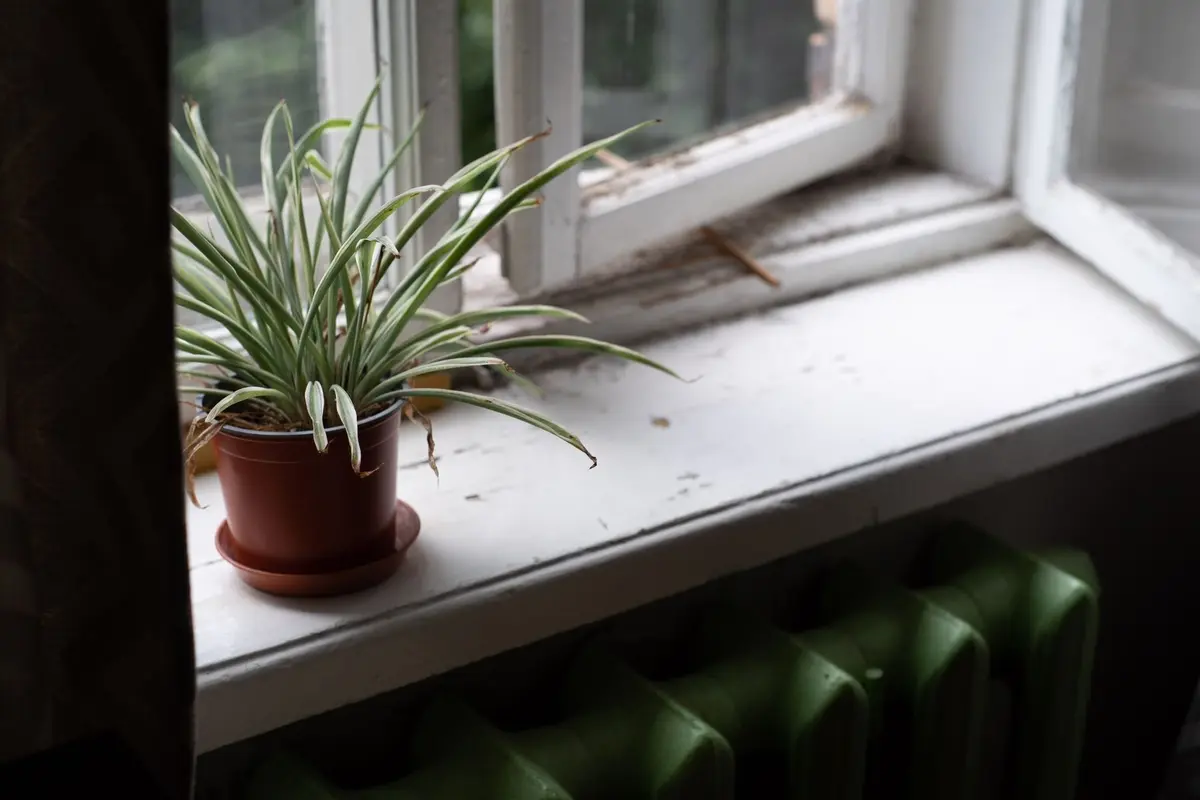
Water a spider plant thoroughly when the top 1 to 2 inches of soil feel dry, letting a little water run out of the bottom of the pot. A deep watering carries salts out of the soil instead of leaving them to build up.
There is no fixed schedule. Plant size, pot, potting mix and the room all change how fast the soil dries, so feel it before you water, and water less in fall and winter.
Thick, fleshy roots store water, so a spider plant forgives a missed watering. Soggy soil is the bigger risk, since it leads to root rot.
A spider plant is sensitive to the chlorine and fluoride in tap water, which brown the leaf tips. Rainwater or distilled water helps if your tips keep browning.
The watering schedule maker sets days to check the soil for a spider plant and your other plants.
Soil and pot
A general-purpose potting mix with good drainage works well. Adding perlite to a bagged mix helps it drain faster.
Use a pot with a drainage hole and a saucer, and empty the saucer after watering. Soil stays too wet in a pot with no hole, a full saucer or a pot that is too big.
Temperature and humidity
A spider plant likes 65 to 75°F during the day and 50 to 55°F at night. It is sensitive to cold, so move it a few feet away from cold windows and drafts in winter.
Average to medium humidity is fine. Very dry air is one of the causes of brown tips, and a humidifier or a pebble tray helps in a heated room.
Feeding
Feed a spider plant during active growth in spring and summer, following the label of a houseplant fertilizer. It needs little, and stops needing any in winter.
Too much fertilizer browns the tips and cuts down on plantlets. A white crust on the soil or the rim of the pot is a sign of salt buildup from overfeeding.
Repotting
Spider plants grow fast and fill their pots with thick, tuberous roots. Repot before the roots push the plant up out of the pot or crack it.
Young plants often need a new pot every year, and mature plants every other year. You can repot at any time, but don’t move up too soon: a slightly pot-bound plant grows and makes plantlets best.
After repotting, wait 4 to 6 months before you feed it again. The pot size calculator gives the next pot size from the one it is in now.
Spider plant babies and flowers
A healthy spider plant sends out long, wiry stems, up to 2 feet long, with small white star-shaped flowers. Small plants, the plantlets or babies, form along the same stems.
Plantlets form mostly after a stretch of short days and long, uninterrupted nights, about 3 weeks of them, so they often appear after fall. Indoors, stems can show up at any time of year.
If your plant makes no plantlets, look at the fertilizer and the pot. Too much feeding and a pot that is too big both hold them back.
How to propagate a spider plant
Spider plants are among the easiest houseplants to propagate. You can root the plantlets or divide a large plant.
Rooting a plantlet while it is attached
- Set a small pot of moist potting mix next to the mother plant.
- Rest a plantlet on the mix and pin it down with a bent paper clip, leaving it attached to its stem.
- Keep the mix lightly moist. Roots form in about 2 to 3 weeks.
- Once the plantlet is rooted, cut the stem that joins it to the mother plant.
Rooting a detached plantlet
A plantlet that already has roots can be cut off and potted straight into moist mix. One without roots can root in moist potting mix or in a glass of water, then go into a small pot once the roots grow.
Dividing a large plant
Slide a crowded plant out of its pot and loosen the root ball into pieces, each with leaves and roots. Replant them in fresh mix, water them, and give them bright, indirect light.
Common spider plant problems
Brown leaf tips
Brown tips are the most common spider plant complaint. The causes are dry air, soil that dries out too far, too much fertilizer or salts, and the chlorine or fluoride in tap water.
Snip off brown tips with clean scissors if you like the look better, but they come back unless you fix the cause. Start with the water you use and how often you feed.
Root rot
Waterlogged soil that drains poorly rots the roots. Let the soil dry a little between waterings, and use a pot with a drainage hole.
Scorched leaves
Bleached or scorched patches come from direct sun. Move the plant back from the window.
Pests
Diseases are rare on indoor spider plants. Watch for spider mites, scale, mealybugs, whiteflies and aphids, and wipe or rinse them off as soon as you see them.
Spider plant varieties
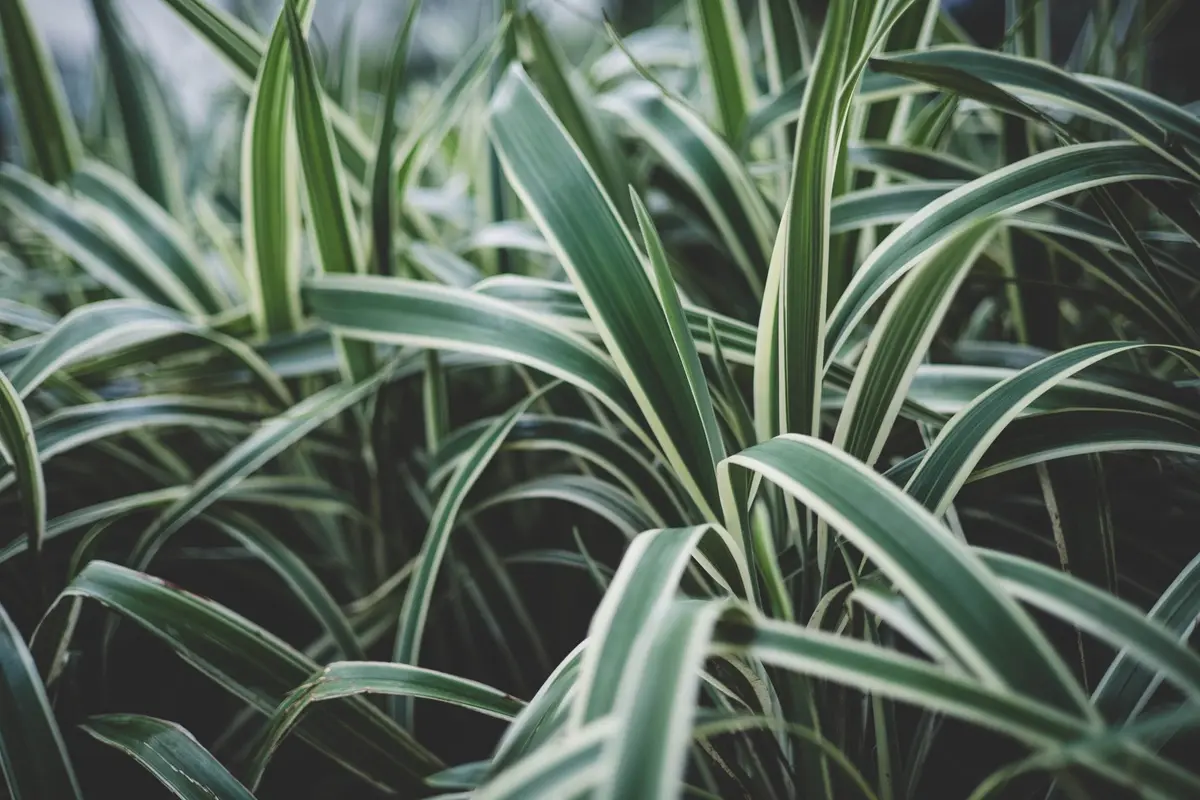
Spider plants grow 12 to 18 inches tall, and trail 2 to 3 feet from a hanging basket. Most have leaves striped with white or yellow; all-green plants are the rarest.
- ‘Vittatum’ is the most common variegated form, with a white stripe down the center of each leaf.
- ‘Variegatum’ has green leaves with white edges and makes fewer plantlets.
- ‘Bonnie’ has green leaves that curl and twist; ‘Bonnie Variegated’ adds cream stripes.
- ‘Mandaianum’ is a dwarf with leaves only 4 to 6 inches long, dark green with a yellow stripe.
Spider plants and pets
The ASPCA lists the spider plant as non-toxic to cats and dogs. That makes it one of the easier choices for a home with pets, along with the other houseplants the ASPCA lists as non-toxic to cats.
Non-toxic doesn’t mean a pet can chew it freely, since eating a lot of any plant can upset a stomach. Hang it out of reach. The pet-safe houseplants list has more plants the ASPCA lists as non-toxic to cats and dogs, and the plant finder suggests more with your pets selected.
Spider plant care checklist
- Bright, indirect light; out of the midday sun.
- Water when the top 1 to 2 inches of soil are dry; less in winter.
- A well-drained mix in a pot with a drainage hole; empty the saucer.
- 65 to 75 °F by day, away from cold windows.
- Feed lightly in spring and summer.
- Repot before the roots crack the pot.
- Root the plantlets and share them.
Print its care card to keep next to the pot.
Frequently asked questions
Why does my spider plant have brown tips?
Brown tips are the most common spider plant complaint. Dry air, soil that dries out too far, too much fertilizer and the chlorine or fluoride in tap water can all cause them. Trim the tips if you like, but fix the cause or they come back.
Why isn't my spider plant making babies?
Plantlets form after a stretch of short days and long nights, so they often appear after fall. Too much fertilizer or too big a pot can also hold them back.
Can I root spider plant babies in water?
Yes. A detached plantlet roots in water or in moist potting mix. You can also root it in soil while it is still attached to the mother plant.
Is a spider plant safe for cats and dogs?
The ASPCA lists the spider plant as non-toxic to cats and dogs. Even so, a pet that chews a lot of any plant can get an upset stomach, so keep it out of reach.
Save it for later
Pin it to a board so it's there when you need it.
Save to Pinterest(opens in a new tab)Keep reading
Care guide
Snake plant care guide for light, water and soil
How to care for a snake plant indoors: the light it likes, how often to water, the right soil and pot, repotting, propagation and the problems to watch for.
Care guide
Pothos plant care guide for long, full vines
How to care for a pothos plant indoors: light for bright leaves, watering, soil, feeding, pruning for fuller vines, rooting cuttings and fixing yellow leaves.
Try a free tool
Plant Finder
Answer four questions about light, space, pets and watering to see the houseplants that fit your spot.