Peace lily care guide for leaves, blooms and water

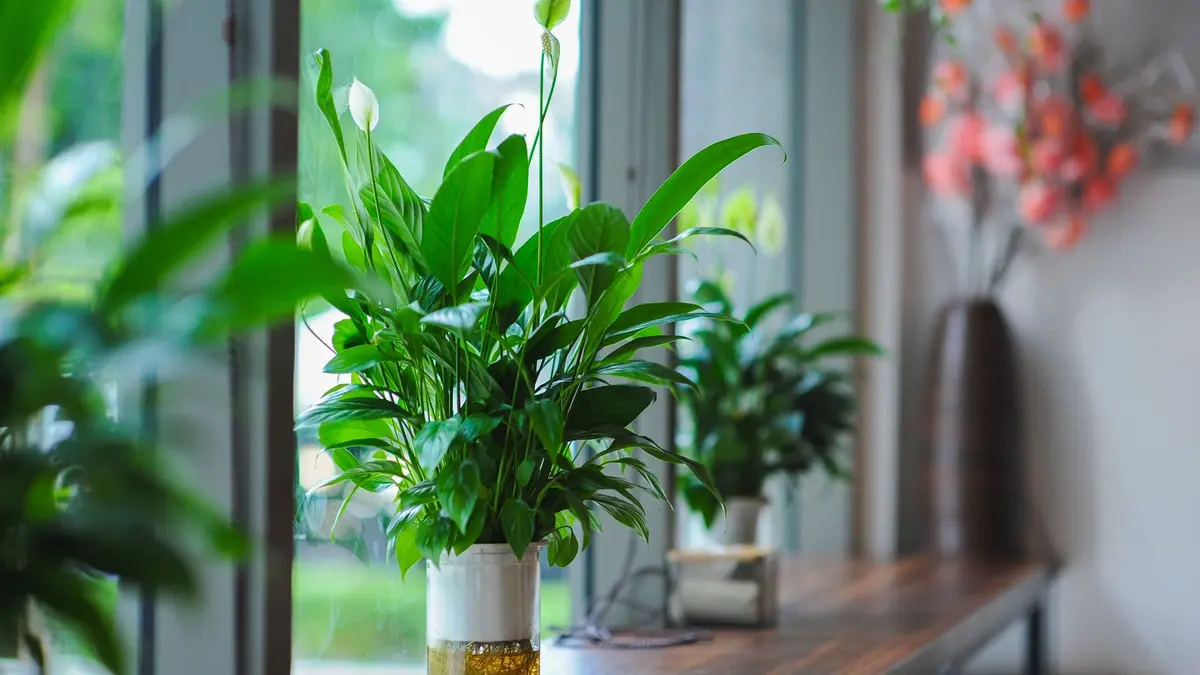
To care for a peace lily, give it bright, indirect light, keep the soil lightly moist but never soggy, and keep it in a warm room away from drafts. It forgives low light better than most flowering plants, droops to tell you it needs water, and blooms best when it gets enough light.
Water and light are where most peace lilies go wrong. Get those two right and the rest is easy.
Peace lily care at a glance
| Need | What a peace lily wants |
|---|---|
| Light | Bright, indirect or filtered light; tolerates low light; no direct sun |
| Water | Keep the soil lightly moist; let the top dry slightly; never let it sit in water |
| Soil | A well-drained potting mix rich in organic matter |
| Temperature | 68 to 85°F by day, about 10°F cooler at night |
| Humidity | Average room air works; very dry air browns the tips |
| Feeding | Light feeding in spring and summer only |
| Pets | Toxic to cats and dogs (ASPCA) |
Light
A peace lily grows best in bright, indirect or filtered light, close to a window but out of the sun’s direct rays. Direct sun scorches and burns the leaves.
It is one of the few flowering houseplants that copes with low light, so it suits a north window or a dim corner. In low light it keeps growing but flowers less, and too little light is the most common reason a peace lily doesn’t bloom.
Too much light shows too. Leaves turn pale and bleached, and the tips and edges can burn, so move a sunburned plant back from the window.
Watering
Keep the soil of a peace lily lightly moist, letting the top dry slightly between waterings. Water thoroughly, until water runs out of the drainage hole, then empty the saucer so the pot never sits in water.
A peace lily droops when it is thirsty, and it usually recovers within hours of a good drink. That makes it easy to read, but don’t let it wilt often: repeated wilting leads to yellow leaves and brown tips.
The opposite is just as harmful. Soil that stays soggy leads to root rot, which also makes the plant droop, so always feel the soil before you water a drooping plant.
Use water at room temperature. In fall and winter the plant uses less, so the soil stays wet longer between waterings.
The watering schedule maker sets days to check the soil for a peace lily and the rest of your plants.
Soil and pot
A peace lily grows in almost any well-drained potting mix. A peat-based or bark-based mix rich in organic matter holds moisture without staying soggy.
Use a pot with a drainage hole. A pot that is too big keeps the mix wet for too long, which can rot the roots.
Temperature and humidity
Peace lilies like warmth: about 68 to 85°F during the day and around 10°F cooler at night. Avoid temperatures below 60°F, where cold damage may begin.
Keep the plant away from heating and air-conditioning vents and cold drafts. Chilled leaves blacken at the tips and edges first.
Average room humidity works, but very dry air is one cause of brown leaf tips. Grouping plants together or setting the pot on a pebble tray helps in a heated home. A bathroom is often more humid than the rest of the house, and even one without a window can hold a peace lily under a grow light, as the guide to bathroom plants for no sunlight explains.
Flowers
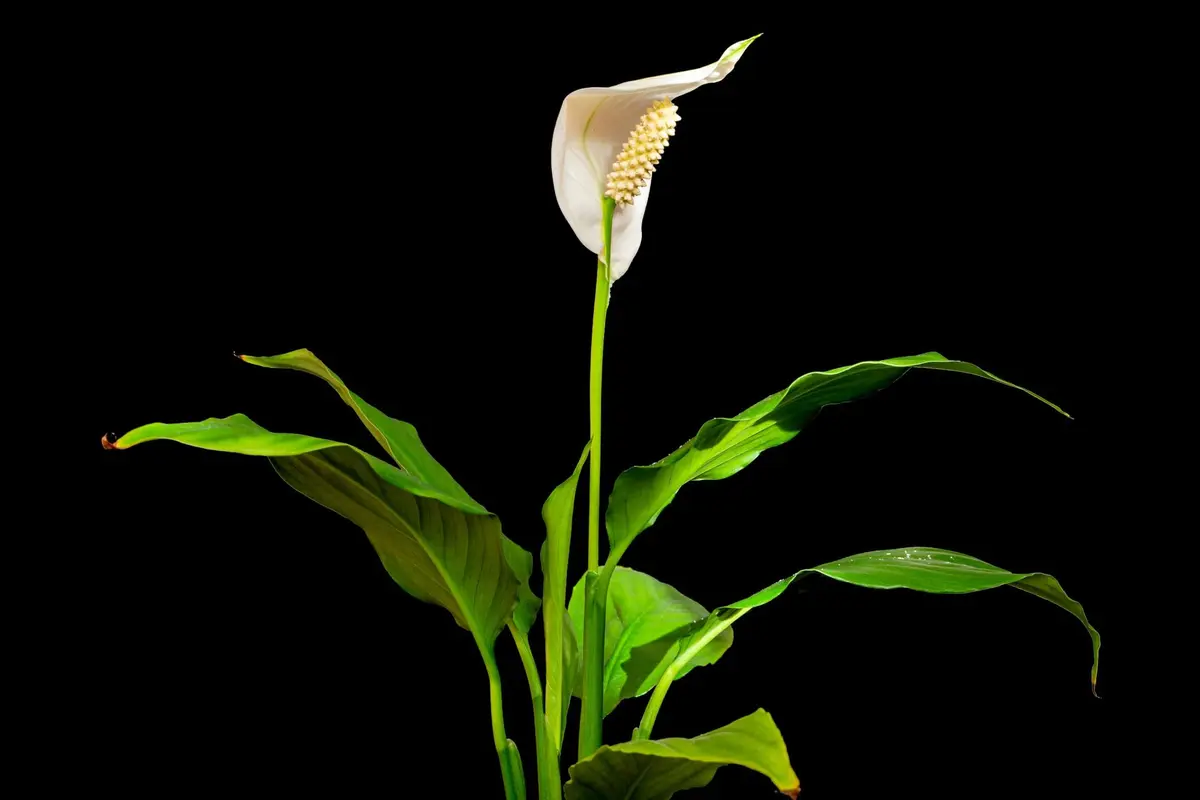
The peace lily’s flower is a white hood, the spathe, wrapped around a cream spike, the spadix. Each one fades to pale green with age and lasts a month or more.
A healthy plant in good light can bloom more than once a year, and many bloom in spring and early summer. A plant younger than a year may not flower yet.
Cut off faded flowers and dead leaves at the base as soon as you see them, so the plant stays tidy.
Feeding
A peace lily needs very little fertilizer. Feed it about every 6 to 8 weeks in spring and summer, and stop in fall and winter.
Too much fertilizer builds up salts that burn the leaf tips and roots brown. Follow the label of a houseplant fertilizer, and water thoroughly now and then to rinse salts through the pot.
Repotting
A peace lily likes to be slightly pot-bound. Repot when roots grow through the drainage hole or circle on top of the soil.
Move up only 1 to 2 inches in pot width, gently loosen the roots, and set the plant in fresh mix. It recovers fastest when it is growing, in late winter or spring.
The pot size calculator works out the next pot from the plant’s current one.
How to divide a peace lily
Division is the easiest way to get more peace lilies, best done in early spring or whenever a plant is crowded.
- Slide the plant out of its pot.
- Lay the root ball on its side and gently pull it apart into clumps by hand. Use a clean knife only where the roots won’t separate.
- Make sure each piece has healthy leaves and roots.
- Pot each piece in fresh mix in a pot that fits its roots, and water to settle the soil.
- Wait a few weeks before feeding the new plants.
Common peace lily problems
Drooping
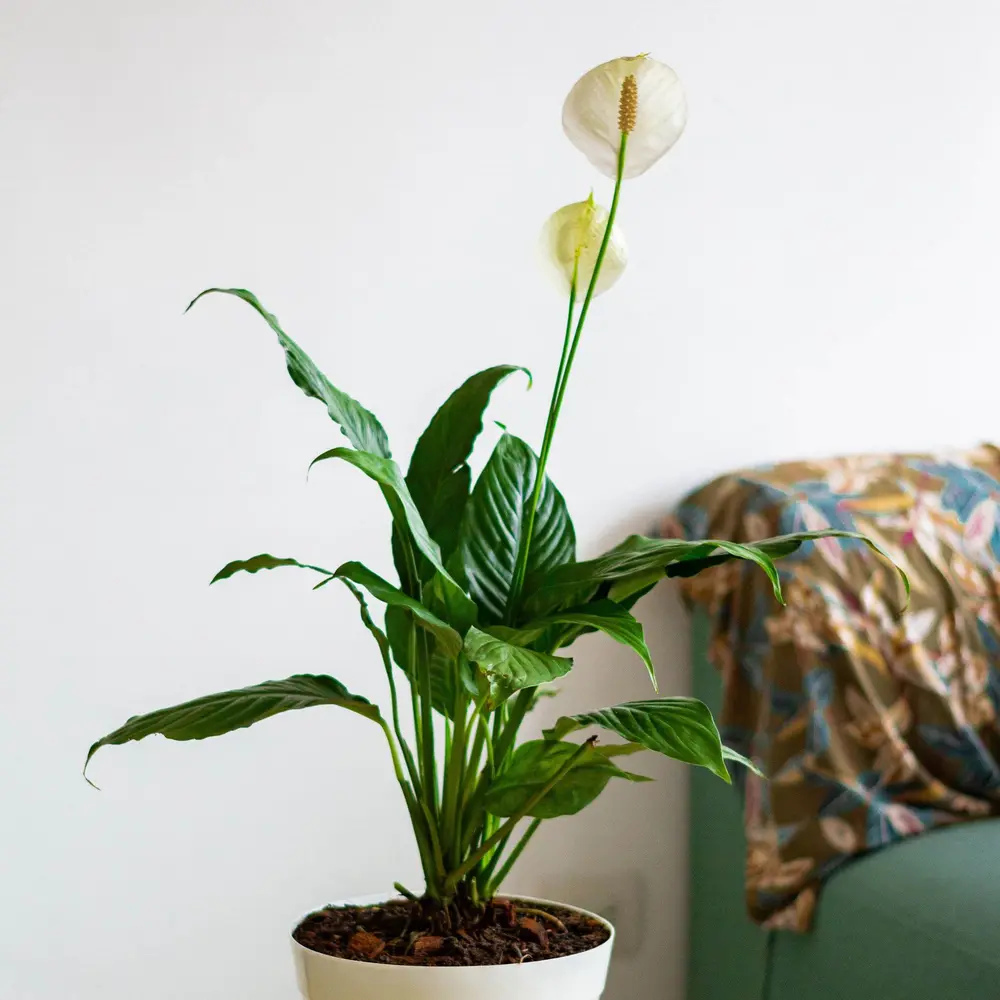
Most drooping is thirst, fixed within hours by watering. If the soil is wet, the cause is root trouble from too much water, so let it dry. A plant may also droop late on a hot, bright day even in moist soil, and it recovers by evening.
Brown tips and edges
Brown tips come from direct sun, soil that dries out too much, frequent wilting, dry air, too much fertilizer or chilling. Fix the watering first, then look at the spot.
Yellow leaves
Yellow leaves follow soil that dried out too far, cold soil in winter, or a lack of magnesium, which shows as yellow between green veins.
Pests
Few pests bother a peace lily. Mealybugs are the most common indoors; also watch for scale, spider mites and fungus gnats. Wiping the leaves with a damp cloth removes dust and some of the pests that gather underneath.
Peace lily varieties
Peace lilies range from compact plants to floor plants. Most grow 1 to 4 feet tall and wide indoors.
- ‘Wallisii’ is small and compact, about 12 to 15 inches tall.
- ‘Little Angel’ is a dwarf of about the same size.
- ‘Domino’ has leaves streaked with white.
- ‘Sensation’ is the largest, up to 6 feet tall and wide, big enough to stand with other tall indoor plants.
Peace lilies and pets
The ASPCA lists the peace lily as toxic to cats and dogs. It holds calcium oxalate crystals that cause intense burning and irritation of the mouth, drooling, vomiting and trouble swallowing.
Keep it out of reach, and call your vet or the ASPCA Animal Poison Control Center if a pet chews it. For plants the ASPCA lists as non-toxic, try the plant finder with your pets selected.
Peace lily care checklist
- Bright, indirect light for blooms; low light is fine for leaves.
- Water when the top of the soil dries slightly; never leave it in a full saucer.
- A well-drained mix in a pot with a drainage hole.
- Warm days, slightly cooler nights, no drafts.
- Feed lightly in spring and summer only.
- Repot when roots fill the pot, one small step up.
- Keep it away from pets.
Keep these notes with the plant on its card from the plant care cards.
Frequently asked questions
Why is my peace lily drooping?
Most often it is thirsty, and it perks up within hours of a good watering. If the soil is already wet, the roots may be sitting in too much water instead, so let it dry and check the roots.
Why isn't my peace lily flowering?
The two usual reasons are too little light and a plant younger than a year. Move it to bright, indirect light and give it time.
Why are the leaf tips turning brown?
Brown tips come from the soil drying out too much, direct sun, dry air, too much fertilizer or cold drafts. Look at watering first, then the spot.
Is a peace lily safe for cats and dogs?
No. The ASPCA lists the peace lily as toxic to cats and dogs. Keep it out of reach, and call your vet if a pet chews it.
Save it for later
Pin it to a board so it's there when you need it.
Save to Pinterest(opens in a new tab)Keep reading
Care guide
Snake plant care guide for light, water and soil
How to care for a snake plant indoors: the light it likes, how often to water, the right soil and pot, repotting, propagation and the problems to watch for.
Try a free tool
Watering Schedule Maker
Pick your plants and the days you check the soil to get a weekly schedule with the right test for each plant.