10 tall indoor plants that add height to a room

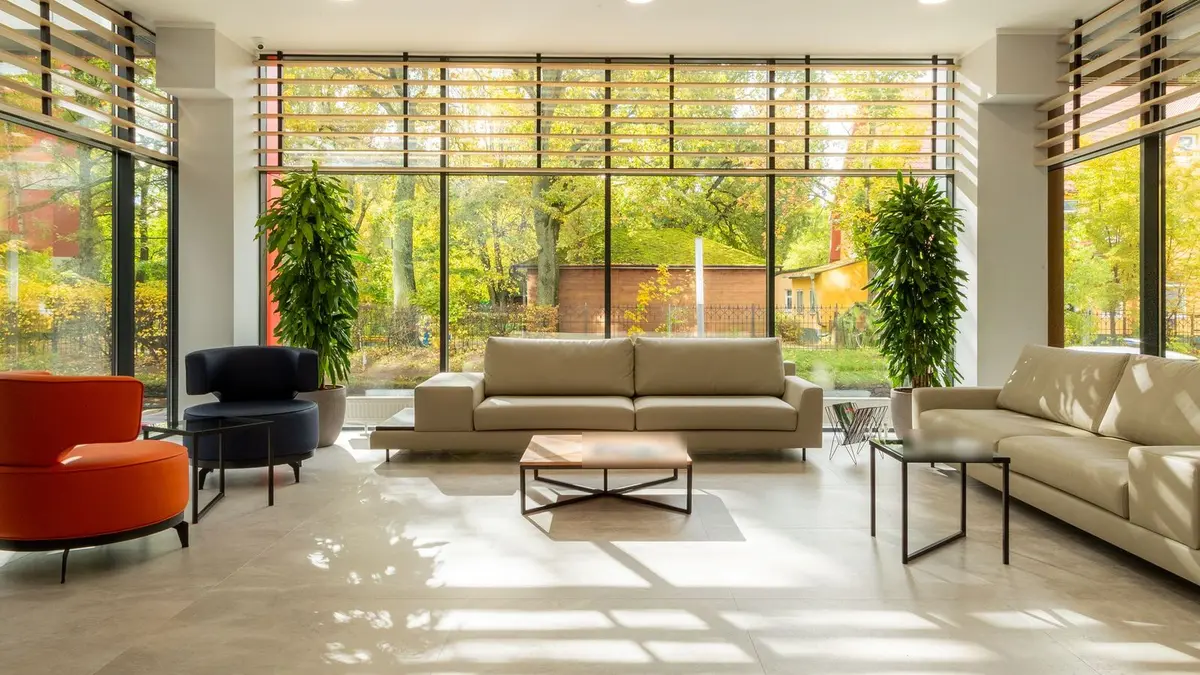
These tall indoor plants grow into the empty space between the floor and the ceiling: a large peace lily, parlor palm, corn plant, Madagascar dragon tree, rubber plant, monstera, money tree, areca palm, umbrella tree and ponytail palm. Each one grows several feet tall in a pot and brings the green of a room up to eye level and above.
The list runs from the plants that take the least light to the ones that need the most. The first four handle a dim corner, the middle of the list wants a bright spot near an east or west window, and the last two want your sunniest window.
Where a tall plant can stand by its light
Choose a tall plant by the light at the spot where it will stand, not by the room. Windows facing south give the brightest light for the longest part of the day, east and west windows suit plants in the medium light range, and a north window suits only plants that need little light.
Distance matters as much as direction. A spot within 4 feet of a large south, east or west window counts as high light, and even plants that tolerate low light usually get too little more than 10 feet from an average window. The low light plants guide explains how to judge a dim spot.
Then measure the spot. Note the height from the floor to the ceiling or the shelf above, and leave room for the plant to grow taller and wider than it is today, pot included.
1. Large peace lily
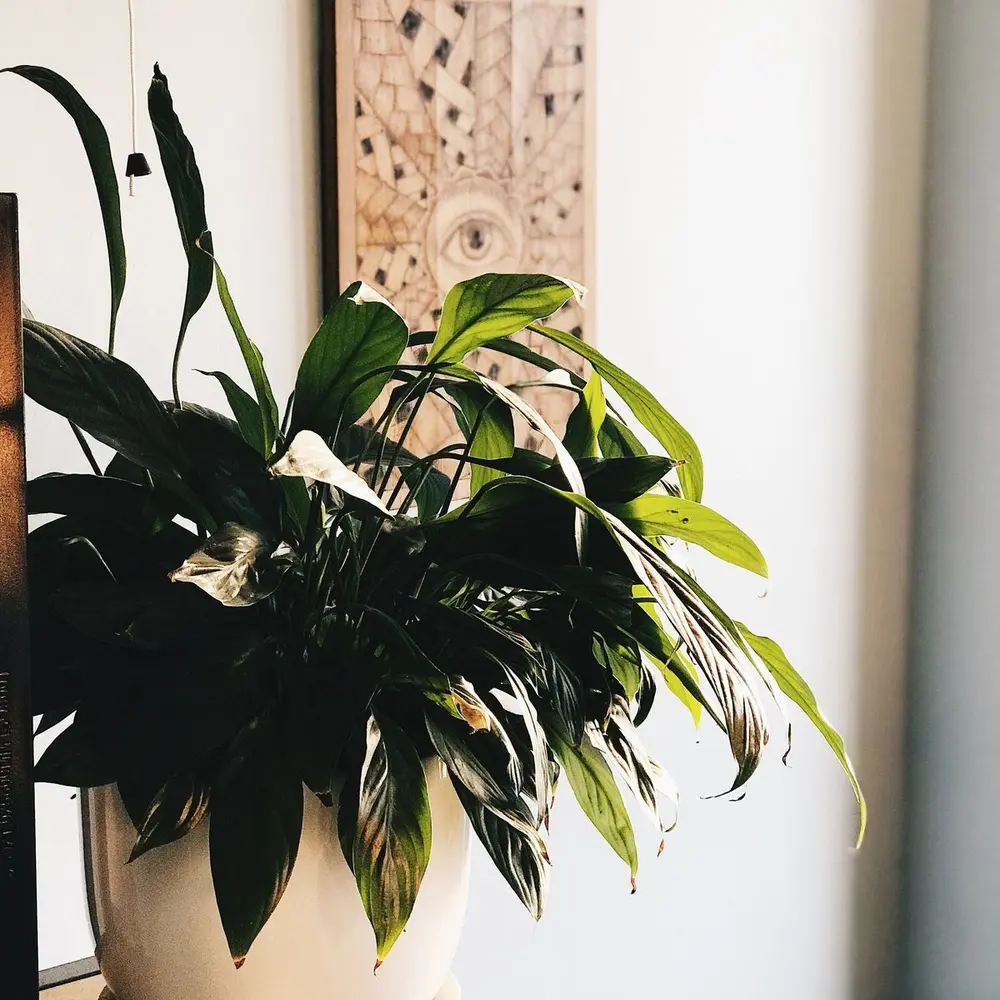
Most peace lilies stay small, 1 to 4 feet tall and wide. ‘Sensation’ is the exception: the largest peace lily grown for sale, it matures at about 6 feet tall and just as wide. That makes it a tall plant that blooms, with broad, dark leaves that rise straight from the soil.
It tolerates low light but grows best in bright, indirect light. Keep it out of direct sun, which scorches the leaves. A spot a few steps back from an east window, or beside a north window, suits it well.
Keep the soil moist but not soggy, and let it dry out slightly between waterings. Its leaves wilt when the soil gets dry and revive after a good watering, but try not to let it reach that point often.
Because it grows as wide as it is tall, give it floor space of its own in a corner rather than squeezing it beside a chair. The peace lily care guide covers its blooms and brown tips.
The ASPCA lists the peace lily as toxic to cats and dogs.
2. Parlor palm
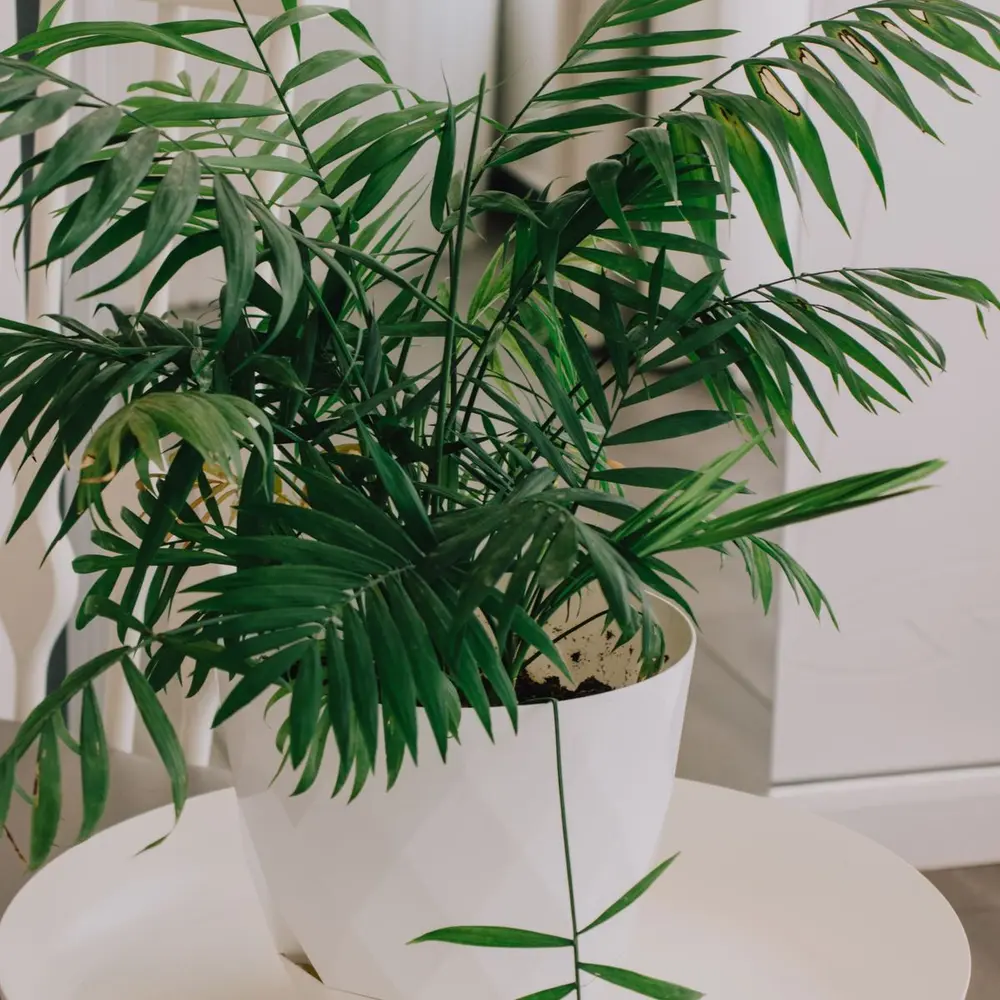
The parlor palm is a small, single-stemmed palm with fine, feathery leaves that thrives in dry air and dim light where many other plants struggle. Indoors its stems grow up to 5 feet, though most stay shorter. Growers often pot several plants together, which makes a fuller clump.
It needs bright, indirect light but tolerates low light well. A spot near a north or east window is ideal, which makes it one of the best tall plants for a bedroom or a hallway that never gets sun.
Keep the soil lightly moist and let the surface dry slightly between waterings. Never let it dry out completely or stand in water, since overwatering rots it, and water less in winter.
Like every palm, it grows from a single point at the top, so it can’t be cut back to make it shorter. Choose a plant that already fits the spot, or one that will grow into it slowly.
The ASPCA lists the parlor palm as non-toxic to cats and dogs.
3. Corn plant
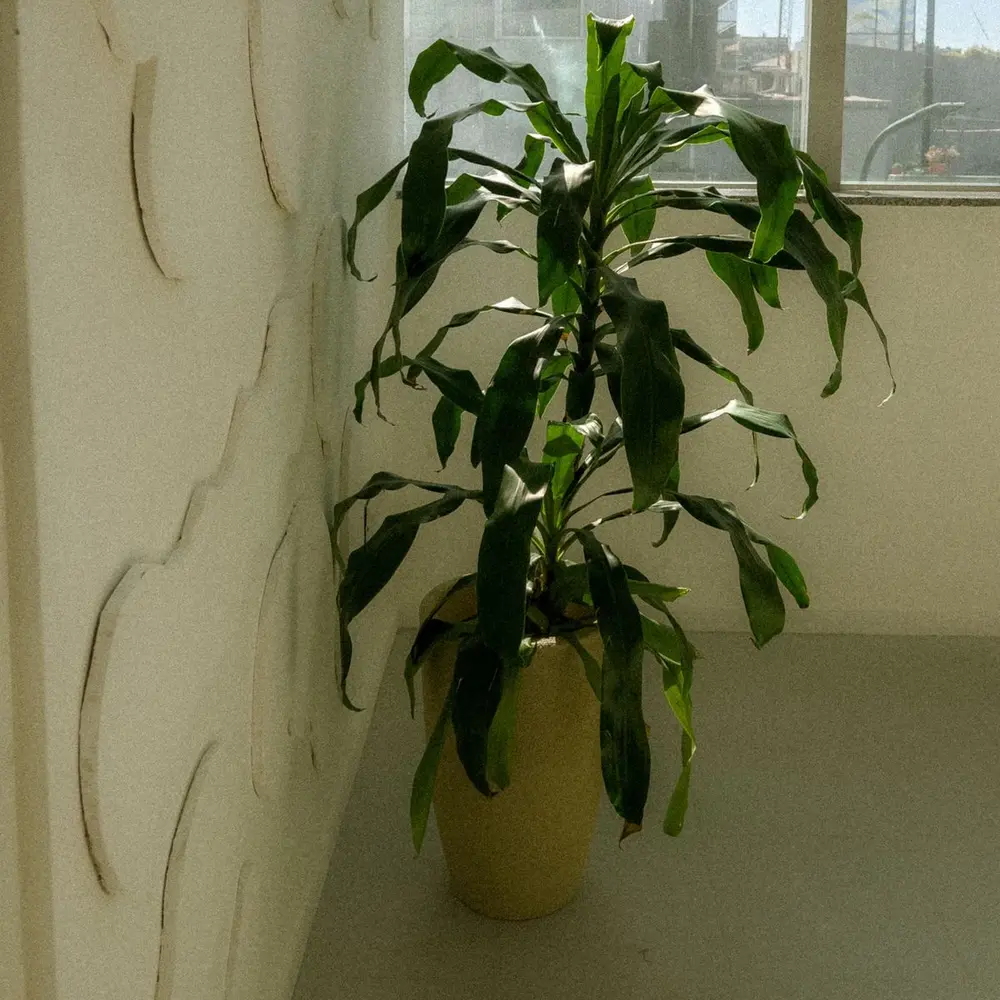
The corn plant is a dracaena named for its tall, unbranched stem topped with broad, strap-like leaves, which looks like a stalk of corn. As a container plant it usually grows 4 to 6 feet tall, and it stays narrow enough for the gap beside a sofa or a bookcase.
Keep it in bright to moderate, filtered light. It tolerates some low light, but in too little light the new leaves grow narrower, and direct sun burns them. The cultivar ‘Janet Craig’ has solid green leaves that are shorter and borne on more compact stems.
Wait until the soil surface is dry to the touch, then water thoroughly, and cut back in winter. Leaf tips turn brown when the air is too dry or when fluoride and salts build up in the soil, so a humidifier in winter and water without fluoride both help.
If the stems grow too long and bare, cut them at the height you want. New leaves soon sprout below the cut.
The ASPCA lists the corn plant (Dracaena fragrans) as toxic to cats and dogs, and ‘Janet Craig’ is a form of the same species.
4. Madagascar dragon tree
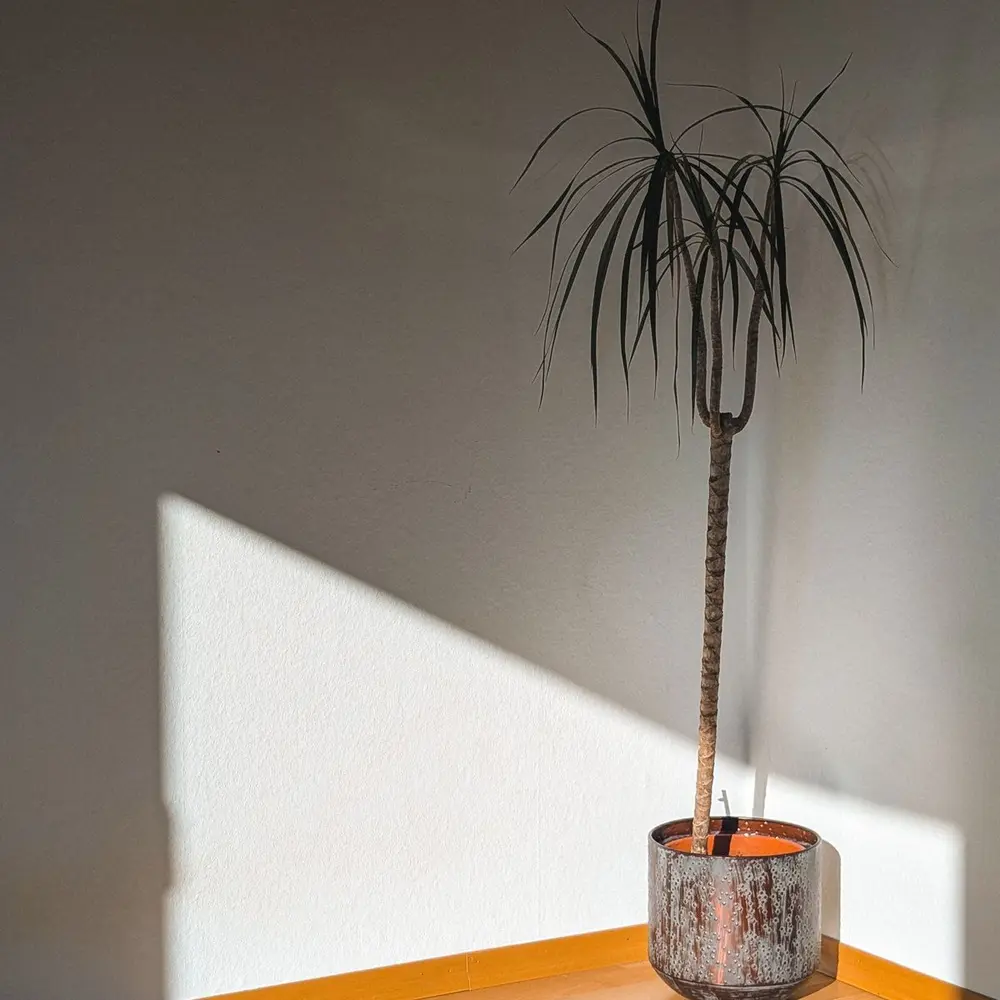
The Madagascar dragon tree grows slim, woody canes topped with tufts of narrow leaves, so it adds height without taking up much floor. As a houseplant it grows to about 6 feet, and you can prune it shorter. A pruned stem usually branches, which makes the plant fuller.
Bright, indirect light is ideal, but it tolerates low light, which is why it is so common in homes and offices. Moved to a brighter spot, a dracaena grows faster and its new leaves come in thicker and stronger.
Let the potting mix dry between waterings, but not severely. Like most dracaenas it is sensitive to fluoride, which discolors the leaves, so water it with distilled or non-fluorinated water.
Its stems can be trained into braids or spirals while they are young, and its fine leaves cast striking shadows on a plain wall. It is one of the easiest tall plants to fit into a narrow spot.
The ASPCA lists the Madagascar dragon tree (Dracaena marginata) as toxic to cats and dogs.
5. Rubber plant
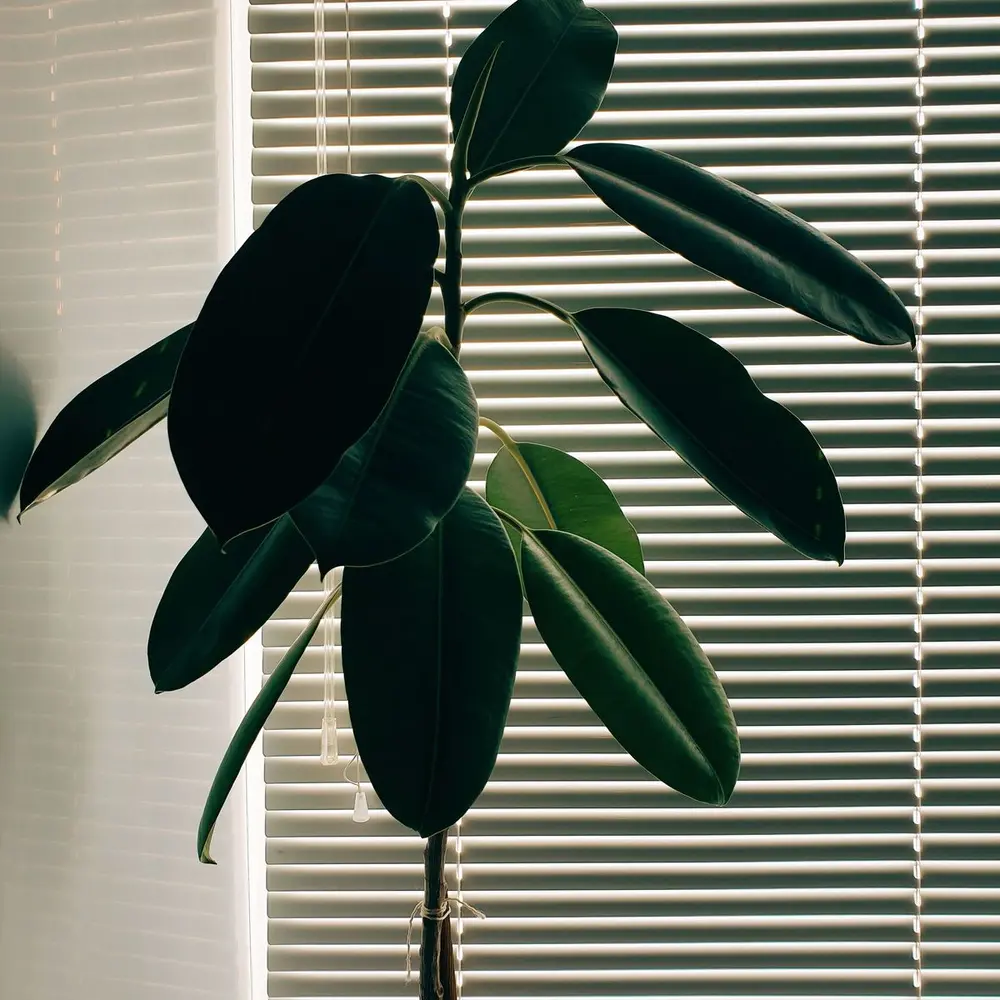
The rubber plant fills a tall, empty spot with bold, glossy leaves on a woody stem. Indoors it can easily grow 6 to 10 feet tall if it has the space.
It prefers bright light but adapts to low light, and it grows best with morning light from an east window. In too little light, dry air or a cold draft it drops leaves, so keep it away from a drafty door in winter.
Water thoroughly, then let the soil dry slightly to the touch before you water again. Empty the saucer after watering, because roots that sit wet rot.
Indoors it tends to grow tall and lanky, with one bare stem. Support it with a stake, or prune it in spring to keep it shorter and make it branch. A living room corner by a bright window shows off its height.
The ASPCA lists rubber plants under its Ficus entry as toxic to cats and dogs.
6. Monstera
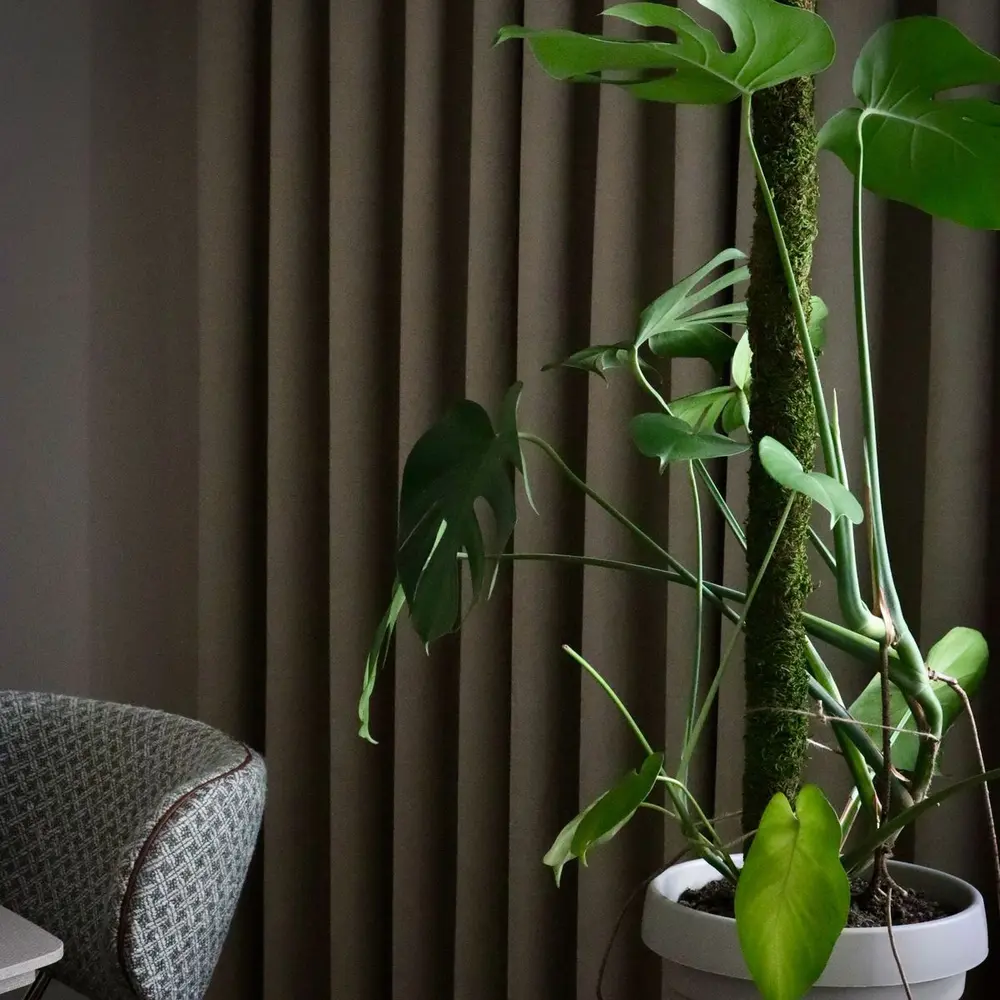
A monstera is a climbing vine, and how tall it grows depends on what you give it to climb. Grown on a pole or trellis, it usually reaches 6 to 8 feet indoors. Without a support, its stems tend to sprawl sideways instead of rising, and the plant takes over the floor.
Push a sturdy moss pole into the pot when you repot it, and tie the stems to it loosely as they grow. A sturdy support keeps the heavy stems from breaking, and the aerial roots grip the pole over time.
Give it bright indoor light with no strong direct sun. The leaves only develop their splits and holes in good light, so a monstera in a dim corner grows small, plain leaves.
Water thoroughly when the top 1 to 2 inches of soil are dry, and water less from fall to late winter. The monstera care guide covers poles, pruning and propagating it.
The ASPCA lists the monstera, under cutleaf philodendron, as toxic to cats and dogs.
7. Money tree
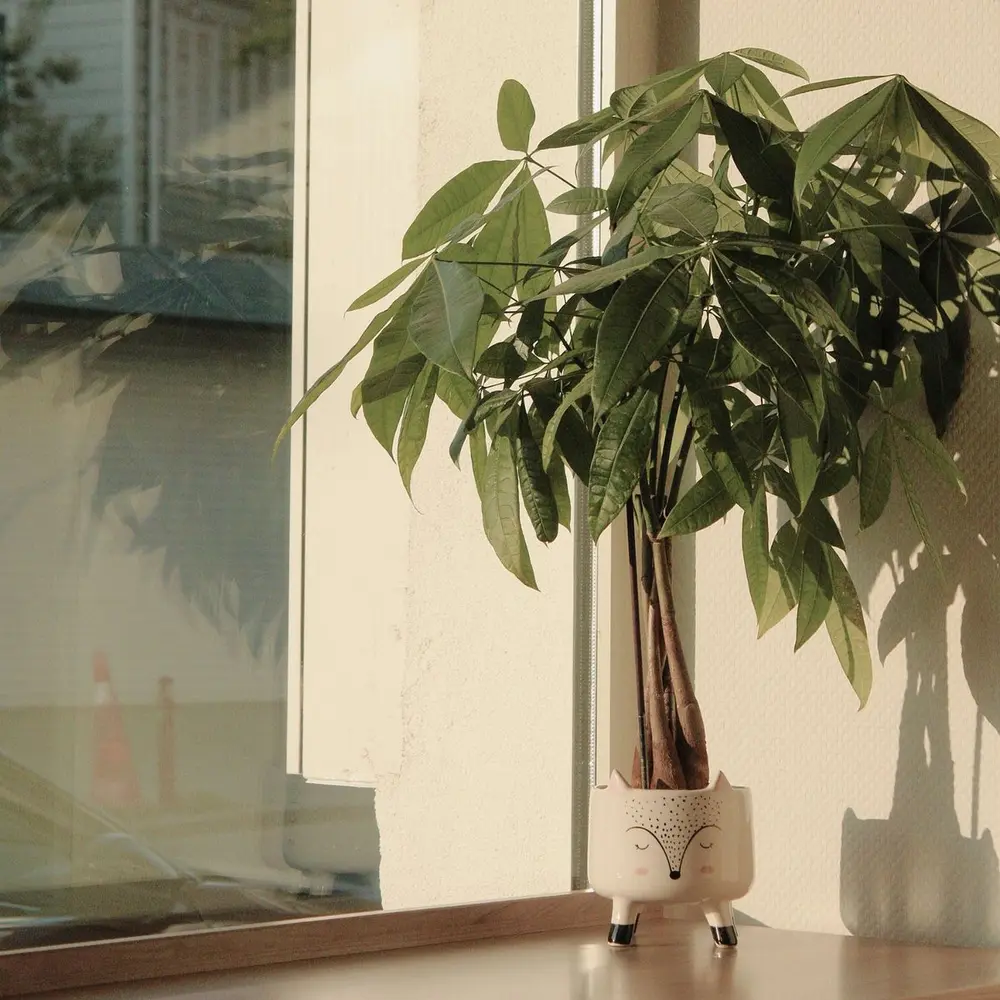
The money tree, Pachira aquatica, has shiny leaves divided into leaflets like an open hand, on slender trunks that are often braided. In the wild it becomes a large tree, but as a houseplant it typically grows no more than 6 to 8 feet tall.
It prefers indirect sunlight or a mix of sun and shade. Direct sun scorches the leaves, so stand it beside a bright window rather than right in front of it.
Plant it in a moist, well-drained potting mix in a pot with a drainage hole. It doesn’t tolerate standing water, which causes root rot, but it drops leaves when the soil gets too dry, so check the soil often. It likes humid air, and yellow leaves can be a sign that the air is too dry.
A braided money tree won’t flower indoors. Grow it for its leaves and its trunks.
The ASPCA lists the money tree (Pachira aquatica) as non-toxic to cats and dogs.
8. Areca palm
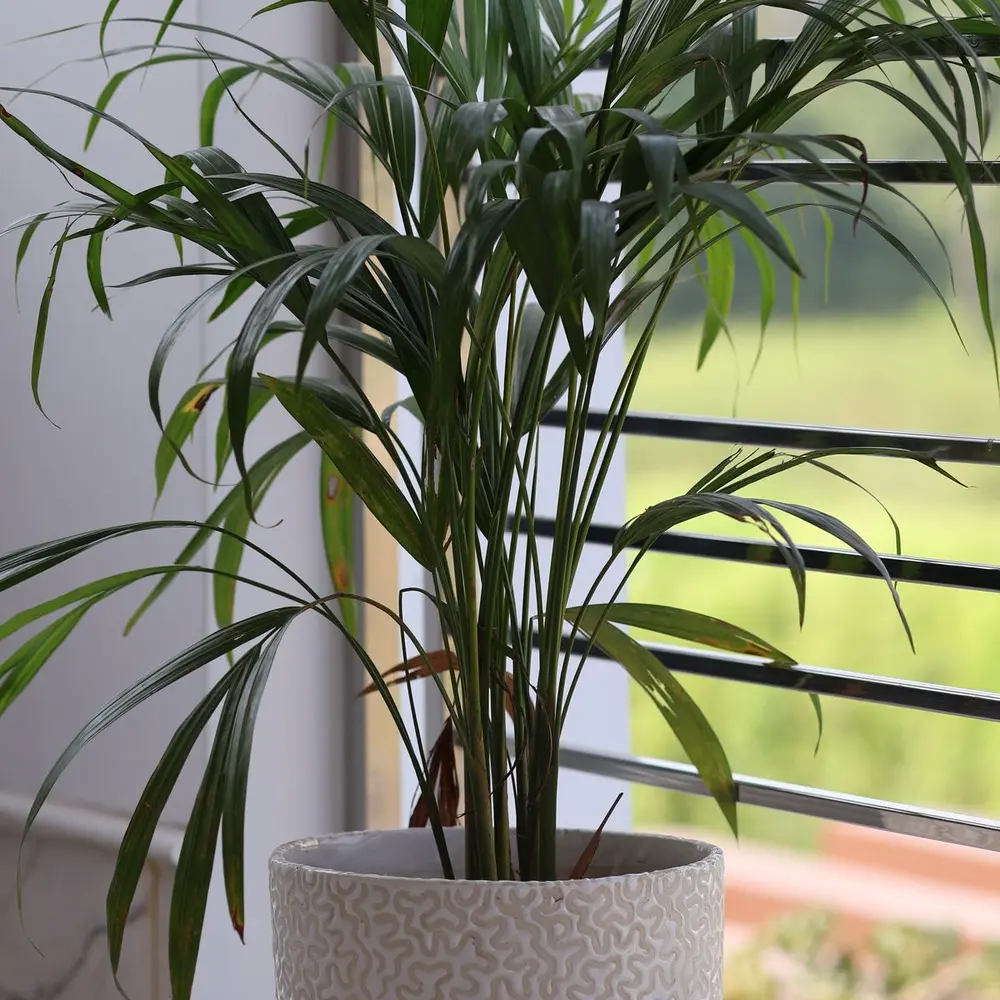
The areca palm forms a clump of cane-like stems with arching, feathery leaves, so it fills both height and width. It grows 6 to 7 feet tall indoors and adds 6 to 10 inches a year, so a small plant often outgrows its spot.
Areca palms do best in bright, indirect light in a warm room with high humidity. A spot near a south or east window with filtered sunlight suits it, and a humidifier helps in winter, when frond tips brown in dry air.
Keep the soil moist but not soggy while it grows, and water when the top of the potting mix is dry. Never let it dry out completely or sit in water.
Like the parlor palm, it can’t be pruned to reduce its height. If it is already close to the ceiling, buy a smaller plant instead of trying to cut it down. Palms like their roots a little crowded, so move it to a bigger pot only when the roots fill the old one.
The ASPCA lists the areca palm as non-toxic to cats and dogs.
9. Umbrella tree
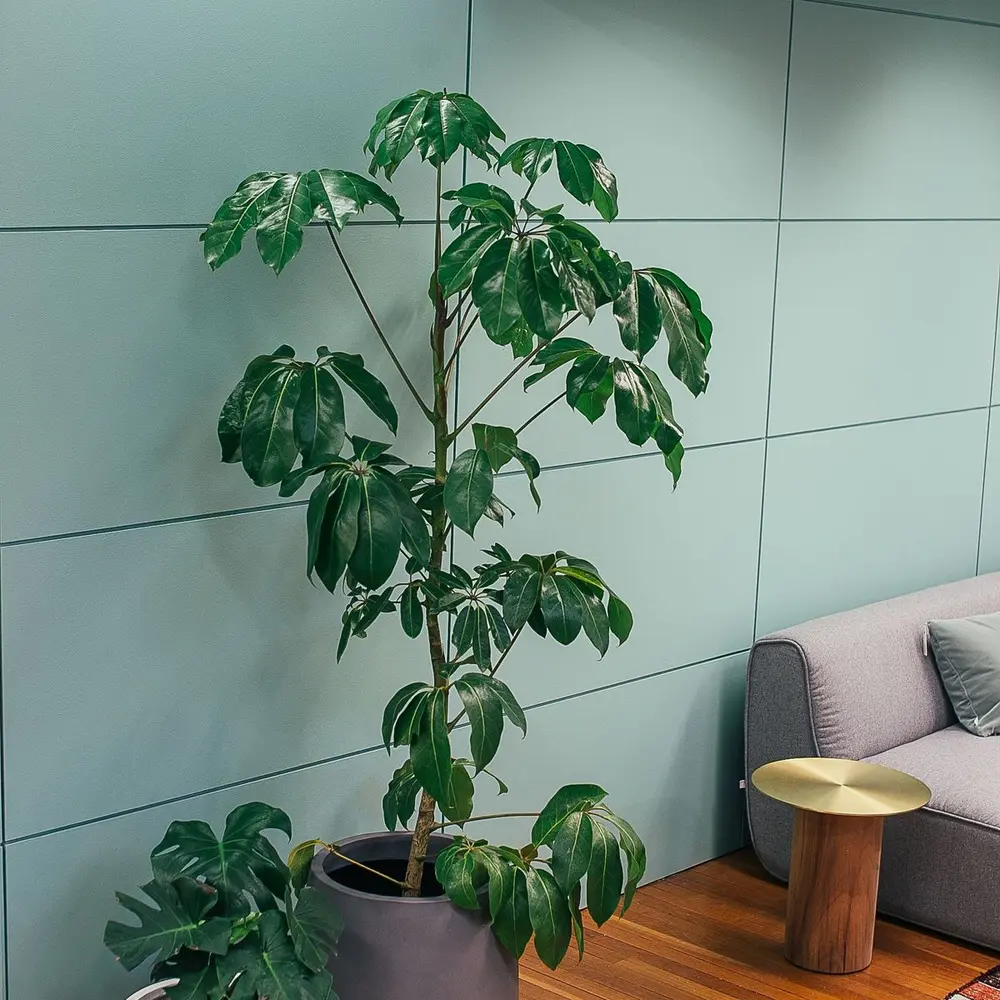
The umbrella tree, Schefflera actinophylla, grows upright on a thin trunk, with glossy leaflets arranged in a circle like the spokes of an umbrella. Indoors it usually grows 4 to 6 feet tall and nearly as wide, so give it an open corner.
It prefers medium to bright light, ideally a bright spot protected from hot afternoon sun. Low light makes the leaves yellow and the stems weak and spindly, so this is not a plant for a dark corner.
Water thoroughly, then let the top of the soil dry before you water again, and never let it sit in a saucer of water. Too much water, dry air or a chill can all make it drop leaves.
To keep it shorter, prune just above a leaf. Pruning this way holds an umbrella tree at a lower height and keeps it in scale with the room.
The ASPCA lists the umbrella tree (Schefflera) as toxic to cats and dogs.
10. Ponytail palm
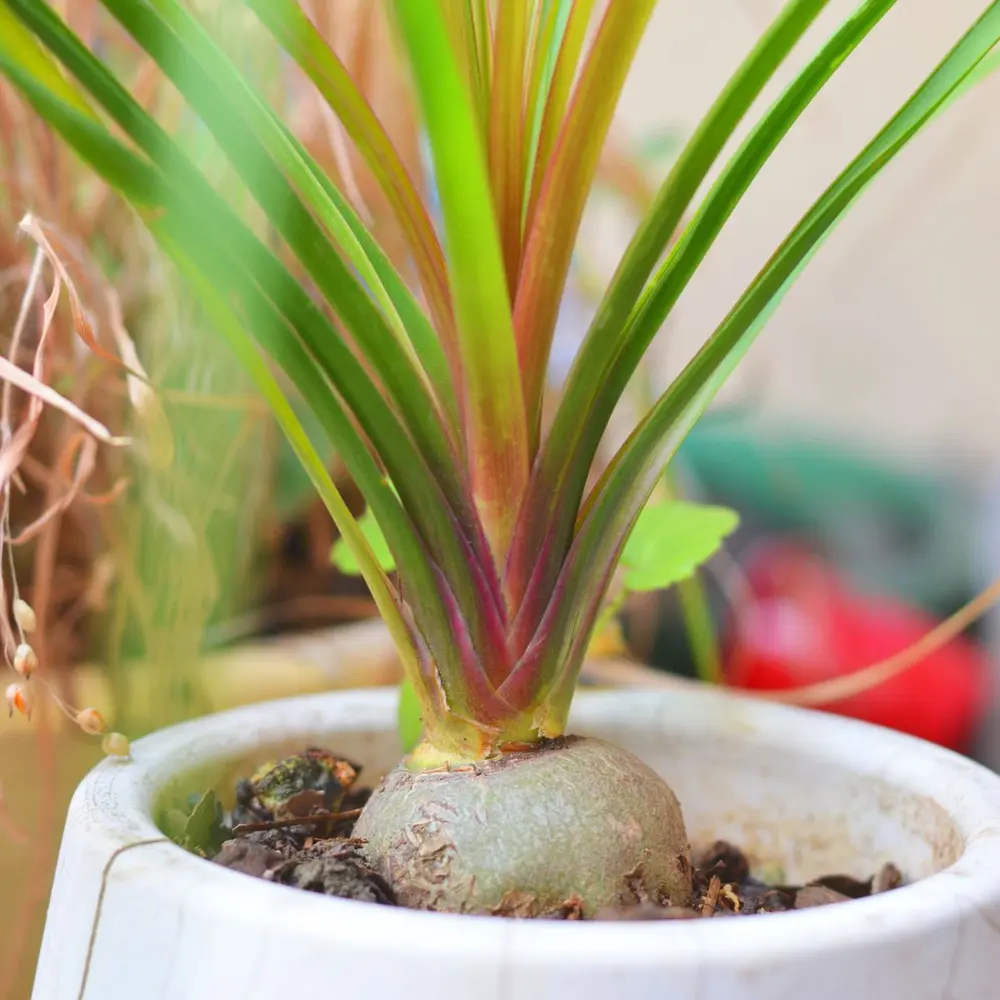
The ponytail palm isn’t a true palm. It stores water in a thick, swollen base and grows a fountain of narrow, curling leaves, so it looks like a plume of water rising from the pot. It is slow growing, but in a pot it will eventually reach 6 to 8 feet tall.
It needs a sunny window. It likes warm, sunny and dry conditions and does well even in the dry air of a heated home in winter, where many houseplants suffer.
In summer, water deeply but let the soil dry out between waterings, and water much less in winter. Plant it in a fast-draining mix like the ones for cactus and succulents, since soggy soil can lead to stem rot.
This is the tall plant to choose if you forget to water. Its swollen base stores water and carries it through dry spells, and its slow growth keeps it in scale with a room for a long time. It is one of the low maintenance indoor plants that suit a busy week.
The ASPCA lists the ponytail palm as non-toxic to cats and dogs.
How to keep a tall plant upright and healthy
A tall plant needs the same care as a small one, plus a few habits that keep it straight, steady and in proportion to the room.
- Turn it every week. A tall plant leans toward the window as it grows. Turning the pot a little once a week keeps it from growing one-sided.
- Use a heavy, wide pot. Pick a broad, wide-based pot for a tall plant so it stays stable and is less likely to tip. A heavy pot, or a decorative pot with the grow pot set inside it, steadies a plant that is top-heavy.
- Stake it early. Give a lanky rubber plant a stake and a monstera a moss pole while the plant is still young and easy to handle, and tie the stems loosely with soft ties. Check the ties as the stems thicken.
- Keep the drainage. Every pot needs a drainage hole, and a tall plant in a decorative pot still needs its saucer emptied. Water left standing beneath a pot rots the roots.
- Prune for height. Cut a corn plant, dragon tree, rubber plant or umbrella tree back to the height you want, and new leaves grow below the cut. Never cut the top off a palm.
- Dust the leaves. Large leaves collect dust, which dulls them. Wipe both sides with a soft, damp cloth.
The new plant checklist walks you through the first weeks after you bring a big plant home.
Repotting a big plant
Repot only in spring or summer, while the plant is growing, and only when it needs it. Roots in a solid mass around the root ball, roots growing out of the drainage hole, or a plant that wilts soon after watering all mean it’s time.
Move it to a pot 1 to 2 inches wider than the old one, and no bigger. The pot size calculator gives you the next pot size from the current one.
When a plant gets too big to lift out of its pot, topdress it instead. Remove the top 2 to 3 inches of potting mix and replace it with fresh mix every other year or so.
Repotting a tall plant is a two-person job. Lay the pot on its side, slide the plant out by the base of the stems rather than pulling on the top, and set it in the new pot at the same depth as before. The step-by-step repotting guide covers loosening the roots and the first weeks after.
Tall indoor plants at a glance
| Plant | Indoor height | Light | Water when | Cats and dogs (ASPCA) |
|---|---|---|---|---|
| Peace lily ‘Sensation’ | 6 feet | Low to bright, indirect | The soil is slightly dry | Toxic |
| Parlor palm | Up to 5 feet | Low to bright, indirect | The surface is slightly dry | Non-toxic |
| Corn plant | 4 to 6 feet | Low to bright, filtered | The surface is dry to the touch | Toxic |
| Madagascar dragon tree | 6 feet | Low to bright, indirect | The mix has dried, but not severely | Toxic |
| Rubber plant | 6 to 10 feet | Low to bright, morning sun | The soil is slightly dry to the touch | Toxic (Ficus) |
| Monstera | 6 to 8 feet | Bright, no strong direct sun | The top of the soil is dry | Toxic |
| Money tree | 6 to 8 feet | Indirect, or some sun and shade | Keep moist, never standing in water | Non-toxic |
| Areca palm | 6 to 7 feet | Bright, indirect | The top of the mix is dry | Non-toxic |
| Umbrella tree | 4 to 6 feet | Medium to bright, no afternoon sun | The top of the soil is dry | Toxic |
| Ponytail palm | 6 to 8 feet over time | Sunny window | The soil has dried out | Non-toxic |
Not sure which one fits your spot? The plant finder matches houseplants to your light, your space and your pets.
Frequently asked questions
What is the best tall indoor plant for low light?
Of the plants on this list, the parlor palm, the corn plant and the large peace lily cope best with low light. The Madagascar dragon tree and the rubber plant tolerate it too, but they grow faster in brighter light. None of them grows well in a room with no window at all.
Which tall indoor plants are safe for cats and dogs?
Of the plants on this list, the ASPCA lists the parlor palm, the areca palm, the money tree and the ponytail palm as non-toxic to cats and dogs. The other six are on its list as toxic, so keep them out of reach of pets that chew leaves.
Which tall indoor plant is the easiest to care for?
The ponytail palm and the Madagascar dragon tree are the most forgiving, because both like the soil to dry out between waterings. The ponytail palm needs a sunny window, while the dragon tree takes bright, indirect light and tolerates less.
How do I keep a tall plant from leaning?
Turn the pot a little every week so each side faces the window in turn, and give a top-heavy plant a stake or a moss pole. A plant that leans hard toward the glass usually needs a brighter spot.
Can I make a tall plant shorter?
Most of them, yes. A corn plant, dragon tree, rubber plant or umbrella tree can be cut back to the height you want, and new leaves grow below the cut. Palms are the exception, because they grow from a single point at the top and can't be pruned shorter.
Save it for later
Pin it to a board so it's there when you need it.
Save to Pinterest(opens in a new tab)Keep reading
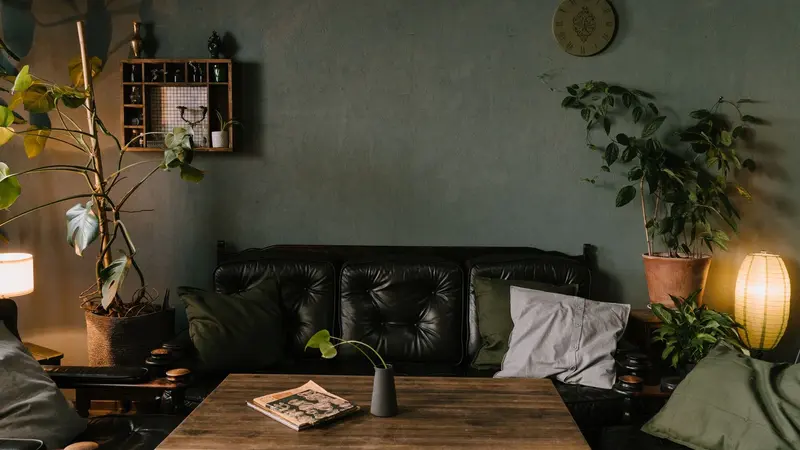
Low lightPlant list
15 low light plants that grow away from the window
Houseplants for a north window, a dim hallway or a corner across the room: what low light means, where each plant fits and how to water it with less light.
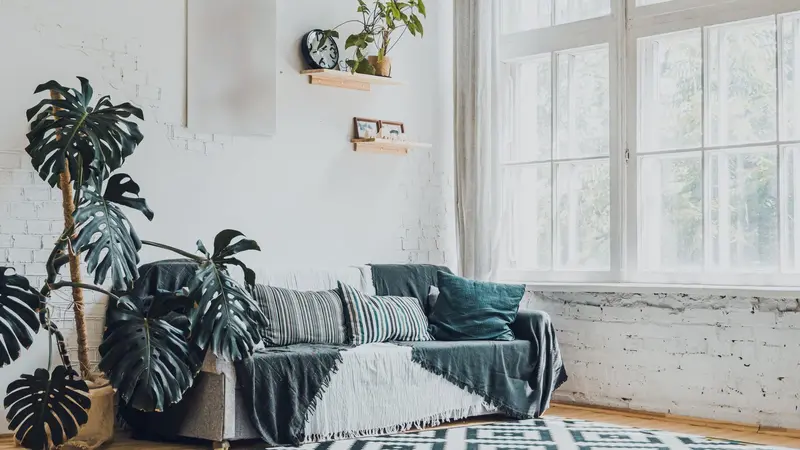
Plant list
16 living room plant decor ideas that look planned
Where to put plants in a living room, from the sofa and coffee table to the mantel and window, with a plant for each spot that suits its light.
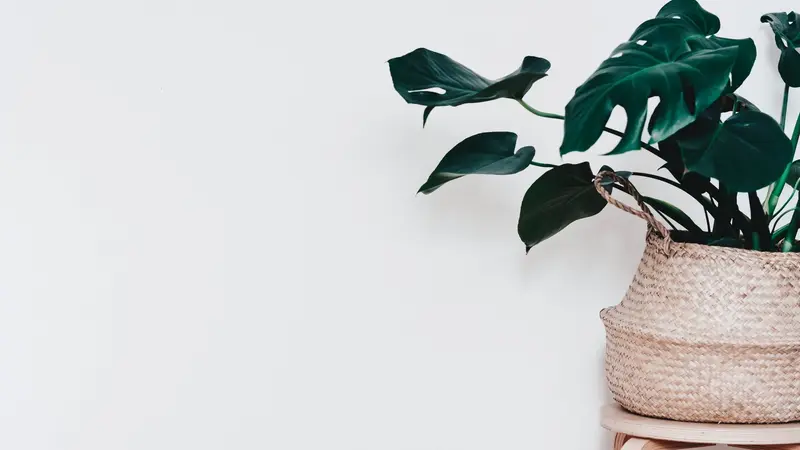
Care guide
Monstera plant care guide for big, split leaves
How to care for a monstera indoors: the light that brings leaf holes and splits, watering, soil, humidity, a moss pole, repotting, cuttings and common problems.
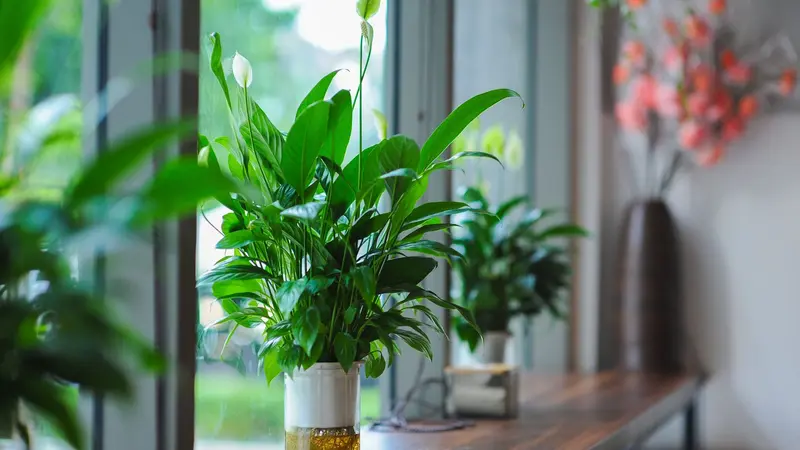
Care guide
Peace lily care guide for leaves, blooms and water
How to care for a peace lily indoors: the light that brings flowers, how to water without root rot, soil, feeding, repotting, dividing and fixing brown tips.
Try a free tool
Pot Size Calculator
Type the current pot's width and tick the signs you see to get the next pot size for repotting.