15 hanging plants that trail beautifully indoors

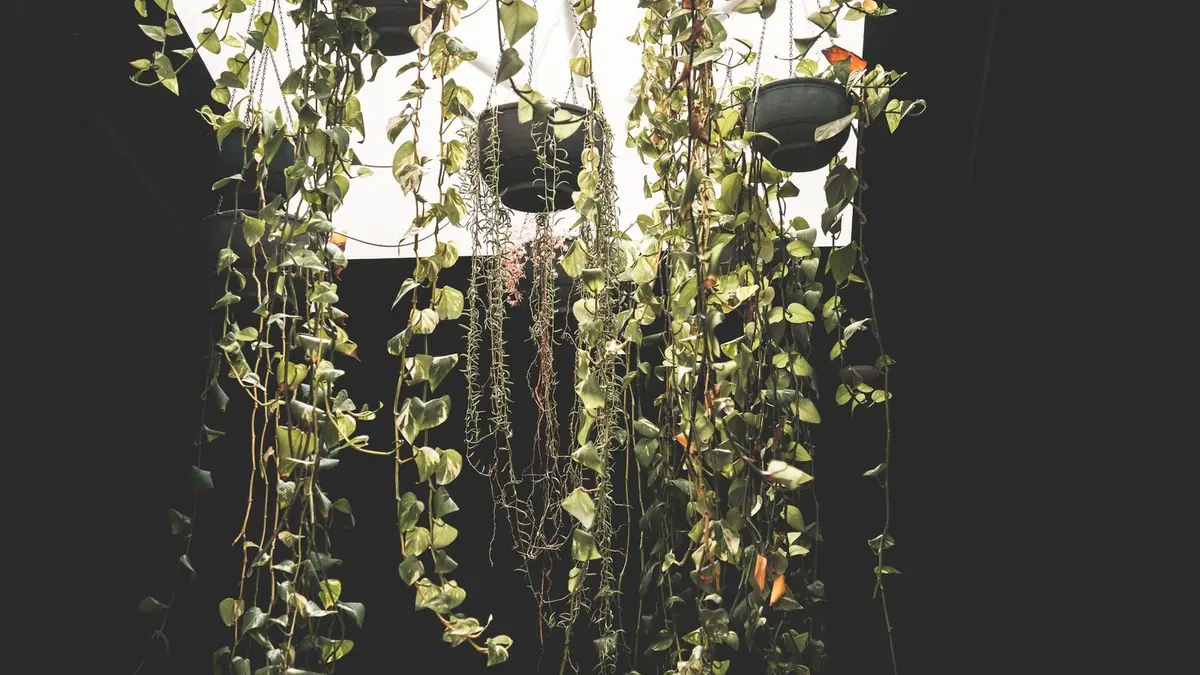
These hanging plants trail from a hook, a hanger or the top of a shelf: golden pothos, heartleaf philodendron, spider plant, satin pothos, arrowhead plant, English ivy, inch plant, Boston fern, wax plant, lipstick plant, mistletoe cactus, string of hearts, string of pearls, string of bananas and burro’s tail.
The list runs from the plants that take the least light to the ones that need the most. The first six tolerate a dim spot, the middle of the list wants an east or west window, and the trailing succulents at the end want your brightest window.
Where to hang each plant by its light
Choose the plant by the light where it will hang, not by the room. Windows facing south give the brightest light for the longest part of the day. East and west windows suit plants in the medium light range, and a north window suits only plants that need little light.
Distance from the glass matters as much as direction. Even a low light plant usually gets too little light more than 10 feet from an average window, so a hook in the far corner of a room is a spot for very few plants. The low light plants guide explains how to read a dim spot.
In a bright south window, hang plants that dislike direct sun to the side of the glass instead of right in front of it. Long vines suit a high ceiling or the top of a tall bookcase, while small hanging plants such as string of pearls look best on a short hanger at eye level.
1. Golden pothos
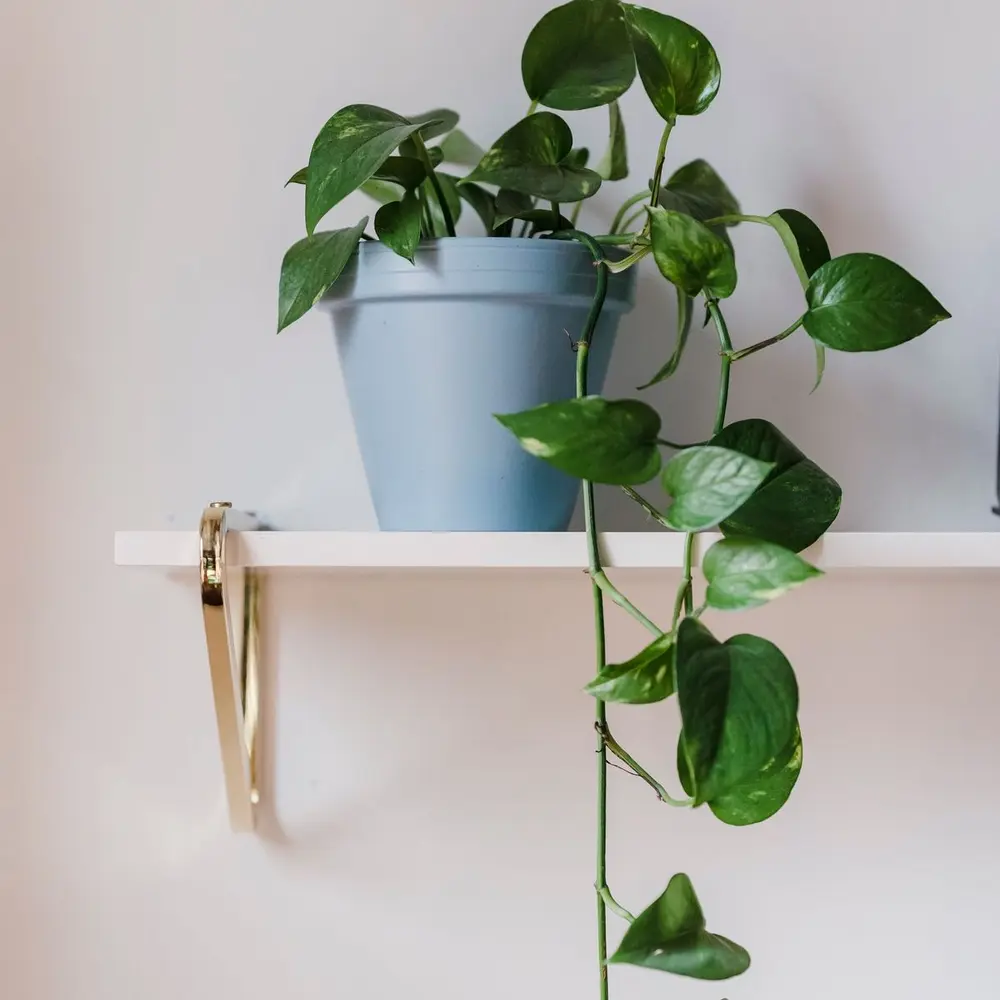
Golden pothos is the easiest hanging plant to start with. It prefers bright, indirect light and survives for long periods in low light, so it trails from a hook by an east window as readily as from a shelf across the room. Keep it out of hot afternoon sun.
Its vines grow 8 to 10 feet long indoors, which makes it the long hanging plant for a high ceiling, a tall bookcase or a deep hanging basket. Low light can fade the gold variegation, so give it more light if you want the marbled leaves.
Let the potting mix dry out between waterings, and water less often in fall and winter. Soggy soil leads to root rot, so a hanging pot with a drainage hole matters. It tolerates the dry air of most homes.
The ASPCA lists golden pothos as toxic to cats and dogs. The pothos care guide covers pruning and rooting cuttings.
2. Heartleaf philodendron
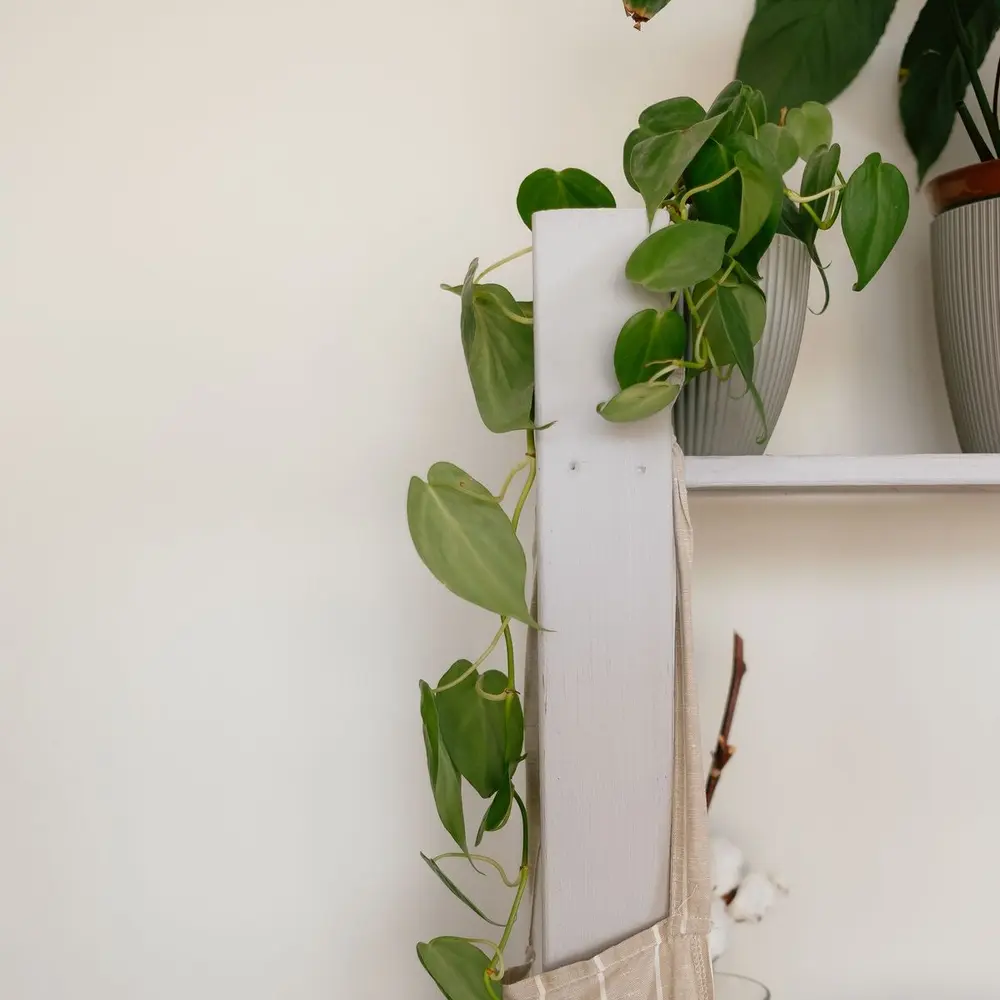
The heartleaf philodendron tolerates low light and grows well under ordinary room light or near a north, east or west window. It can survive for long periods in very low light, which makes it one of the best hanging indoor plants for a room the sun never reaches.
It looks a lot like pothos, with softer, heart-shaped leaves on thinner stems. The stems trail from a pot or climb if you give them a support, so it works in a hanging basket, along a plant shelf or spilling from the top of a cabinet.
Its watering differs from pothos. Keep the soil evenly moist but never soggy, and slow down in winter. It prefers high humidity but tolerates the low humidity of most homes, so a hanging pot in a living room or bedroom suits it fine.
The ASPCA lists the heartleaf philodendron as toxic to cats and dogs.
3. Spider plant
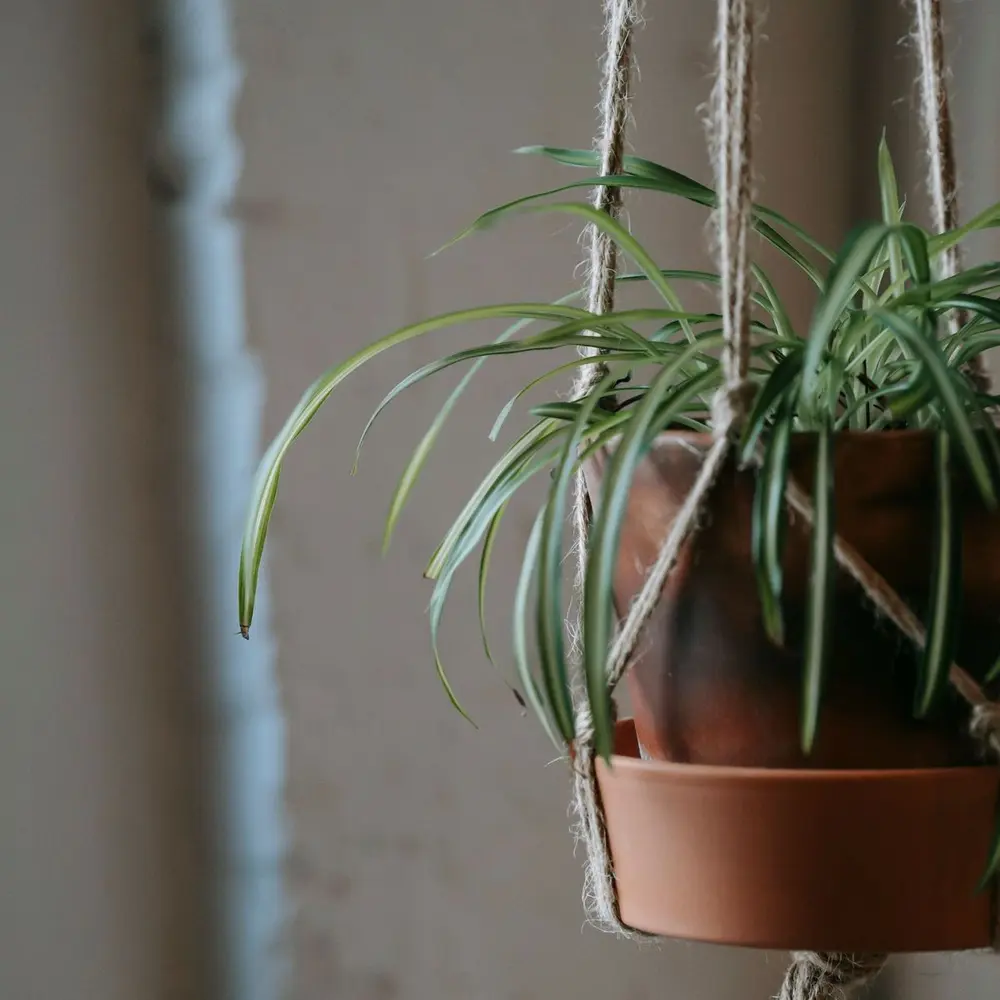
The spider plant does particularly well in a hanging basket, where its arching leaves and the long stems that carry small plantlets can cascade down the sides. In a hanging basket it trails 2 to 3 feet.
It grows best in bright, indirect light and tolerates much lower light, though midday sun can scorch its leaves. A hook near an east or west window suits it, and so does a spot farther back in a bright room.
Water when the top 1 to 2 inches of soil feel dry, let it dry out briefly between waterings, and reduce watering in winter. It tolerates drought, dry soil and the medium humidity of most homes, which makes it forgiving in a hanging pot that dries out fast.
The ASPCA lists the spider plant as non-toxic to cats and dogs, which makes it a good choice for a home with pets, like the other cat-safe house plants. The spider plant care guide explains its plantlets and brown tips.
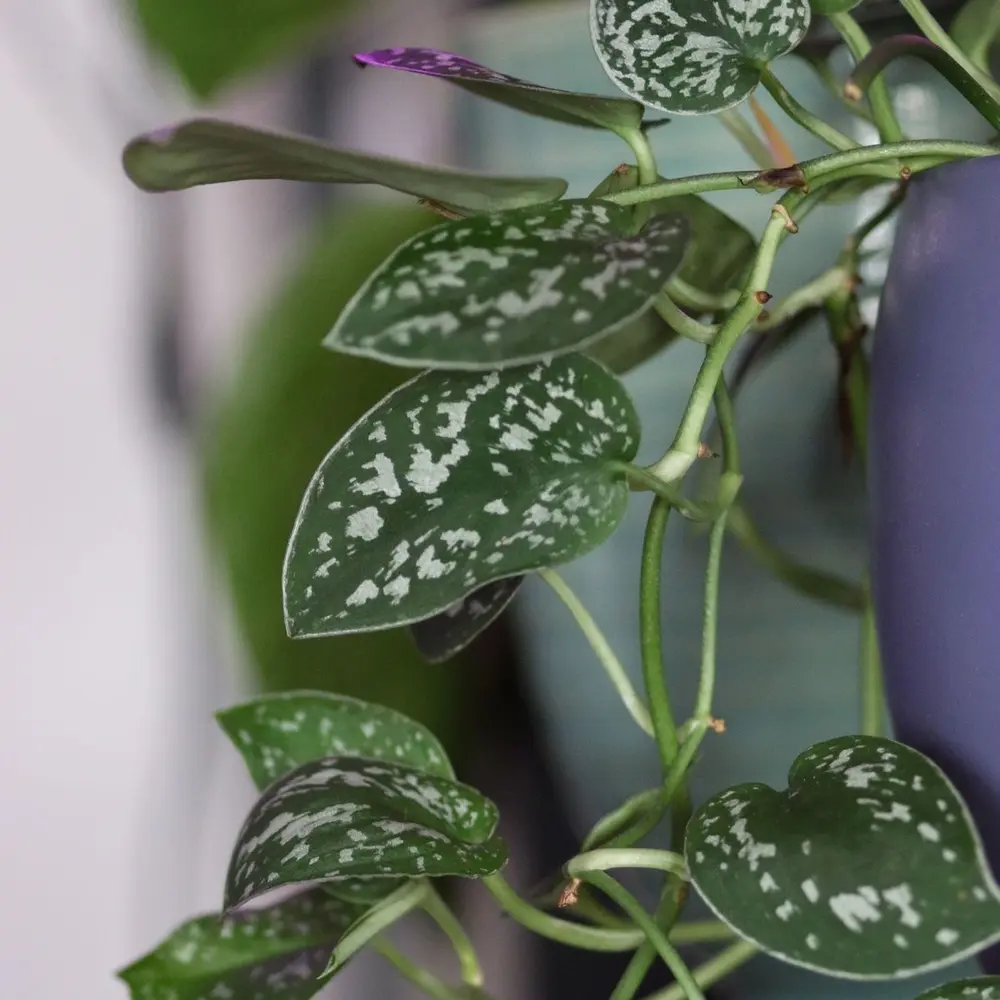
4. Satin pothos
Satin pothos is a climbing vine in the same arum family as golden pothos, with dark green, heart-shaped leaves splashed with silver. Indoors it grows 1.5 to 3 feet, and you can train it up a stake or let it trail from a hanging basket or pot.
Give it bright, indirect light. It doesn’t tolerate direct sun or cool air, so hang it beside a bright window rather than in front of it, and away from cold glass in winter. Pinching the stems keeps it tidy and full.
Keep the potting mix moist but well drained. Its leaves tell you when the watering is off: yellow leaves can be a sign of too much water, and curling leaves a sign of too little. Root rot sets in when the soil stays wet.
It is a slow grower, so a small plant stays a manageable size in a hanging pot for a long time.
The ASPCA lists satin pothos as toxic to cats and dogs.
5. Arrowhead plant
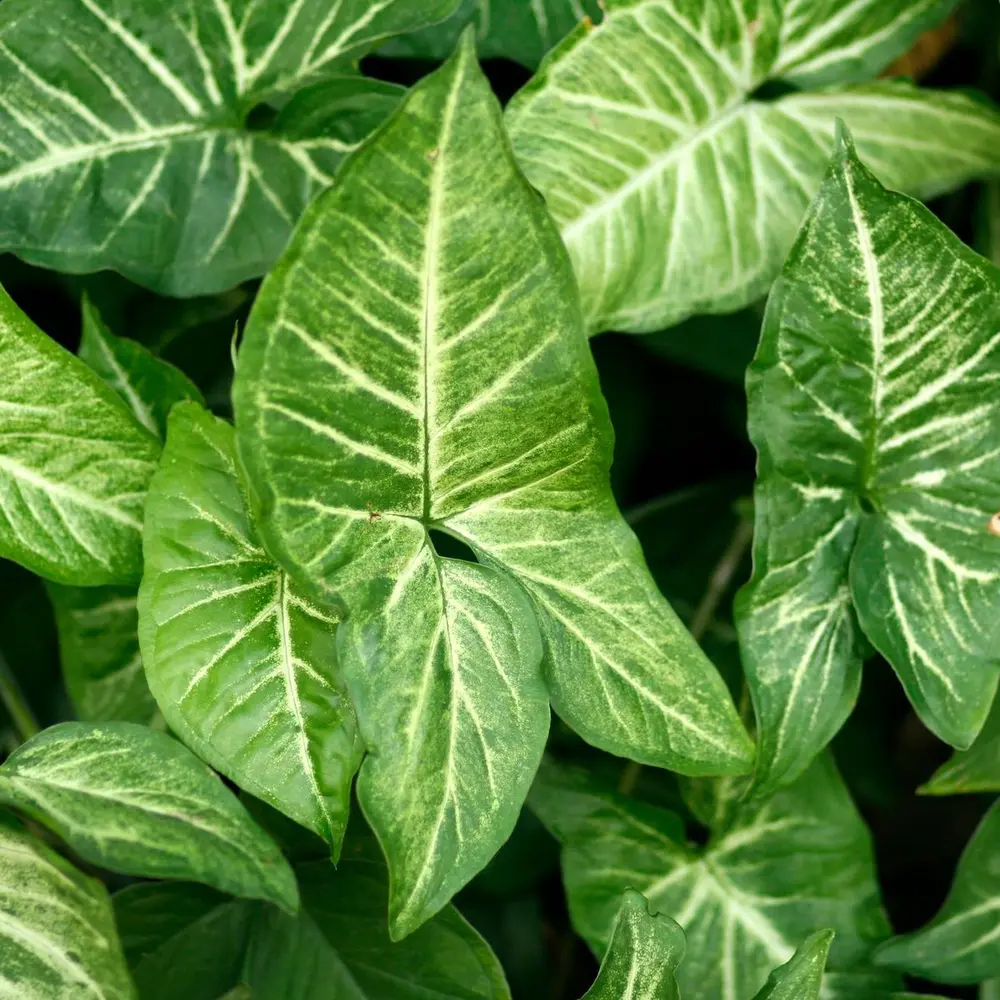
The arrowhead plant tolerates low light but prefers medium to bright light. An east window suits it, or a spot a few feet from a west window. A north window works too, though the leaf color may dull, and variegated forms keep their markings best in brighter light.
Young plants are fairly compact and grow well in containers and hanging baskets. As the plant ages, it takes on a vining habit, with some stems that climb or cascade. If you want to keep the bushy shape and the arrow-shaped leaves, cut off the vining stems as they start to form.
Let the potting mix dry out slightly between waterings. It tolerates average home temperatures and humidity. Green or reverting leaves mean it isn’t getting enough light, so move the hanging pot closer to the window.
The ASPCA lists the arrowhead plant, under arrow-head vine, as toxic to cats and dogs.
6. English ivy
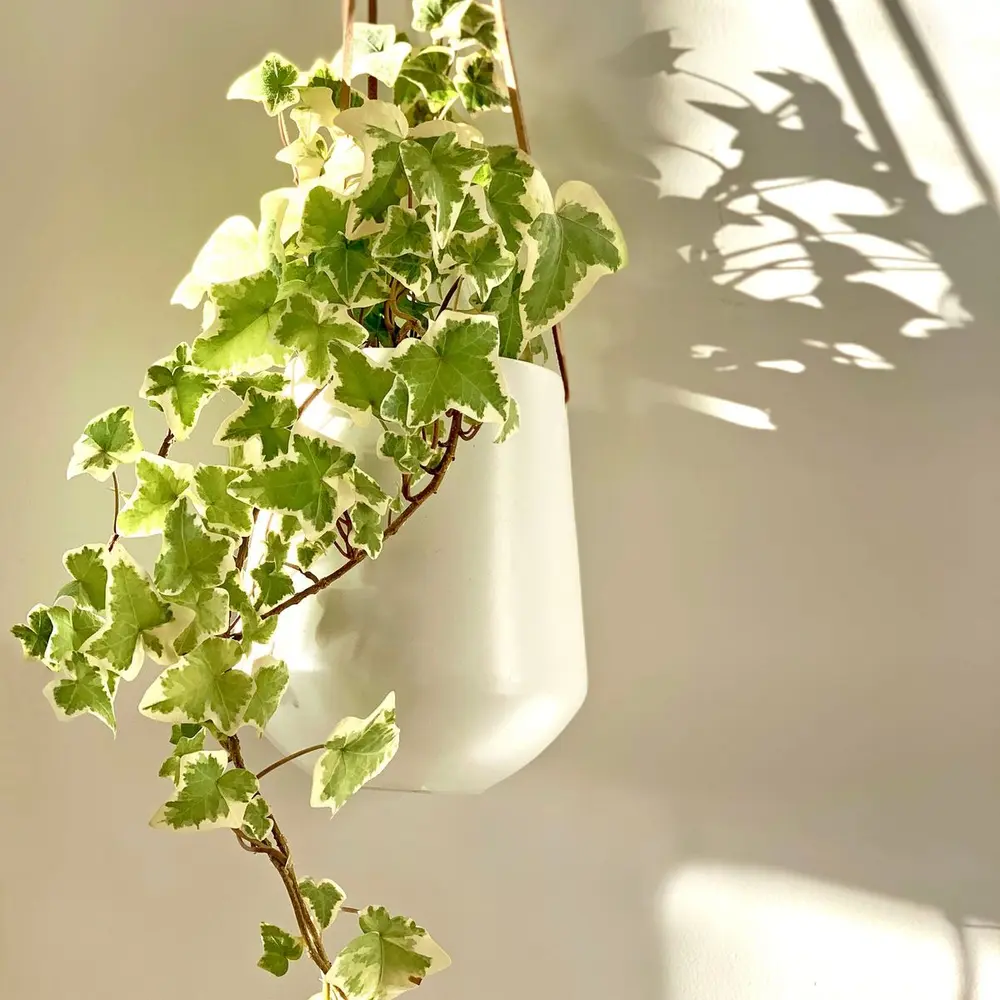
English ivy grows best in bright light, but not direct sun. It tolerates low to medium light, but its growth slows and variegated forms may turn all green, so hang a plain green ivy if the spot is dim.
Its trailing stems fill a hanging basket, and it also grows at the base of other houseplants or in a pot of its own. A variegated ivy, with cream or white edges, needs the brighter end of its range to keep that color.
Water thoroughly, then let the soil dry to the touch just below the surface before you water again. Ivy needs fairly steady moisture to keep its leaves, and it grows better slightly cool indoors. It prefers moderate humidity and tolerates the low levels in most homes.
If it drops leaves or stops growing, move it closer to the window before you change anything else.
The ASPCA lists English ivy as toxic to cats and dogs.
7. Inch plant
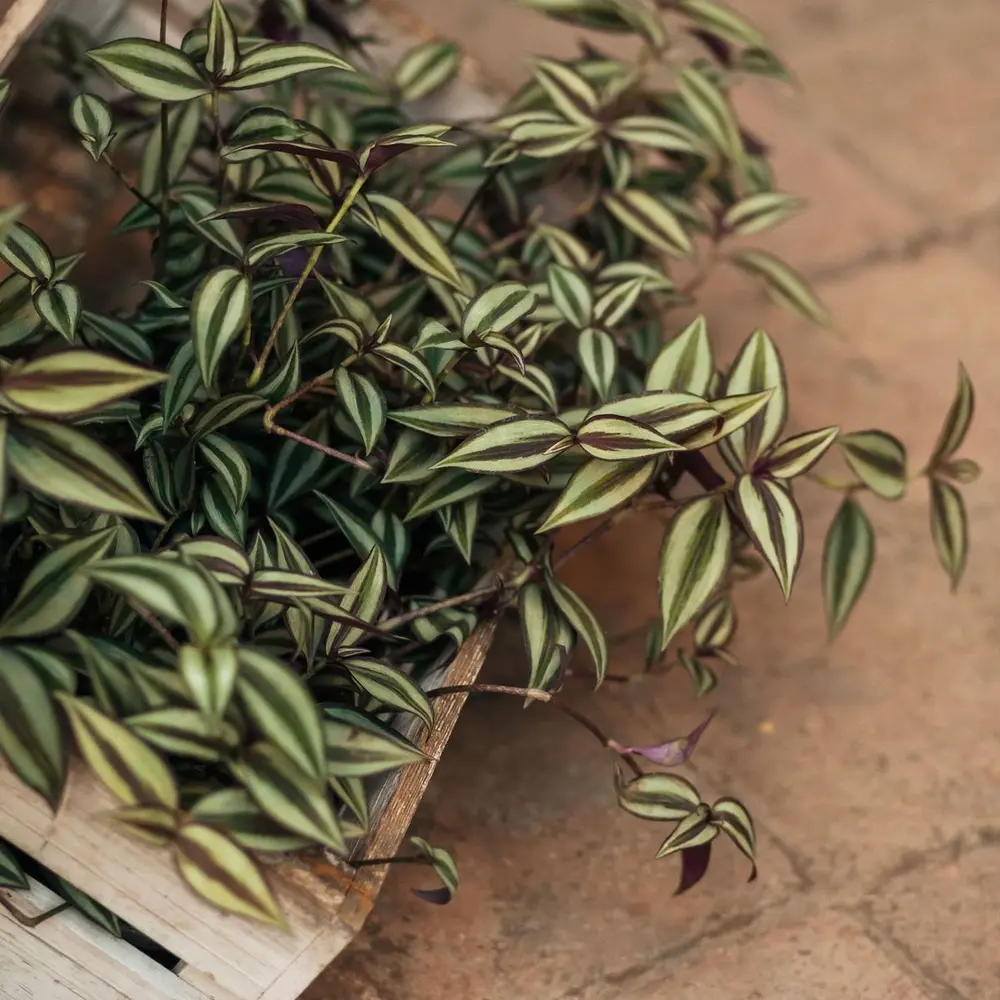
The inch plant (Tradescantia zebrina) has green and silver striped leaves with purple undersides on trailing stems that root at their joints. It grows fast and is commonly grown indoors in a hanging basket, where you see the purple undersides from below.
It does best in filtered sun. Full sun brings out its strongest color, though very strong sun can wash the color out, and in low light the stems lose their lower leaves and the remaining leaves fade. A hook by an east or west window suits it.
Water regularly, but let the soil dry out between waterings, and water less in winter. Soggy soil leads to root and stem rot. It tolerates average home humidity as well as high humidity.
Cut it back hard in spring to keep it dense, and root the trimmed stems as new plants. The leaf joints sit close together along the stems, which gave it its name.
The ASPCA lists the inch plant (Tradescantia fluminensis) as toxic to cats and dogs, and Tradescantia zebrina isn’t on its list. Its sap can also irritate skin, so treat it as unsafe for pets.
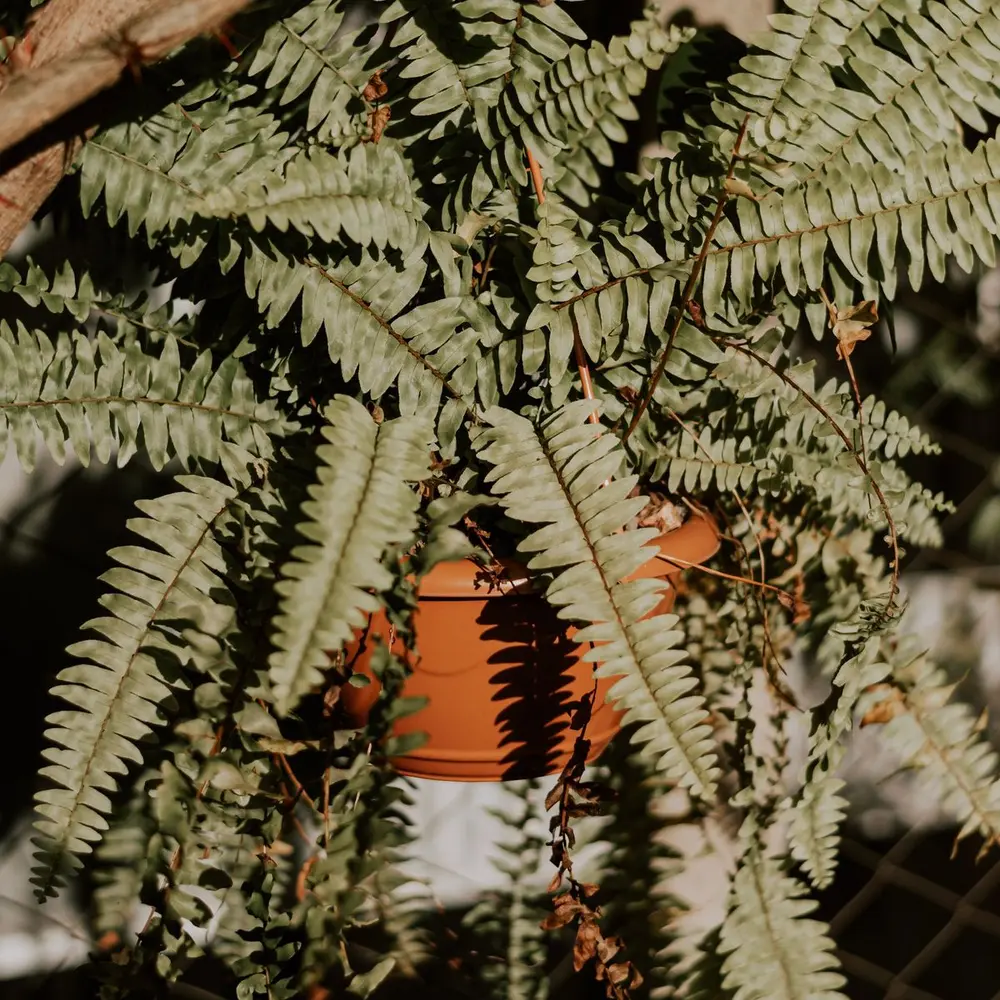
8. Boston fern
The Boston fern is the classic fern for a hanging basket. Its arching fronds grow up to 3 feet long and cascade on all sides, so it shows its form best hung where you see it from below.
Give it bright, indirect light with no direct sun. It tolerates some shade, but tropical ferns grow best in medium light, such as an east window, and grow poorly in low light.
It needs more care than most plants here. Keep the soil moist and never let it dry out, and reduce watering only a little in winter, since soggy soil then can rot the roots. It needs high humidity to thrive, and its fronds can brown in dry air.
That makes a bright bathroom or a kitchen window, where humidity often runs higher, a good place to hang one.
The ASPCA lists the Boston fern as non-toxic to cats and dogs, like the other pet-safe houseplants that suit a home with a cat and a dog.
9. Wax plant
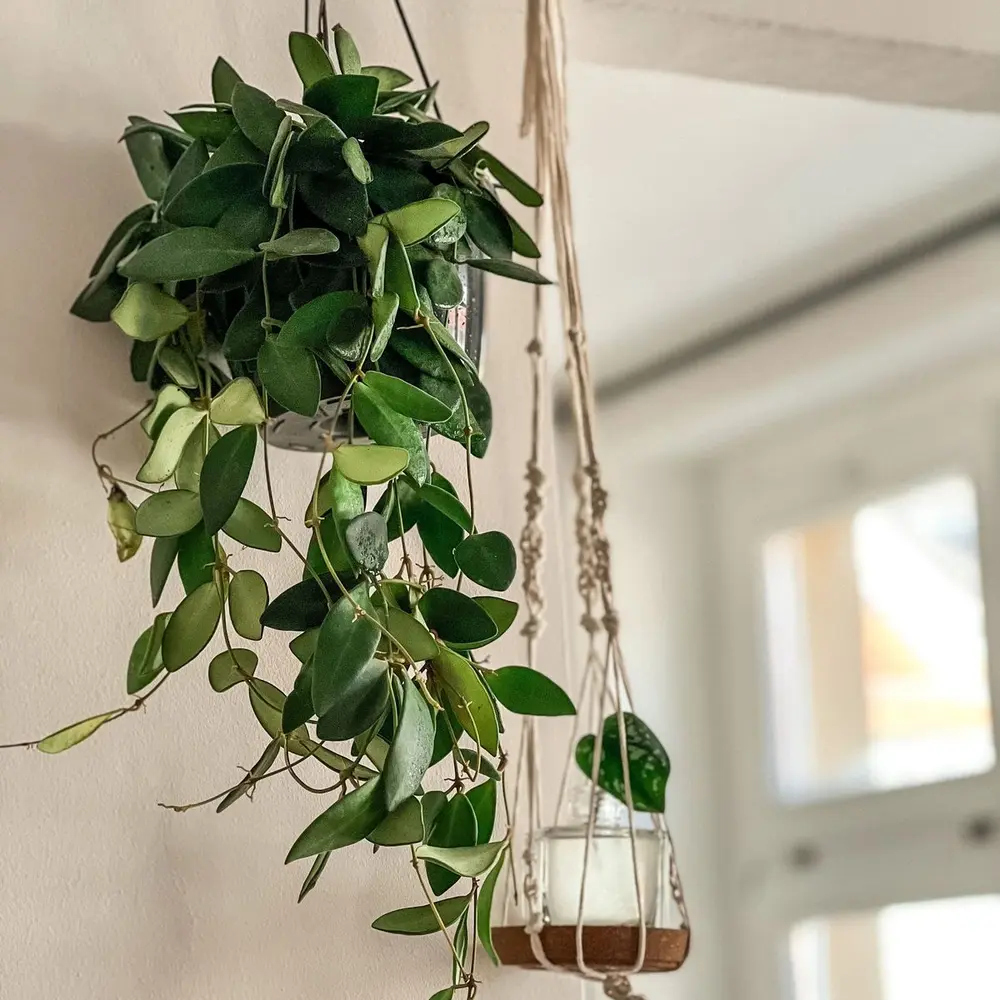
The wax plant, a hoya, is a vine with thick, waxy leaves. Given its climbing habit and rapid growth, it is a great choice for a hanging basket, where its vines create a cascading display.
It tolerates low light but needs medium light to grow and high light to flower. Bright, indirect light all year is ideal, so hang it close to an east, west or south window.
Allow the soil to dry out between waterings. Soil that stays too wet or gets too dry can make the leaves drop, and cold water can shock it, so water with room temperature water. Keep it a little cooler and drier in winter.
It loves high humidity. Once it settles in, leave it where it is: a hoya does best when it isn’t moved around.
The ASPCA lists the wax plant as non-toxic to cats and dogs.
10. Lipstick plant
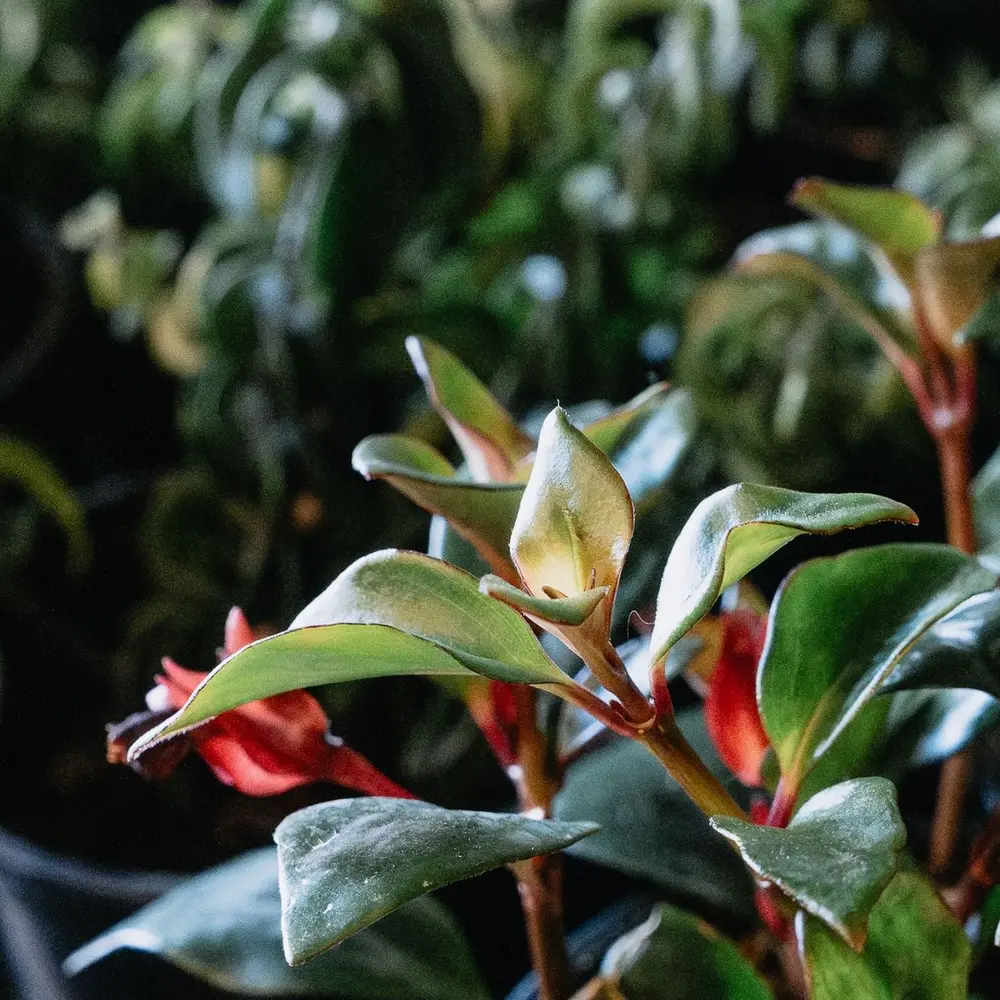
The lipstick plant is named for its red tubular flowers, which push out of a dark maroon calyx the way lipstick rises from its case. Its glossy, waxy leaves on cascading stems look good in a pot or hanging basket even when it isn’t in bloom.
It needs bright, indirect light but not full sun. Hang it near a south or west window, out of the direct rays that can burn the leaves. It also grows under artificial light.
Water regularly, especially in a hanging basket, but let the soil become slightly dry between waterings. It likes warmth and high humidity with moving air, since still, damp air encourages fungal disease. If the temperature falls below 50°F, it drops its leaves.
In winter, keep it a little cooler and drier to encourage flower buds in spring.
The ASPCA lists the lipstick plant as non-toxic to cats and dogs.
11. Mistletoe cactus
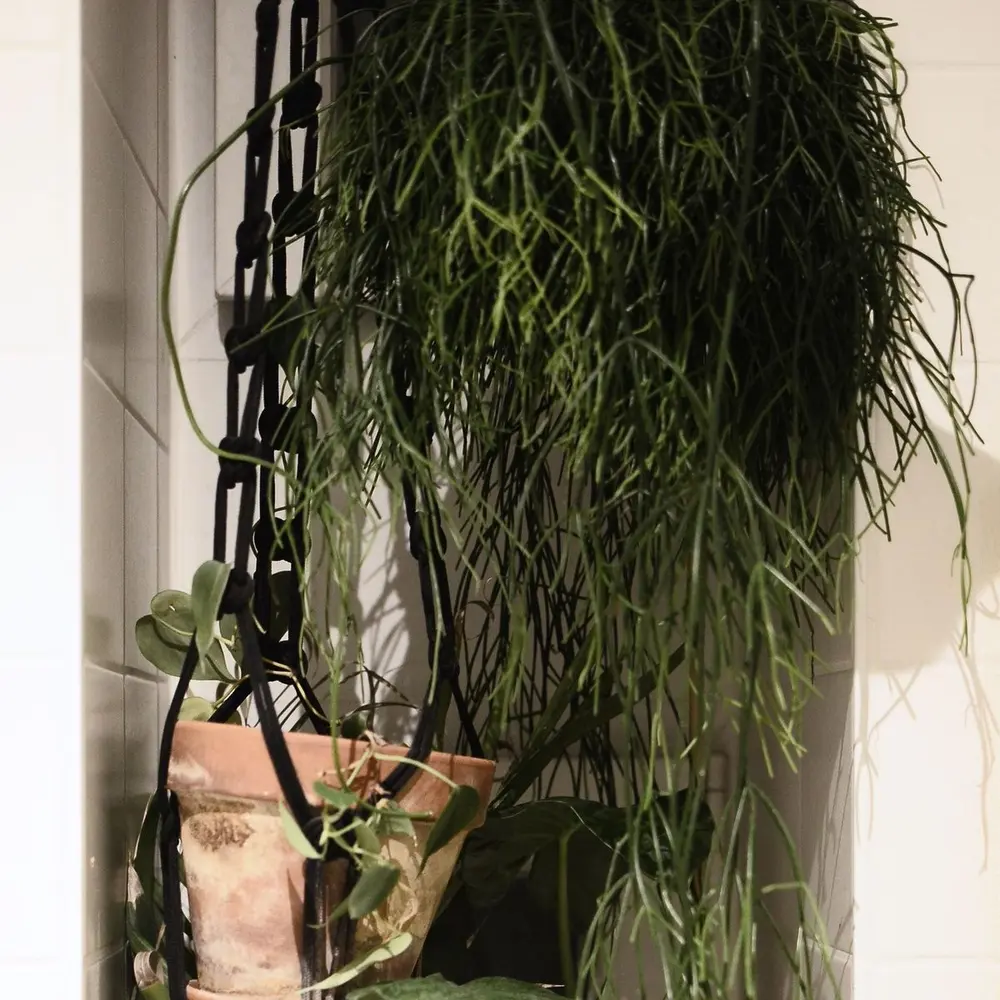
The mistletoe cactus, a rhipsalis, is a cactus with no leaves or spines: a mass of thin, green stems that look like green spaghetti noodles. It grows best as a hanging indoor plant, where it can grow up to 6 feet long.
Unlike desert cacti, it prefers bright, indirect light and high humidity. Direct sun can scorch its stems, so hang it beside a bright window rather than in it. A bright bathroom suits it well.
Water when the soil feels dry, but avoid overwatering, which leads to mushy stems and root rot. It prefers more even moisture than other cacti, and its stems pucker and lose their stiffness when it is thirsty. Water less in winter, while it rests.
Brown stem tips mean the air is too dry or the plant needs water more often.
The ASPCA lists the mistletoe cactus as non-toxic to cats and dogs.
12. String of hearts
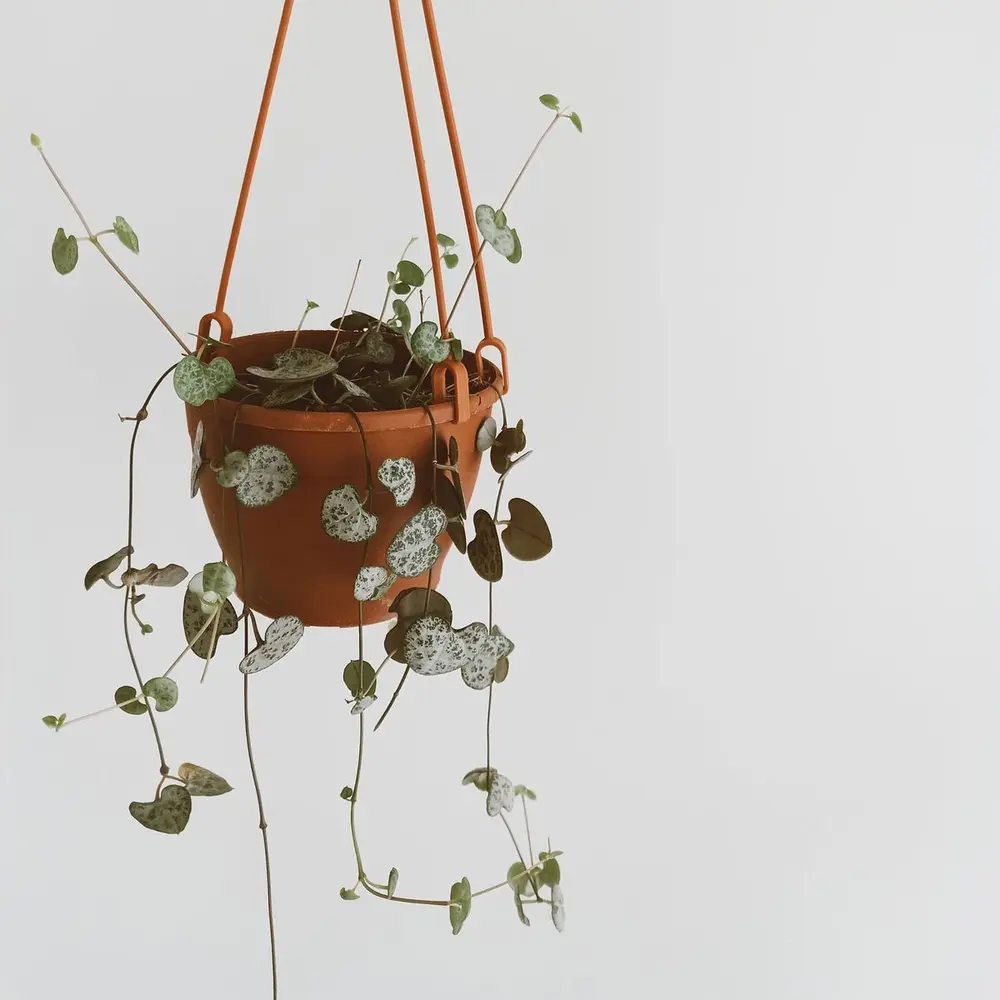
The string of hearts trails long, wiry stems strung with small heart-shaped leaves, dark green etched with silver on top and purple underneath. The stems drape over the pot and hang down about 3 feet, so it suits a hanging pot or the edge of a high shelf.
Give it bright, indirect light. Too much sun scorches the leaves, and large gaps between the leaves mean it isn’t getting enough light.
It is a succulent, so let the soil dry out completely between waterings, and water even less in winter, while it rests. Overwatering causes root rot and yellow leaves, while wilted leaves mean it needs a drink. Leave it in a snug pot, because it likes to be crowded.
Small, bead-like tubers form along its stems, and they root and make new plants where they touch the soil.
The string of hearts isn’t on the ASPCA plant list. Treat it as unsafe for pets and children and keep it out of reach.
13. String of pearls
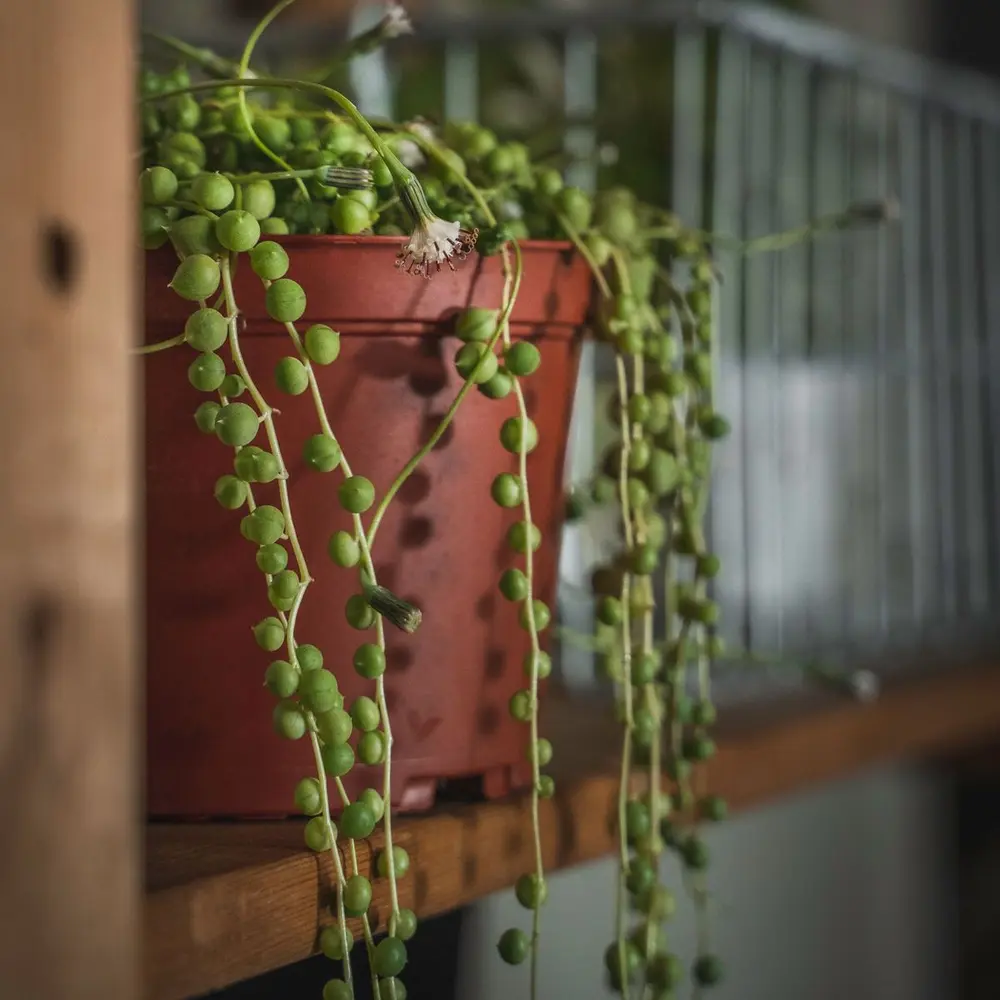
The string of pearls is the trailing succulent with round, bead-like leaves on thin stems that spill downward over the side of the pot. It is popularly grown in hanging baskets, and its stems trail 1 to 3 feet, which makes it one of the best small hanging plants indoors.
Indoors it flourishes in bright, indirect light, so hang it near your brightest window but out of direct sun, which can scorch the leaves. Its stems hang rather than climb, so a short hanger keeps the strands at eye level, where you can see the beads.
It is fussier than it looks. Water once the top of the soil has dried, but don’t let the pot dry out completely, and never let it sit wet: soggy soil rots the roots. Wilting can come from too much or too little water, so feel the soil before you decide which.
Plant it in cactus mix, or potting soil mixed with sand or perlite, in a pot with a drainage hole.
The string of pearls isn’t on the ASPCA plant list. Treat it as unsafe for pets and children and keep it out of reach.
14. String of bananas
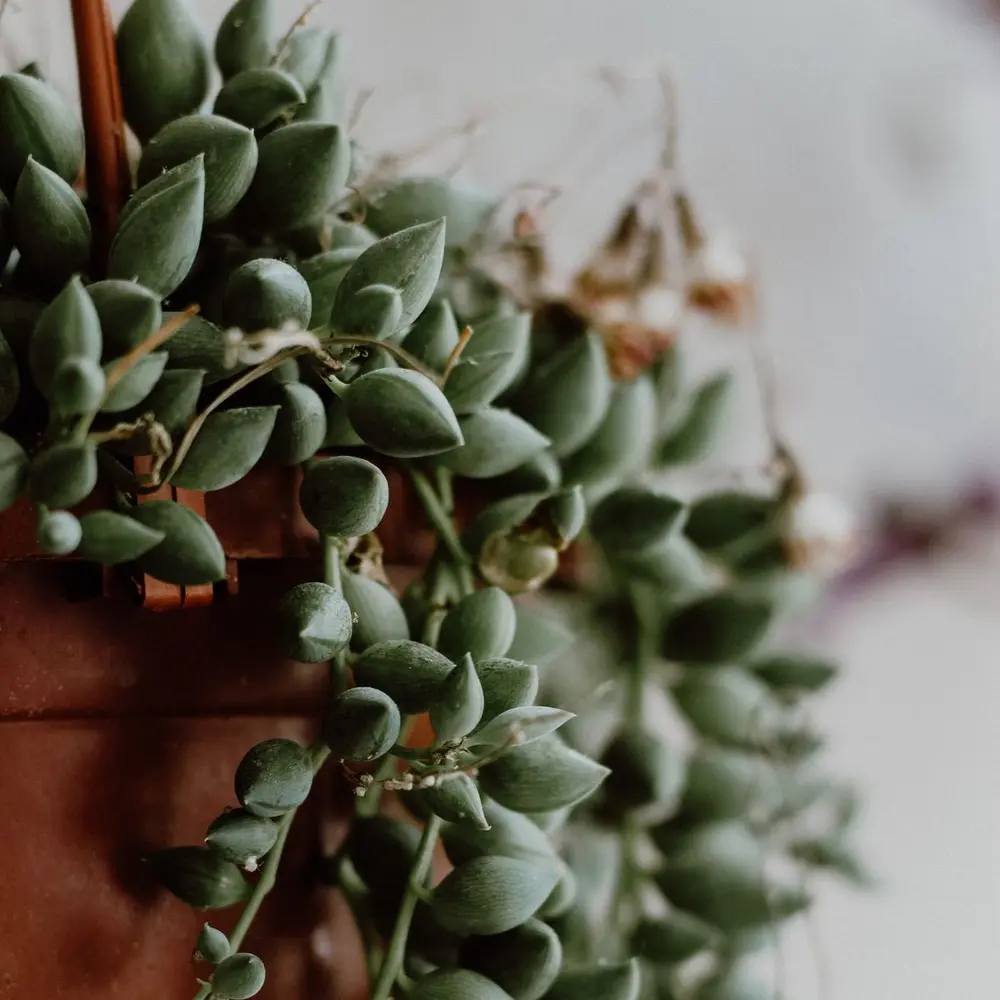
The string of bananas is a relative of string of pearls with curved, banana-shaped leaves on long, thin stems. It is easy to grow and fast growing, and its slender stems cascade over the side of a hanging basket, reaching 1 to 3 feet long.
It needs bright, indirect light that reaches all parts of the plant, but it isn’t full sun tolerant. Brown or reddish leaves are usually sunburn, so hang it near a bright window but out of the direct rays, and turn the pot now and then so every side gets light.
Water only when the top half of the soil feels dry. It tolerates drought, and overwatering leads to root rot, so plant it in a well-drained, sandy or cactus mix.
Prune it in spring or summer to manage its growth and encourage branching.
The string of bananas isn’t on the ASPCA plant list. Treat it as unsafe for pets and children and keep it out of reach.
15. Burro’s tail
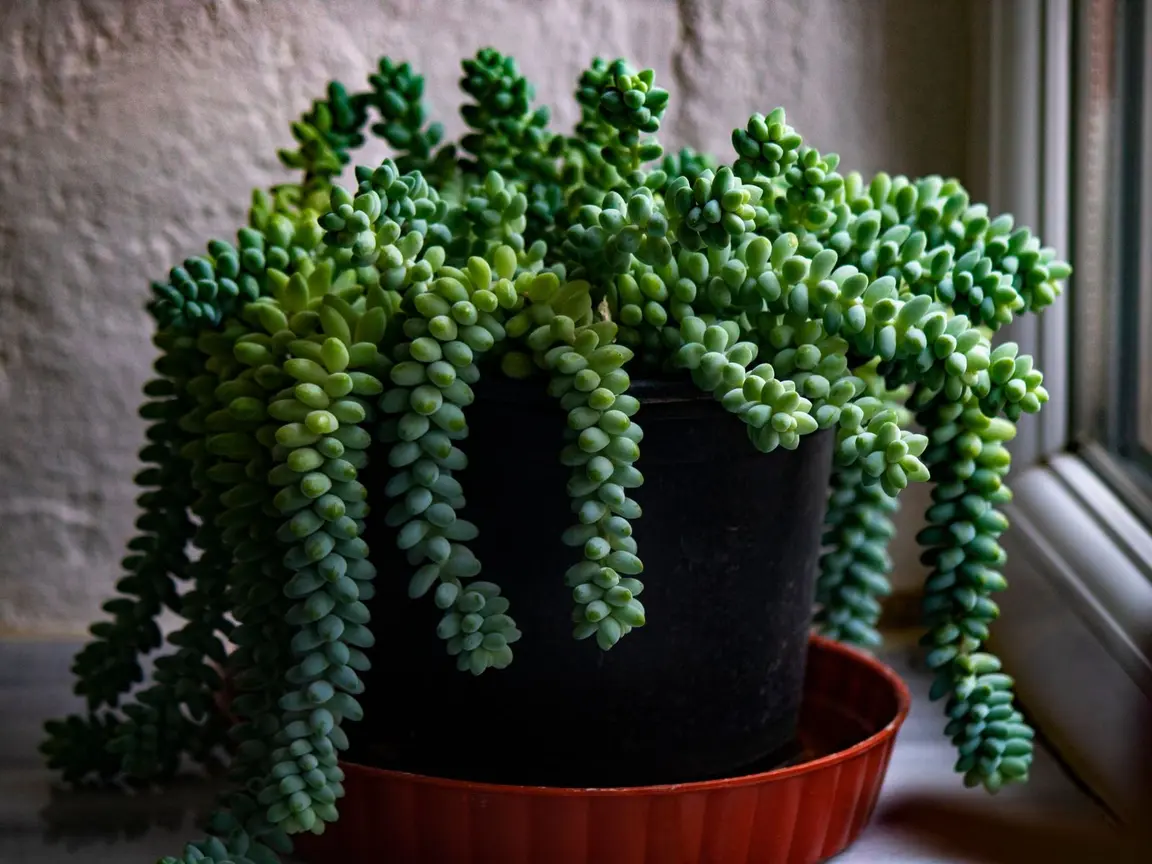
Burro’s tail grows trailing stems up to 24 inches long, packed with fleshy, blue-green leaves. It looks its best in a hanging container that shows off the stems as they trail.
It needs a high light spot, such as a windowsill with at least partial sun, so hang it in or right beside your sunniest window. In a dim spot it is the wrong choice; pick a pothos or a philodendron there instead.
Let the soil dry out between waterings, and water less in winter. It tolerates drought and dry soil, and wet or poorly drained soil is what harms it. Shallow pots and fresh air suit it.
Hang it where nobody brushes past. The leaves are delicate and break off when handled, but dropped leaves root easily, so pot them up instead of throwing them away.
The ASPCA lists burro’s tail as non-toxic to cats and dogs.
How to care for hanging plants
A hanging plant needs the same care as one on a table, with a few differences that come from where it hangs.
- Check it more often. Potting mix in a hanging pot is light, drains well and dries out quickly. Warm air rises, so a pot near the ceiling sits in warmer air than plants lower down, and a plant in a warm, dry spot needs water more often.
- Water until it drains. Add water until it runs out of the drainage hole, so the whole root ball gets wet. Take the pot down to the sink, or hold a tray under it.
- Empty the saucer. Many hanging pots have a built-in saucer or sit inside a decorative pot. Pour off water still standing beneath the pot 1 hour after watering, so the roots don’t sit in it.
- Rewet a dried-out pot from below. Mix that dries out completely pulls away from the sides, and water poured on top runs straight through. Set the pot in a tub of water for 1 to 2 hours, and no longer, so it soaks up water from the bottom.
- Lift it to judge. Potting mix loses weight as it dries, so a pot that feels light usually needs water, and a heavy one doesn’t yet.
- Hang it securely. Wet soil makes a pot heavier than it looks. Before you hang a large basket, make sure the hook and whatever holds it can carry the pot when the soil is soaked, and check the hanger for wear now and then.
- Turn it now and then so the plant grows evenly instead of leaning toward the window.
The watering schedule maker sets check days for each of your plants, hanging pots included, and gives you its soil test.
Hanging plants at a glance
| Plant | Light | Water when | Trail | Cats and dogs (ASPCA) |
|---|---|---|---|---|
| Golden pothos | Low to bright, indirect | The soil has dried out | Long vines | Toxic |
| Heartleaf philodendron | Low to bright, indirect | Keep evenly moist | Long vines | Toxic |
| Spider plant | Low to bright, indirect | The top of the soil is dry | Medium, with plantlets | Non-toxic |
| Satin pothos | Bright, indirect | Keep moist, well drained | Medium vines | Toxic |
| Arrowhead plant | Low to bright, indirect | The soil is slightly dry | Compact, vines with age | Toxic |
| English ivy | Low to bright, no direct sun | The surface is dry | Medium to long stems | Toxic |
| Inch plant | Filtered sun | The soil has dried out | Medium, fast growing | Toxic (T. fluminensis) |
| Boston fern | Medium to bright, indirect | Never let it dry out | Arching fronds | Non-toxic |
| Wax plant | Medium to bright, indirect | The soil has dried out | Medium vines | Non-toxic |
| Lipstick plant | Bright, indirect | The soil is slightly dry | Medium, cascading | Non-toxic |
| Mistletoe cactus | Bright, indirect | The soil feels dry | Long stems | Non-toxic |
| String of hearts | Bright, indirect | The soil has dried completely | Medium, fine stems | Not on the list |
| String of pearls | Bright, indirect | The top of the soil is dry | Short to medium | Not on the list |
| String of bananas | Bright, indirect | The top half of the soil is dry | Short to medium | Not on the list |
| Burro’s tail | Bright, some direct sun | The soil has dried out | Short | Non-toxic |
Want a shortlist for one hook or shelf? The plant finder matches houseplants to your light, your space and your pets.
Frequently asked questions
What is the easiest hanging plant to grow indoors?
Golden pothos and heartleaf philodendron. Both trail freely from a hanging pot and grow in anything from low light to bright, indirect light. A spider plant comes close, and the ASPCA lists it as non-toxic to cats and dogs.
Which hanging plants grow in low light?
Of the plants on this list, golden pothos, heartleaf philodendron, spider plant, arrowhead plant and English ivy tolerate low light. They grow more slowly there, and variegated forms may turn greener. The trailing succulents, such as string of pearls and burro's tail, need bright light.
Which hanging plants are safe for cats and dogs?
Of the plants on this list, the ASPCA lists the spider plant, Boston fern, wax plant, lipstick plant, mistletoe cactus and burro's tail as non-toxic to cats and dogs. Hanging a toxic plant out of reach helps, but fallen leaves and trimmed stems can still end up on the floor.
How often should I water a hanging plant?
Check it more often than the plants on your floor and tables, because a hanging pot dries out quickly. Feel the soil and water by the plant's needs, not the calendar. A Boston fern should never dry out, while string of pearls and burro's tail want the soil to dry between waterings.
Where should I hang a plant indoors?
Where the light suits that plant and you can reach it with a watering can. Most of the leafy vines here grow well near an east or west window, the succulents want your brightest window, and the low light growers can hang farther back in the room.

Save it for later
Pin it to a board so it's there when you need it.
Save to Pinterest(opens in a new tab)Keep reading
Low lightPlant list
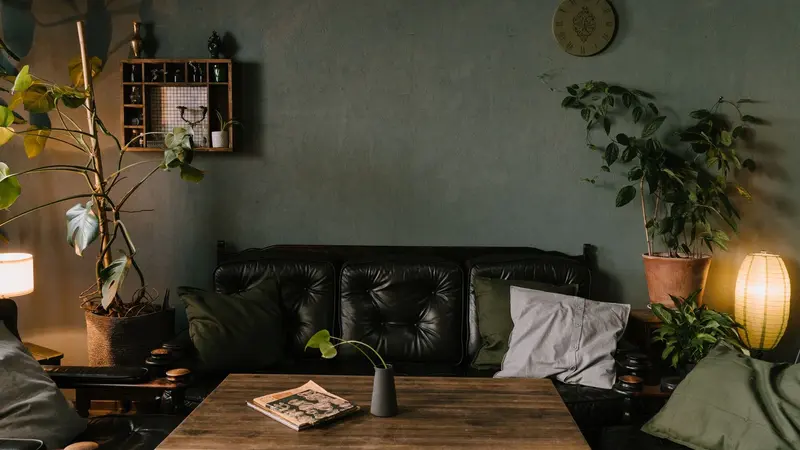
15 low light plants that grow away from the window
Houseplants for a north window, a dim hallway or a corner across the room: what low light means, where each plant fits and how to water it with less light.
Care guide
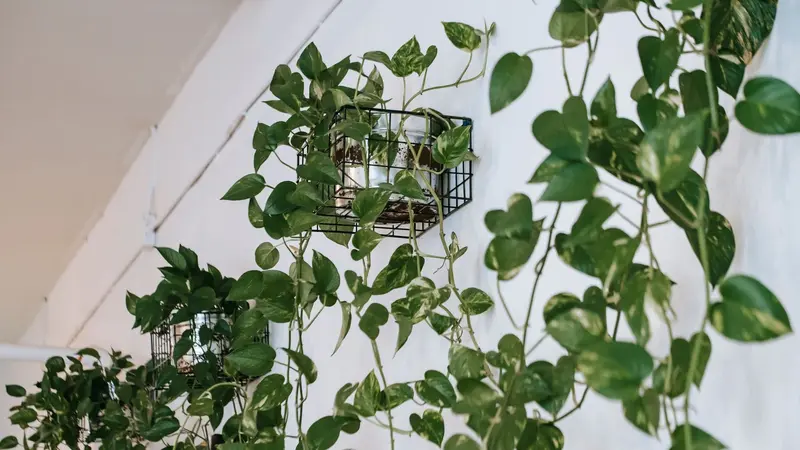
Pothos plant care guide for long, full vines
How to care for a pothos plant indoors: light for bright leaves, watering, soil, feeding, pruning for fuller vines, rooting cuttings and fixing yellow leaves.
Care guide
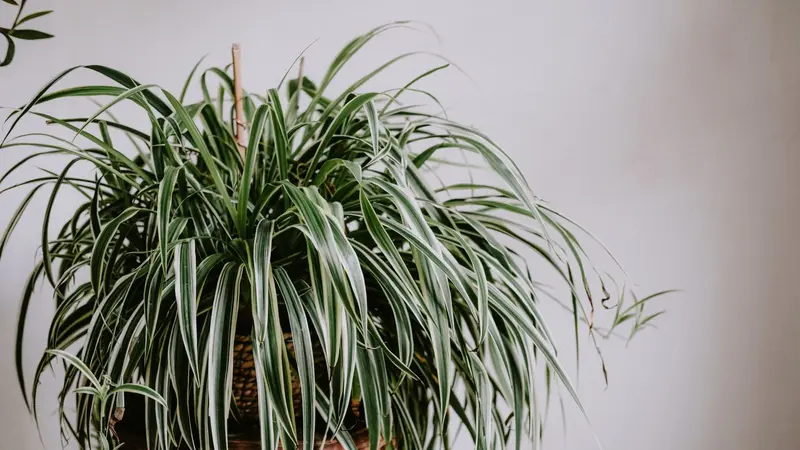
Spider plant care guide for healthy leaves and babies
How to care for a spider plant indoors: light, watering, soil, feeding, repotting, rooting its babies and fixing the brown leaf tips it is known for.
Plant list
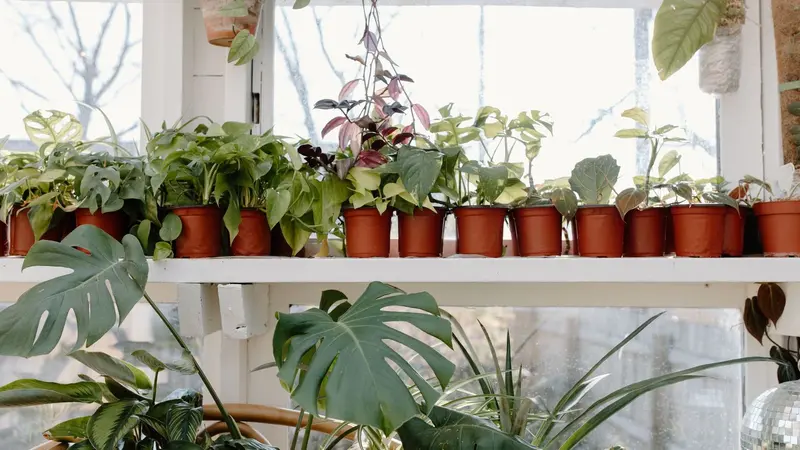
14 plant shelf ideas that look full without crowding
Ladder shelves, open bookcases, corner shelves and metal etageres, each with the plants that suit its light, plus how to keep every pot healthy.
Try a free tool
Plant Finder
Answer four questions about light, space, pets and watering to see the houseplants that fit your spot.