9 kitchen window plant ideas from sill to curtain rod

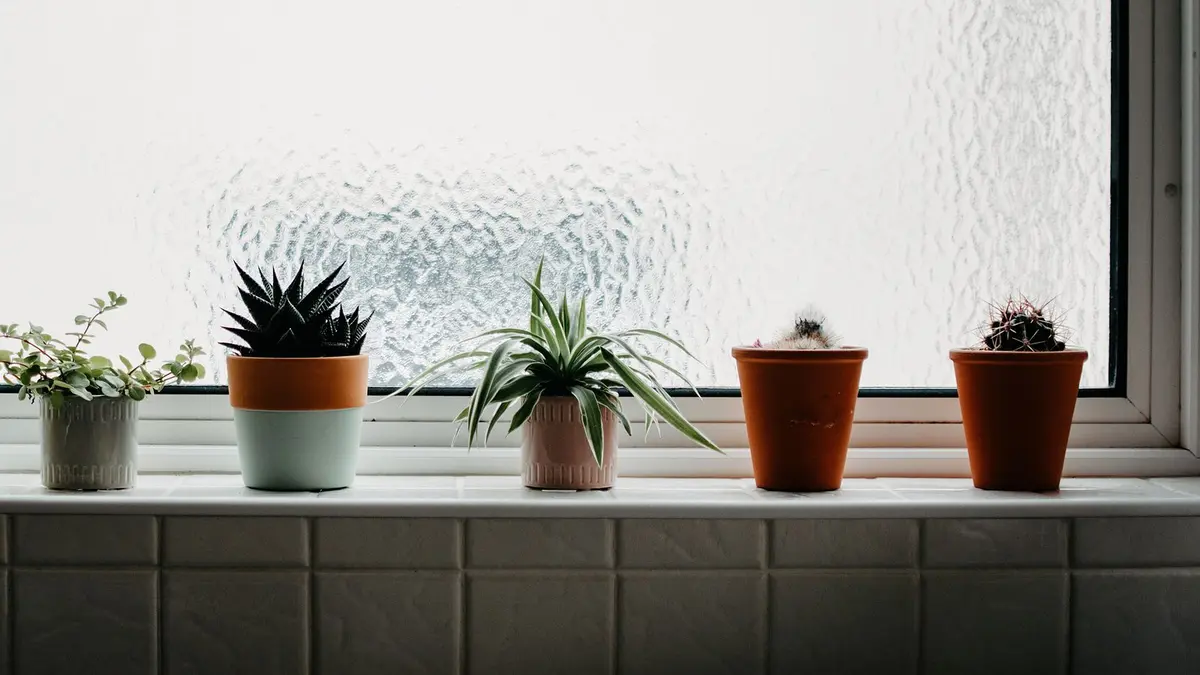
These kitchen window plant ideas use the whole window, from the sill to the curtain rod: a row of herbs in a sunny window, a succulent sill, African violets, a shelf across the glass, hanging pots, low light plants for a north window, cuttings rooting in jars, a long trough and a few plants for the window over the sink.
Which ideas fit depends on the way your window faces. Read its light first, then pick the ideas and plants that match it, and keep every plant clear of the stove.
What each kitchen window gives your plants
The direction of the glass sets how much light your plants get and for how long.
- South: the brightest light for the longest part of the day. Every houseplant benefits from it in winter, but from late spring to early fall its sun can burn plants that don’t need bright light.
- East: good, abundant light that suits many plants in the medium light range, with the sun in the morning.
- West: abundant light as well, but it can be too intense for some plants.
- North: suitable only for plants that need lower light, the kind that shouldn’t get direct sun.
Distance matters as much as direction. High light means a spot within 4 feet of a large south, east or west window, and light drops quickly as you move back, so the sill and the space just in front of the glass are the prime spots in a kitchen.
Then look at what stands in the way. Roof overhangs, trees, curtains, sheers and window films all cut the light. Clean glass with no screen can let in up to 30 percent more light, so wipe off the splashes and the cooking film that collect on a kitchen window.
1. A sill row of herbs in a sunny window
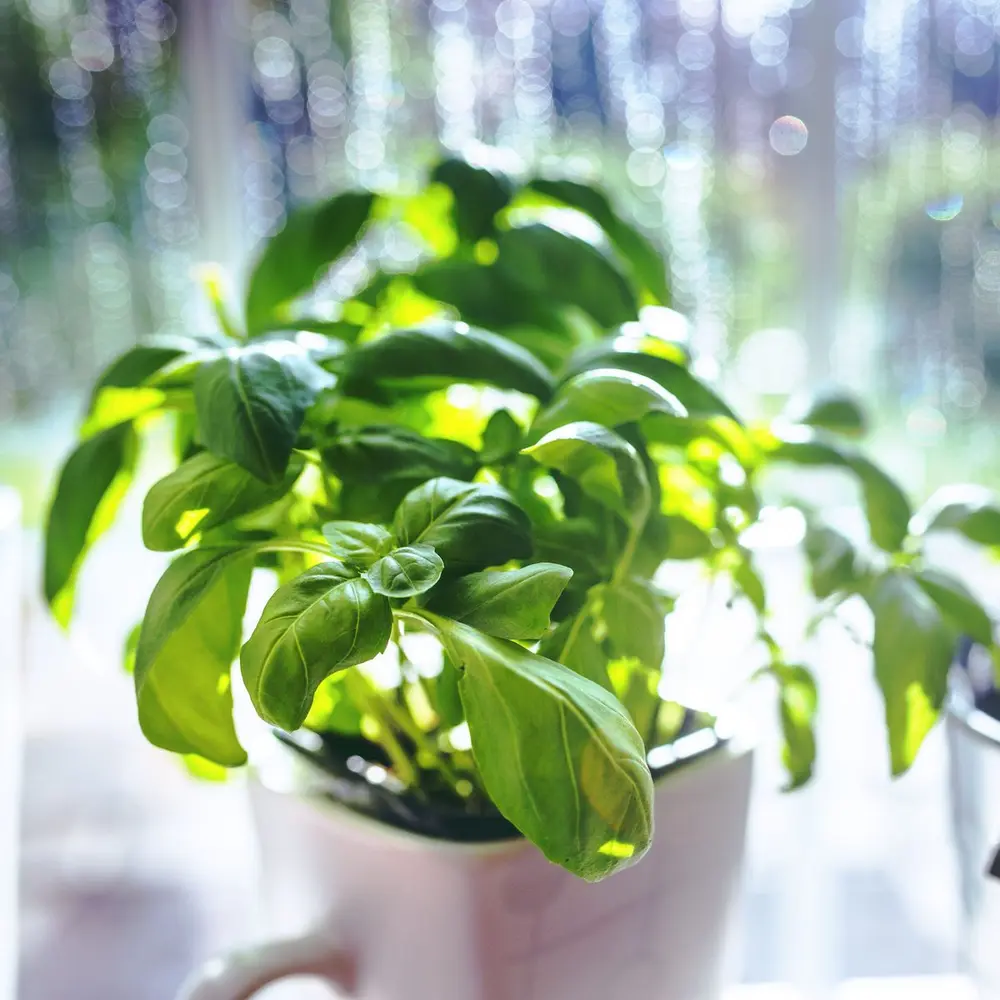
Herbs are the classic kitchen window plant, and light decides whether they thrive. Most herbs want about 8 hours of direct sun a day indoors, and a few manage with 6. A south window is the best bet, and a bright east or west window can work too.
Basil, rosemary and thyme do well on a sunny sill, and so do parsley and chives. Grow each herb in its own pot with a drainage hole, since it is hard to suit several herbs in one container. Let the soil dry between waterings, because most herbs don’t tolerate wet soil, and choose clay pots, which dry out faster.
Turn the pots often so every side gets light. An herb with too little light grows thin and spindly, with smaller leaves and less aroma. If your window can’t give that much sun, a grow light 6 to 12 inches from the leaves, on a timer for 12 to 16 hours a day, makes up the difference.
Basil can’t survive temperatures below 50 °F, so move it off a cold sill in winter.
The ASPCA lists basil, rosemary and thyme as non-toxic to cats and dogs, and parsley and chives as toxic.
2. A succulent sill for a south or west window
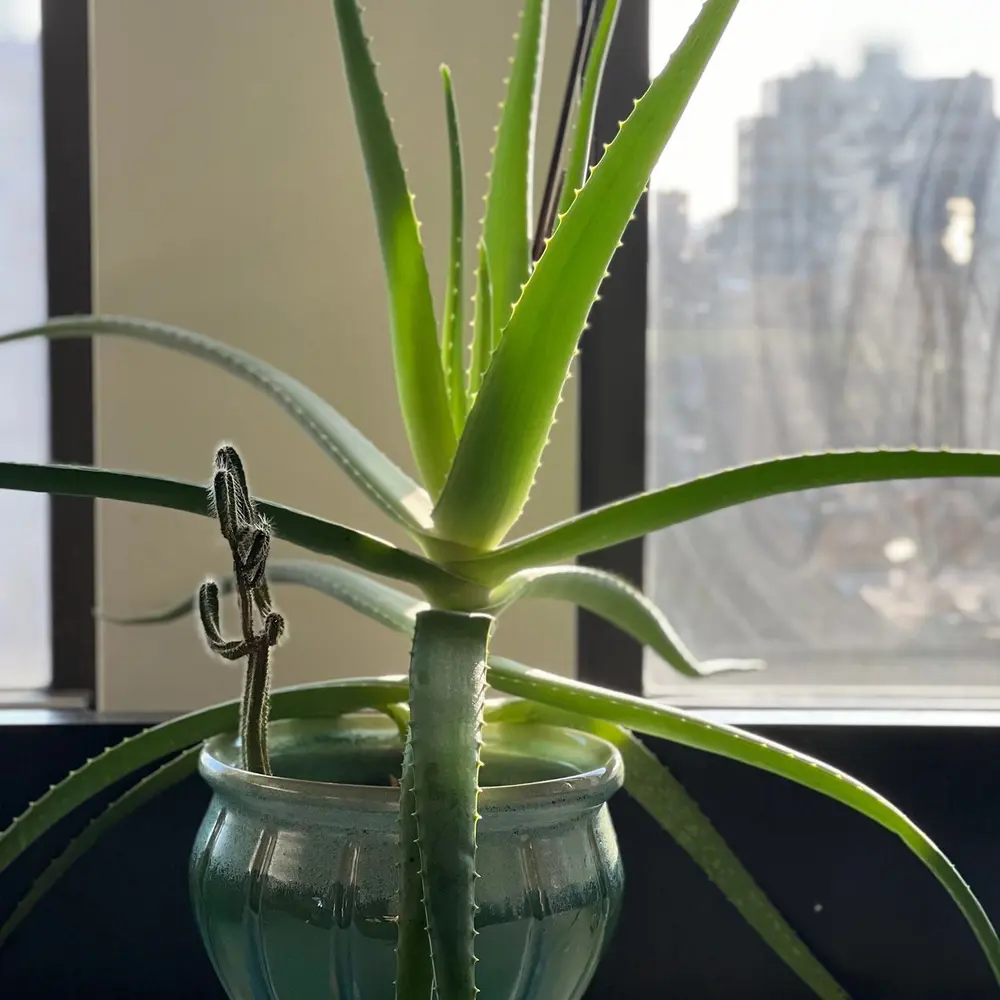
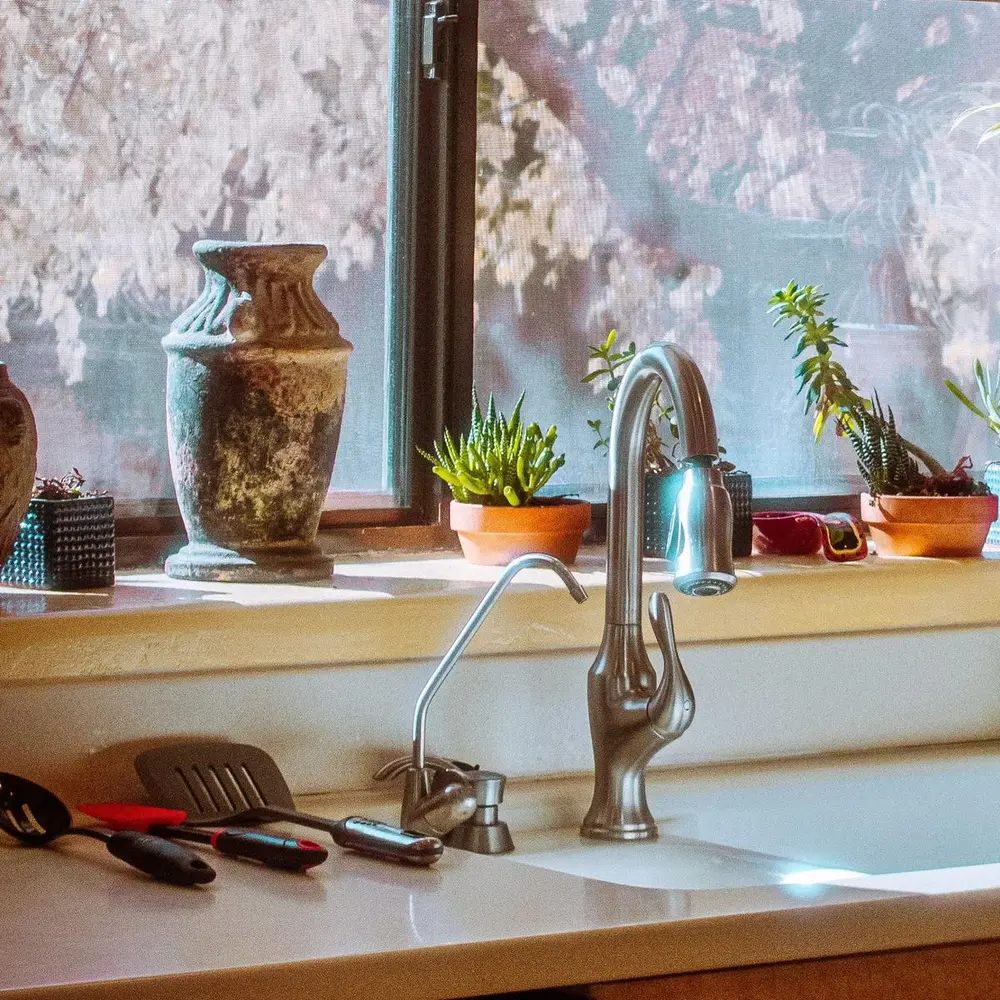
A south window, or a west window with strong sun, is the place for succulents. They need lots of light, and a bright, sunny window is where they grow best indoors. Aloe vera and jade plant are the two to start with.
The jade plant prefers the full sun or bright filtered light of a south window, and it does best with 4 or more hours of direct sun a day. Aloe vera takes full sun to partial shade and grows its thick leaves in a rosette that can reach 2 to 3 feet tall, so give it the end of the sill where it won’t crowd the faucet.
Both store water in their thick leaves. Let the soil dry completely between waterings, use pots with drainage holes, and in the low light of winter water only enough to keep the leaves from shrinking. A sunny sill also runs warm, so these pots dry out faster than plants elsewhere in the room.
In winter, keep the jade’s leaves from touching the windowpane.
The ASPCA lists aloe and jade plant as toxic to cats and dogs, so this sill suits a home without pets that chew on plants.
3. African violets for an east window
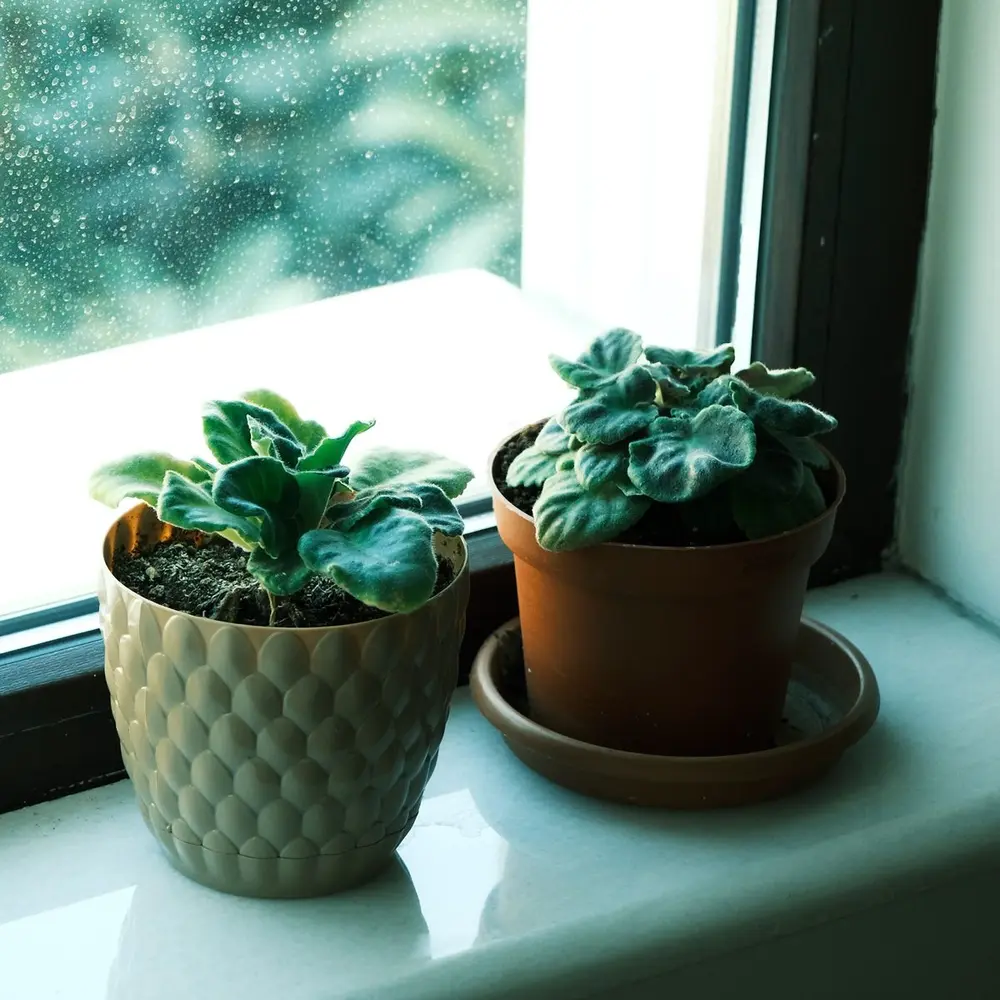
For a softer window, line the sill with African violets. They like a bright spot that doesn’t get direct afternoon sun, which is what an east window gives. Keep them within 3 feet of a large window; a north window can work for them too.
They are sized for a sill. A standard African violet grows 8 to 16 inches wide and the miniatures stay smaller, so measure the depth of your sill before you buy.
If a violet stops flowering, it usually needs more light. In a south window, move it to the side of the window or to a north window from late spring to early fall, when that strong sun can burn it.
Keep the potting mix moist but not soggy, and never leave the pot standing in water. Use room-temperature water and keep it off the leaves, since cold water leaves white blotches. Grouping the pots, or setting them on a tray of pebbles and water, keeps the air around them more humid.
The ASPCA lists the African violet as non-toxic to cats and dogs, which makes this sill a good fit for a home with cats and dogs.
4. A shelf across the window for young plants
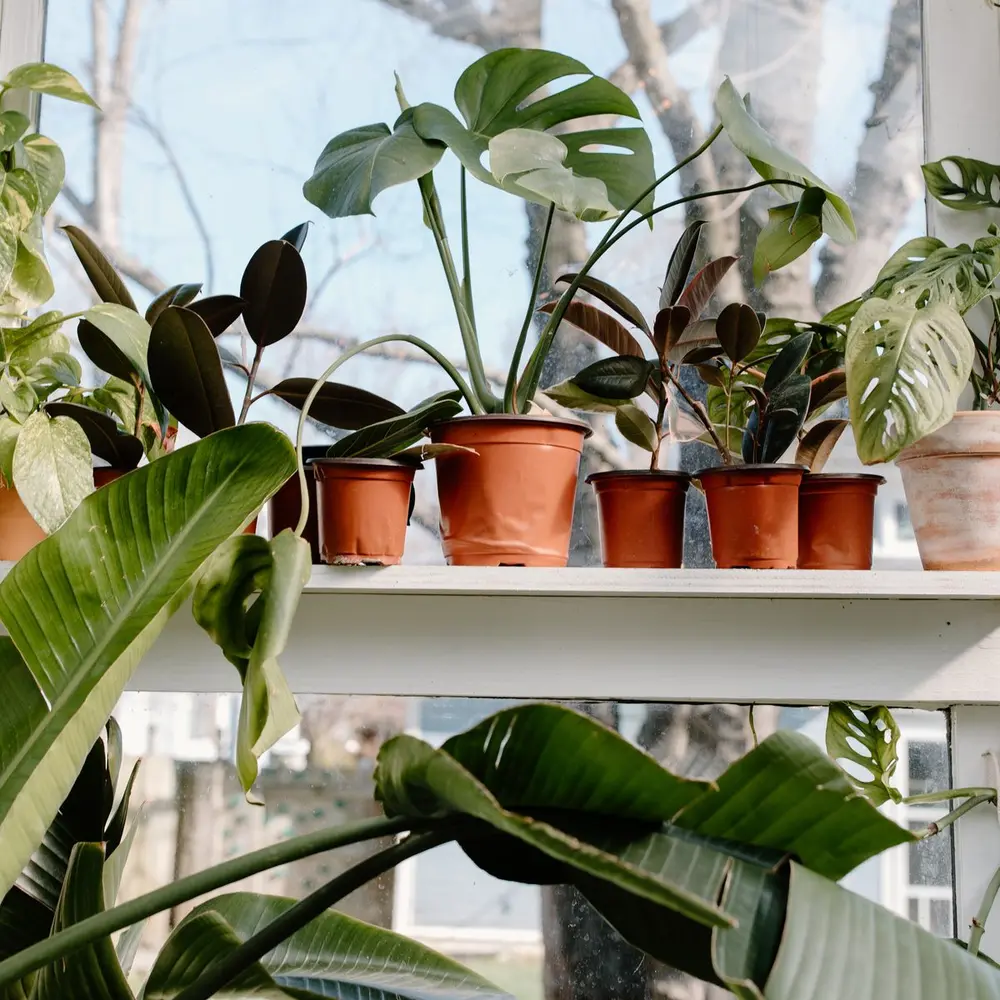
When the sill is full, add a second tier: a shelf fixed across the window frame, partway up the glass. It doubles the growing space in the brightest part of the kitchen and keeps the counter free. More ways to build tiers of plants are in these plant shelf ideas.
A window shelf makes a good nursery for young plants that will one day be too big for it, such as a small monstera or rubber plant. The rubber plant prefers bright light and grows best with the morning light from an east window. The monstera wants moderate brightness without direct sun, and in too little light its leaves won’t form their holes.
Neither stays small. A monstera reaches 6 to 8 feet in most homes, and a rubber plant can grow 6 to 10 feet tall indoors, so plan to move each one to the floor once it crowds the shelf. The monstera care guide covers that next stage.
Space the pots so the plants don’t shade each other, and turn them every week or two so they grow evenly.
The ASPCA lists the monstera and rubber plants as toxic to cats and dogs.
5. Hanging plants from the curtain rod or a ceiling hook
Hanging plants in front of a kitchen window use the space above the sill and keep trailing stems off the counter. Small, light pots can hang from a sturdy curtain rod, while a heavier basket belongs on a hook screwed into a ceiling joist.
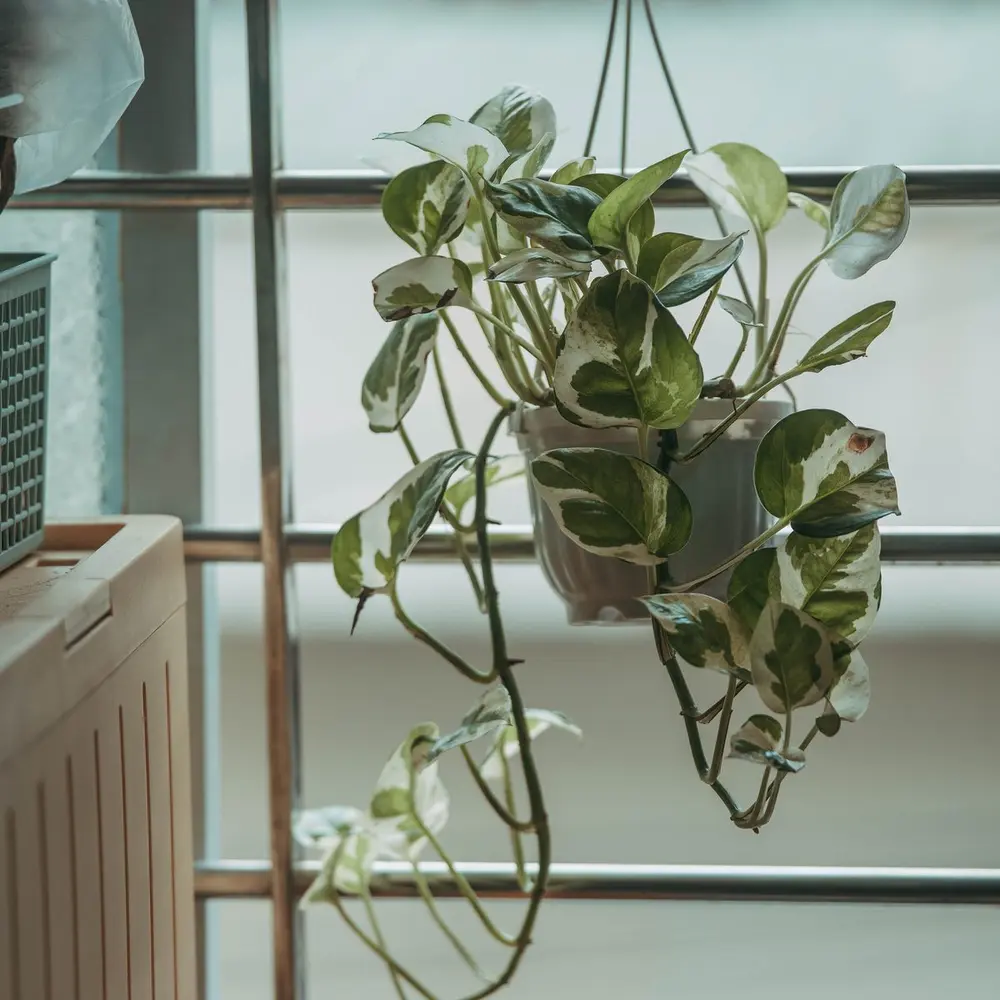
Pothos is the easy choice. It suits hanging baskets, prefers bright, indirect light and tolerates lower light. Its vines can grow 8 to 10 feet long indoors, so trim them before they reach the faucet.
The spider plant does particularly well where its leaves and stems can cascade down the sides of a pot, trailing 2 to 3 feet from a hanging basket. The wax plant, a hoya, also suits a hanging basket close to an east, west or south window, though at a south window it needs to get used to direct sun little by little.
Take each pot down to the sink to water it, and let it drain before you hang it back up.
The ASPCA lists the spider plant and wax plant as non-toxic to cats and dogs, and golden pothos as toxic. More trailing plants for a hanging pot are in this list of hanging plants for indoors.
6. Peace lilies and other low light plants for a north window
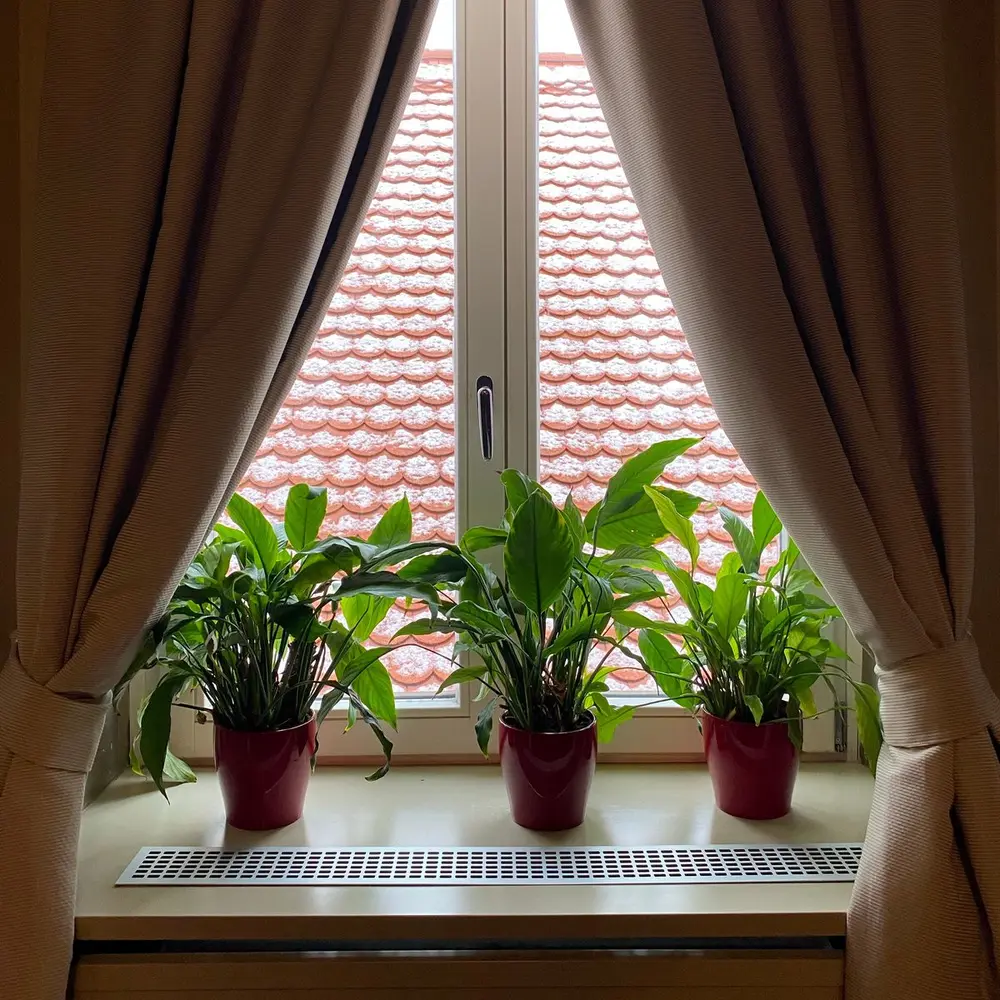
A north kitchen window suits only plants that need lower light and shouldn’t get direct sun. That rules out herbs and succulents, but it suits a peace lily well.
The peace lily tolerates low light and grows best in bright, indirect light, never direct sun, whose heat scorches the leaves. Keep the soil moist but not soggy, letting it dry slightly between waterings, and keep the plant out of the blast of a heating or air conditioning vent. The peace lily care guide covers getting it to bloom.
The plants from the hanging idea work here too. The spider plant prefers medium light but tolerates deep shade, and pothos survives long periods in low light. The spider plant care guide covers its plantlets and brown tips.
Window glass turns cold in winter. Keep the leaves from touching it, and move the pots about 6 inches into the room on cold nights. Don’t close a curtain behind the plants either: the space between curtain and glass gets warm by day and quite cold at night.
The ASPCA lists the peace lily as toxic to cats and dogs. The list of low light plants has more choices for a dim window.
7. Cuttings rooting in jars on the sill
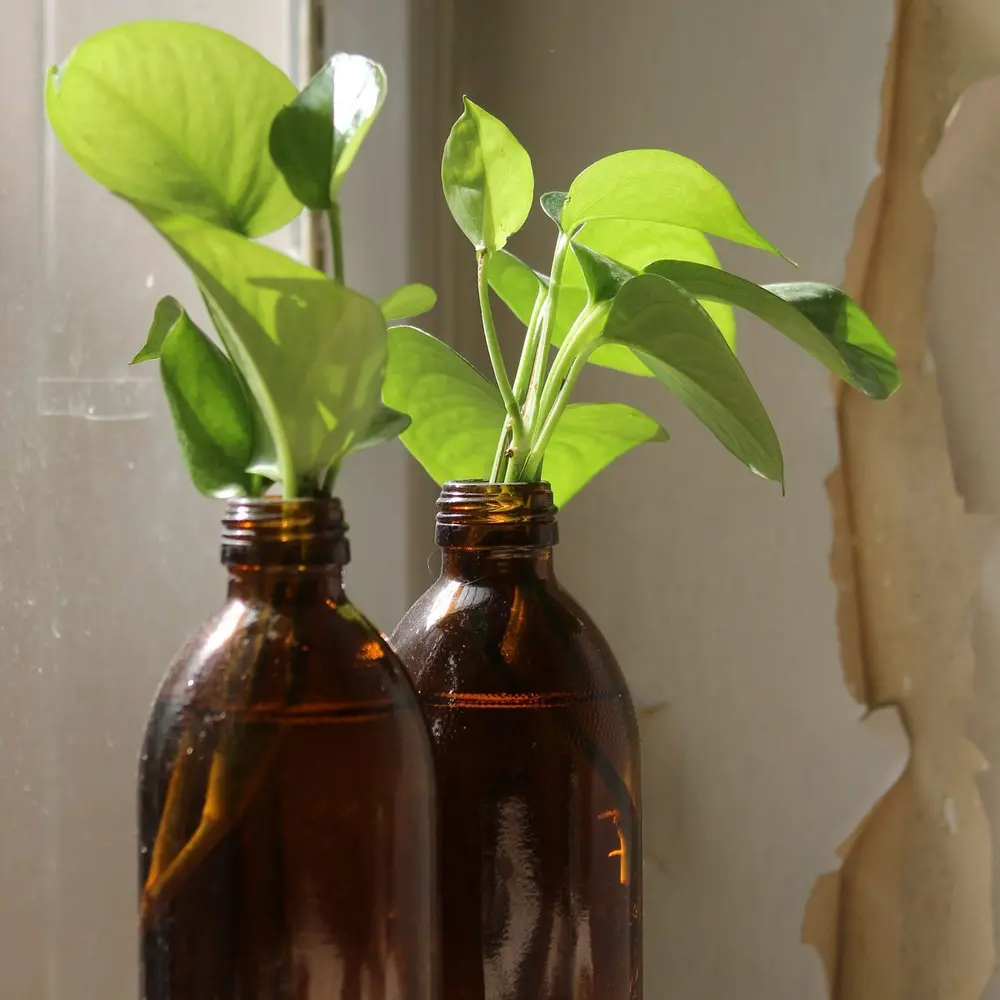
A row of glass jars or bottles with cuttings turns a bare sill into a small propagation station. Pothos is the easiest plant to start with: cut a piece of vine with at least one node, the point where a leaf joins the stem, and stand it in water with the node covered. The vines root in water within 3 to 4 weeks.
Clear jars let you watch the roots grow, while brown glass bottles hide them and look tidier on a sill. Top up the water as it drops, and keep the node under the surface.
Several plants root readily in a glass of water, but roots that form in water are coarser and not well adapted to potting soil. Once potted, a cutting may wilt or drop a few leaves while it adjusts. Pot several rooted cuttings together in one pot for a fuller plant.
A jar on a sill is easy for a cat to tip over or drink from, and the ASPCA lists golden pothos as toxic to cats and dogs, so keep the jars where pets can’t reach them. The pothos care guide covers taking cuttings and potting them up.
8. A long trough planter along the sill
A long, narrow trough fits a kitchen sill better than a row of round pots, and it turns several small plants into one tidy planting.
The simplest way to use one is as a sleeve: set separate pots with drainage holes inside it instead of planting straight into it. Each plant keeps its own soil, you can lift one out to water it or swap it, and a plant that needs different care doesn’t drag the others down. It is the same reason herbs do better one to a pot.
Spread pebbles in the bottom with a little water, and the trough doubles as a humidity tray. Keep the pot bottoms above the water, never standing in it.
Fill it with plants that share the same light and the same watering, such as herbs for a sunny window or African violets for an east one. A trough also catches the drips when you water, which keeps them off the sill and the counter below.
Whether it suits a home with pets depends on what you plant, so check each plant against the ASPCA list.
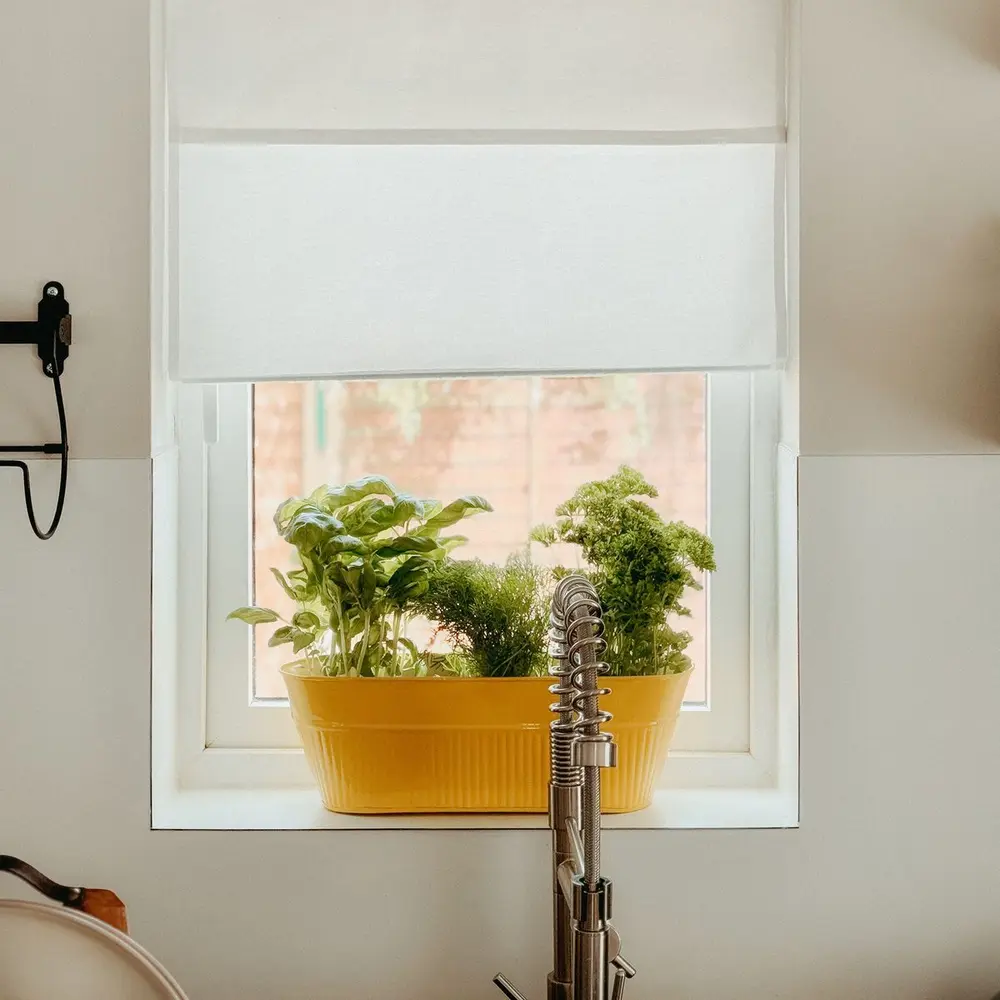
9. Plants for the window over the sink
The window over the sink is the one you look through most, and the air around it is often a little more humid. Kitchens and bathrooms often run more humid than the rest of the house, which suits plants that need moist air, as long as they also get enough light.
The Boston fern needs high humidity and moist soil that never dries out, and a spot near the kitchen gives it that. It wants bright, indirect light, such as an east window gives, and it is commonly grown in a hanging basket. The prayer plant also wants bright, indirect light and doesn’t tolerate direct sun or low humidity.
If your sink window gets strong sun instead, as a south or west window does, the succulents from the second idea suit it better than a fern.
Splashes are the hazard here. Set pots back from the faucet spray, keep soapy dishwater out of the soil, and leave room to open the window. Use the sink itself for watering, and let each pot drain there before it goes back.
The ASPCA lists the Boston fern and the prayer plant as non-toxic to cats and dogs.
How to match plants to your kitchen window
The ideas above work best when the plants match the window. A few minutes of checking saves a sill of struggling plants.
- Find the direction. Stand at the window and check which way it faces with a compass app on your phone.
- Count the hours of sun. On a clear day, note when direct sun reaches the sill and when it leaves. Herbs want at least 6 hours of it, and the jade plant at least 4.
- Check what blocks the light. Note any overhang, tree or building outside, and open the curtains or blinds during the day.
- Measure the sill. Its width and depth decide how many pots fit, and whether a shelf, a trough or hanging pots will give you more room.
- Pick from the table below. Start with the ideas listed for your window’s direction.
- Keep plants away from the stove. The direct heat of a stove and its drying effect damage leaves.
- Recheck the window in winter. Keep leaves off the cold glass and water less as growth slows. The winter plant care checklist covers the rest of the cold months.
Kitchen window plant ideas at a glance
| Idea | Window it suits | Plant picks | Cats and dogs (ASPCA) |
|---|---|---|---|
| Sill row of herbs | South, or bright east, west | Basil, rosemary, thyme, parsley, chives | Basil, rosemary, thyme non-toxic; parsley, chives toxic |
| Succulent sill | South or west | Aloe vera, jade plant | Toxic |
| African violet sill | East or north | African violet | Non-toxic |
| Shelf across the window | East | Young monstera, young rubber plant | Toxic |
| Hanging plants | East or west | Pothos, spider plant, wax plant | Pothos toxic; spider plant, wax plant non-toxic |
| North window | North | Peace lily, spider plant, pothos | Peace lily, pothos toxic; spider plant non-toxic |
| Cuttings in jars | Same as the parent plant | Pothos cuttings | Toxic |
| Long trough | Whatever the plants need | Herbs or African violets in pots | Depends on the plants |
| Window over the sink | East, out of direct sun | Boston fern, prayer plant | Non-toxic |
Not sure which plants fit your kitchen? The plant finder matches plants to your light, your space and your pets.
Frequently asked questions
What are the best plants for a kitchen window?
A sunny south window suits herbs, aloe vera and jade plant. An east window suits African violets, ferns and young foliage plants. A north window suits plants that need less light, such as the peace lily, spider plant and pothos.
Can herbs grow in a north-facing kitchen window?
Not well. Most herbs need many hours of direct sun a day, and a north window suits only plants that need less light. Grow herbs in your sunniest window, or under a grow light on a timer.
Which kitchen window plants are safe for cats and dogs?
Of the plants on this list, the ASPCA lists basil, rosemary, thyme, African violet, spider plant, wax plant, Boston fern and prayer plant as non-toxic to cats and dogs.
Can I keep plants on the windowsill near the stove?
Keep them away from it. The direct heat of a stove and the dry air around it damage leaves, so put plants at the far end of the window from the cooktop, or in another window.
How do I keep kitchen windowsill plants healthy in winter?
Keep the leaves from touching the cold glass, move the pots a little way into the room on cold nights, and don't shut them between the curtain and the window. Water less, since plants grow more slowly in winter light.
Save it for later
Pin it to a board so it's there when you need it.
Save to Pinterest(opens in a new tab)Keep reading
Low lightPlant list
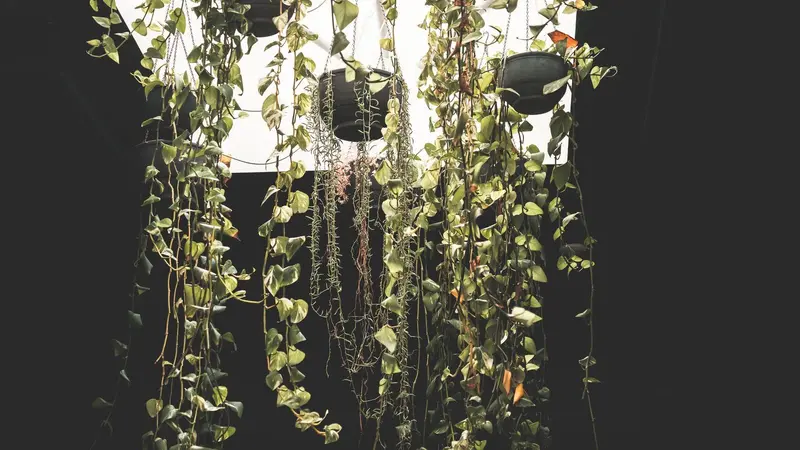
15 low light plants that grow away from the window
Houseplants for a north window, a dim hallway or a corner across the room: what low light means, where each plant fits and how to water it with less light.
Plant list
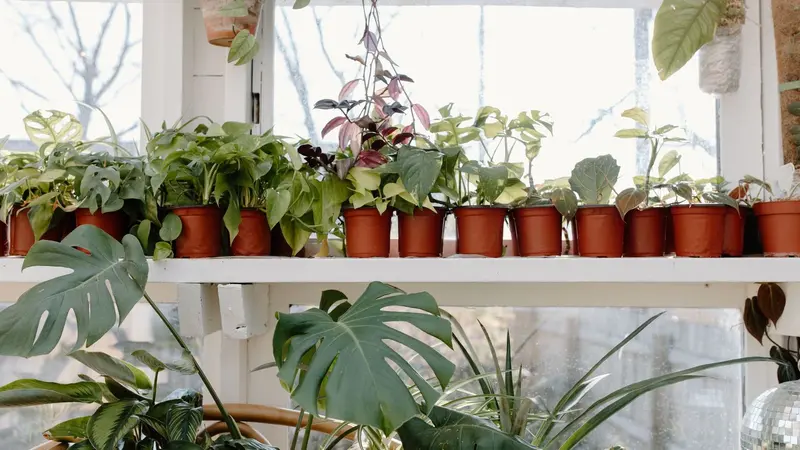
15 hanging plants that trail beautifully indoors
Pothos, string of hearts, Boston fern and twelve more plants for a hanging pot or high shelf, where each one hangs best for its light and how to water it.
Plant list
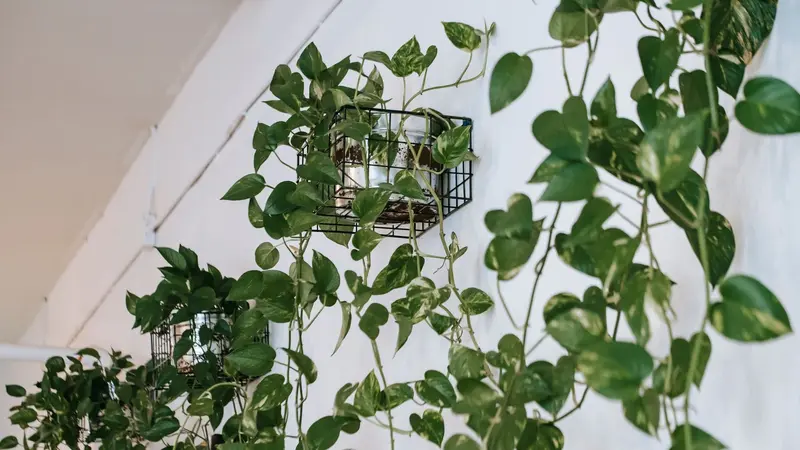
14 plant shelf ideas that look full without crowding
Ladder shelves, open bookcases, corner shelves and metal etageres, each with the plants that suit its light, plus how to keep every pot healthy.
Care guide
Pothos plant care guide for long, full vines
How to care for a pothos plant indoors: light for bright leaves, watering, soil, feeding, pruning for fuller vines, rooting cuttings and fixing yellow leaves.
Free printables
Free PDF
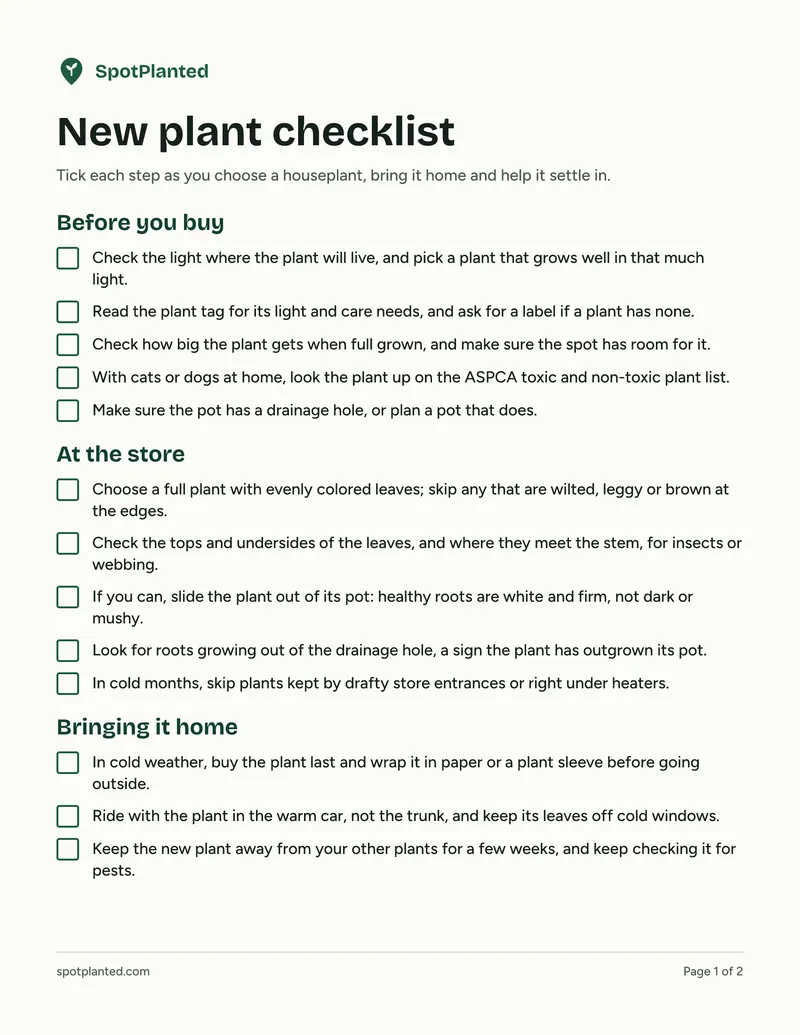
New Plant Checklist
A checklist for buying a houseplant and settling it in: the light, the store checks, the trip home and the first weeks.