Pothos plant care guide for long, full vines

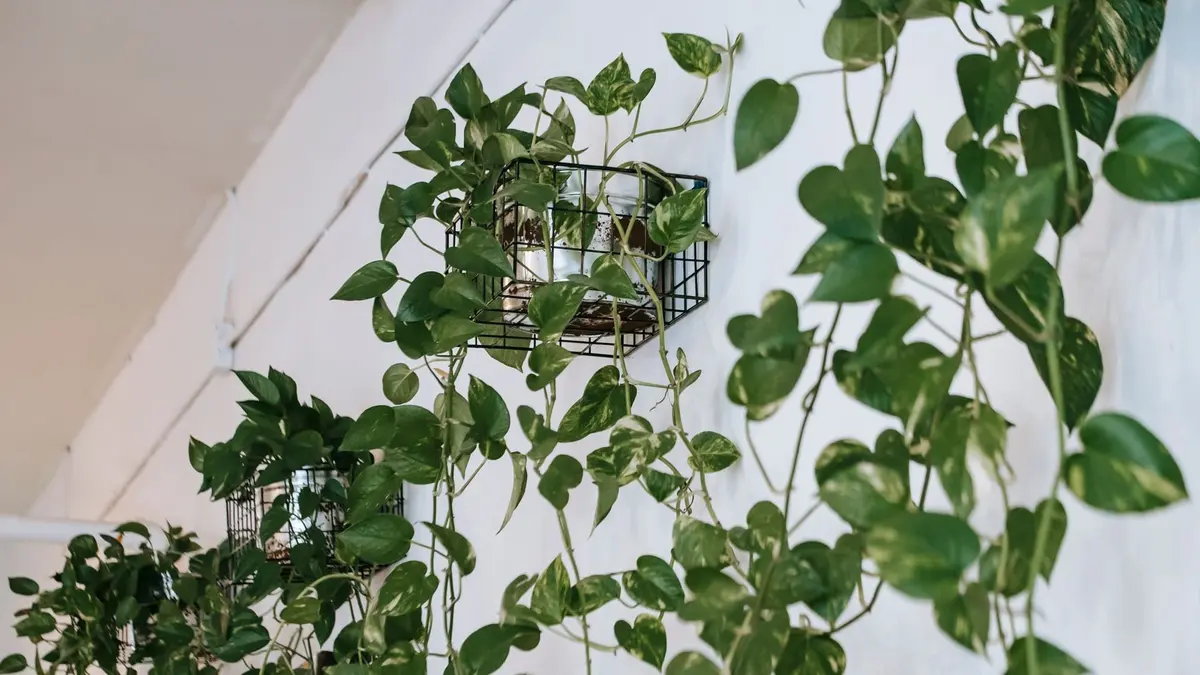
To care for a pothos, give it bright, indirect light, plant it in a well-drained mix in a pot with a drainage hole, and water when the soil has dried out between waterings. It grows in low light too, forgives a missed watering, and roots so easily from cuttings that one plant soon becomes several.
The two things to watch are soggy soil and long, bare vines. Both are easy to fix once you know why they happen.
Pothos care at a glance
| Need | What a pothos wants |
|---|---|
| Light | Bright, indirect light is best; low light works; no direct sun |
| Water | When the soil has dried out; better a little dry than too wet |
| Soil | A well-drained, airy potting mix |
| Temperature | Average room temperatures, about 60 to 80°F |
| Humidity | Prefers 50 to 70 percent; tolerates average home air |
| Feeding | Every other month in spring and summer |
| Pets | Toxic to cats and dogs (ASPCA) |
Light
Bright, indirect light suits a pothos best and keeps its leaves bright and well marked. Keep it out of direct sun, which can yellow and scorch the leaves.
A pothos also grows in low light, which is why it does well in north windows, offices and dim rooms. There it grows more slowly, uses less water, and its gold or white markings fade.
Variegated types, such as ‘Marble Queen’ with its white-streaked leaves, need more light to keep their pattern. The solid green ‘Jade’ handles lower light better.
The vines grow toward the light. Turn the pot every week or so for even growth on all sides.
Watering
Water a pothos when the soil has dried out between waterings, then water thoroughly so the water reaches every root. In many homes that comes to about once a week, but light and warmth change it, so feel the soil first.
A pothos is better kept a little too dry than too wet. Soil that stays soggy rots the roots and can blacken the leaf edges.
Underwatering shows as drooping leaves, and the plant usually perks up after a good drink. Over- and underwatering can both turn leaves yellow or brown, so check the soil to tell them apart.
In low light and in winter, the soil dries more slowly. Check it before every watering instead of keeping to a fixed day.
Soil and pot
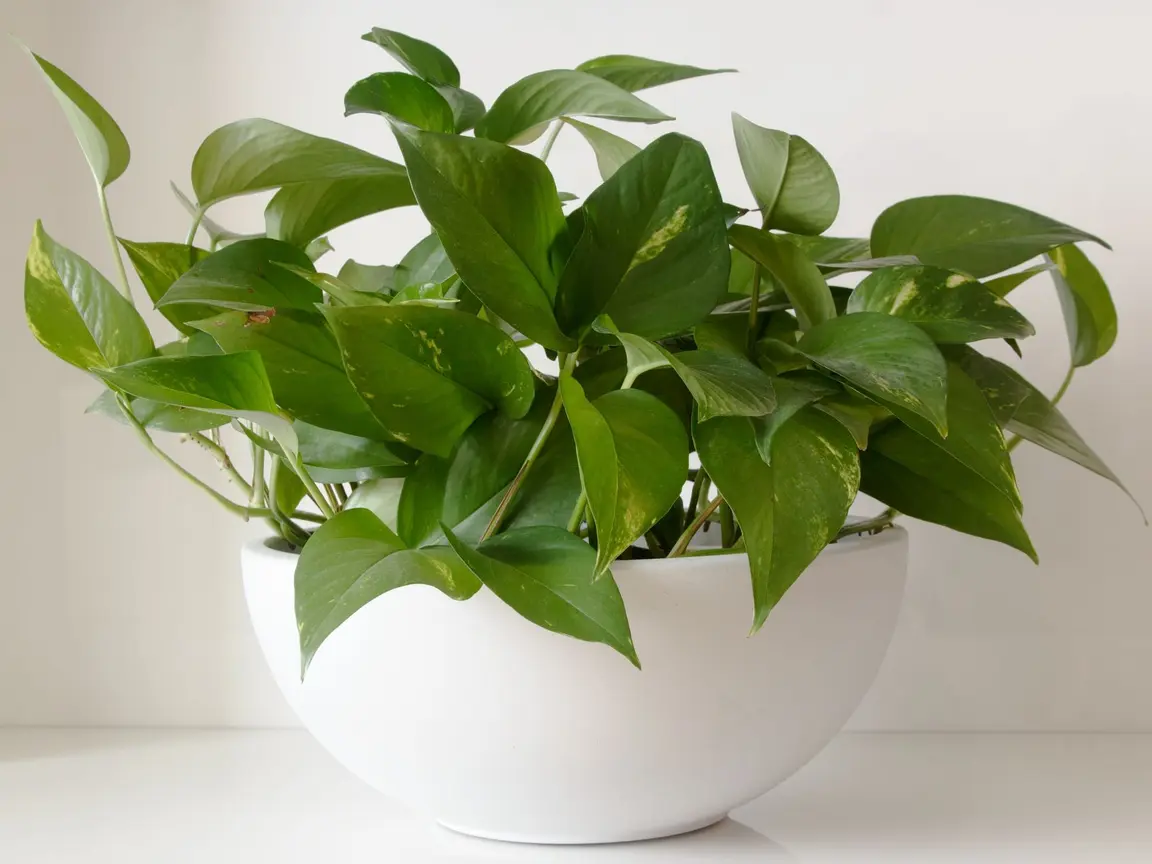
Plant a pothos in a well-drained, airy potting mix. A mix that drains well, together with careful watering, is the best protection against root rot.
Use a pot with a drainage hole. A pothos trails over the edge as it grows, so a hanging basket, a plant shelf or the top of a bookcase shows the vines off well.
Temperature and humidity
Average room temperatures of about 60 to 80°F suit a pothos. Keep it away from drafts, air-conditioning vents, heating vents and cold windowsills, since cold or sudden drops in temperature leave brown patches in the middle of the leaves.
A pothos prefers 50 to 70 percent humidity but tolerates the 30 to 60 percent of an average home. Very dry air can scorch the leaf tips, and a humidifier or a pebble tray helps in a heated home.
Feeding
Feed a pothos every other month in spring and summer, and skip winter, when it isn’t actively growing. Follow the label of the houseplant fertilizer you use.
Too much fertilizer builds up salts that blacken the leaf edges and tips. When in doubt, feed less.
Repotting
Repot a pothos every 1 to 2 years, depending on how fast it grows. Roots growing through the drainage hole or a crowded, root-bound plant mean it is time.
Move it up to a slightly larger pot in spring. The pot size calculator gives the next size from the pot it is in now.
To keep a large plant in the same pot, trim some of the roots, cut back up to a third of the vines and add fresh soil. Then take care not to overwater it while it regrows.
Pruning for fuller vines
Pothos vines grow long, often 8 to 10 feet or more indoors, and the older leaves at the base yellow and drop as they go. That leaves long, bare stems with leaves bunched at the ends.
Pruning fixes it. Cut a vine just above a node, the bump where a leaf joins the stem, at any point along its length, or remove a whole vine down to a 2-inch stub.
Pinch the tips now and then to keep the plant bushy. An overgrown plant can even be cut back to about 2 inches above the soil and left to regrow.
How to propagate pothos
Pothos roots easily from stem cuttings, in water or in soil, and spring and summer are the best times to try.
- Cut a piece of vine with at least one node, and a few leaves above it.
- Set the cutting in a glass of water, or in moist vermiculite or potting mix, with the node covered.
- Keep it warm, in bright, indirect light. Roots form in about 3 to 4 weeks.
- Once the roots are growing well, pot the cutting in potting mix.
- Plant several rooted cuttings together in one pot for a fuller plant.
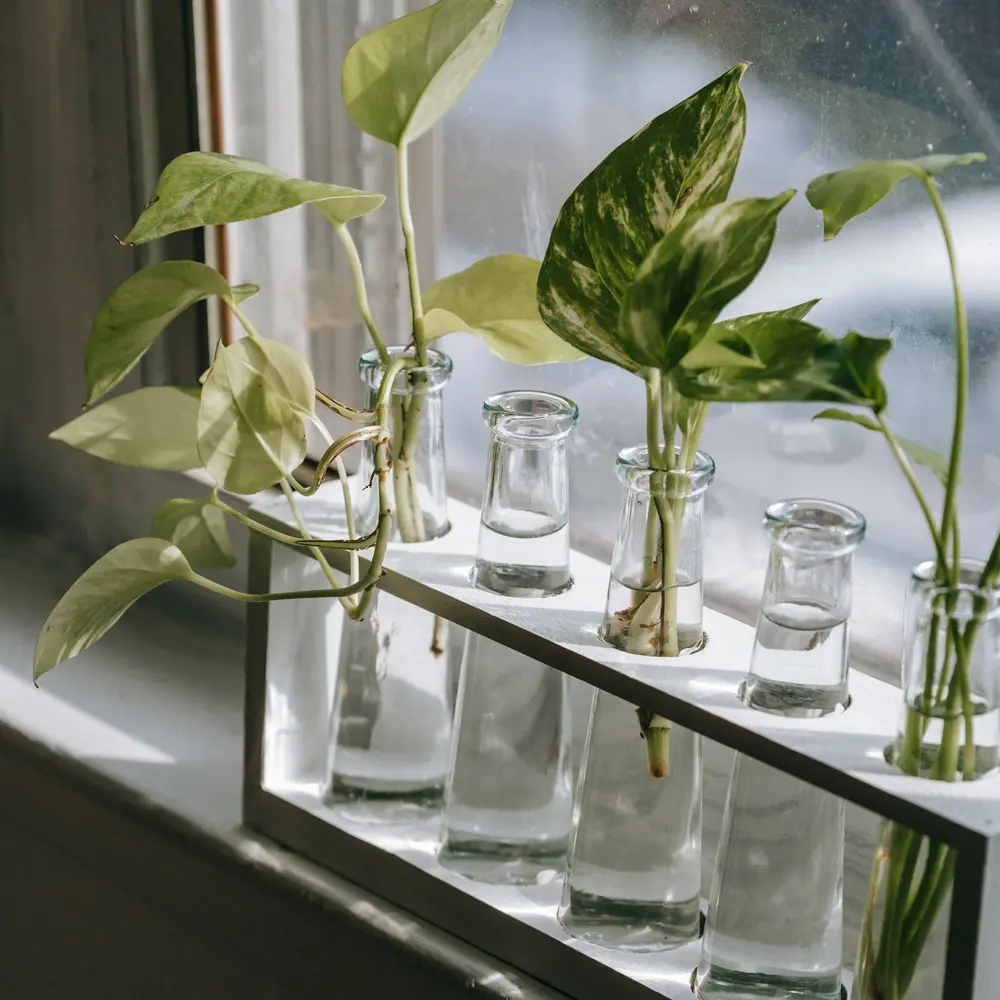
You can also divide the root ball when you repot, or layer a vine by pinning a node against the soil of another pot until it roots.
Climbing pothos and bigger leaves
Pothos climbs with aerial roots, the short brown roots at each node. Give it a moss pole, a totem or a wooden support, and it climbs instead of trailing.
As a trailing houseplant, pothos keeps small leaves, about 2 to 6 inches long. A climbing plant in good light can start to make larger leaves, closer to its form in the wild.
Common pothos problems
Yellow leaves
Overwatering is the most common cause, followed by too little fertilizer and direct sun. An old leaf at the base yellowing and dropping now and then is normal for a vine.
Brown or black edges and tips
Black or brown edges come from overwatering, underwatering or a buildup of fertilizer salts. Dry tips with scorched patches point to very dry air or too much light.
Brown patches in the middle of leaves
Scattered brown patches in the center of a leaf often follow cold or a sudden drop in temperature. Move the plant away from cold windows and drafts.
Pests
Mealybugs and scale are the most common pests. Mealybugs look like white cottony bits where leaves meet the stem, and scale like small brown bumps; both leave sticky leaves. Remove them as soon as you see them, and start over from clean cuttings if a plant is badly infested.
Pothos varieties
Common pothos varieties include ‘Golden’, ‘Jade’, ‘Neon’, ‘Marble Queen’, ‘Lime’ and ‘Tricolor’. Light is the main difference in their care.
- ‘Jade’ is solid green and handles low light better than the variegated types.
- ‘Marble Queen’ has white-streaked leaves and needs more light than most.
- ‘Snow Queen’ is heavily variegated in white and green and wants plenty of bright, indirect light.
Pothos is often confused with heartleaf philodendron. A pothos leaf stalk has a groove along it, and its new leaves unfurl without a papery sheath.
Pothos and pets
The ASPCA lists golden pothos as toxic to cats and dogs. Its calcium oxalate crystals cause intense burning and irritation of the mouth, drooling, vomiting and trouble swallowing, and the sap can irritate skin.
Hang the vines out of reach of pets, and call your vet or the ASPCA Animal Poison Control Center if a pet chews them. With pets at home, the plant finder suggests plants the ASPCA lists as non-toxic.
Pothos care checklist
- Bright, indirect light; low light is fine, but markings fade.
- Water when the soil has dried out; better a little dry than soggy.
- A well-drained mix in a pot with a drainage hole.
- Average warmth, away from drafts and vents.
- Feed every other month in spring and summer.
- Prune long vines above a node and root the cuttings.
- Keep it out of reach of pets.
Set check days for its soil with the watering schedule maker.
Frequently asked questions
How much light does a pothos need?
Bright, indirect light is best, but a pothos grows in low light too. In dim light it grows slowly and its leaves lose some of their gold or white markings.
Why are my pothos leaves turning yellow?
Overwatering is the most common cause, followed by too little fertilizer or direct sun. An old leaf at the base yellowing and dropping now and then is part of how the vine grows.
How do I make my pothos fuller?
Cut long vines back just above a leaf, and pinch the tips. Root the cuttings and plant them back in the same pot for a fuller plant.
Is pothos safe for cats and dogs?
No. The ASPCA lists golden pothos as toxic to cats and dogs. Keep the vines out of reach, and call your vet if a pet chews them.

Save it for later
Pin it to a board so it's there when you need it.
Save to Pinterest(opens in a new tab)Keep reading
Care guide
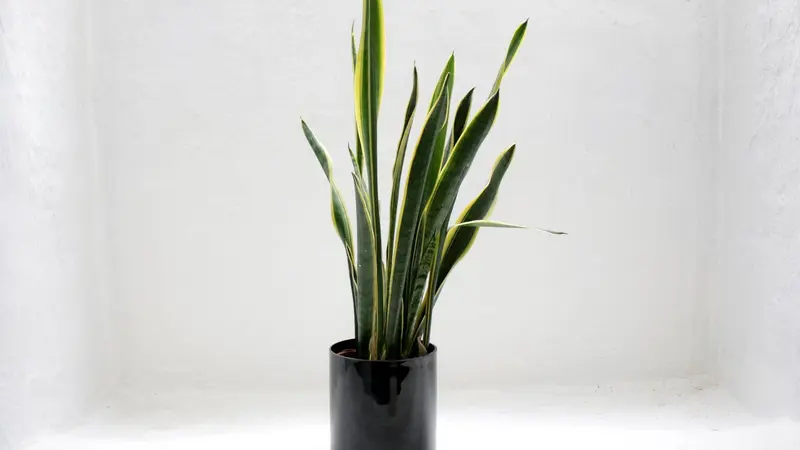
Snake plant care guide for light, water and soil
How to care for a snake plant indoors: the light it likes, how often to water, the right soil and pot, repotting, propagation and the problems to watch for.
Care guide
Peace lily care guide for leaves, blooms and water
How to care for a peace lily indoors: the light that brings flowers, how to water without root rot, soil, feeding, repotting, dividing and fixing brown tips.
Try a free tool
Plant Finder
Answer four questions about light, space, pets and watering to see the houseplants that fit your spot.