14 cat-safe house plants the ASPCA lists as non-toxic

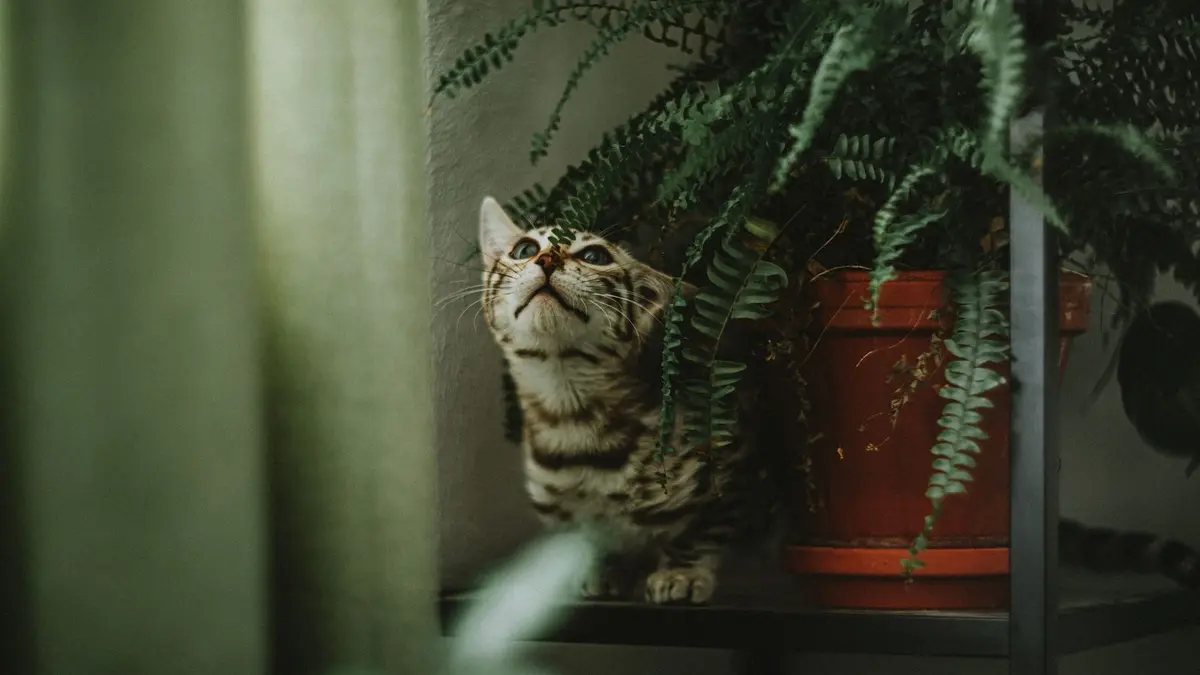
The ASPCA lists these 14 houseplants as non-toxic to cats: cast iron plant, parlor palm, baby rubber plant, spider plant, prayer plant, calathea, Boston fern, African violet, money tree, areca palm, moth orchid, wax plant, zebra haworthia and ponytail palm.
Non-toxic doesn’t mean a cat can graze on them. The ASPCA notes that eating any plant material can upset a cat’s stomach, so even these plants belong where your cat can’t make a habit of chewing them.
If you think your cat has eaten a plant that may be toxic, contact your veterinarian or the ASPCA Animal Poison Control Center as soon as possible.
How to read the ASPCA list for cats
The ASPCA keeps separate lists of plants that are toxic and non-toxic to cats, and the pet-safe houseplants list covers plants it lists as non-toxic to cats and dogs alike. Each entry gives a common name, other common names and a scientific name, so look for the botanical name on the plant’s tag, not just a common name that several plants may share.
The list isn’t meant to include every plant. It gathers the plants the ASPCA comes across most often, so a plant that isn’t on it hasn’t been cleared. Treat it as unsafe and keep it away from your cat.
The plants below run from the ones that take the least light to the ones that need the most. Each item names the plant as the ASPCA lists it, along with where to put it in a home with a cat.
1. Cast iron plant
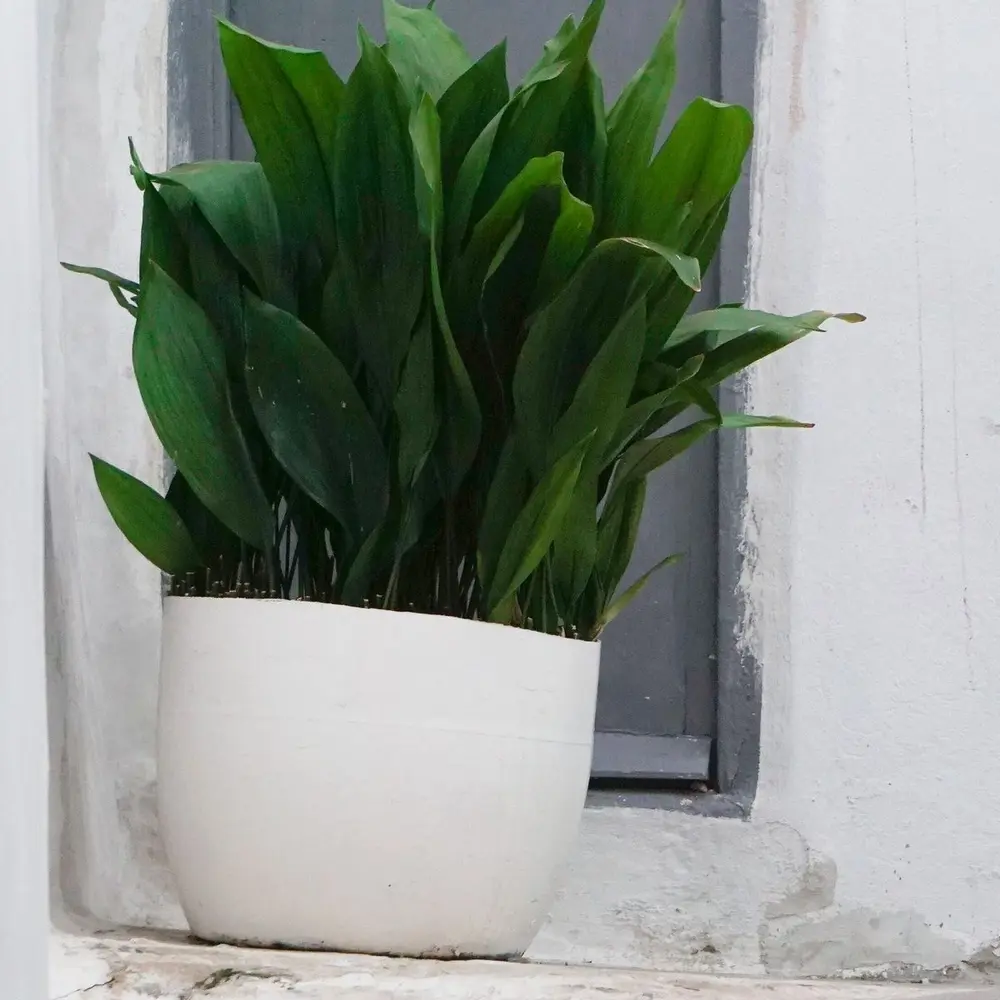
The cast iron plant takes neglect in stride. It grows best in bright, indirect light but tolerates full shade, and it doesn’t need humid air, so a north window or a dim corner suits it. Keep it out of direct sun.
Water when the soil has dried 2 to 3 inches down, and let the extra drain from the pot. It needs only a little water in winter. Its sword-shaped leaves grow upright to 2 to 3 feet tall.
In a home with a cat, it’s a good floor plant. The stiff, upright leaves don’t sway or dangle, and a wide, heavy pot keeps it from tipping if your cat leans on it. The low light plants list has more plants for a dim spot.
The ASPCA lists the cast iron plant (Aspidistra elatior) as non-toxic to cats.
2. Parlor palm
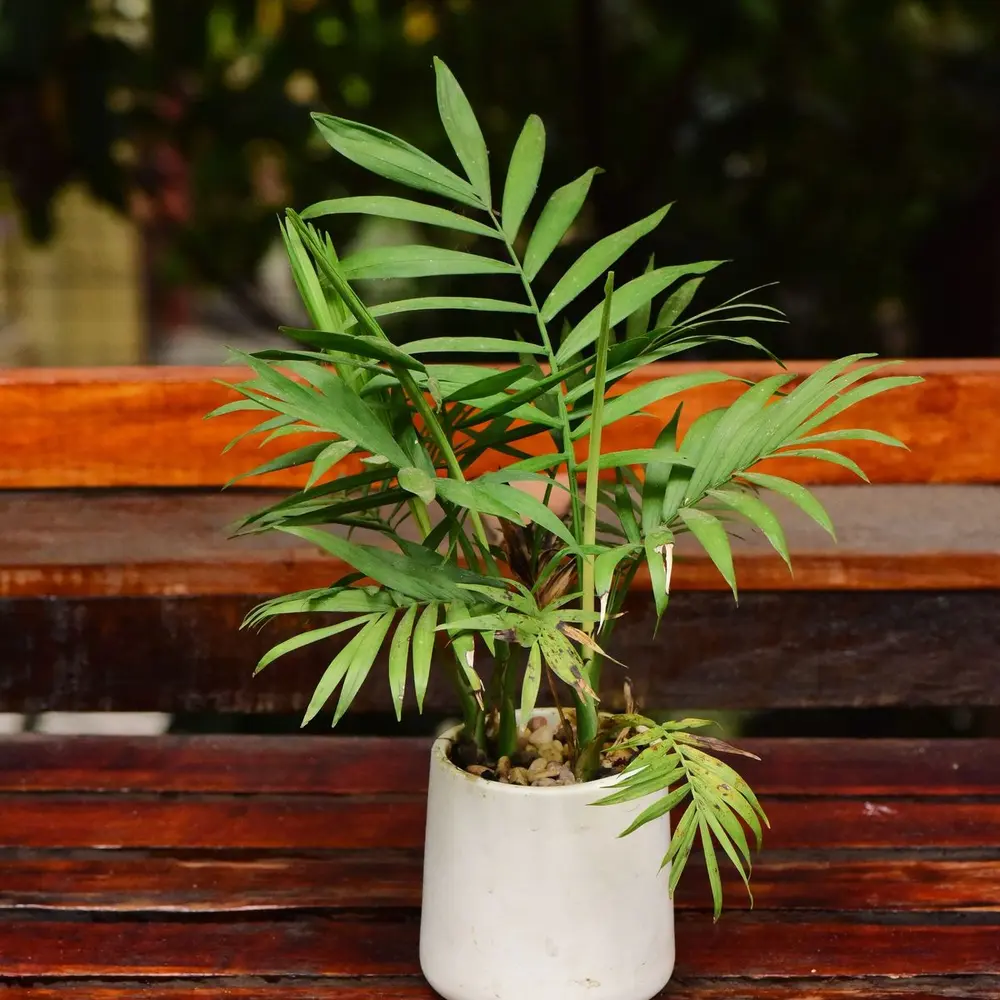
The parlor palm is a small palm that thrives in the dry air and dim light that many other plants can’t take. It does best in bright, indirect light near a north or east window, though it tolerates low light. Keep it away from cold drafts by windows, doors and vents.
Keep the soil moist and let the surface dry slightly between waterings. Never let it dry out completely or sit in water, and empty the saucer after watering. It prefers moderate to high humidity but adapts to most homes.
Indoors, its stems can grow up to 5 feet, but they usually stay smaller. Its fine, feathery fronds move in a draft, which can catch a cat’s eye. Set it on the floor in a heavy pot, or on a stand your cat doesn’t use as a perch.
The ASPCA lists the parlor palm (Chamaedorea elegans) as non-toxic to cats.
3. Baby rubber plant
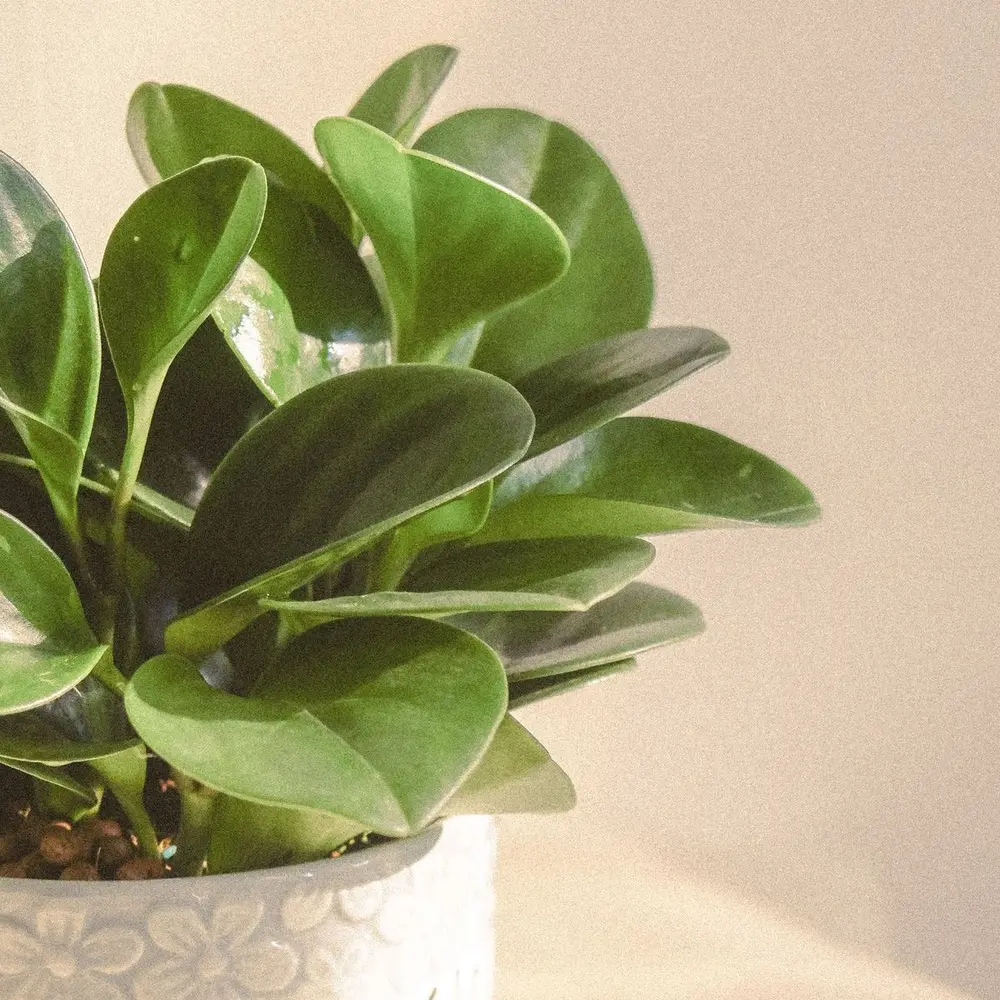
The baby rubber plant is a peperomia with thick, glossy, cupped leaves on sturdy stems. It prefers bright, indirect light but tolerates low light for several months without stress, especially the plain green kinds. Strong, direct sun burns its leaves.
Let the soil dry out between waterings. It dislikes both wet soil and very dry soil, and overwatering is its biggest problem: it yellows the leaves and can lead to root rot. Medium to low humidity suits it, and it doesn’t like drafts.
It is a classic desk plant, which makes it easy to place out of a cat’s way. A desk your cat doesn’t walk across works well, and the desk plants list has more small plants for one.
The ASPCA lists the baby rubber plant (Peperomia obtusifolia) as non-toxic to cats. It also lists the same plant as blunt leaf peperomia.
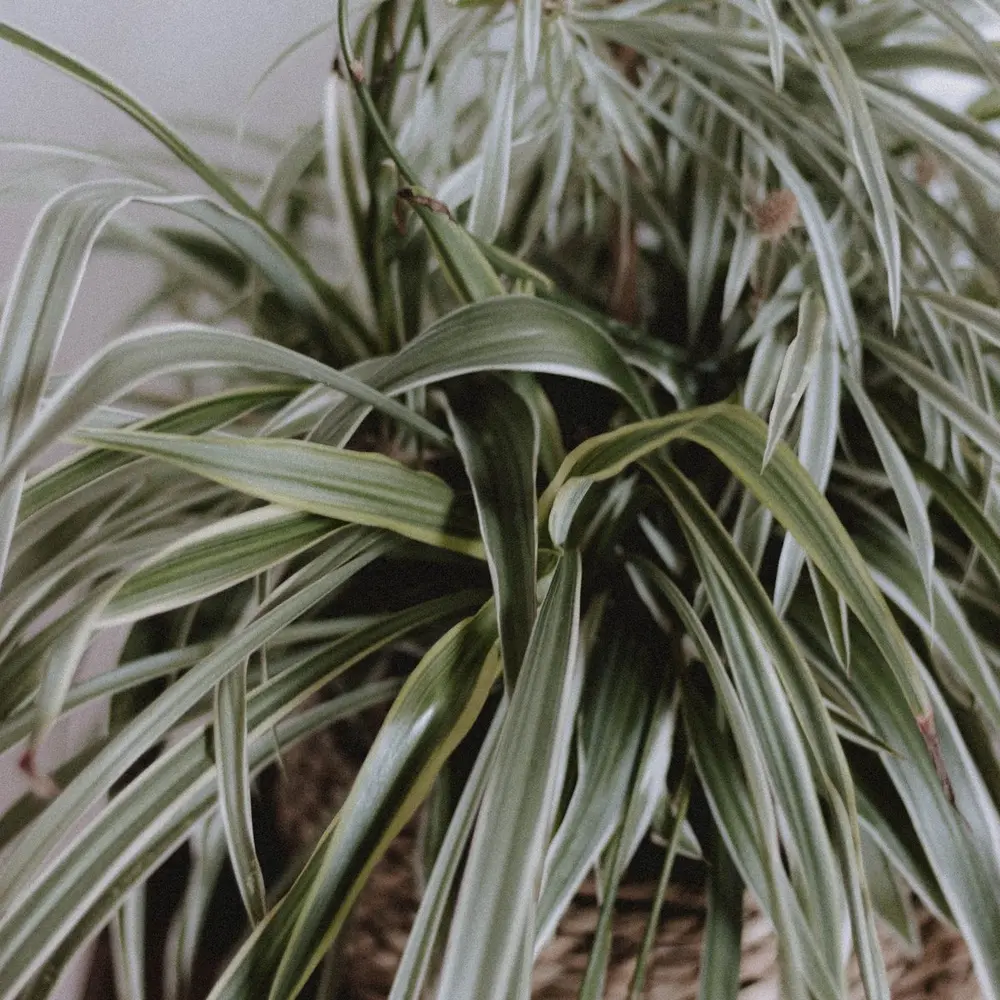
4. Spider plant
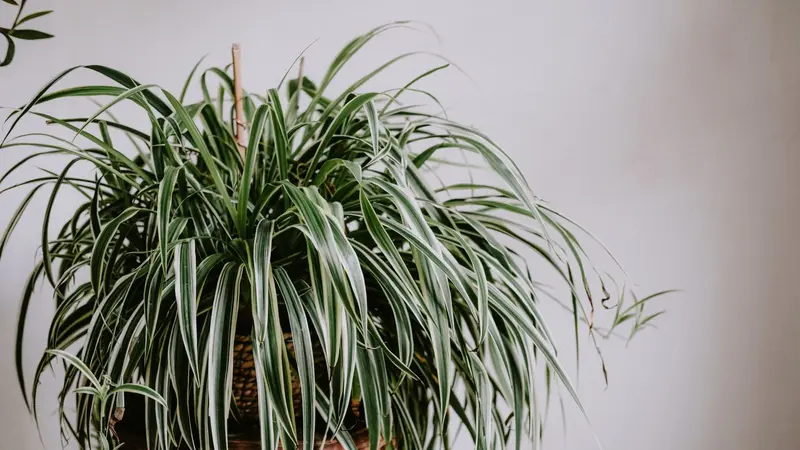
The spider plant grows best in bright, indirect light and tolerates much lower light, though midday sun can scorch its leaves. It tolerates drought, dry soil and the medium humidity of most homes, which makes it forgiving if you forget to water.
Water when the top 1 to 2 inches of soil feel dry, let it dry out briefly between waterings, and water less in winter. In a hanging basket, its leaves and the stems that carry small plantlets trail 2 to 3 feet.
Those arching leaves and dangling plantlets tempt cats to bat and chew. Hang the pot well out of reach, away from furniture your cat can climb, so the plantlets don’t hang down to a jumping spot. The spider plant care guide covers its plantlets and brown tips.
The ASPCA lists the spider plant (Chlorophytum comosum) as non-toxic to cats.
5. Prayer plant
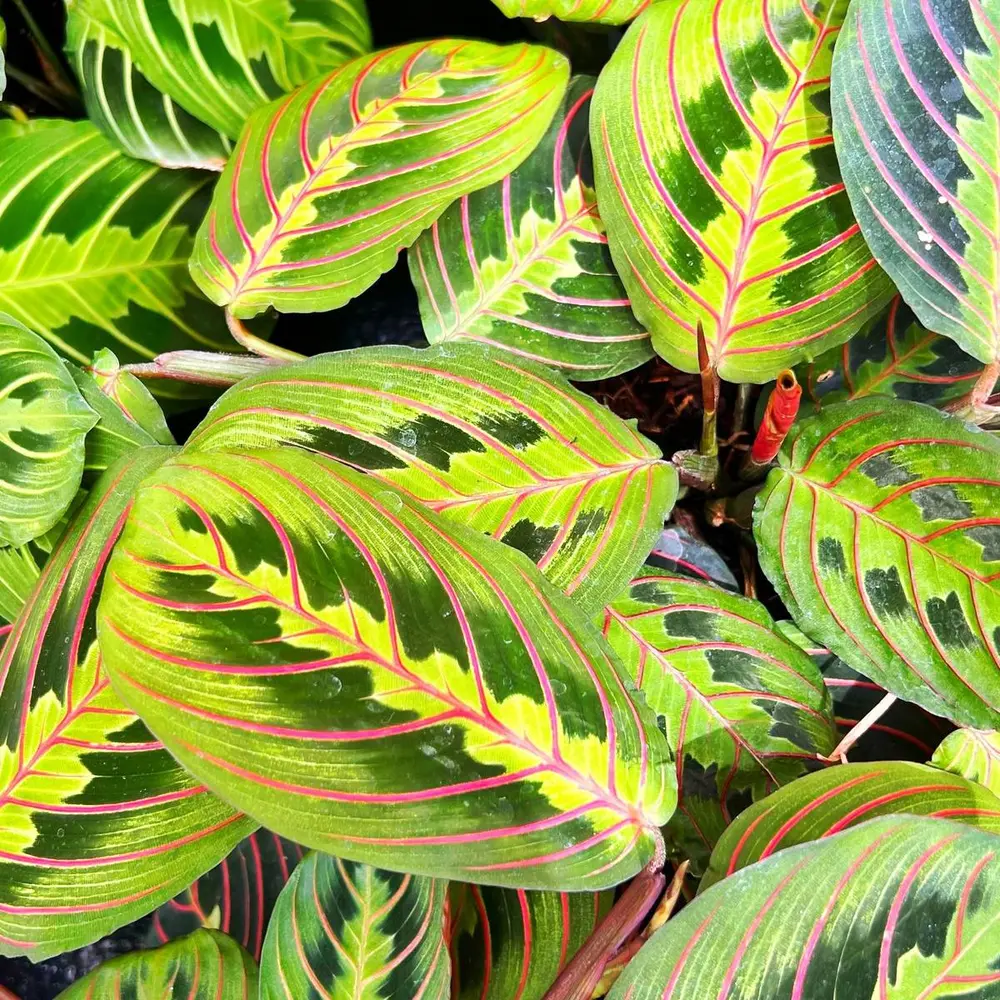
The prayer plant has patterned leaves with red, fishbone-shaped veins that lie flat by day and fold upward at night. Grow it in bright, indirect light. It tolerates low to medium light, but too much sun bleaches the leaf colors.
Keep the soil evenly moist through the growing season, then let it dry out a little more in winter. It needs high humidity, so stand the pot on a tray of wet pebbles or keep it in a humid room, and keep it away from cold drafts.
The prayer plant grows low and spreads sideways, and it is often grown in a hanging basket. A hanging pot shows off the leaves from below and keeps them away from a cat that likes to chew broad, soft leaves.
The ASPCA lists the prayer plant as non-toxic to cats. Its entry gives the scientific name as Calathea insignis, with maranta among its other names.
6. Calathea
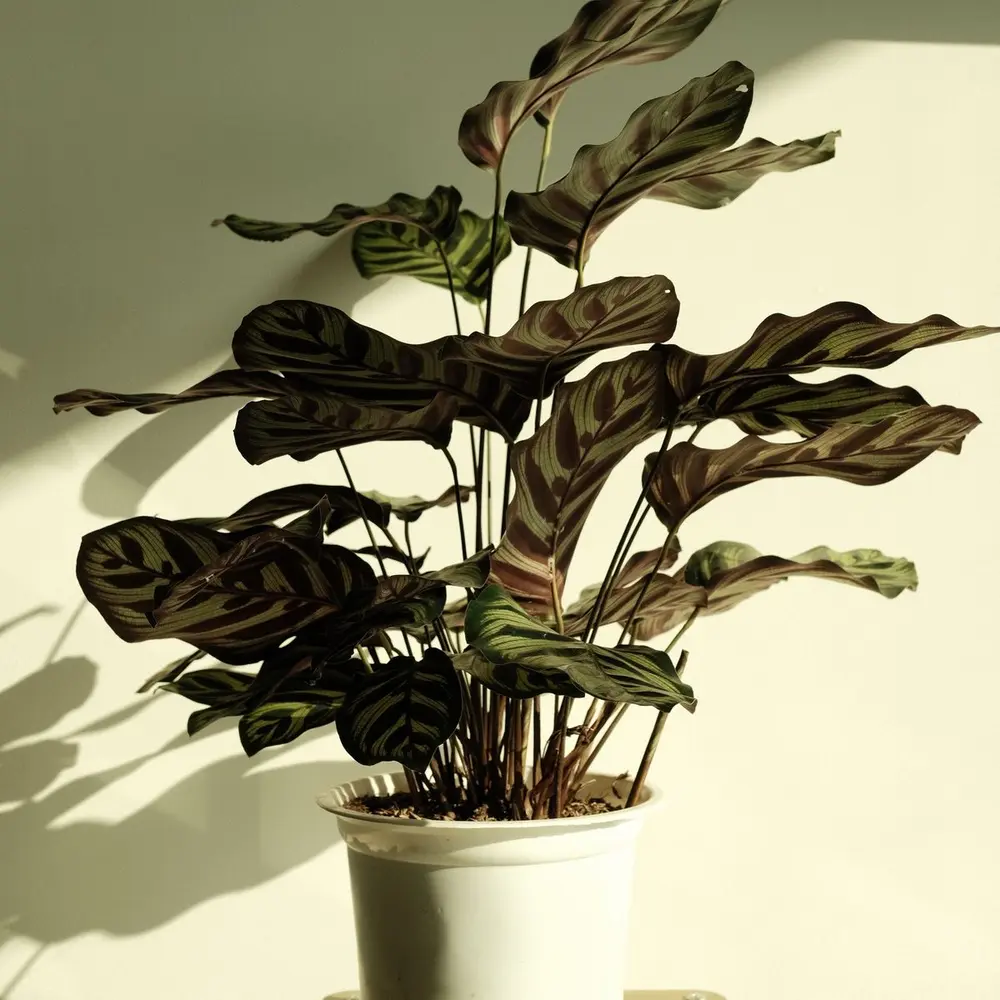
Calatheas are relatives of the prayer plant with striped, feathered or mottled leaves, and many of them have been moved to the genus Goeppertia. They like medium, indirect light. Direct sun scorches the leaves, so keep them back from a sunny window.
Keep the soil moist but never soggy. Tap water can damage the leaves, so water with distilled water or rainwater. They need warmth, 65 to 75°F, and high humidity, so a bright bathroom or kitchen or a tray of wet pebbles helps, and brown leaf edges are a sign the air is too dry.
They are fussier than most plants here. Avoid sudden temperature changes and drafts, and wipe the leaves now and then with a soft, damp cloth. Their broad leaves sit at a cat’s eye level on the floor, so a plant stand works better than the floor.
The ASPCA lists calathea (Calathea spp.) as non-toxic to cats. Its entry covers the whole genus rather than one species.
7. Boston fern
The Boston fern grows best in bright, indirect light with no direct sun, such as the medium light near an east window. It tolerates some shade.
It needs more care than most plants here. Keep the soil moist and never let it dry out, and water a little less in winter, since soggy soil then can rot the roots. It needs high humidity, so a bright kitchen or bathroom suits it.
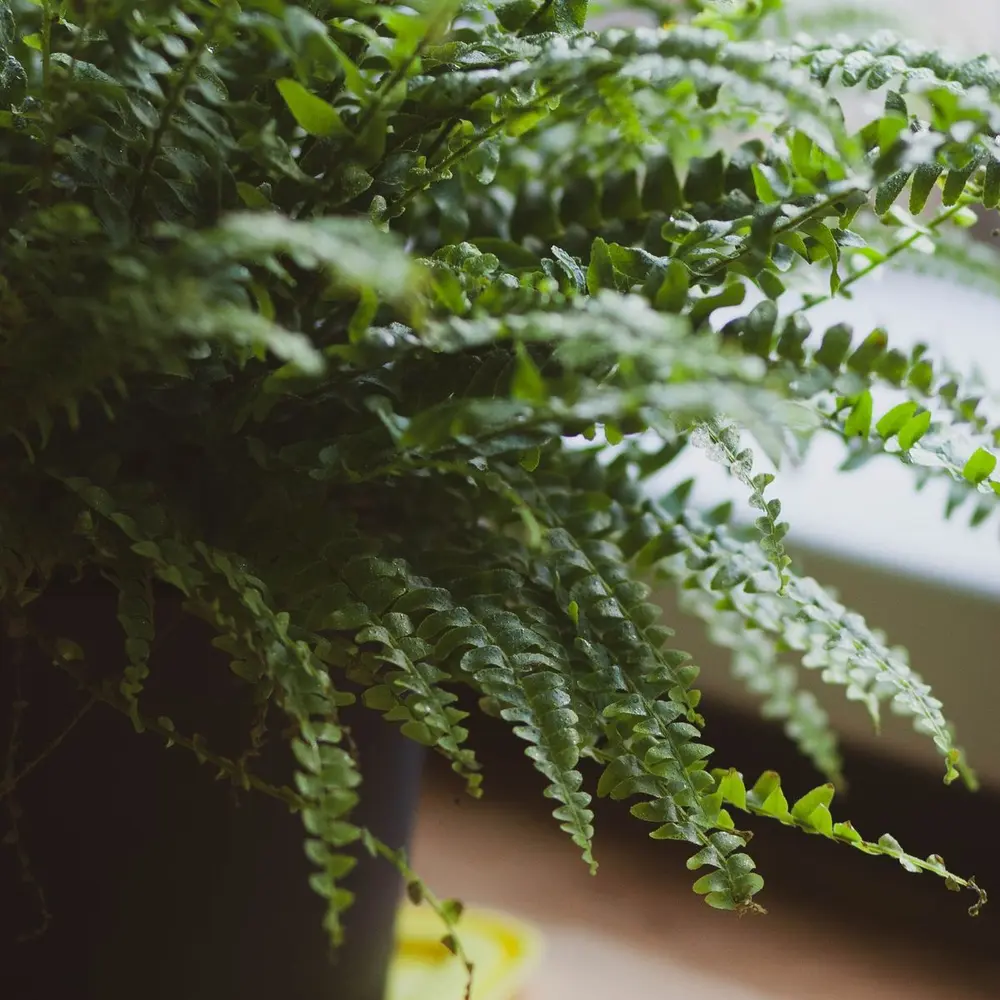
Rows of dark brown dots under the fronds are spores, not pests.
Its arching fronds grow up to 3 feet long and cascade on all sides. On a low table, that’s a curtain for a cat to hide in and chew. Hang it instead, where you see it from below and your cat can’t reach the fronds.
The ASPCA lists the Boston fern (Nephrolepis exalta bostoniensis) as non-toxic to cats.
8. African violet
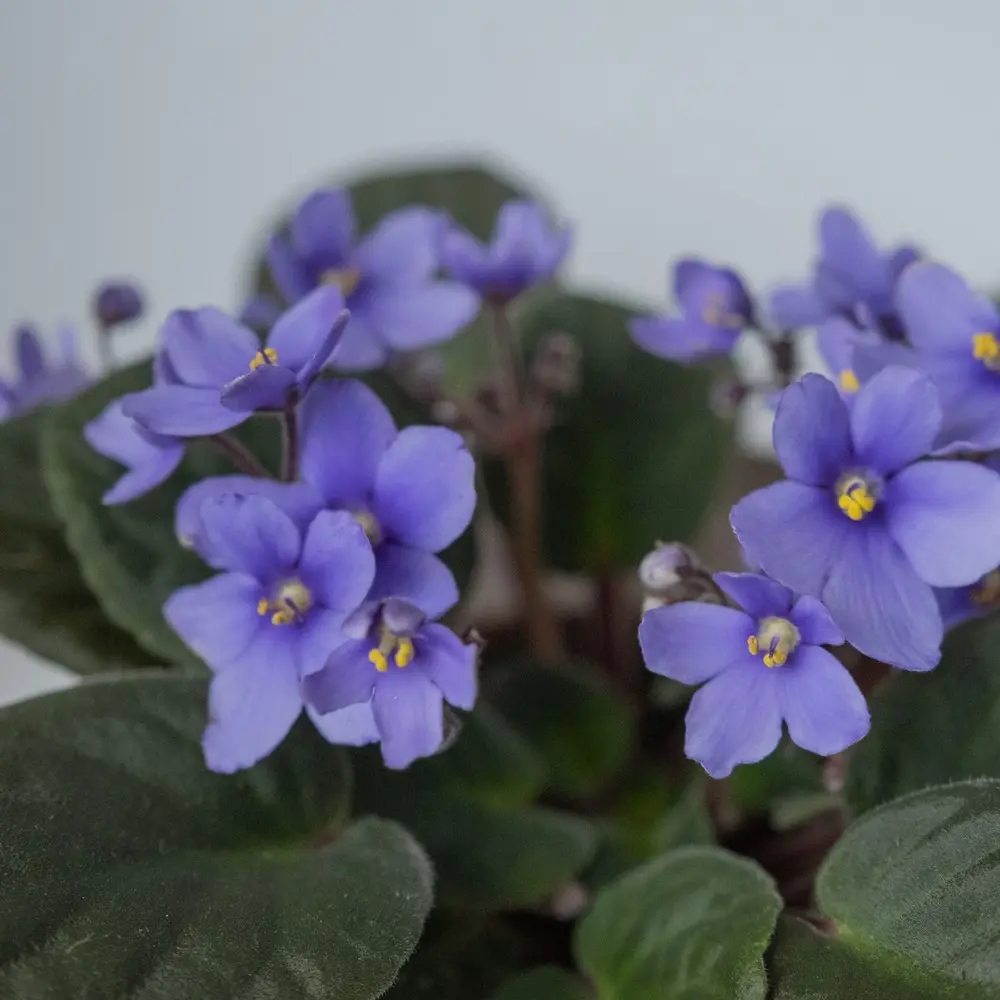
The African violet is a low, compact plant with fuzzy leaves and flowers in purple, blue, pink, red or white. It likes a bright spot that doesn’t get direct afternoon sun, so a north or east window works well. Keep it within 3 feet of a large window.
Keep the potting mix moist but not soggy, and never let the pot sit in water. Water from the bottom to keep the leaves dry, since water on them leaves spots. It does best at 60 to 80°F, and very cold water harms it.
A standard plant grows 8 to 16 inches wide, small enough for a windowsill. A sunny sill is also a favorite cat perch, so pick a window your cat doesn’t use, or set the violet on a narrow plant stand beside the glass.
The ASPCA lists the African violet (Saintpaulia spp.) as non-toxic to cats.
9. Money tree
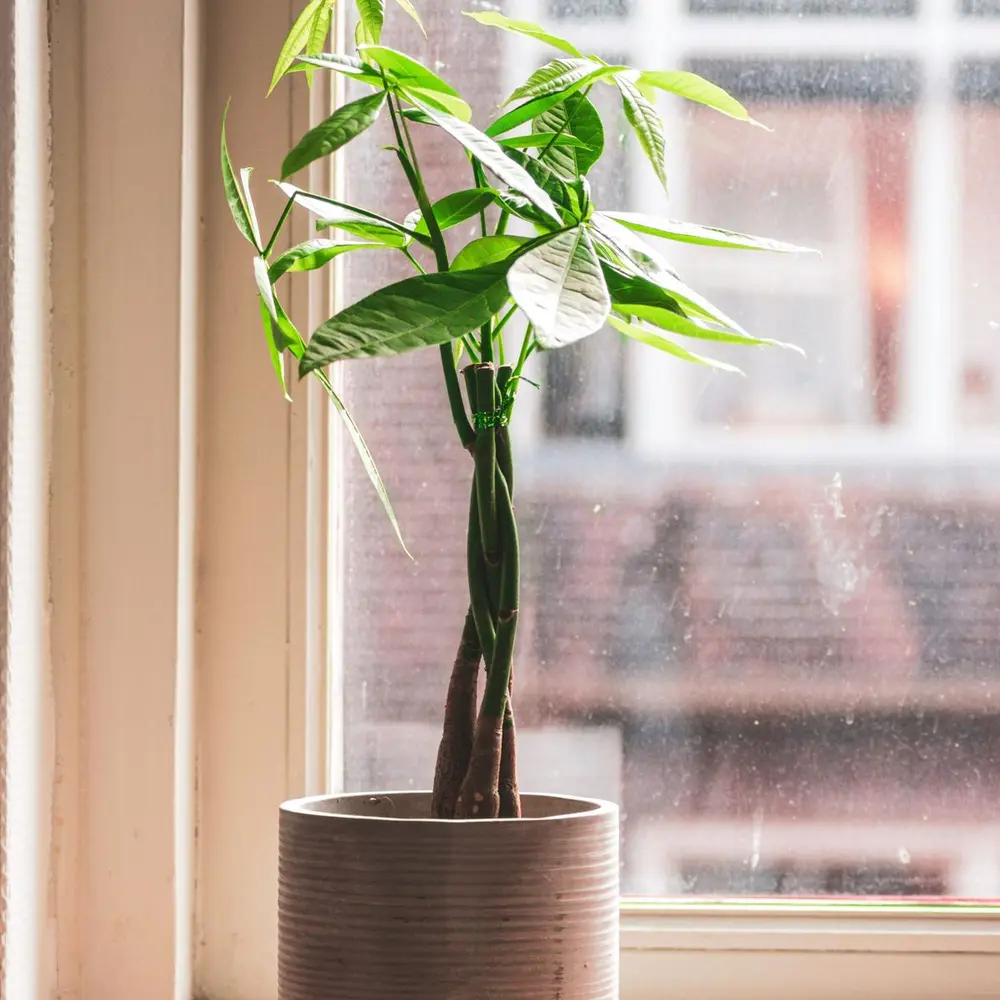
The money tree has flexible trunks that can be braided together and shiny leaves that spread like the fingers of a hand. It prefers indirect light or a mix of sun and shade. Direct sun can scorch the leaves, so set it near a window rather than in the brightest part of one.
Plant it in a moist, well-drained potting mix. It doesn’t tolerate standing water, which causes root rot, and its leaves can drop if the soil gets too dry. It likes humid air and warm rooms.
As a houseplant, it typically grows no more than 6 to 8 feet tall, so it becomes a floor plant in time. A heavy pot keeps a climbing cat from tipping it over. Check for Pachira aquatica on the tag, since that is the species the ASPCA entry names.
The ASPCA lists the money tree (Pachira aquatica) as non-toxic to cats.
10. Areca palm
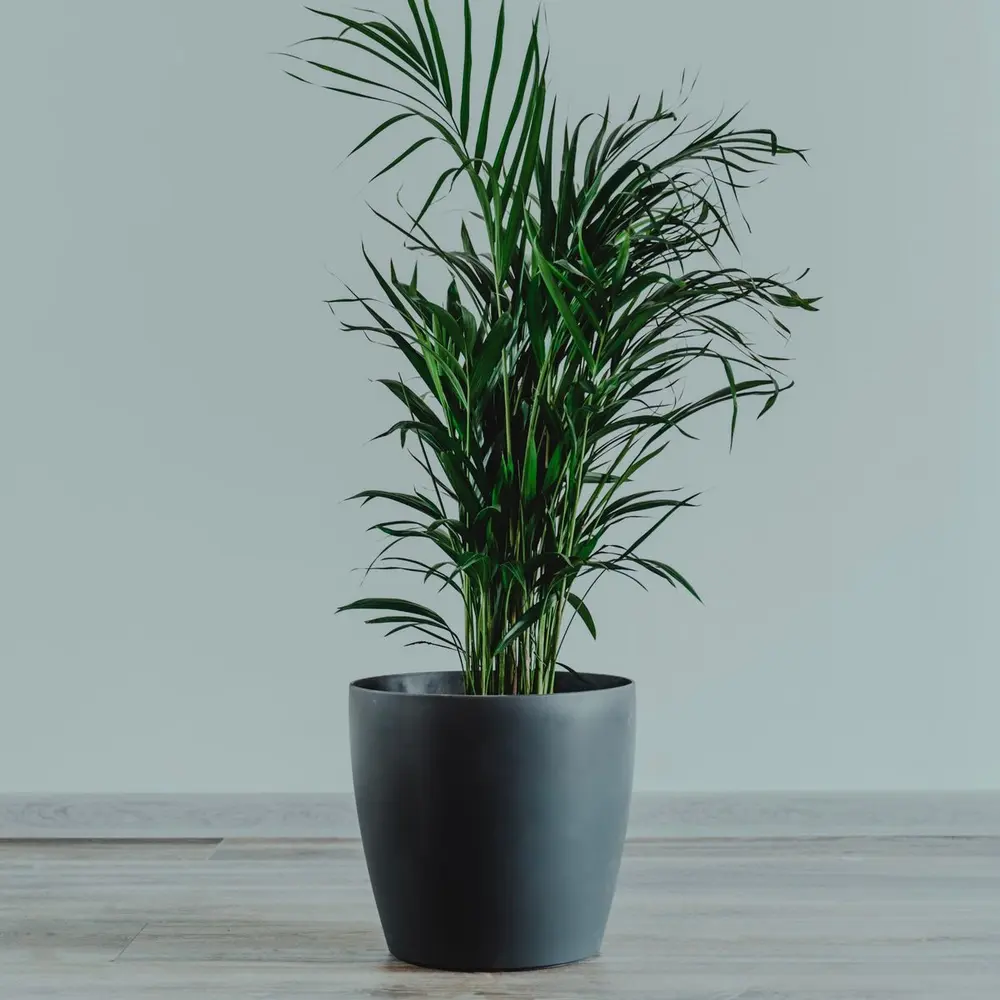
The areca palm is a clustering palm with many thin stems and arching, feathery fronds. It does best in bright, indirect light, so place it near an east, west or south window.
Keep the soil moist but not soggy through the growing season, and water when the top of the potting mix is dry. Empty the saucer after watering, since too much water can rot the roots. It likes high humidity, and frond tips turn brown when the air is dry, especially in winter.
It grows 6 to 7 feet tall indoors and adds 6 to 10 inches a year, so give it room. Its low fronds sit right at a cat’s level. If your cat chews the tips, a plant stand or a corner behind a chair helps, and the tall indoor plants list has more plants for a floor spot.
The ASPCA lists the areca palm (Dypsis lutescens) as non-toxic to cats.
11. Moth orchid
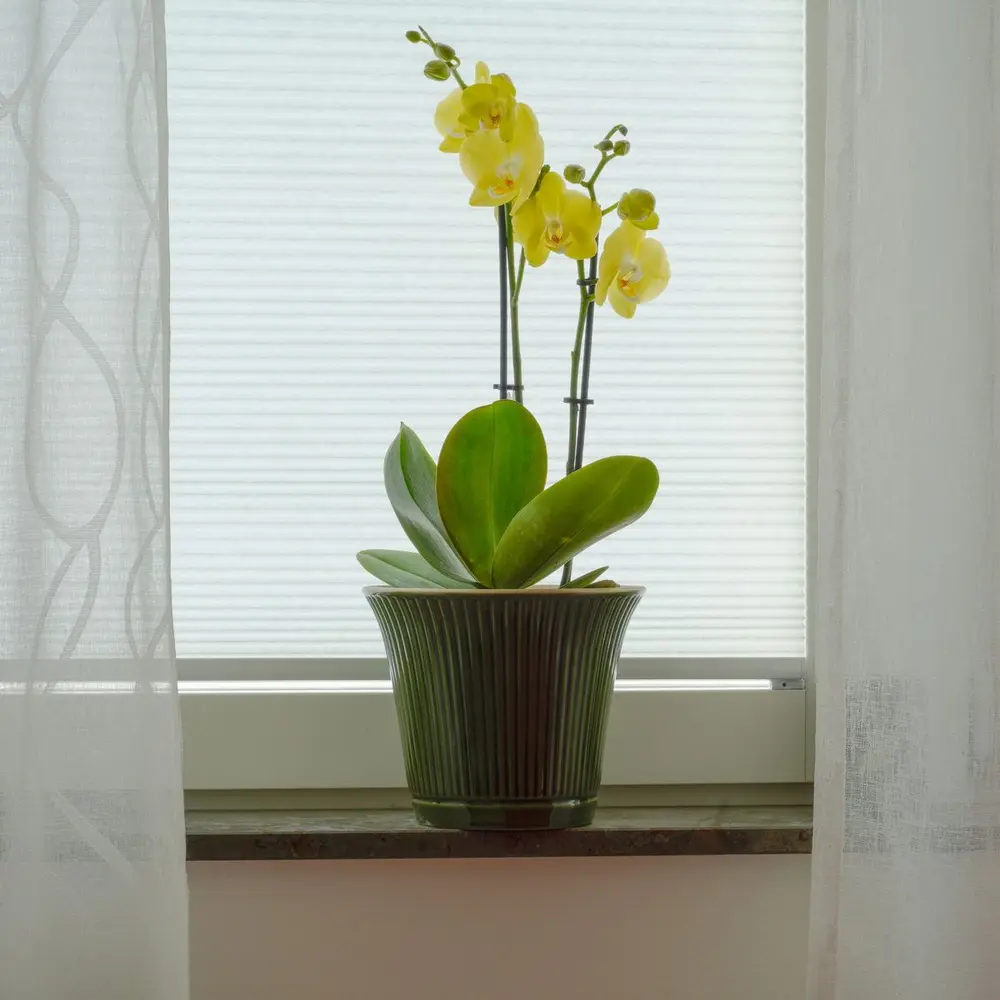
The moth orchid is the orchid most often sold as a houseplant. It prefers low light, warmth and high humidity. The best spot is an east windowsill, though it also grows well on a west or south sill that is well shaded.
It grows in a loose, bark-based mix that drains fast. Water a mature plant about once a week, or more often in summer heat, by running tepid water through the pot in the sink. Let it drain completely so it never stands in water, and let the mix dry a little between waterings.
Its flowers can last 4 months or more on tall, staked stems, and the plant reaches up to 2 feet. A cat brushing past can snap a flower stem, so give it a sill or shelf your cat doesn’t walk along.
The ASPCA lists the Phalaenopsis orchid (moth orchid) as non-toxic to cats. Check other orchids by their own names.
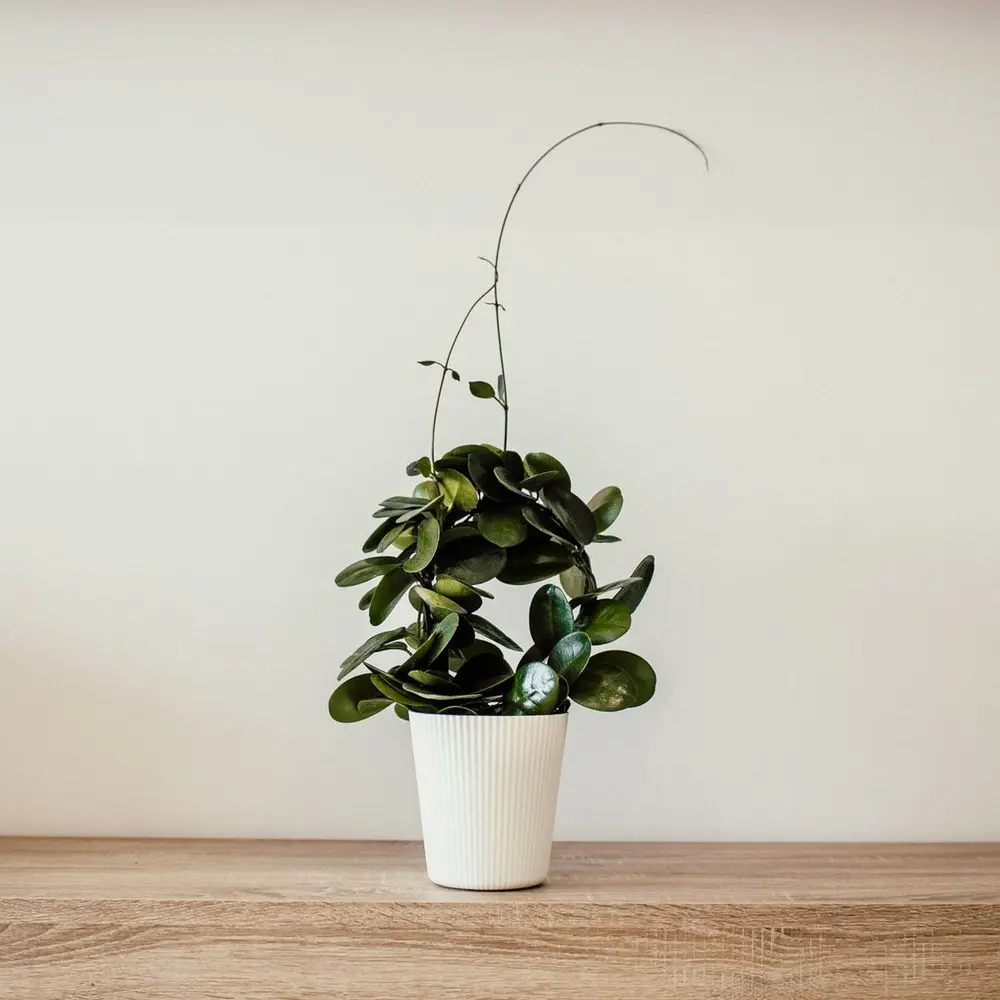
12. Wax plant
The wax plant, a hoya, is a vine with thick, waxy leaves and clusters of shiny white to pink flowers with five-point centers. It does best in bright, indirect light all year, close to an east, west or south window.
Let the soil dry out between waterings. Soil that stays too wet or gets too dry can make the leaves drop. It loves high humidity and doesn’t mind a snug pot.
Leave the short spurs where it flowered, because new flowers come from the same spurs.
Its vines trail or climb, which makes a hanging pot the natural place for it in a home with a cat. Hang it where a cat can’t reach the vines from a shelf or the back of a sofa.
The ASPCA lists Hoya carnosa as honey plant, also called wax plant, and as non-toxic to cats. It lists the curled-leaf Hoya carnosa ‘Krinkle Kurl’ under wax plant as non-toxic too.
13. Zebra haworthia
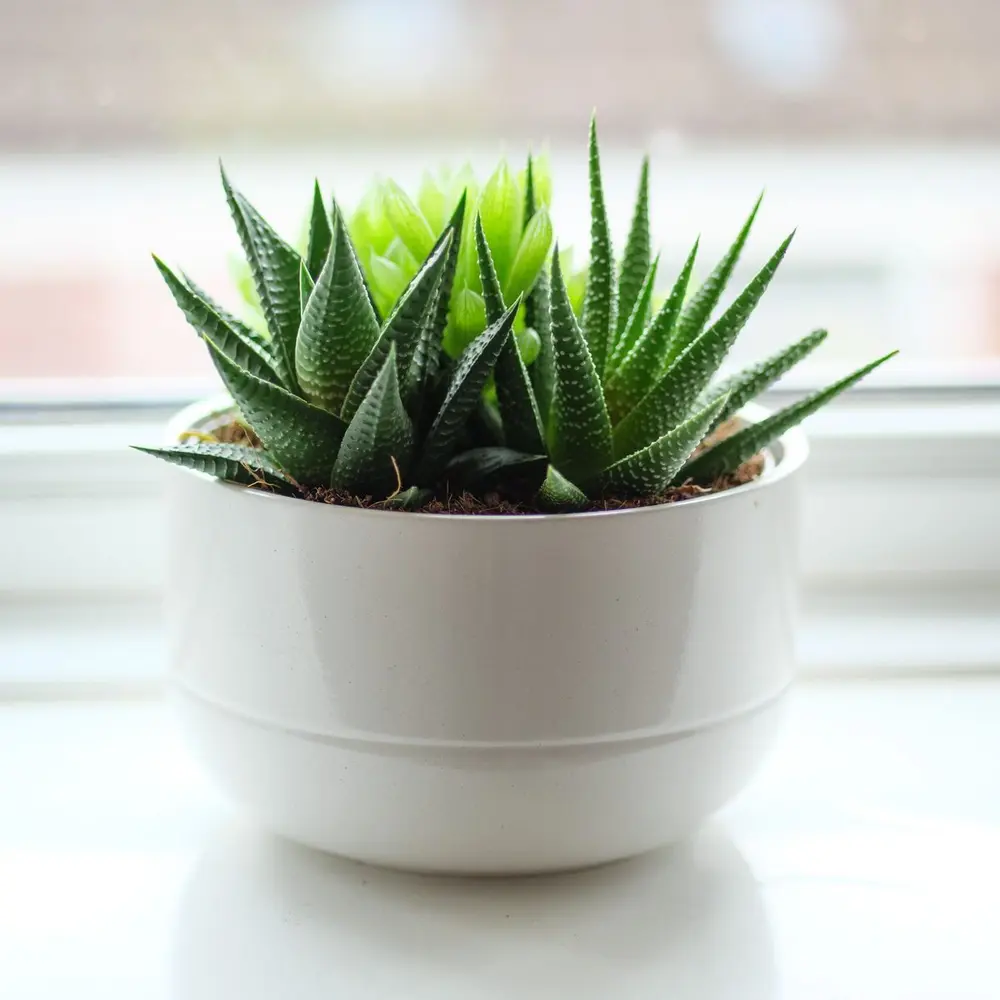
The zebra haworthia is a small succulent with stiff, dark green leaves banded with raised white stripes. It prefers bright, indirect light and tolerates lower light, but direct sun can scorch the leaves.
Water only when the soil has dried out completely, in a well-draining cactus or succulent mix. Room temperatures and the humidity of most homes suit it. Keep it away from sudden temperature changes and cold drafts.
It reaches only 4 to 6 inches tall and grows slowly, so it fits a desk, a narrow sill or a shelf. Put it where a cat won’t knock the small pot over.
It is often mixed up with a close relative, Haworthiopsis attenuata. On the zebra haworthia, the upper side of each leaf is smooth and the raised stripes sit on the outer side.
The ASPCA lists the zebra haworthia under its older name, Haworthia fasciata, as non-toxic to cats; its current name is Haworthiopsis fasciata. The ASPCA also lists the Haworthia genus as non-toxic.
14. Ponytail palm
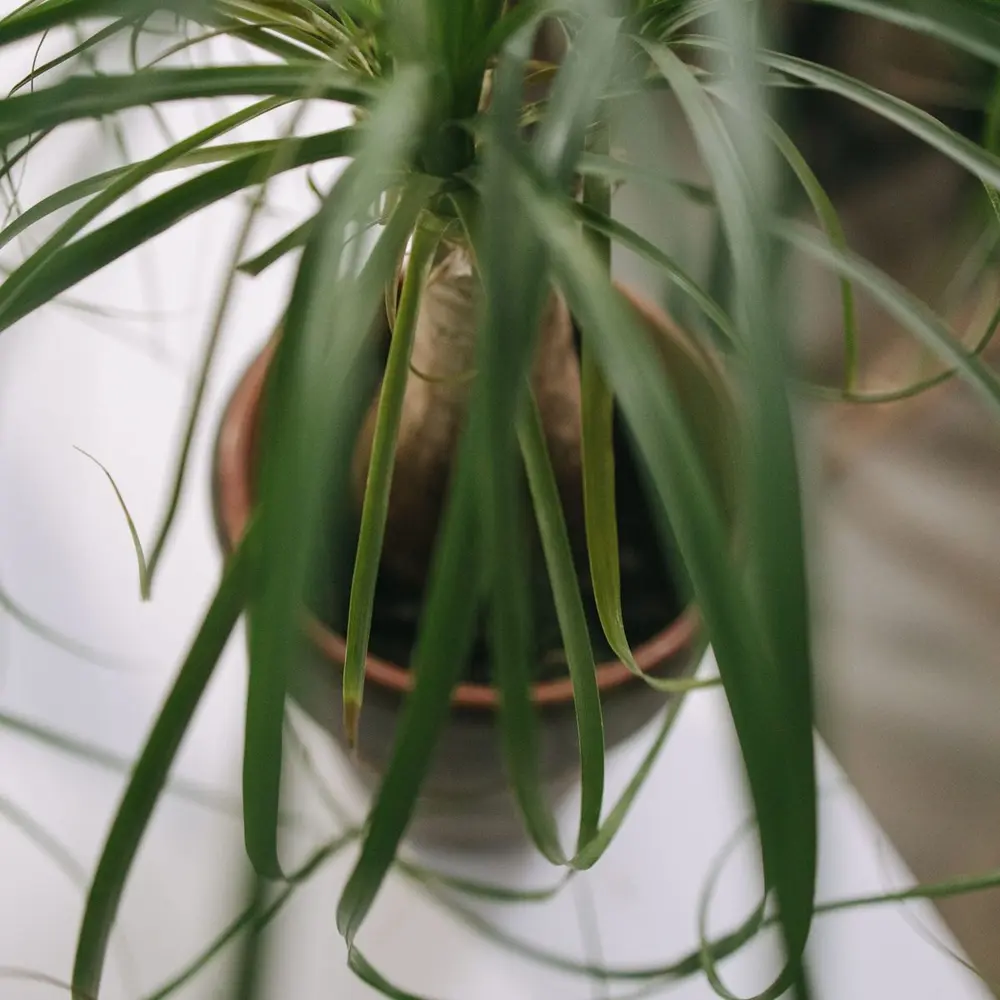
The ponytail palm isn’t a true palm. It has a swollen, water-storing trunk topped with narrow, strappy leaves that curl at the ends. Give it your sunniest window.
In summer, water deeply and then let the soil dry out between waterings. Cut back on water a lot in winter.
Plant it in a well-drained mix like the ones for cactus and succulents. It likes dry winters and copes well with the dry air of a heated home.
It grows slowly but in a pot can reach 6 to 8 feet tall. Its long leaves dangle and curl, which can invite batting. A heavy pot on the floor in a sunny spot keeps it steady.
It rarely blooms as a houseplant, so grow it for the trunk and leaves.
The ASPCA lists the ponytail palm as pony tail (Beaucarnea recurvata), also called bottle palm or elephant-foot tree, and as non-toxic to cats.
Common houseplants the ASPCA lists as toxic to cats
Several of the most popular houseplants are on the ASPCA list as toxic to cats. If you already have one, keep it in a room your cat never enters, or give it to a home without pets.
- Golden pothos. The pothos care guide covers this vine.
- Peace lily. The peace lily care guide has its light and watering.
- Snake plant. The snake plant care guide covers its care.
- Monstera, which the ASPCA lists as cutleaf philodendron (Monstera deliciosa). The monstera care guide has the rest.
- Aloe vera, listed as aloe.
- Jade plant.
The ZZ plant isn’t on the ASPCA plant list at all, so treat it as unsafe too. The ZZ plant care guide covers its care.
How to keep cats and plants apart
Cats climb, jump and reach higher than most plants sit. These steps keep your plants and your cat out of each other’s way.
- Check the name before you buy. Look up the botanical name on the tag in the ASPCA list. The new plant checklist puts that check next to the other steps for a new plant.
- Hang the trailing plants. Spider plants, Boston ferns and wax plants grow well in hanging pots, as do the plants in the hanging plants list. Hang them away from shelves and furniture your cat can jump from.
- Use the shelves your cat can’t reach. A shelf with no landing spot nearby, or a glass cabinet, keeps small pots away from paws. The plant shelf ideas show how to fill one.
- Choose heavy, wide pots for the floor. A palm in a heavy pot stays put when a cat leans on it or climbs into it.
- Pick up what falls. Fallen leaves, flowers and trimmings end up on the floor, where a cat finds them. Clear them away after you prune.
- Keep a toxic plant in a closed room. A high shelf only slows a determined climber, so a plant the ASPCA lists as toxic belongs in a room your cat never enters.
- Move a plant your cat keeps chewing. Even a non-toxic plant can upset a cat’s stomach, so put it higher or in another room.
Houseplants non-toxic to cats at a glance
| Plant | ASPCA name | Light | Water when | Dogs too (ASPCA) |
|---|---|---|---|---|
| Cast iron plant | Cast Iron Plant (Aspidistra elatior) | Low to bright, indirect | The top few inches are dry | Non-toxic |
| Parlor palm | Parlor Palm (Chamaedorea elegans) | Low to bright, indirect | The surface is slightly dry | Non-toxic |
| Baby rubber plant | Baby Rubber Plant (Peperomia obtusifolia) | Low to bright, indirect | The soil has dried out | Non-toxic |
| Spider plant | Spider Plant (Chlorophytum comosum) | Low to bright, indirect | The top of the soil is dry | Non-toxic |
| Prayer plant | Prayer Plant (Calathea insignis) | Low to bright, indirect | Keep evenly moist | Non-toxic |
| Calathea | Calathea (Calathea spp.) | Medium, indirect | Keep moist, not soggy | Non-toxic |
| Boston fern | Boston Fern (Nephrolepis exalta bostoniensis) | Medium to bright, indirect | Never let it dry out | Non-toxic |
| African violet | African Violet (Saintpaulia spp.) | Bright, no afternoon sun | Keep moist, not soggy | Non-toxic |
| Money tree | Money Tree (Pachira aquatica) | Indirect or part sun | Keep moist, never standing water | Non-toxic |
| Areca palm | Areca Palm (Dypsis lutescens) | Bright, indirect | The top of the mix is dry | Non-toxic |
| Moth orchid | Phalaenopsis Orchid (Phalaenopsis sp.) | East window or shaded west sill | The mix has dried a little | Non-toxic |
| Wax plant | Honey Plant (Hoya carnosa) | Bright, indirect | The soil has dried out | Non-toxic |
| Zebra haworthia | Zebra Haworthia (Haworthia fasciata) | Bright, indirect | The soil has dried completely | Non-toxic |
| Ponytail palm | Pony Tail (Beaucarnea recurvata) | Sunny window | The soil has dried out | Non-toxic |
Want a shortlist for your own rooms? The plant finder matches houseplants to your light and space, and with pets at home it keeps to plants the ASPCA lists as non-toxic.
Frequently asked questions
Which houseplants are safe for cats?
Go by the ASPCA plant list. Among common houseplants, it lists the spider plant, cast iron plant, parlor palm, Boston fern, prayer plant, calathea, African violet, money tree, areca palm, moth orchid and ponytail palm as non-toxic to cats. Check the plant's botanical name against the list before you bring it home.
Can a non-toxic plant still upset my cat's stomach?
Yes. The ASPCA notes that eating any plant material can upset a cat's stomach, even a plant it lists as non-toxic. Place these plants where your cat can't make a habit of chewing them.
Is the spider plant safe for cats?
The ASPCA lists the spider plant (Chlorophytum comosum) as non-toxic to cats. Its arching leaves and dangling plantlets tempt cats to bat and chew, so a hanging pot out of reach suits it best.
Is a plant that isn't on the ASPCA list safe for cats?
Don't assume so. The list gathers the plants the ASPCA comes across most often and isn't meant to include every plant. Treat a plant that isn't on it, such as the ZZ plant, as unsafe and keep it away from your cat.
What should I do if my cat eats a plant that may be toxic?
Contact your veterinarian or the ASPCA Animal Poison Control Center as soon as possible. Have the plant's name ready, and its botanical name from the tag if you have it.
Which of these plants grow in low light?
The cast iron plant, parlor palm, baby rubber plant and spider plant tolerate low light. The prayer plant takes low to medium light, while the African violet, moth orchid and the succulents on this list need a bright window.
Save it for later
Pin it to a board so it's there when you need it.
Save to Pinterest(opens in a new tab)Keep reading
Care guide
Spider plant care guide for healthy leaves and babies
How to care for a spider plant indoors: light, watering, soil, feeding, repotting, rooting its babies and fixing the brown leaf tips it is known for.
Plant list
15 hanging plants that trail beautifully indoors
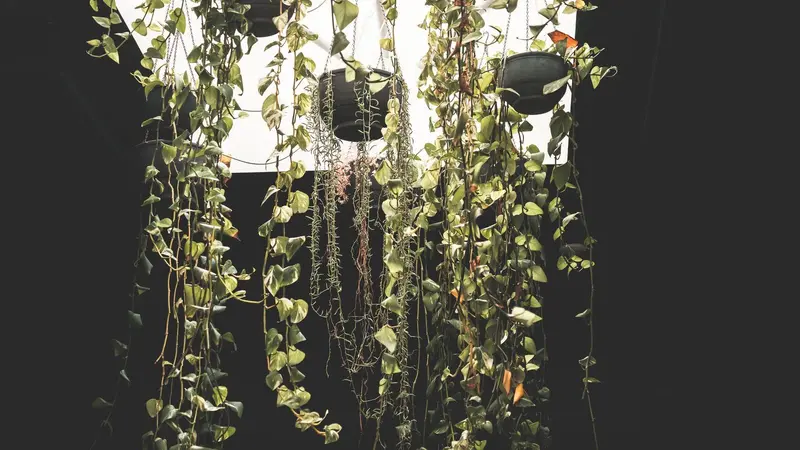
Pothos, string of hearts, Boston fern and twelve more plants for a hanging pot or high shelf, where each one hangs best for its light and how to water it.
Low lightPlant list
15 low light plants that grow away from the window
Houseplants for a north window, a dim hallway or a corner across the room: what low light means, where each plant fits and how to water it with less light.
Plant list
14 plant shelf ideas that look full without crowding
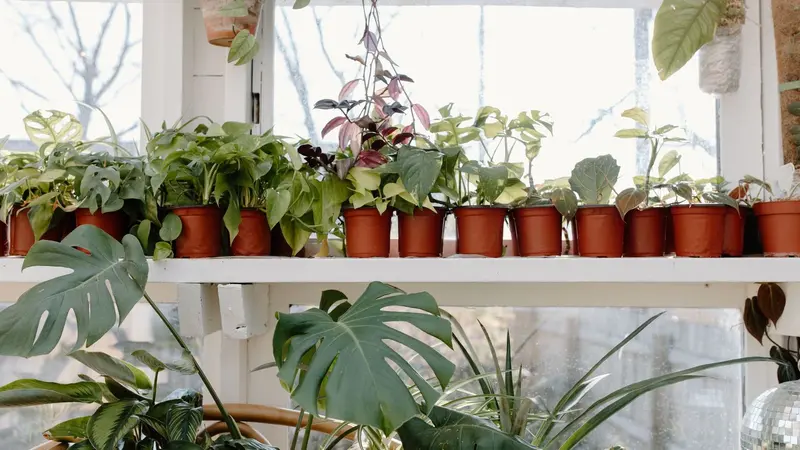
Ladder shelves, open bookcases, corner shelves and metal etageres, each with the plants that suit its light, plus how to keep every pot healthy.
Try a free tool
Plant Finder
Answer four questions about light, space, pets and watering to see the houseplants that fit your spot.