15 pet-safe houseplants from the ASPCA non-toxic list

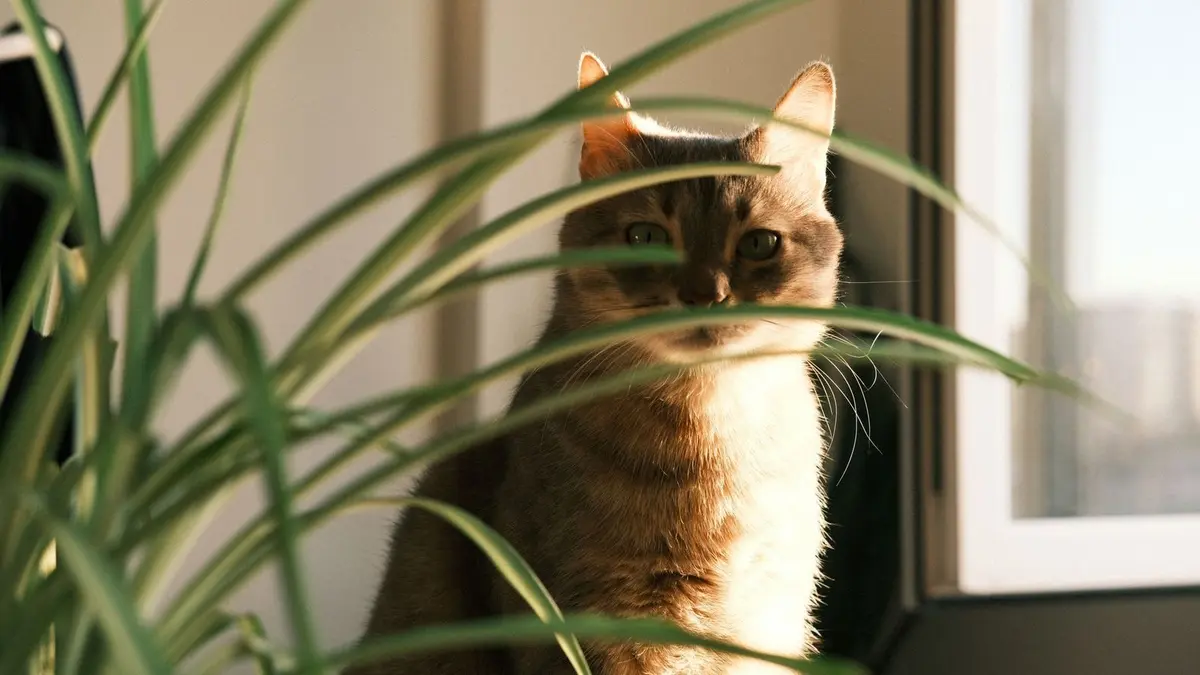
The ASPCA lists these 15 houseplants as non-toxic to both cats and dogs: parlor palm, spider plant, calathea, nerve plant, friendship plant, watermelon peperomia, Boston fern, polka dot plant, staghorn fern, blushing bromeliad, moth orchid, African violet, echeveria, burro’s tail and ponytail palm.
Non-toxic doesn’t mean your pets can graze on them. The ASPCA notes that eating any plant material may upset a dog’s or a cat’s stomach, so even these plants belong where your pets can’t make a habit of chewing them.
If you think your pet has eaten a plant that may be toxic, contact your veterinarian or the ASPCA Animal Poison Control Center as soon as possible.
How to check a houseplant for cats and dogs
The ASPCA keeps one list for dogs and one for cats, each split into toxic and non-toxic plants. Every plant also has its own entry, which gives its common names and its scientific name and then names each animal it applies to, one by one.
In a home with both, read that line for each animal. Every plant on this page has an entry that says non-toxic to dogs and non-toxic to cats; if you only have a cat, the cat-safe houseplants list has more choices.
Look for the botanical name on the plant’s tag, not just the common name, because one common name can belong to several plants. The list also isn’t meant to include every plant, so a plant that isn’t on it hasn’t been cleared. Treat it as unsafe.
The plants below run from the ones that take the least light to the ones that need the most.
1. Parlor palm
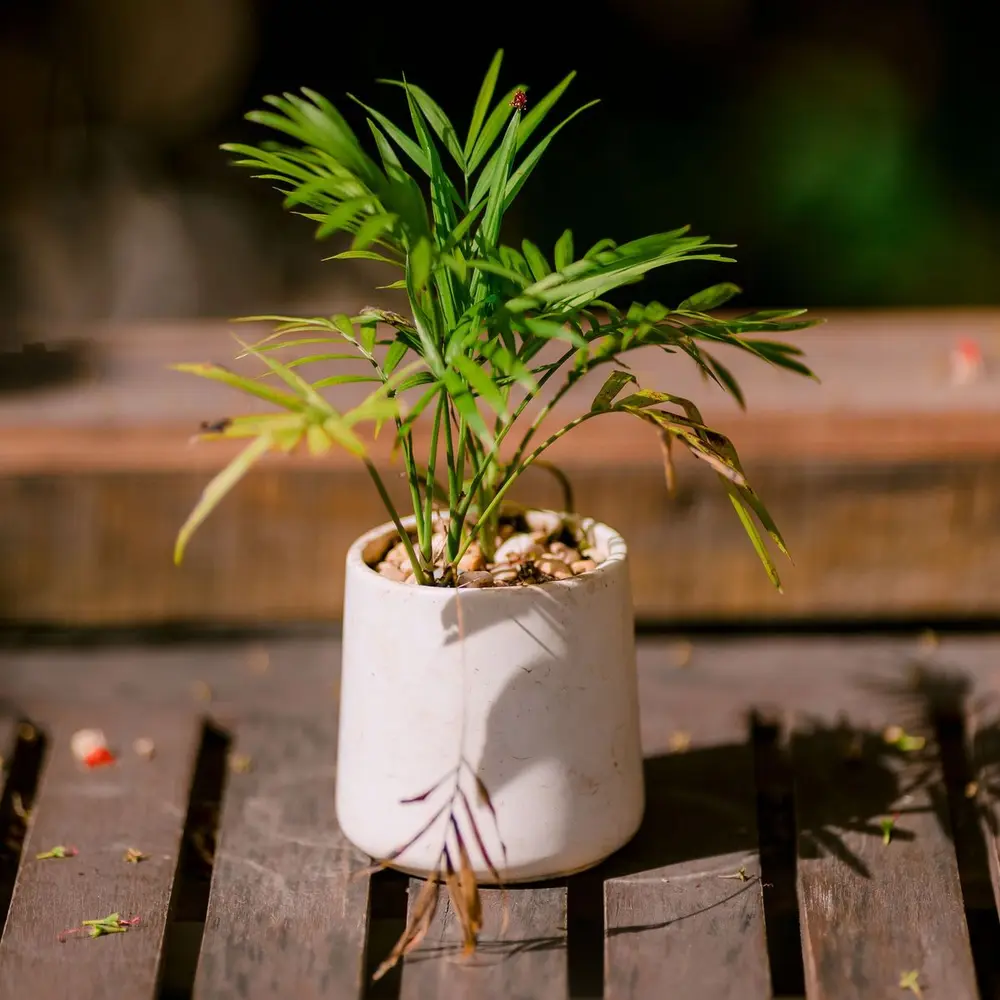
The parlor palm is a small palm with fine, feathery fronds that thrives in the dry air and dim light that many other houseplants can’t take. It needs bright, indirect light but tolerates low light, so a spot near a north or east window suits it well.
Let the surface of the soil dry slightly between waterings, but never let it dry out completely or stand in water. Pour off the water in the saucer after the pot drains, and keep the palm away from cold drafts near windows, doors and vents.
Indoors its stems can grow up to 5 feet, though most stay smaller. That makes it a floor plant in time, and its lowest fronds can end up at the height of a dog’s nose. Set it in a heavy pot in a corner your dog doesn’t pass all day, or on a plant stand.
The ASPCA lists the parlor palm (Chamaedorea elegans) as non-toxic to cats and dogs.
2. Spider plant
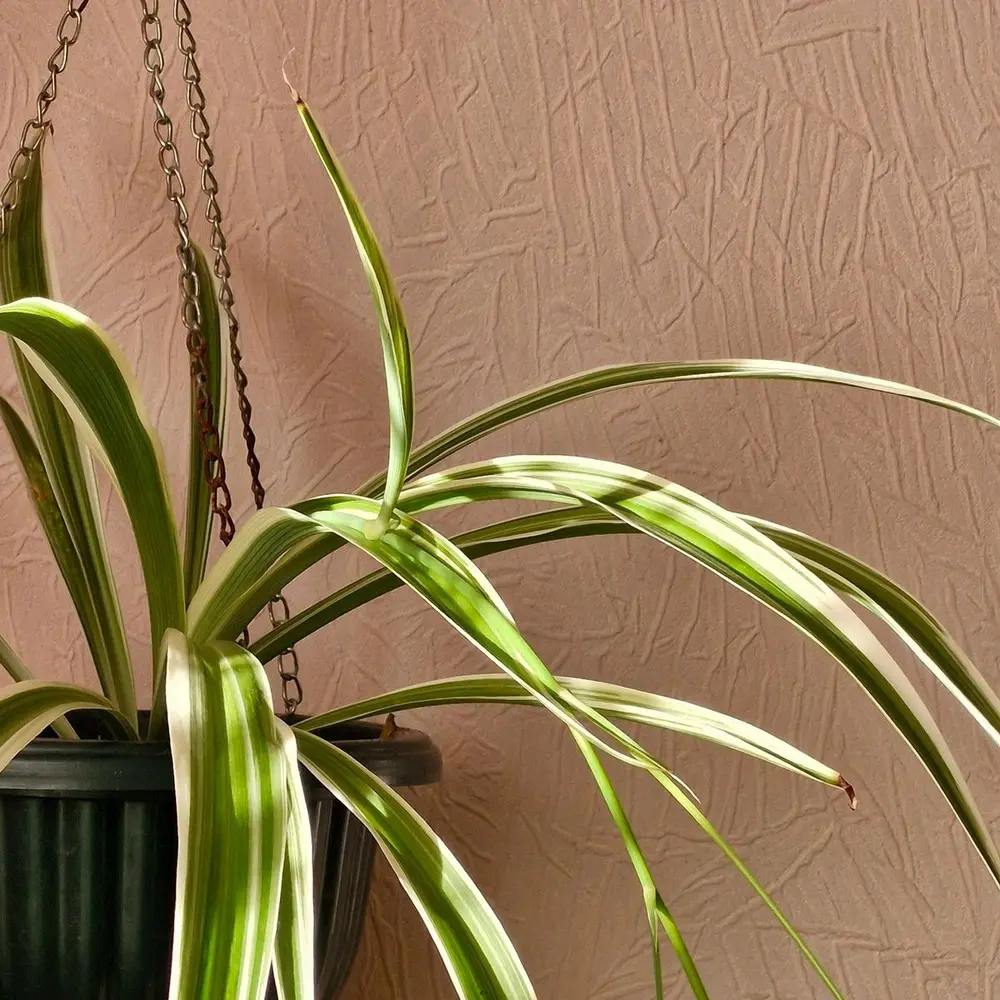
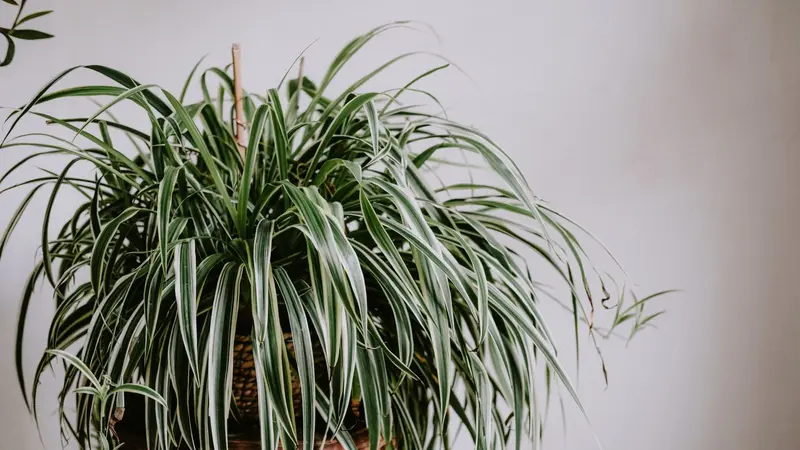
The spider plant grows best in bright, indirect light and tolerates much lower light, though midday sun can scorch its striped leaves. It copes with drought, dry soil and the medium humidity of most homes, so a missed watering rarely hurts it.
Water when the top 1 to 2 inches of soil feel dry, let it dry out briefly between waterings, and water less in winter. In a hanging basket, its arching leaves and the long stems that carry small plantlets trail 2 to 3 feet.
Those dangling plantlets are the problem in a home with pets. Cats bat at them, and a dog will chew a plantlet that hangs low enough to reach. Hang the pot from the ceiling, away from shelves and furniture a cat can jump from, and high enough that the longest stems stay above a standing dog’s head.
The spider plant care guide covers its plantlets and brown tips.
The ASPCA lists the spider plant (Chlorophytum comosum) as non-toxic to cats and dogs.
3. Calathea
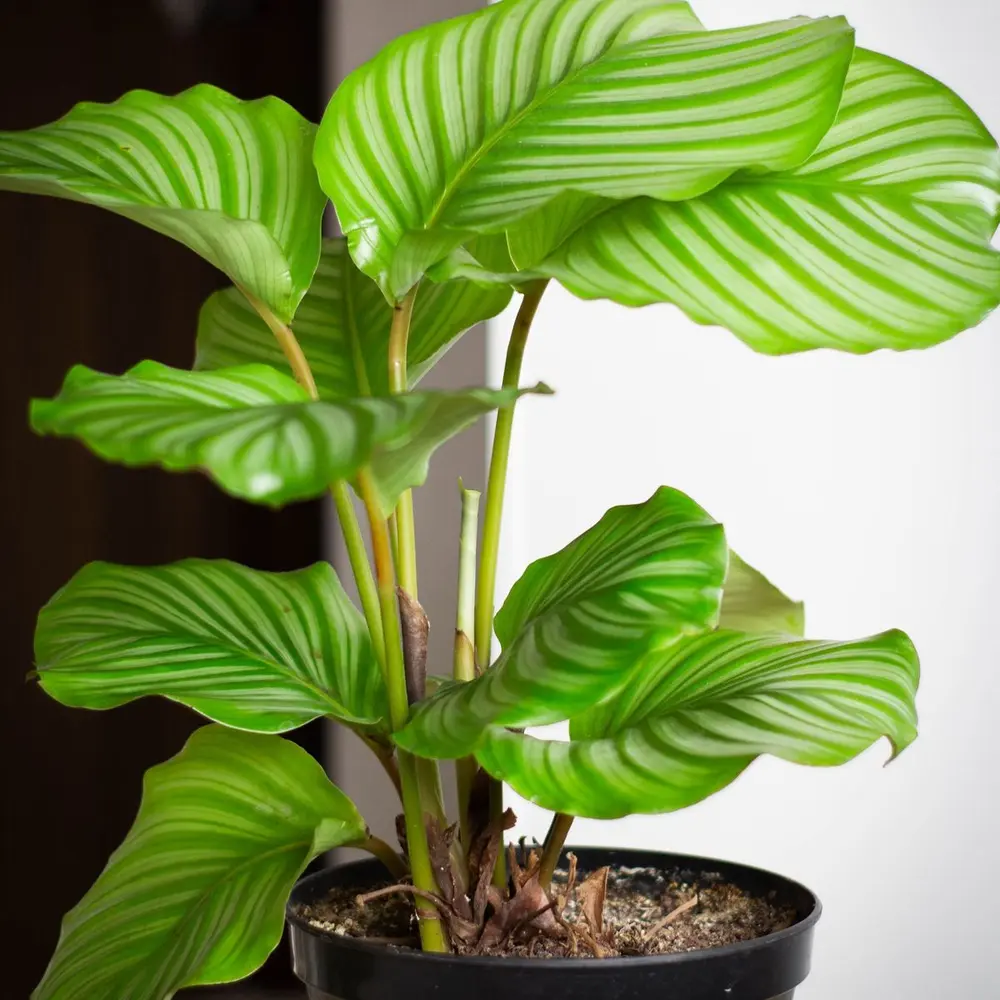
Calatheas belong to the prayer plant family, and many have been moved to the genus Goeppertia. Their leaves come striped, feathered, mottled or with a mosaic pattern. They like medium to low indirect light, and direct sun scorches the leaves.
Keep the soil moist and well drained, never soggy. Tap water can damage the leaves, so water with distilled water or rainwater.
They need a warm room, 65 to 75°F, and high humidity, and brown leaf edges usually mean the air is too dry. A bright bathroom or kitchen suits them.
They need more care than most plants on this list. Avoid drafts and sudden temperature changes, and wipe the leaves now and then with a soft, clean cloth. A plant stand lifts the broad, soft leaves above a dog’s tail and away from a cat that likes to chew.
The ASPCA lists calathea (Calathea spp.) as non-toxic to cats and dogs. Its entry covers the whole genus rather than one species.
4. Nerve plant
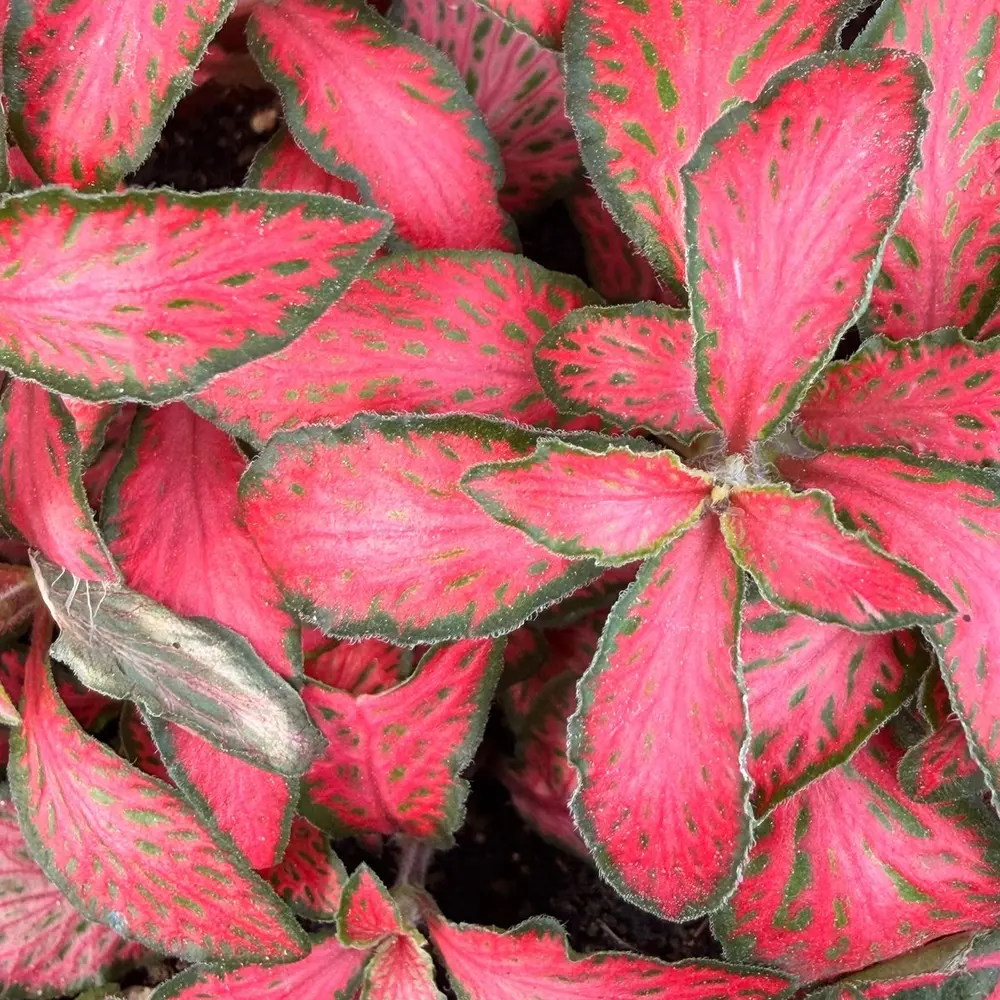
The nerve plant, Fittonia, has small leaves netted with bright veins in red, pink or white. It stays low and spreads, growing 3 to 8 inches tall. It thrives in bright to medium light, average to cool room temperatures and medium humidity, and it does well under fluorescent lights.
Its leaves shrivel and drop in dry air, drafts or direct sun. When the soil gets too dry it wilts dramatically, then recovers after a drink. Overwatering causes root rot, and yellow leaves may be the first sign of it.
Its roots are shallow, so a small pot is enough, and pinching the stem tips keeps it bushy. That size makes it a desk, shelf or terrarium plant, which keeps it above the reach of most dogs. The desk plants list has more small plants for a work spot.
The ASPCA lists the nerve plant (Fittonia verschaffeltii) as non-toxic to cats and dogs.
5. Friendship plant
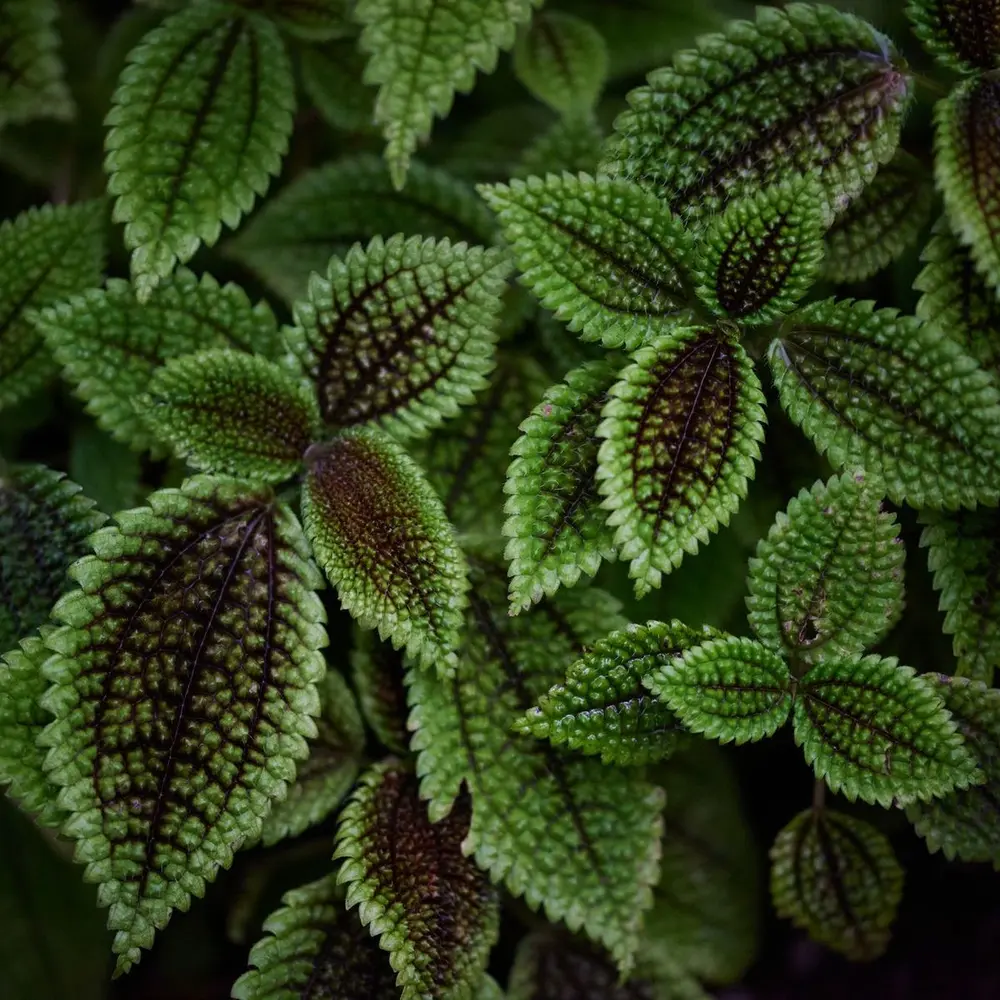
The friendship plant, Pilea involucrata, is a small trailing plant with velvety, crinkled leaves. They are dark green with bronze tones and usually lighter edges on top, and red underneath. It is easy to grow and compact, reaching 3 to 12 inches tall and wide.
Grow it in bright, indirect light in a warm room with high humidity, in a peaty potting mix. Water moderately while it grows, then less from fall to late winter. Pinch the stem tips to keep it compact.
Its name comes from how easily it roots from stem cuttings, so it is simple to share with friends. Indoors it rarely flowers, so grow it for the leaves. Its trailing stems suit a shelf edge or a small hanging pot, out of reach of paws and noses.
The ASPCA lists the friendship plant (Pilea involucrata) as non-toxic to cats and dogs. Not every Pilea is on the list, so check the botanical name on the tag.
6. Watermelon peperomia
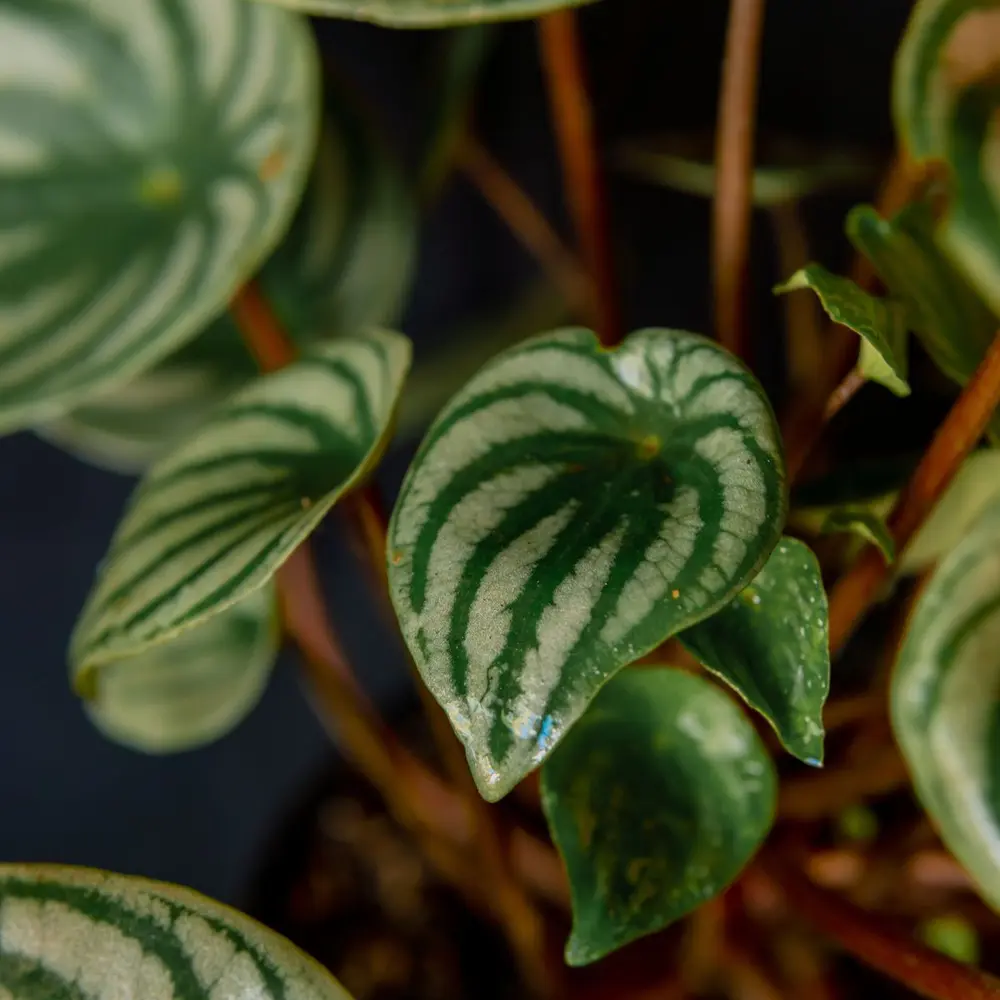
The watermelon peperomia has round, waxy leaves striped silver and green like the rind of a watermelon, held on red stems. It is a small, bushy plant that grows to about 8 inches, which makes it a good fit for a desk or a small shelf.
It prefers bright, indirect light. It dislikes both wet soil and very dry soil, and it doesn’t like cold drafts. Overwatering leads to root rot, while too little water makes it wilt.
Let the top of the soil dry to the touch before you water, and water less in winter. It grows well in a snug pot, so you won’t need to repot it often. It looks best grouped with other small plants that like the same light and water.
The ASPCA lists the watermelon peperomia (Peperomia argyreia) as non-toxic to cats and dogs, and it lists several other peperomias as non-toxic too.
7. Boston fern
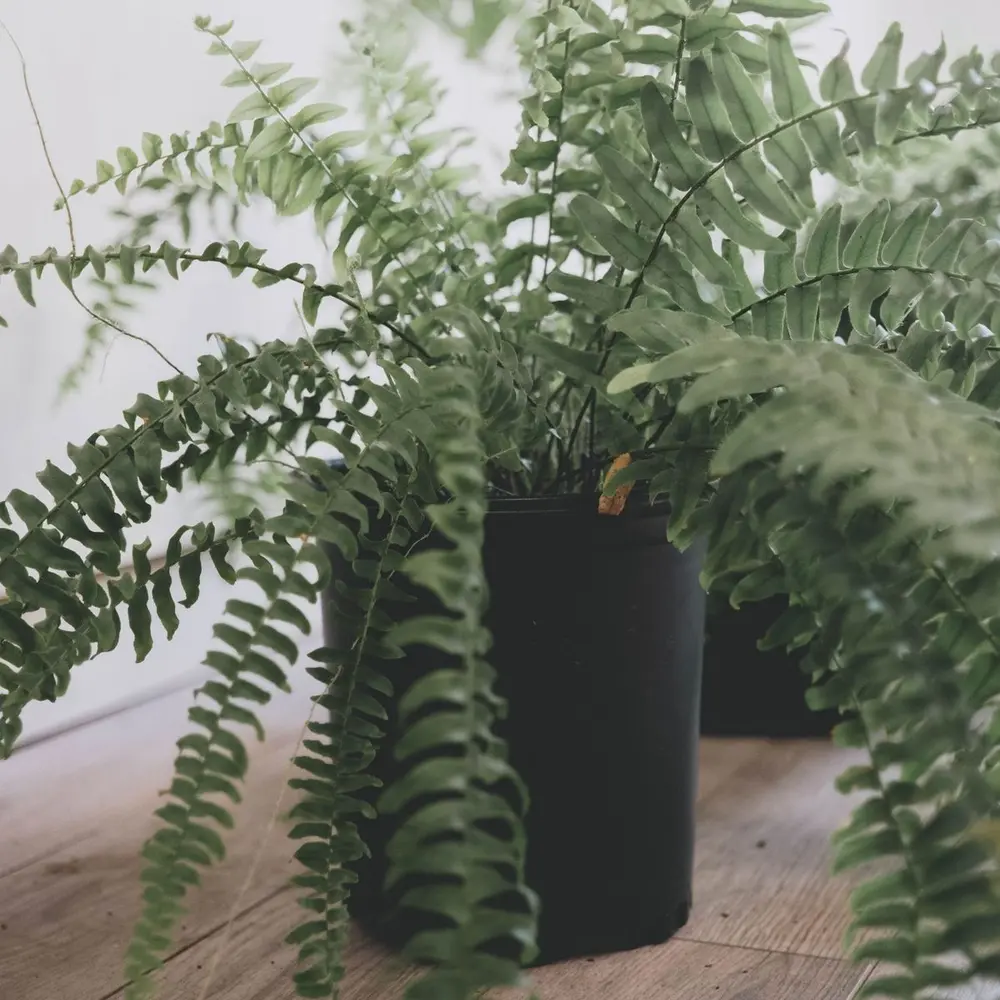
The Boston fern grows best in bright, indirect light with no direct sun, such as the medium light near an east window. It needs high humidity and moist soil that never dries out, so a bright kitchen or bathroom suits it.
Water a little less in winter, when the plant rests and soggy soil can rot the roots. Rows of brown dots under the fronds are spores, not pests or disease.
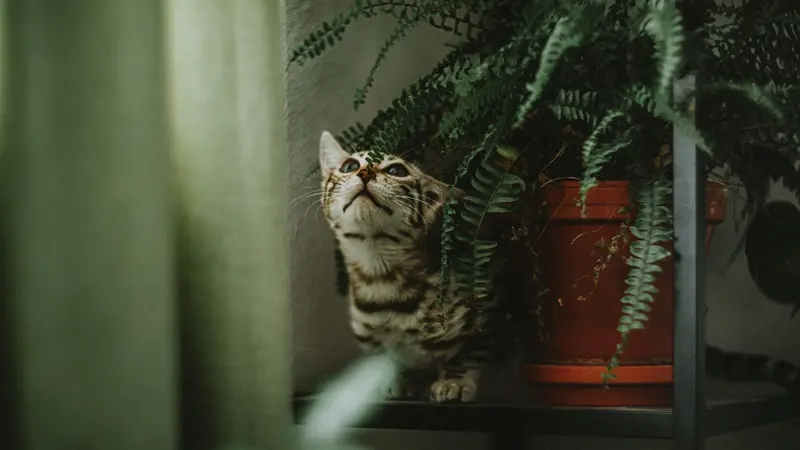
Its arching fronds grow up to 3 feet long and spill over the sides of the pot. On the floor, that soft curtain is a toy for a cat and a chew for a puppy.
The fern shows its shape best in a hanging basket, which also lifts it out of reach. The hanging plants list has more plants for a hook in the ceiling.
The ASPCA lists the Boston fern (Nephrolepis exalta bostoniensis) as non-toxic to cats and dogs.
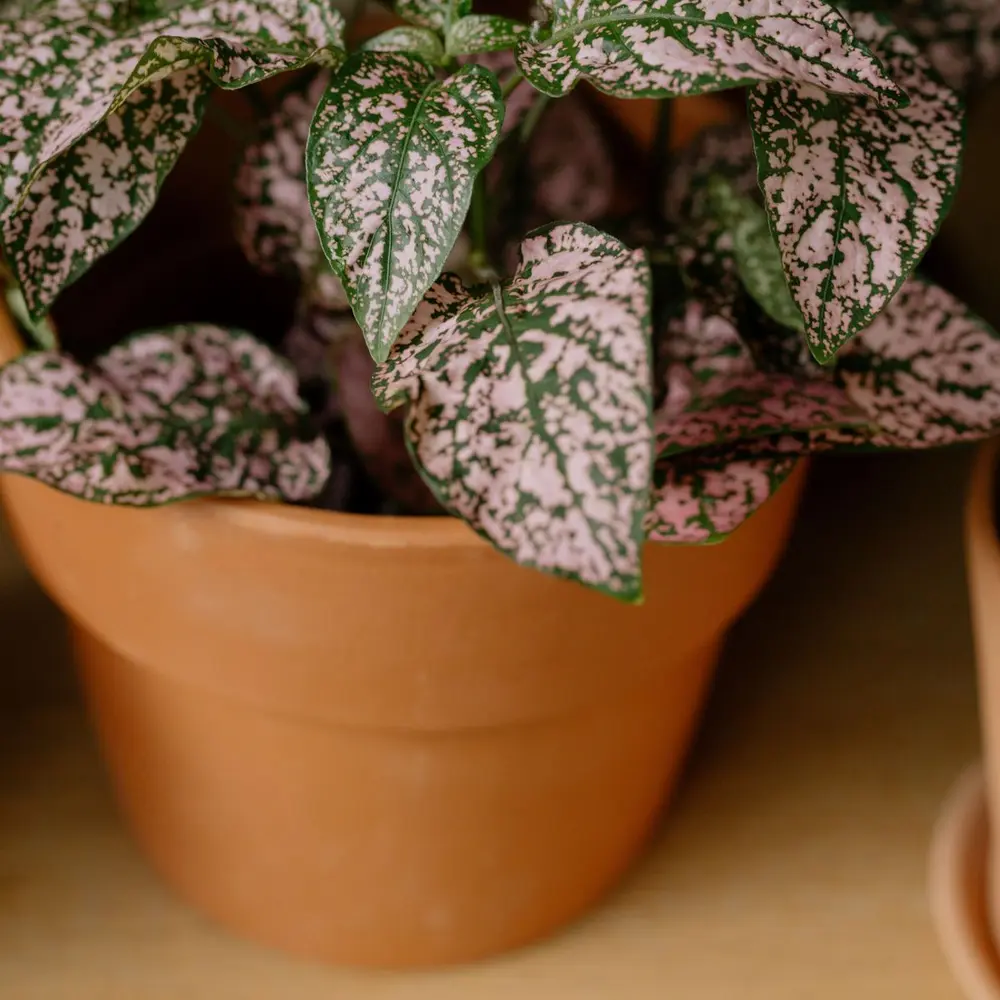
8. Polka dot plant
The polka dot plant has green leaves splashed with pink, red or white. Its color is best in bright, filtered light. It tolerates some direct sun, but too much makes the leaves crinkle and curl, and too little makes the color fade and the stems grow long and leggy.
Pinch back leggy stems to keep it compact. Its small lilac flowers aren’t the point, and cutting them off sends more of the plant’s energy into the leaves.
Root rot is one of the few problems it has, so plant it in a pot with a drainage hole and pour off any water left in the saucer. It roots easily from stem cuttings set in a glass of water in a bright spot.
Its bright leaves draw attention, from people and pets alike. A windowsill or shelf your cat doesn’t use keeps it in good light and away from curious mouths.
The ASPCA lists the polka dot plant (Hypoestes phyllostachya) as non-toxic to cats and dogs.
9. Staghorn fern
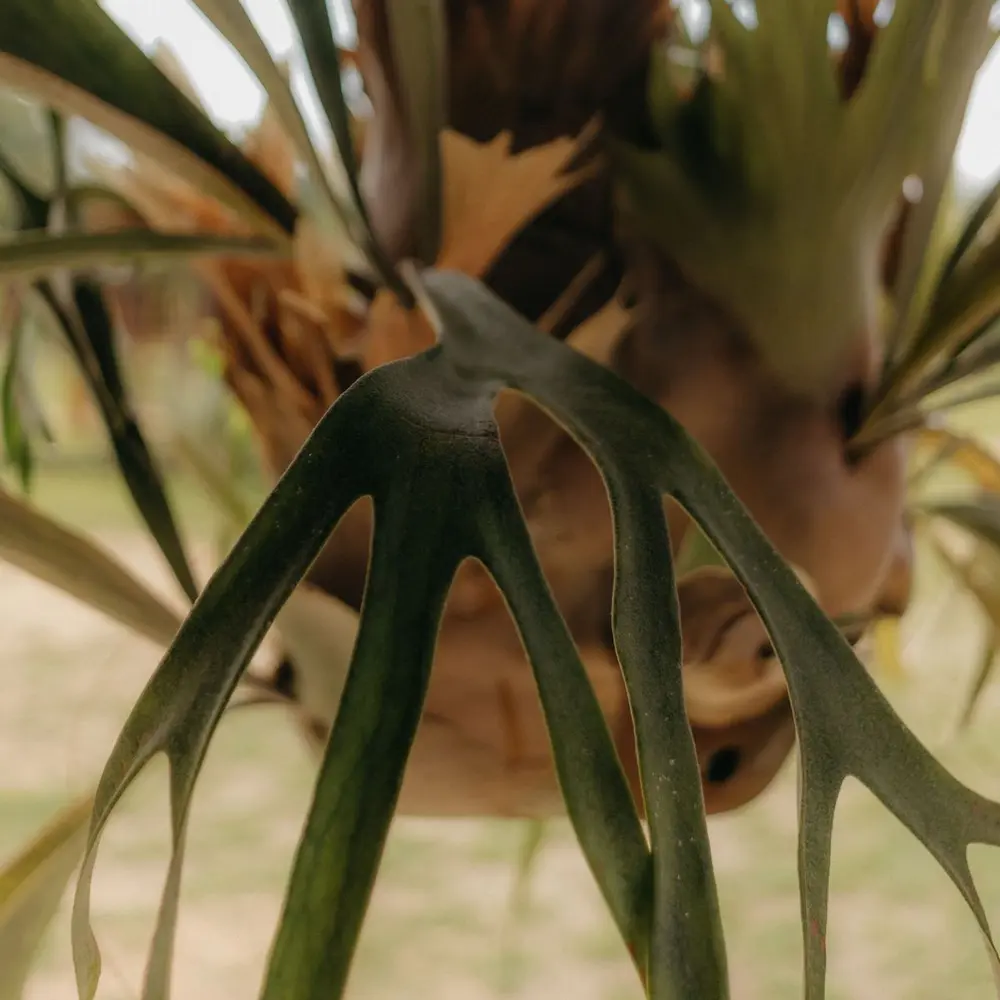
The staghorn fern is an epiphyte, a plant that grows on another plant or a surface without taking anything from it. It has two kinds of fronds: flat shield fronds that press against its mount and cover the roots, and forked, antler-like fronds that grow outward, usually 2 to 3 feet long in cultivation.
It can grow in a pot of orchid mix or sphagnum moss, or mounted on a slab of wood. Give it dappled or filtered light; very low light invites disease and pests.
Water it regularly, letting the roots dry slightly but never completely, and make sure the water drains away. If the mix is hard to judge, wait until the fern wilts slightly before you water, because a wilted fern recovers while an overwatered one rots.
Mounted on a wall, it is one of the easiest plants to keep away from pets.
The ASPCA lists the common staghorn fern (Platycerium bifurcatum) as non-toxic to cats and dogs.
10. Blushing bromeliad
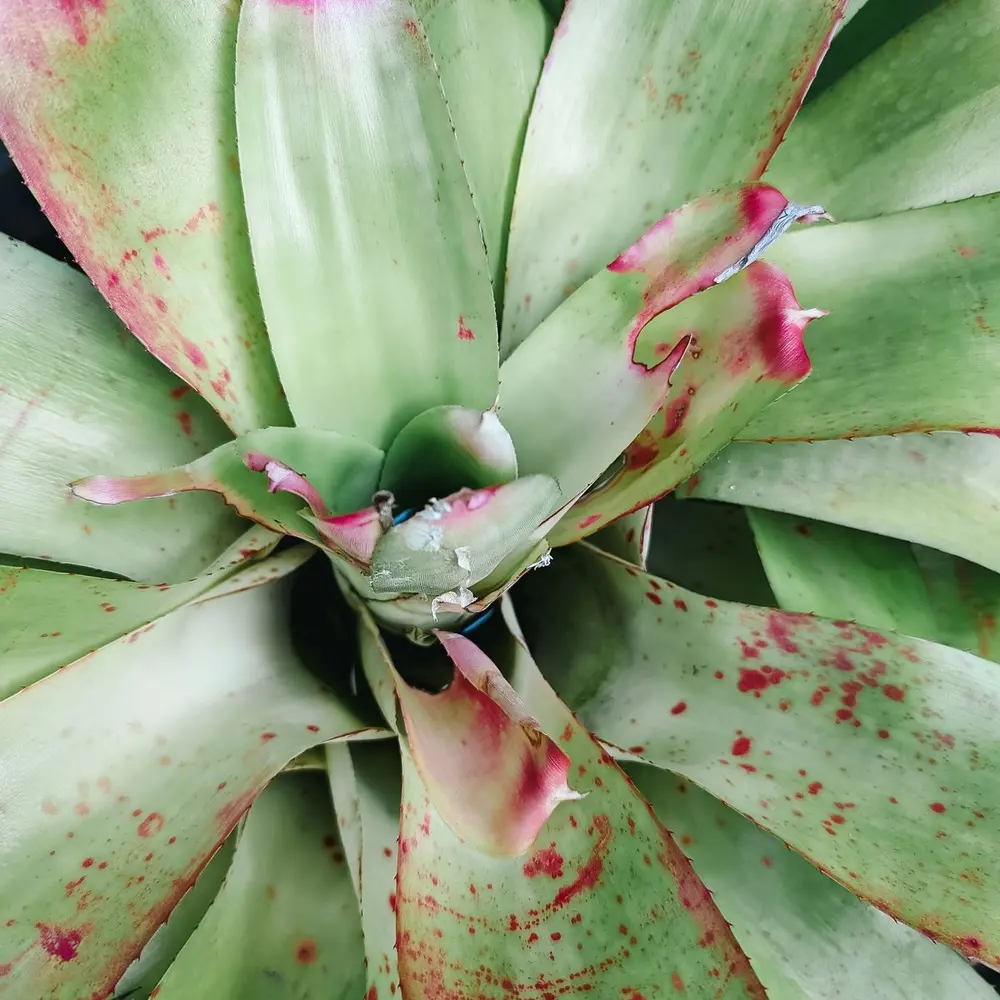
The blushing bromeliad, Neoregelia, grows a rosette of leaves that are often spotted, banded or marbled, with a cup in the middle that holds water. Its name comes from the center leaves, which turn red when the plant is about to bloom.
It needs a bright spot for its best leaf color, since its colors fade in too little light. Direct sun burns the leaves, so keep it near a sunny window rather than in it. It tolerates 50 to 90°F.
Plant it in a bark-based orchid mix that drains fast. Keep the center cup filled with water, rainwater if you have it, and let the potting mix dry completely between waterings. Flush the cup now and then with fresh water so it doesn’t go stale.
After it blooms, the parent plant slowly fades and dies, but it leaves small offsets, called pups, at its base. Pot them up once they are about a third the size of the parent.
The ASPCA lists the blushing bromeliad (Neoregelia) as non-toxic to cats and dogs. Check other bromeliads by their own names.
11. Moth orchid
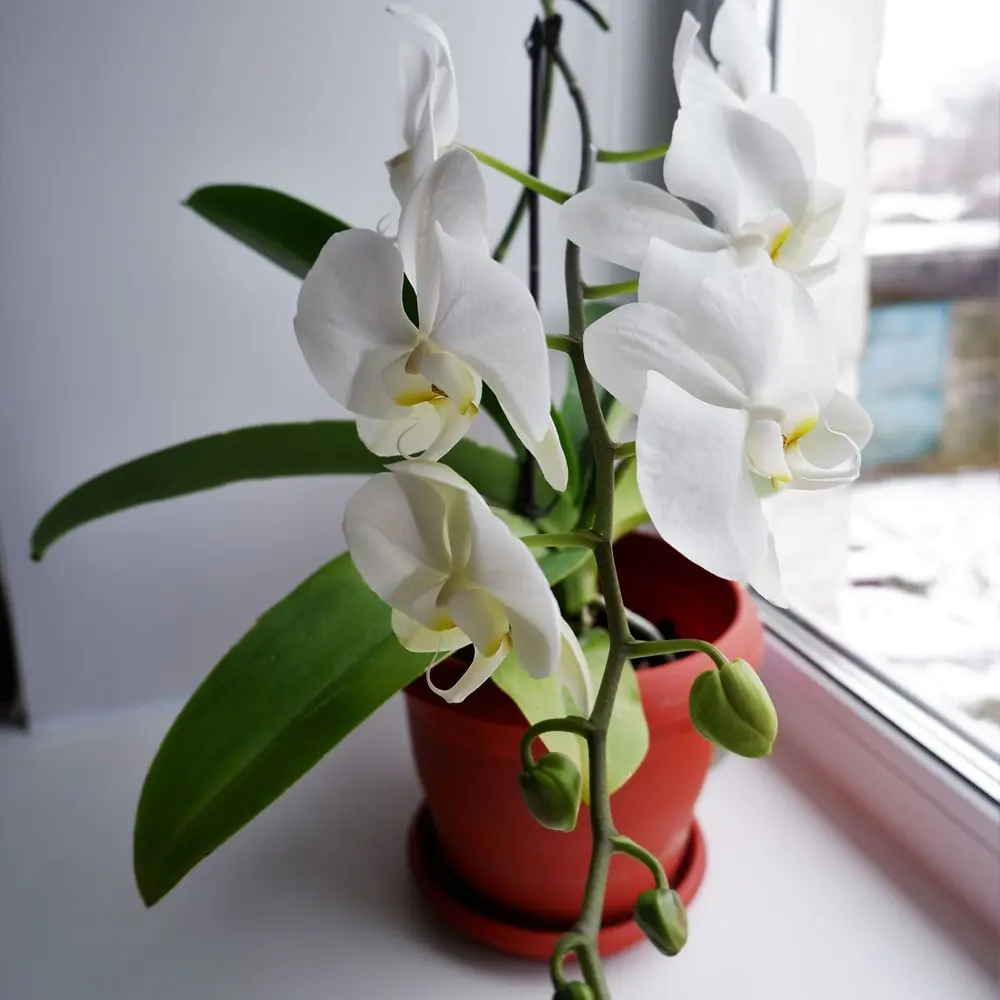
The moth orchid is the orchid most often sold as a houseplant. It prefers low light, warmth and high humidity, and the best spot is an east windowsill, though a well-shaded west or south sill works too.
It grows in a loose, bark-based mix that drains fast. Water a mature plant about once a week, or more often in summer heat, by running tepid water through the pot in the sink. Let it drain completely so it never stands in water, and let the mix dry a little between waterings.
Its flowers can last 4 months or more, on stems that reach up to 2 feet. A wagging tail or a cat brushing past can snap a flower stem, so give it a sill or shelf your pets don’t use.
The ASPCA lists the Phalaenopsis orchid (moth orchid) as non-toxic to cats and dogs. Check other orchids by their own names.
12. African violet
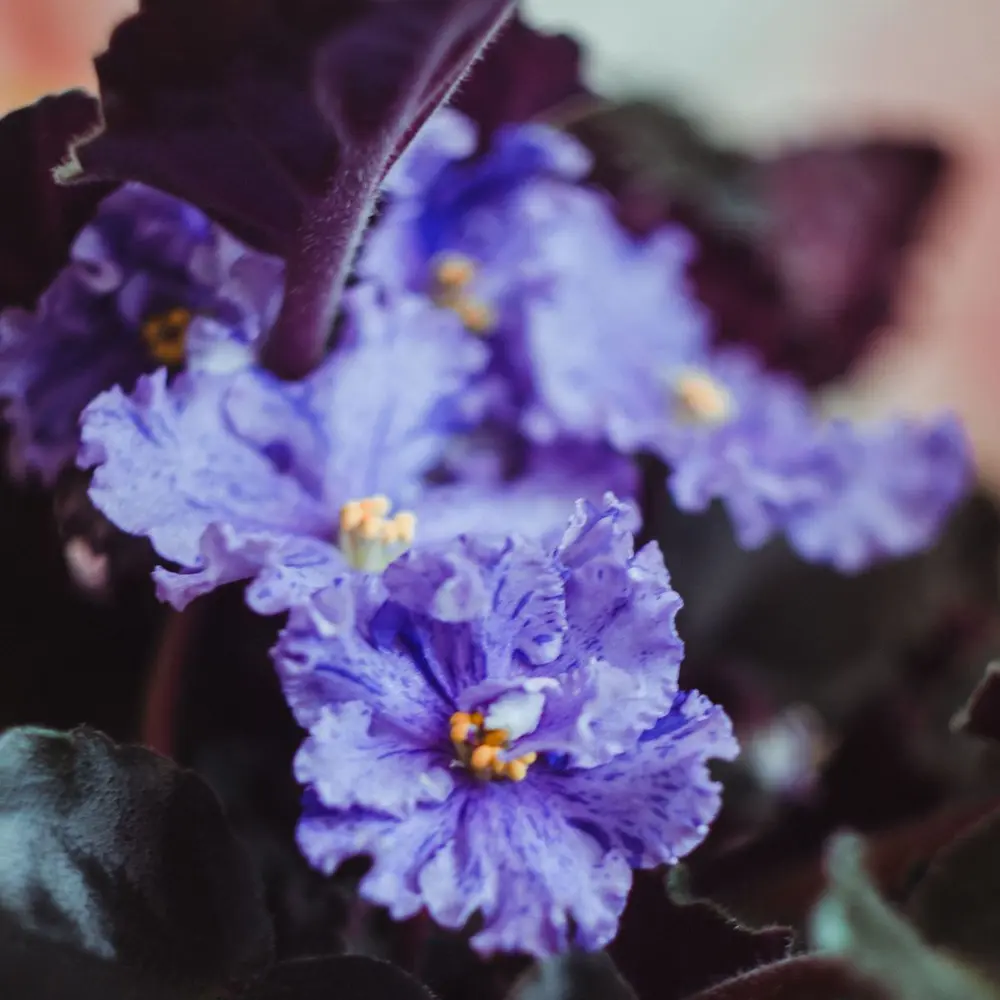
The African violet is a low, compact plant with fuzzy leaves and flowers in purple, blue, pink, red or white. It likes a bright spot without direct afternoon sun, so a north or east window works well, within 3 feet of a large window.
Keep the potting mix moist but not soggy, and never let the pot sit in water. Water from the bottom to keep the leaves dry, since water on them leaves spots or rings, and avoid very cold water. It does best at 60 to 80°F.
A standard plant grows 8 to 16 inches wide, small enough for a windowsill. A sunny sill is also a favorite cat perch and a dog’s lookout, so pick a window your pets don’t use, or set the violet on a narrow stand beside the glass.
The ASPCA lists the African violet (Saintpaulia spp.) as non-toxic to cats and dogs.
13. Echeveria
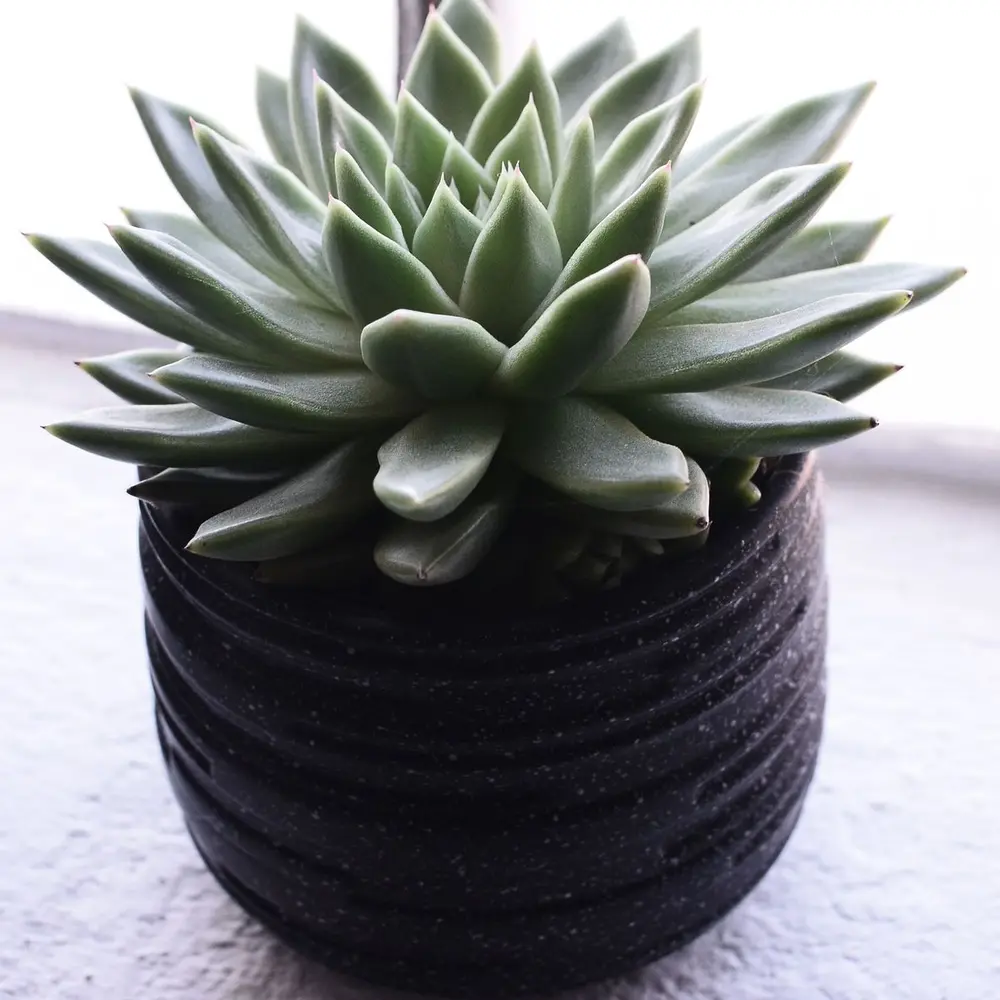
Echeverias are succulents with thick, fleshy leaves in a tight rosette, in shades of gray, sea green and blue green. Some have pointed leaves, some rounded, and some have a blush of color at the edges. They are native to deserts and don’t mind full sun, which improves their leaf color.
Grow one in a pot on a bright, sunny windowsill, where it thrives with little care. It needs little water and prefers dry, well-drained soil, and overwatering is the most common problem.
It makes small rosettes, called offsets, around its base. Detach them and set them in very well-drained soil, where they root. A leaf laid on the soil can grow a new rosette too.
Small pots tip easily, so keep them where a cat won’t knock them off the sill.
The ASPCA lists several echeverias as non-toxic to cats and dogs, including hens and chickens (Echeveria elegans) and blue echeveria (Echeveria glauca). Check the botanical name on the tag.
14. Burro’s tail
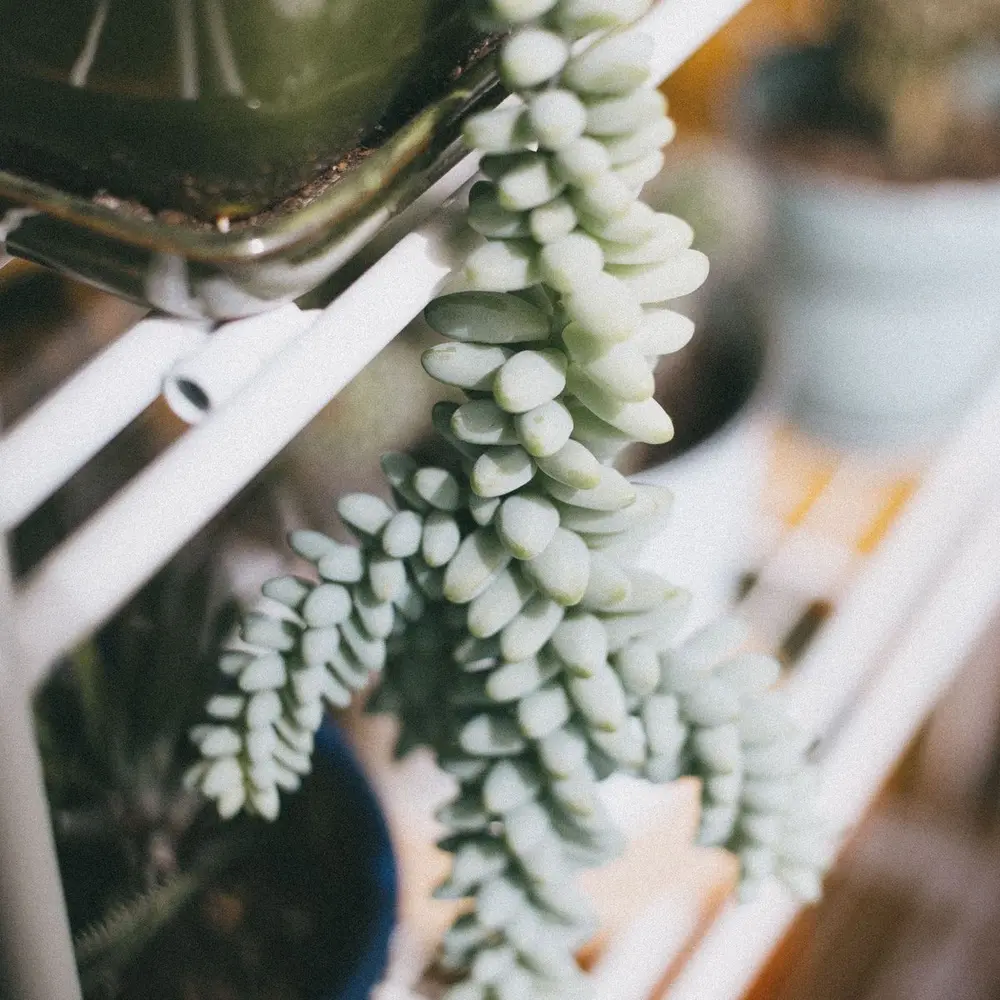
Burro’s tail is a succulent with trailing stems up to 24 inches long, covered in fleshy, blue-green leaves. It looks best in a hanging pot that lets the stems hang free.
It wants a lot of light, such as a windowsill with at least partial sun. Plant it in a shallow pot with a fast-draining mix, let the soil dry out between waterings, and water less in winter. Its fleshy leaves store water, so it tolerates drought far better than wet soil.
The leaves are delicate and break off when the stems are touched. That matters in a home with pets: a cat swatting the stems leaves a trail of leaves on the floor, where a dog finds them. Hang it out of reach and pick up any fallen leaves.
The good news is that the dropped leaves root easily, so you can start new plants from them.
The ASPCA lists burro’s tail (Sedum morganianum) as non-toxic to cats and dogs.
15. Ponytail palm
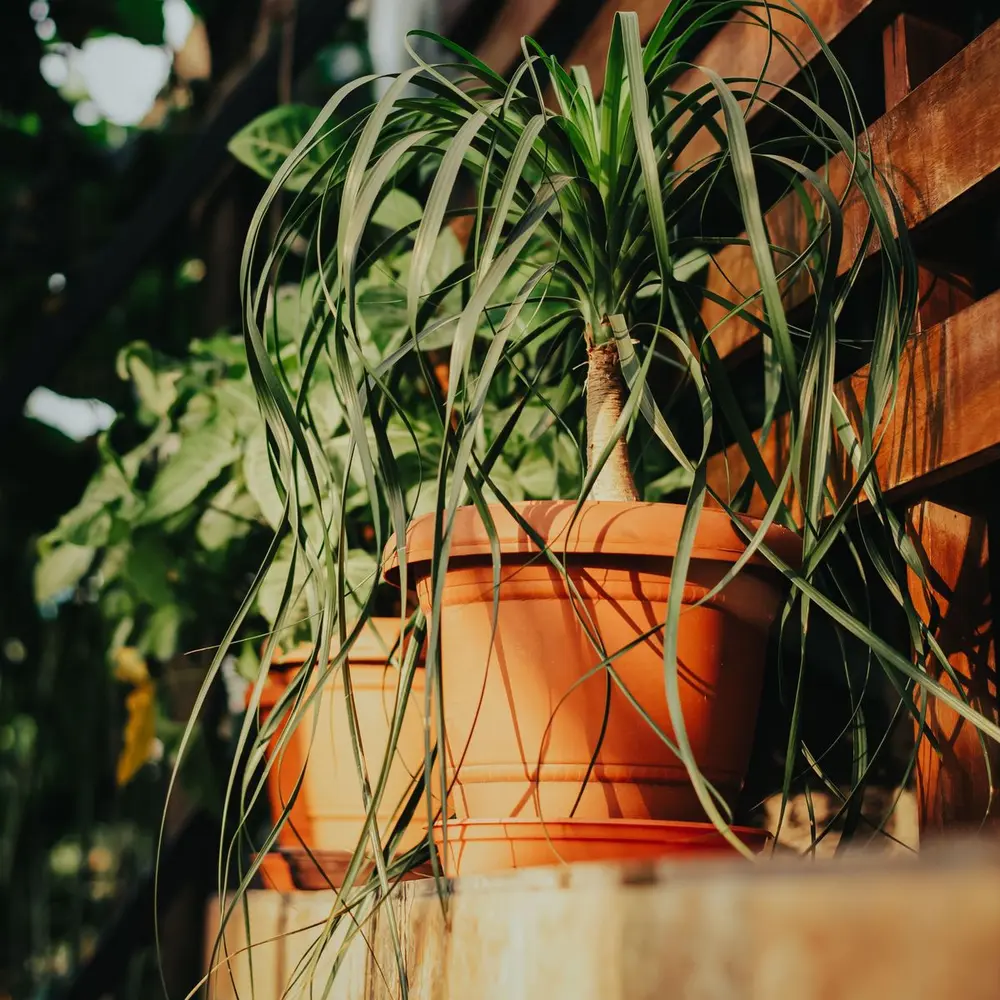
The ponytail palm isn’t a true palm. It has a thick, swollen trunk that stores water and narrow, strappy leaves that curl toward the ends. Give it your sunniest window.
In summer, water deeply and then let the soil dry out between waterings. Water much less in winter. Plant it in a well-drained mix like the ones for cactus and succulents.
It prefers dry winters and copes well with the dry air of a heated home.
It grows slowly, but in a pot it can reach 6 to 8 feet tall. It rarely blooms indoors, so grow it for the trunk and the fountain of leaves.
Its long leaves dangle and sway, which invites batting and tugging. A heavy pot on the floor or a sturdy stand keeps it steady when a pet leans on it or tugs at the leaves.
The ASPCA lists the ponytail palm, under pony tail (Beaucarnea recurvata), as non-toxic to cats and dogs.
Popular houseplants the ASPCA lists as toxic to cats and dogs
Several of the most popular houseplants are on the ASPCA list as toxic to both cats and dogs. If you already have one, keep it in a room your pets never enter, or give it to a home without pets.
| Plant | ASPCA entry | More about it |
|---|---|---|
| Pothos | Golden pothos | Pothos care guide |
| Peace lily | Peace lily | Peace lily care guide |
| Snake plant | Snake plant | Snake plant care guide |
| Monstera | Cutleaf philodendron (Monstera deliciosa) | Monstera care guide |
| Aloe vera | Aloe | |
| Jade plant | Jade plant | |
| Sago palm | Sago palm |
The ZZ plant isn’t on the ASPCA plant list at all, so treat it as unsafe too. The ZZ plant care guide covers its care.
How to keep pets and plants apart
Dogs and cats get into plants in different ways. A dog reaches what sits on the floor and low tables, and a puppy chews what it finds there. A cat climbs, jumps and reaches almost anywhere.
These steps cover both.
- Check both animals before you buy. Look up the botanical name on the tag in the ASPCA list, and read the line for dogs and the line for cats. The new plant checklist puts that check beside the other steps for a new plant.
- Hang the trailing plants. Spider plants, Boston ferns and burro’s tail grow well in hanging pots. Hang them away from shelves and furniture a cat can jump from, and above a standing dog’s head.
- Mount or shelve the small ones. A staghorn fern on a wall, or small pots on a shelf with no landing spot nearby, stay out of reach of both. The plant shelf ideas show how to fill one.
- Choose heavy, wide pots for the floor. A palm in a heavy pot stays put when a dog bumps it or a cat climbs into it.
- Pick up what falls. Dropped leaves, flowers and trimmings end up on the floor, where a dog finds them first. Clear them away after you prune or repot.
- Keep a toxic plant in a closed room. A high shelf only slows a determined cat, so a plant the ASPCA lists as toxic belongs in a room your pets never enter.
- Move a plant your pet keeps chewing. Even a non-toxic plant can upset a pet’s stomach, so put it higher or in another room.
Pet-safe houseplants at a glance
| Plant | ASPCA name | Light | Water when |
|---|---|---|---|
| Parlor palm | Parlor Palm (Chamaedorea elegans) | Low to bright, indirect | The surface is slightly dry |
| Spider plant | Spider Plant (Chlorophytum comosum) | Low to bright, indirect | The top of the soil is dry |
| Calathea | Calathea (Calathea spp.) | Low to medium, indirect | Keep moist, never soggy |
| Nerve plant | Nerve Plant (Fittonia verschaffeltii) | Medium to bright, or office light | Before it wilts; never soggy |
| Friendship plant | Friendship Plant (Pilea involucrata) | Bright, indirect | Moderately; less in winter |
| Watermelon peperomia | Watermelon Peperomia (Peperomia argyreia) | Bright, indirect | The top is dry to the touch |
| Boston fern | Boston Fern (Nephrolepis exalta bostoniensis) | Medium to bright, indirect | Never let it dry out |
| Polka dot plant | Polka Dot Plant (Hypoestes phyllostachya) | Bright, filtered | Never leave it standing in water |
| Staghorn fern | Common Staghorn Fern (Platycerium bifurcatum) | Dappled or filtered | The roots are slightly dry |
| Blushing bromeliad | Blushing Bromeliad (Neoregelia) | Bright, no direct sun | The mix is dry; keep the cup filled |
| Moth orchid | Phalaenopsis Orchid (Phalaenopsis sp.) | East window or shaded sill | The mix has dried a little |
| African violet | African Violet (Saintpaulia spp.) | Bright, no afternoon sun | Keep moist, not soggy |
| Echeveria | Hens and Chickens (Echeveria elegans) | Sunny window | The soil is dry |
| Burro’s tail | Burro’s Tail (Sedum morganianum) | Sunny window | The soil has dried out |
| Ponytail palm | Pony Tail (Beaucarnea recurvata) | Sunniest window | The soil has dried out |
Want a shortlist for your own rooms? The plant finder matches houseplants to your light and space, and with pets at home it keeps to plants the ASPCA lists as non-toxic.
Frequently asked questions
Which houseplants are safe for both cats and dogs?
Go by the ASPCA plant list and its entry for each plant. Among common houseplants, it lists the parlor palm, spider plant, calathea, nerve plant, friendship plant, watermelon peperomia, Boston fern, polka dot plant, staghorn fern, blushing bromeliad, moth orchid, African violet, several echeverias, burro's tail and ponytail palm as non-toxic to cats and dogs.
Can a non-toxic houseplant still make my dog or cat sick?
It can upset a pet's stomach. The ASPCA notes that eating any plant material may cause stomach upset in dogs and cats, even a plant it lists as non-toxic. Put these plants where your pet can't make a habit of chewing them.
Is a plant that is non-toxic to cats also non-toxic to dogs?
Not always, so check both. Each ASPCA entry names the animals it applies to, one by one. Every plant on this page has an entry that says non-toxic to dogs and non-toxic to cats.
Which pet-safe houseplants grow in low light?
The parlor palm copes best with low light on this list, and the spider plant and calathea tolerate it. The nerve plant grows well under fluorescent office lights. The succulents, the ponytail palm and the African violet need a bright or sunny window.
What should I do if my pet eats a plant that may be toxic?
Contact your veterinarian or the ASPCA Animal Poison Control Center as soon as possible. Have the plant's name ready, and its botanical name from the tag if you still have it.
Save it for later
Pin it to a board so it's there when you need it.
Save to Pinterest(opens in a new tab)Keep reading
Plant list
14 cat-safe house plants the ASPCA lists as non-toxic
Spider plant, calathea, moth orchid and more houseplants that are non-toxic to cats by the ASPCA list, with light, watering and where to put each one.
Care guide
Spider plant care guide for healthy leaves and babies
How to care for a spider plant indoors: light, watering, soil, feeding, repotting, rooting its babies and fixing the brown leaf tips it is known for.
Plant list
15 hanging plants that trail beautifully indoors
Pothos, string of hearts, Boston fern and twelve more plants for a hanging pot or high shelf, where each one hangs best for its light and how to water it.
Low lightPlant list
15 low light plants that grow away from the window
Houseplants for a north window, a dim hallway or a corner across the room: what low light means, where each plant fits and how to water it with less light.
Try a free tool
Plant Finder
Answer four questions about light, space, pets and watering to see the houseplants that fit your spot.