Watering Schedule Maker
Pick your plants and the days you check the soil to get a weekly schedule with the right test for each plant.
Published
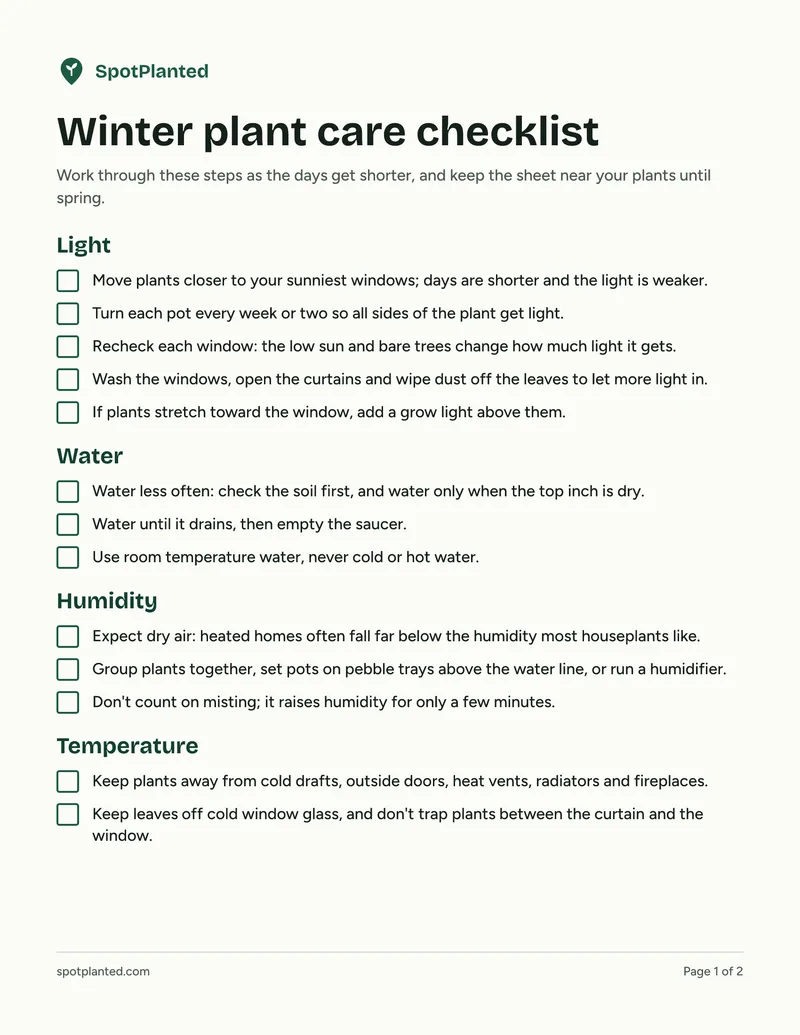
Houseplants in winter need more light, less water, more humidity and a steady, draft-free spot. This winter plant care checklist covers all of it in 20 steps on one printable sheet, from moving plants closer to the window to pausing the fertilizer until spring.
PDF2 pagesUS LetterFree to print at home
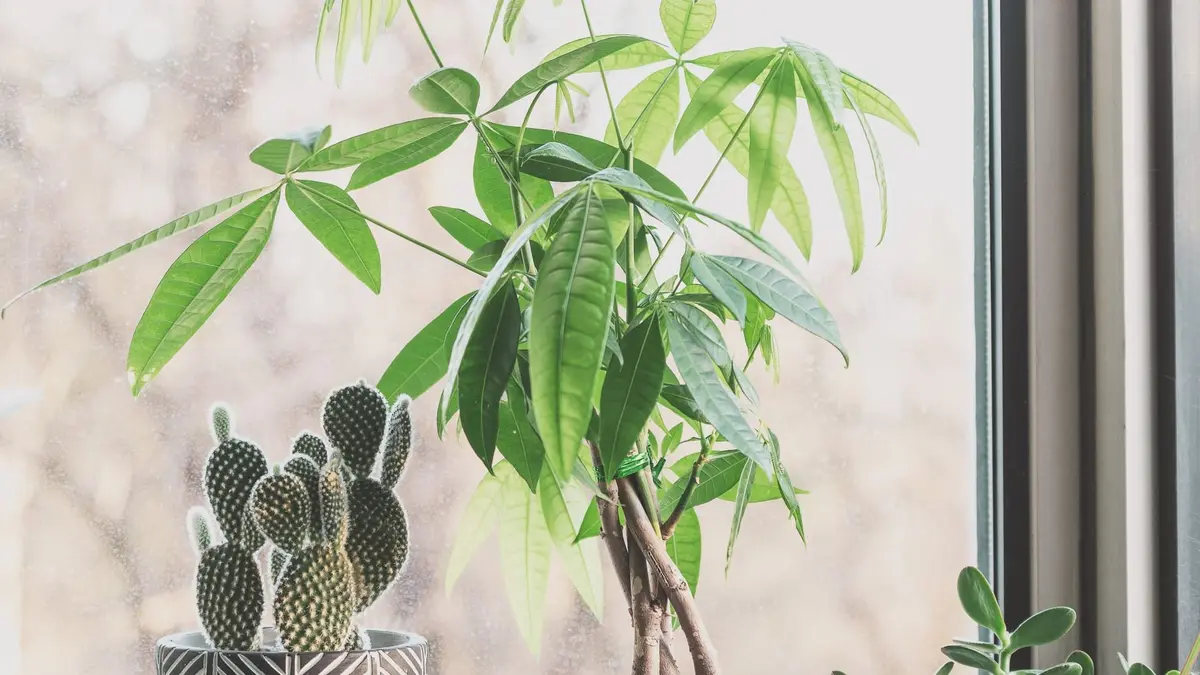
In winter the sun sits lower in the sky, the days are shorter and the light is weaker. Plants get fewer hours of dimmer light, so they grow slowly or rest.
Heated air adds a second problem. The air inside a heated home is often very dry, much drier than most houseplants like.
A resting plant uses less water and food, so the usual routine gives it too much of both. The checklist adjusts each part of that routine for the season.
Light is the first thing to fix. Move plants closer to your sunniest windows, and turn each pot every week or two so every side gets its share.
Look at each window again as the season changes. The low winter sun reaches farther into a room, and a window shaded by a tree in summer can get much more sun once the leaves fall.
Clean windows and dust-free leaves let more light through. Washing the windows and taking out the screens can let in as much as 30 percent more light, so it is worth doing before the darkest weeks.
Open the curtains during the day, and wipe the leaves with a damp cloth. Dust on the leaves blocks light the plant could use.
If plants stretch or lean toward the window, the light isn't enough. A grow light above them makes up for the short days.
Most houseplants need water less often in winter, and more of them die from too much water than from too little. Check the soil before you water, and water only when the top inch is dry.
When you do water, water until it drains from the bottom of the pot, then empty the saucer. Use water at room temperature, never cold or hot.
Plants that like to dry out between waterings may go weeks without a drink. Keep checking on your usual days, and let the soil decide.
Most houseplants, above all those from the tropics, do best at 40 to50 percent relative humidity. In winter, most heated homes sit at10 to 20 percent.
That gap is why leafy plants struggle in winter even when the light and water are right. Raising the humidity around your plants helps them through the season, above all the ones that like humid air.
Misting doesn't help much. The extra humidity lasts only a few minutes, so it can't make up for a dry room.
Most houseplants like about 65 to 75°F during the day and a little cooler at night. Keep them above 55°F.
Cold drafts and blasts of hot air both cause damage. Keep plants away from outside doors, drafty windows, heat vents, radiators and fireplaces.
Window glass gets cold at night. Keep leaves from touching it, and don't close the curtains with a plant trapped between the curtain and the glass.
Stop fertilizing in fall, since most plants grow very little in winter. Start again in spring, when the days lengthen and new growth appears.
Save repotting for spring as well, unless a plant truly can't wait. A resting plant is slow to recover from a move.
Spider mites thrive in dry winter air. Each time you water, turn over a few leaves and check the undersides and the stems.
Houseplants that spent the summer outside come back in when nights drop to about 50°F. Bring them in well before the first frost.
Check their leaves, stems and soil for pests before they come in, and rinse the foliage while they are still outside. Then keep them apart from your other plants for a few weeks.
Expect some dropped leaves as they adjust to the lower light indoors. It is a normal part of the move.
The checklist works best as a habit rather than a one-time job. Fold its steps into the checks you already do, and winter care takes only a few minutes a week.
Writing the date beside each step on the printed sheet helps you remember what you did last. By spring you will know which plants needed the most help through the dark months.
The checklist prints on US Letter paper at full size. Print it as the days start to shorten, and keep it near your plants until spring.
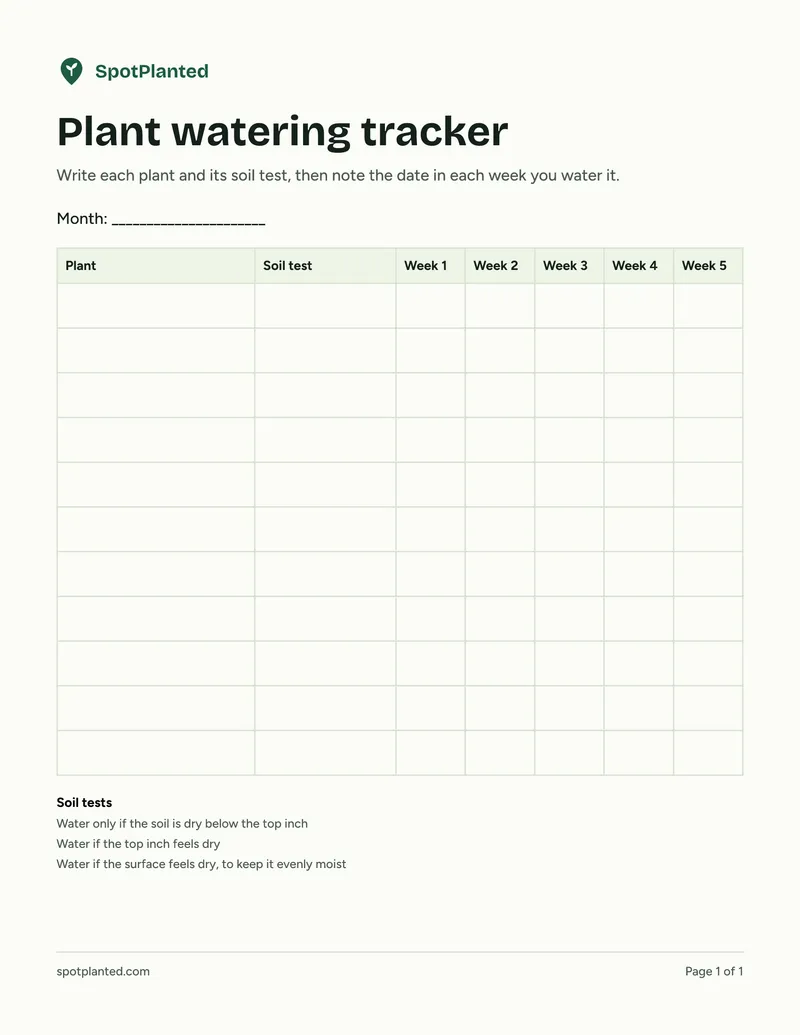
Pair it with the plant watering tracker to see how much less often each plant needs water as the weeks go by.
Tick each step the first time you do it, then use the routine above to keep up with it. When new growth appears in spring, file the sheet away for next winter.
The free plant printables work as a set: care cards for each plant, a tracker for watering and checklists for the seasons.
Yes, for most of them. Growth slows in the short, dim days, so the soil stays wet longer. Check the soil first and water only when it is dry enough.
Not much. Misting raises the humidity around a plant for only a few minutes. Grouping plants, pebble trays or a humidifier make a more lasting difference.
No. Most houseplants grow very little in winter, so stop feeding in fall and start again in spring, when they begin to grow.
Wait for spring unless the plant truly can't wait. A plant that is barely growing is slow to recover from a move.

Pin it to a board so it's there when you need it.
Save to Pinterest(opens in a new tab)Pick your plants and the days you check the soil to get a weekly schedule with the right test for each plant.
Free PDF
A one-page monthly sheet: write each plant and its soil test, then note the dates you water it.