10 plants for dark rooms with little natural light

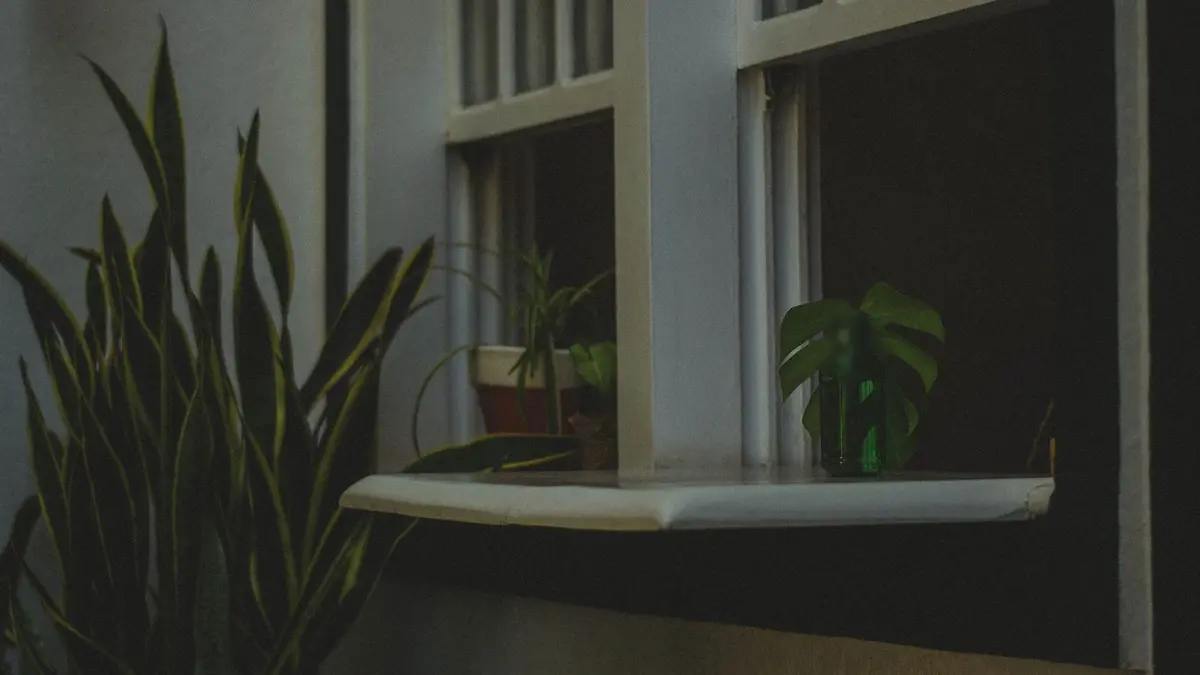
These plants for dark rooms hold on where most houseplants fade: Chinese evergreen, cast iron plant, ZZ plant, snake plant, kentia palm, lucky bamboo, ‘Janet Craig’ dracaena, heartleaf philodendron, peace lily and spider plant. They are the ones to try in a room with one small or shaded window, a north room, a basement apartment or a spot deep inside the room.
Be honest with yourself about what they can do. No plant grows without light, and in a truly dark room these plants survive rather than thrive: they grow slowly, rarely flower and need much less water. The list runs from the plant that takes the least light to the one that wants the most, and the end of the page shows how to add light when even the first plant isn’t enough.
How dark is too dark for a plant
Only a few plants can tolerate the dim interior of a room, and your eyes can’t tell you whether your room is one of those spots. The eye adjusts to the light around it, so a corner that looks fine to you can be far too dark for a plant.
Light for plants is measured in foot-candles. Low light plants generally need 50 to 250 foot-candles, and only a few of them can be held at as little as 10 foot-candles, under a grow light. A light meter that reads foot-candles gives you a number to go by; treat it as a guide rather than a rule.
Distance is the other test. Even low light plants usually get too little light more than 10 feet from an average window, and a window shaded by a porch roof, a tree or the next building gives far less. If your plant has to stand farther away than that, plan on a grow light from the start.
For a dim room that still gets some daylight, the low light plants guide has a longer list. The plants below are the ones for the darker end.
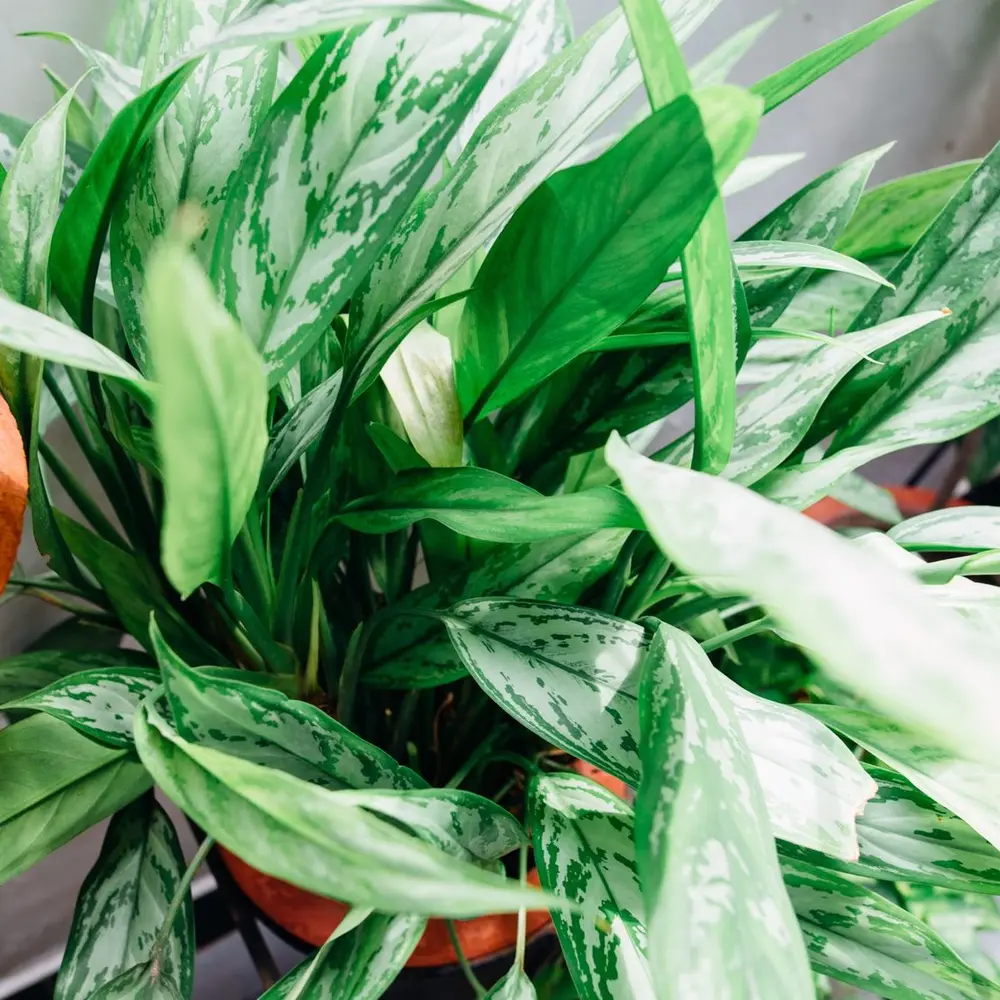
1. Chinese evergreen
The Chinese evergreen can tolerate light as low as 10 foot-candles, the lowest of any plant on this list. That makes it a plant that can live under a lamp in a room that gets almost no daylight. Near a window it grows in low to moderate, indirect light, and it doesn’t like direct sun on its leaves.
It stays fairly small, 1 to 3 feet tall and about as wide, so it fits a side table, a low shelf or a floor pot beside a chair. Plain green and dark-leaved forms suit a dark room best, since plants with darker green leaves generally handle low light better.
Keep the soil moist, but let the top 1 to 2 inches dry before you water again, and water less in winter. Roots rot when the soil stays wet, and in a dark room it stays wet a long time. If you bring one home from a bright shop, move it into its dark spot in steps over a few weeks, because a plant used to bright light can fade when it is moved straight into a dim one.
The ASPCA lists the Chinese evergreen as toxic to cats and dogs.
2. Cast iron plant
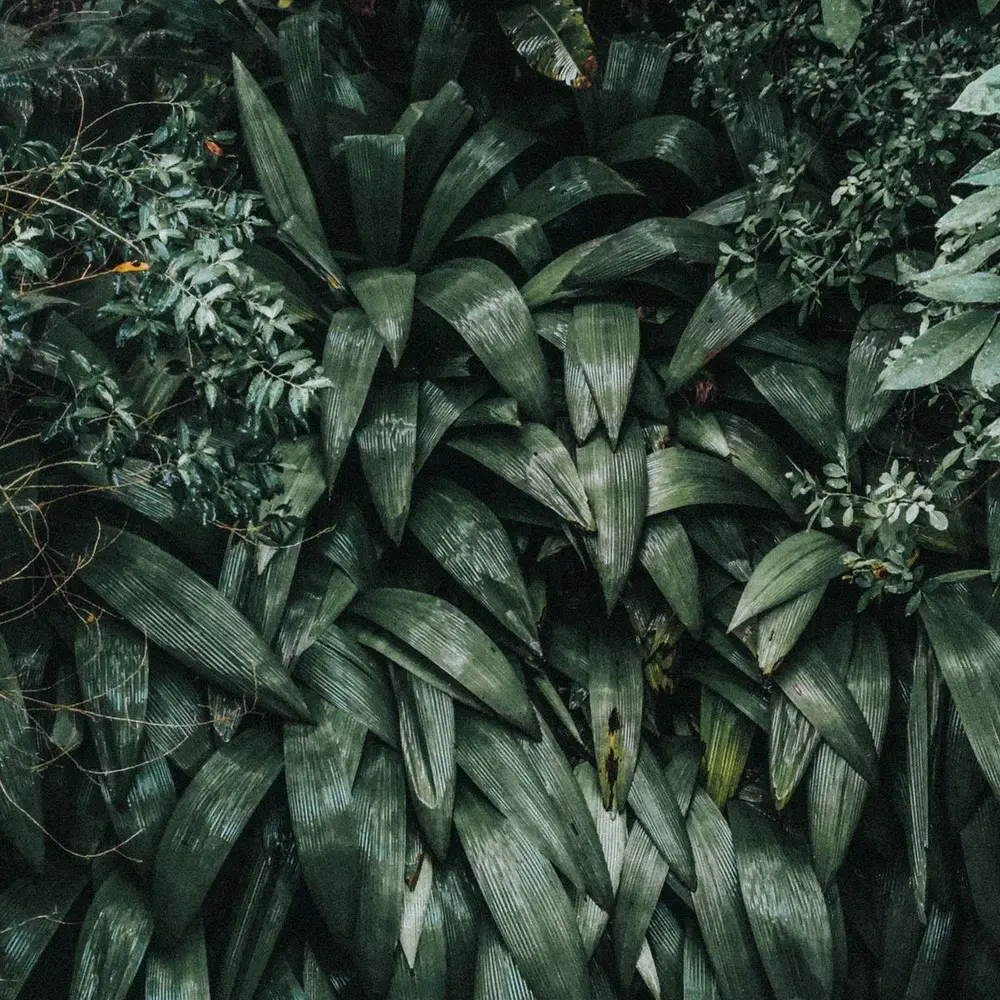
The cast iron plant earned its name. It is one of the best plants for a spot where only low light exists, it tolerates cool rooms, and it puts up with heat, dust, low light and missed waterings better than most other houseplants. It prefers partial to full shade and can’t stand direct sun, so a dark room suits it better than a sunny one.
Its dark green, sword-shaped leaves grow upright to 2 to 3 feet from the soil, which makes it a good floor plant for a hallway, a dim entry or the corner of a north bedroom. It grows slowly, so buy one close to the size you want for the spot.
Water when the soil is dry 2 to 3 inches down, then let the extra water drain from the pot. In a dark, cool room that can mean a long wait between waterings, so check with your finger rather than the calendar.
Wipe its broad leaves with a damp cloth now and then. They are easy to clean, and the plant can use every bit of light that reaches it.
The ASPCA lists the cast iron plant as non-toxic to cats and dogs.
3. ZZ plant
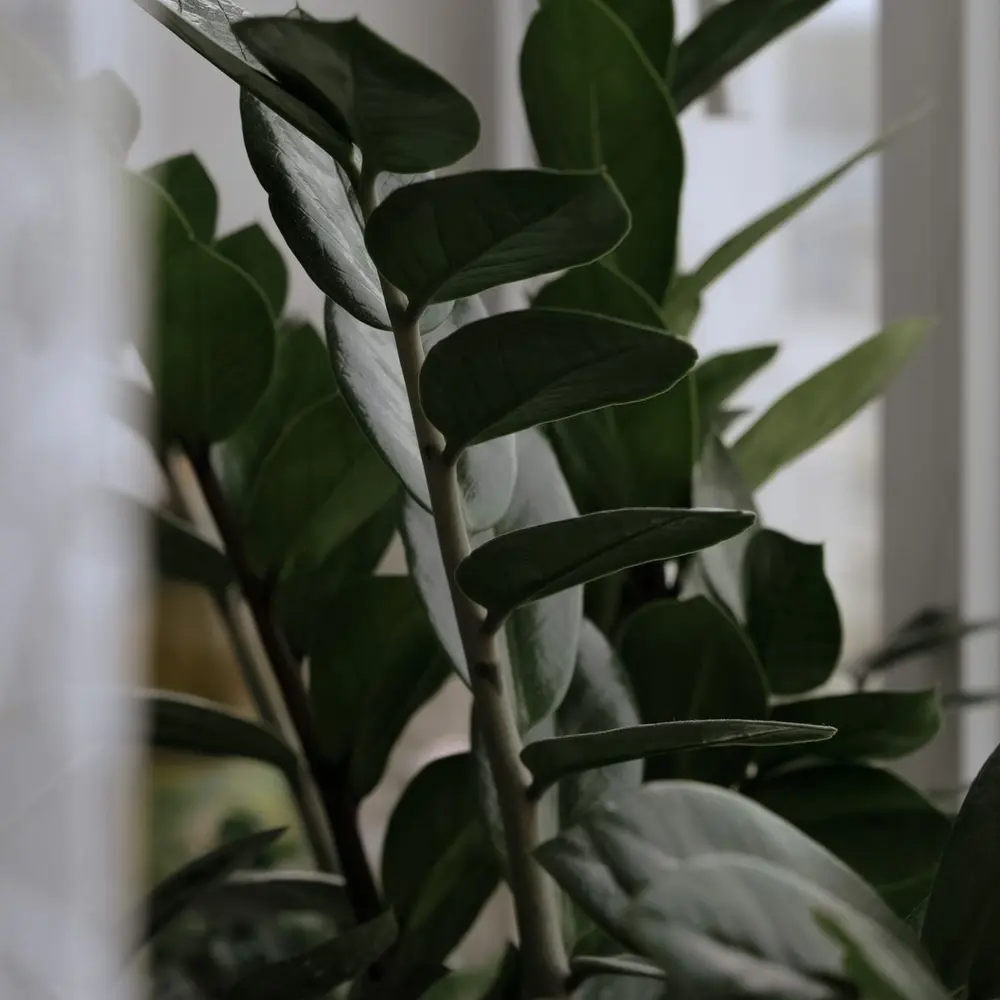
The ZZ plant grows best in low, indirect light, and it also grows under ceiling lights in a room with little or no natural light. That makes it one of the few plants that can live in a windowless office or a basement room on lamp light alone, as long as the lights stay on for much of the day.
It survives in low light for a long time, though brighter, indirect light speeds up its very slow growth. In a dark room, expect very little new growth, and don’t mistake that for a problem. Its upright stems can reach 4 feet in time, with glossy leaflets that stay dark green even far from the window.
Water only after the potting mix has dried completely. Its thick underground stems store water, so a forgotten ZZ plant is usually fine, while one that sits in wet soil rots. In a dark room, that can mean watering only every few weeks.
The ZZ plant care guide covers its soil, repotting and propagation.
The ZZ plant isn’t on the ASPCA plant list. Treat it as unsafe for pets and keep it out of reach.
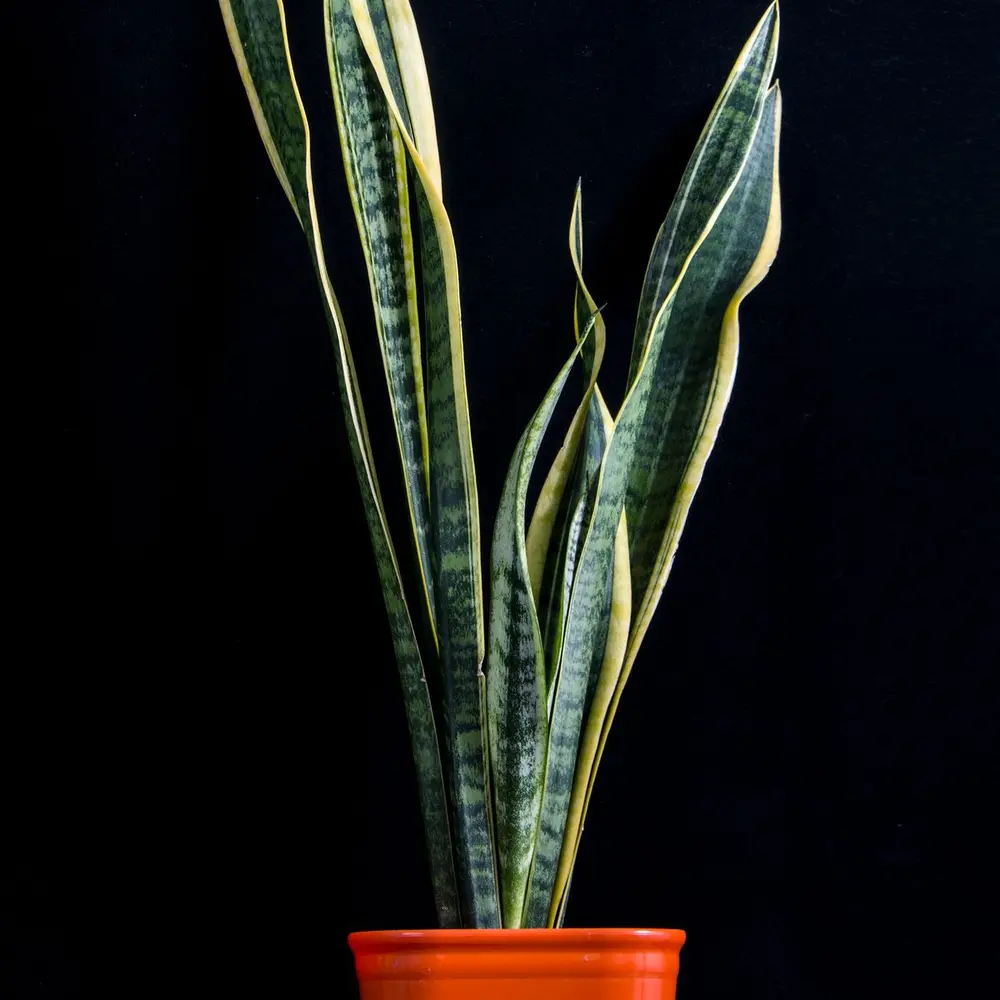
4. Snake plant
The snake plant tolerates very low light and poor light, though it makes its best growth in medium to bright light. In a dark room it simply grows slowly, keeping its stiff, upright leaves with little change.
Its narrow shape suits the tight spots of a small, dim room: the gap beside a dresser, the corner behind a door or the end of a dark hallway. Indoors it often stays near 2 feet tall, and its leaves don’t spread much, so it never crowds a walkway.
Let the soil dry between waterings from spring to fall, and water much less in winter. Overwatering is the main way snake plants die, and a plant in a dark room uses so little water that a normal schedule drowns it. Use a pot with a drainage hole and a fast-draining mix.
Turn the pot now and then so the leaves don’t lean toward the only window. The snake plant care guide covers dividing and repotting it.
The ASPCA lists the snake plant as toxic to cats and dogs.
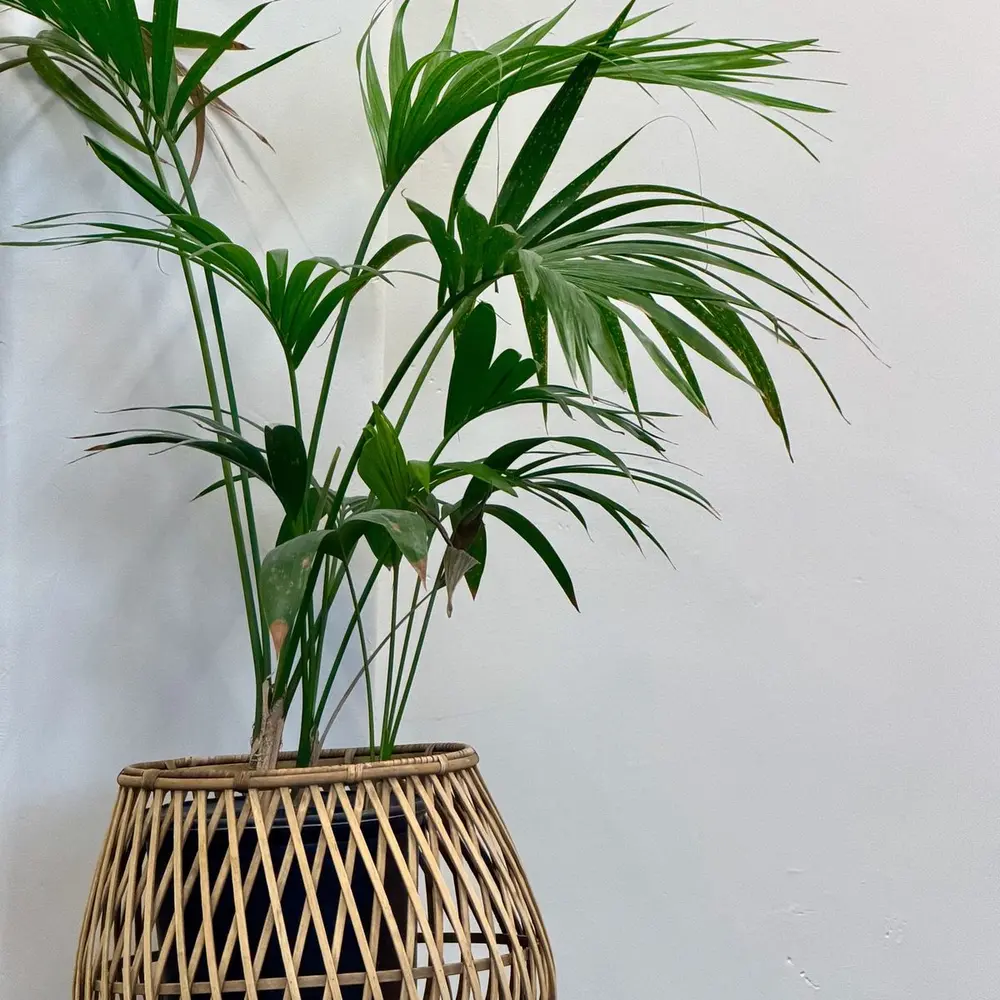
5. Kentia palm
The kentia palm is a palm that needs little light. It has a long track record of surviving low light, dust, central heating, rough handling and general neglect, and it once filled the parlors and hotel lobbies of the Victorian era. Of the palms grown indoors, it and the parlor palm are the most tolerant of low light.
It grows slowly and typically stays around 2 to 3 feet tall indoors, reaching 8 feet only after many years. Its arching, dark green fronds give a dim corner height and softness that the stiff plants above can’t.
Water it well in summer, but in winter water only when the potting mix is dry. It tolerates relatively low humidity too, though it grows best with bright light and regular care, so give it the brightest corner of the dark room.
Keep a close watch for spider mites, a common pest on indoor palms. Check the undersides of the fronds often, and wipe them off as soon as you see them.
The ASPCA lists the kentia palm as non-toxic to cats and dogs.
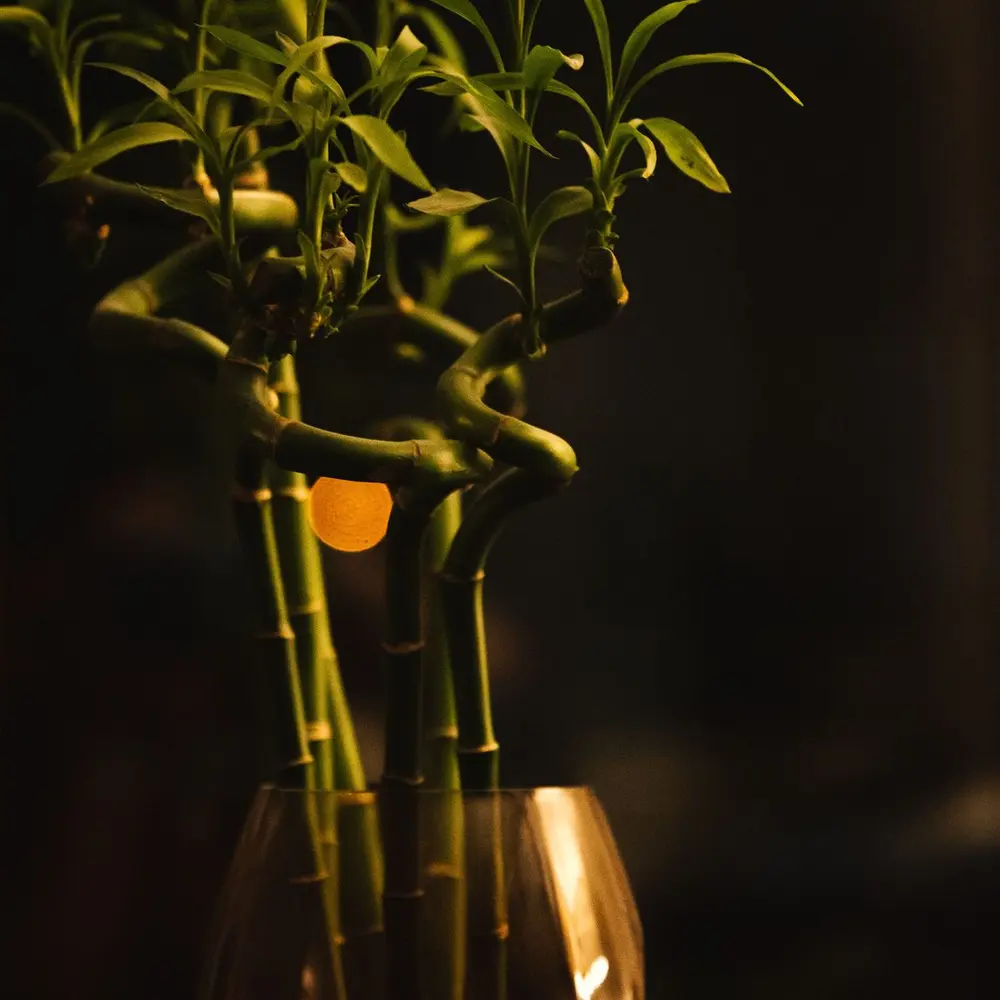
6. Lucky bamboo
Lucky bamboo isn’t a bamboo at all but a dracaena, Dracaena sanderiana. Indoors it does well in bright but indirect light, yet it stays green even in deep shade, which makes it an easy choice for a dim bookshelf, a desk or a bathroom counter.
It grows either in a moist potting mix or in a vase of water. If you grow it in water, use water without chlorine and change it every week, and put pebbles in the bottom so the roots have something to grip and the vase doesn’t tip over.
Watch the leaves for the two common warnings. Leaves that yellow and stems that rot point to too much water, while brown leaf tips point to dry air. In a pot of soil, slow growth in a dark room makes overwatering the more likely of the two.
Because it is small and grows so slowly, lucky bamboo is a good way to test a dark spot before you commit a large plant to it.
The ASPCA lists ribbon plant, a name for lucky bamboo and other dracaenas, as toxic to cats and dogs.
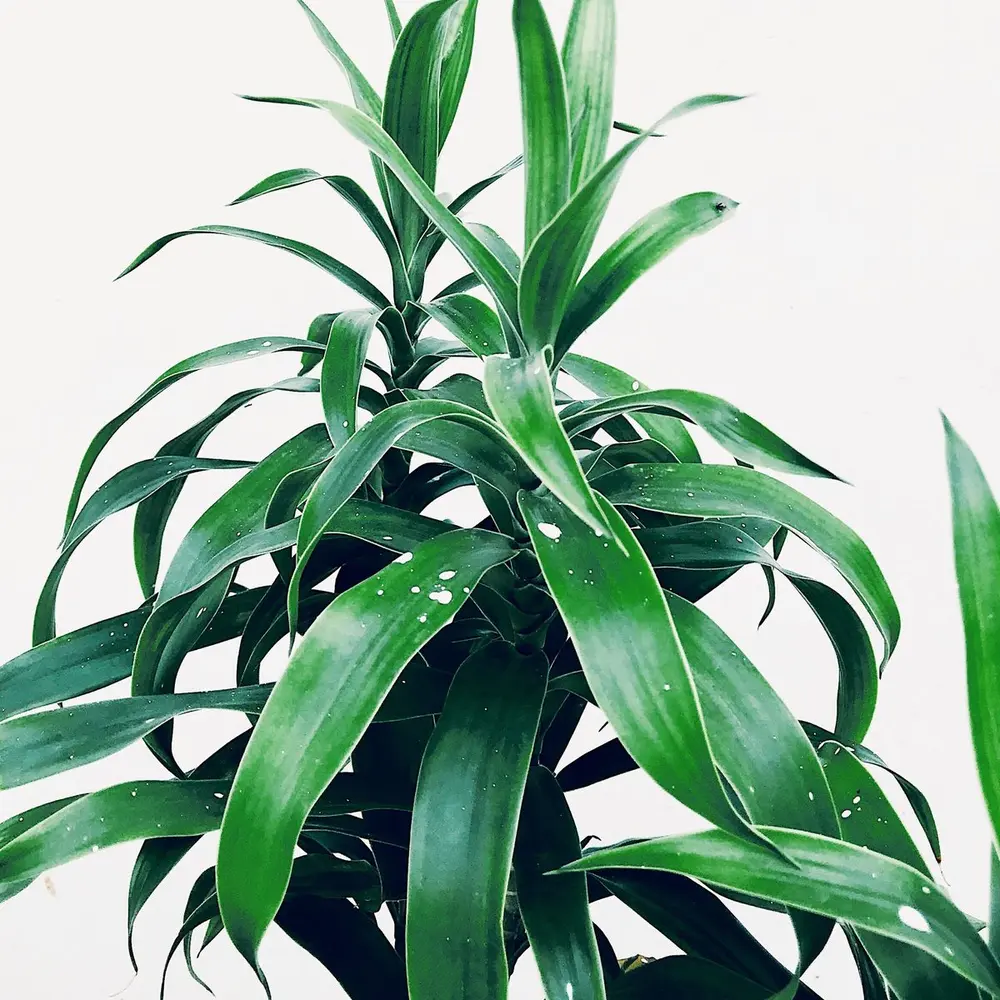
7. ‘Janet Craig’ dracaena
‘Janet Craig’ is a dracaena with wide, dark, glossy green leaves, widely grown in homes and offices. Dracaenas in general are well adapted to house conditions and tolerate low light, and the deep green of ‘Janet Craig’ suits a dim room better than the striped kinds.
Over many years it can grow up to 10 feet tall on thick stems, but it grows slowly in low light, so a small plant stays in scale with a room for a long time. If its stems get too long and bare, cut them at the height you want, and new leaves soon appear. In very low light its new leaves grow narrower, a sign to move it closer to the window.
Wait until the soil surface is dry to the touch, then water thoroughly, and avoid cold water. Dracaenas are very sensitive to fluoride, which yellows or scorches the leaf tips and edges, so avoid potting mixes with a high share of perlite.
If you can move it closer to the window, you’ll see the difference: a dracaena moved from dim light to a brighter spot grows thicker, stronger leaves and grows faster.
The ASPCA lists the corn plant (Dracaena fragrans) as toxic to cats and dogs, and ‘Janet Craig’ is a form of the same species.
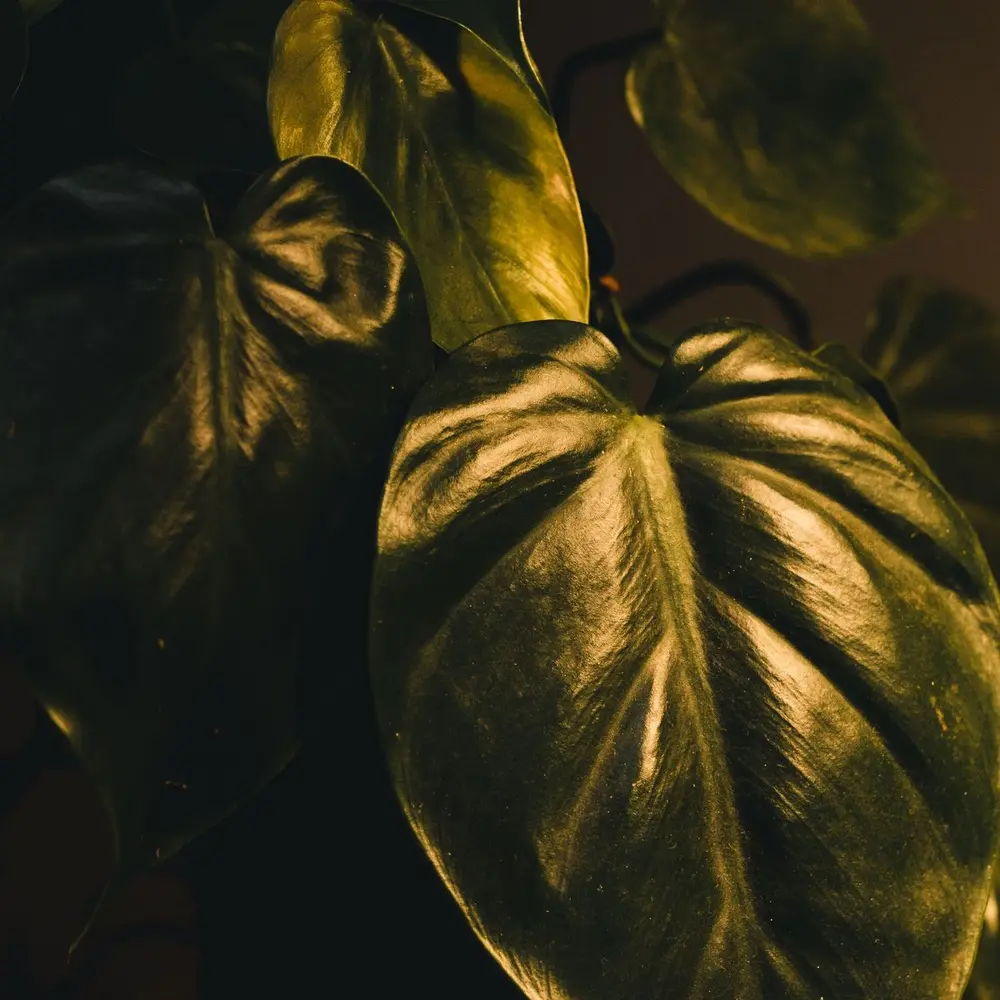
8. Heartleaf philodendron
The heartleaf philodendron tolerates low light and grows well under ordinary room light, so it can trail from a shelf far from the window. Most philodendrons prefer a medium light range for their best growth, so in a dark room expect a slower vine with smaller leaves spaced farther apart.
Grow it in a hanging pot, let it spill from the top of a bookcase, or give it a support to climb. In a dark room, hang or set it on the window side, where it gets the most light the room has.
Keep the soil evenly moist but never soggy, and slow down in winter, when a plant in low light uses very little. It likes humid air but tolerates the dry air of most homes.
The ASPCA lists the heartleaf philodendron as toxic to cats and dogs.
9. Peace lily
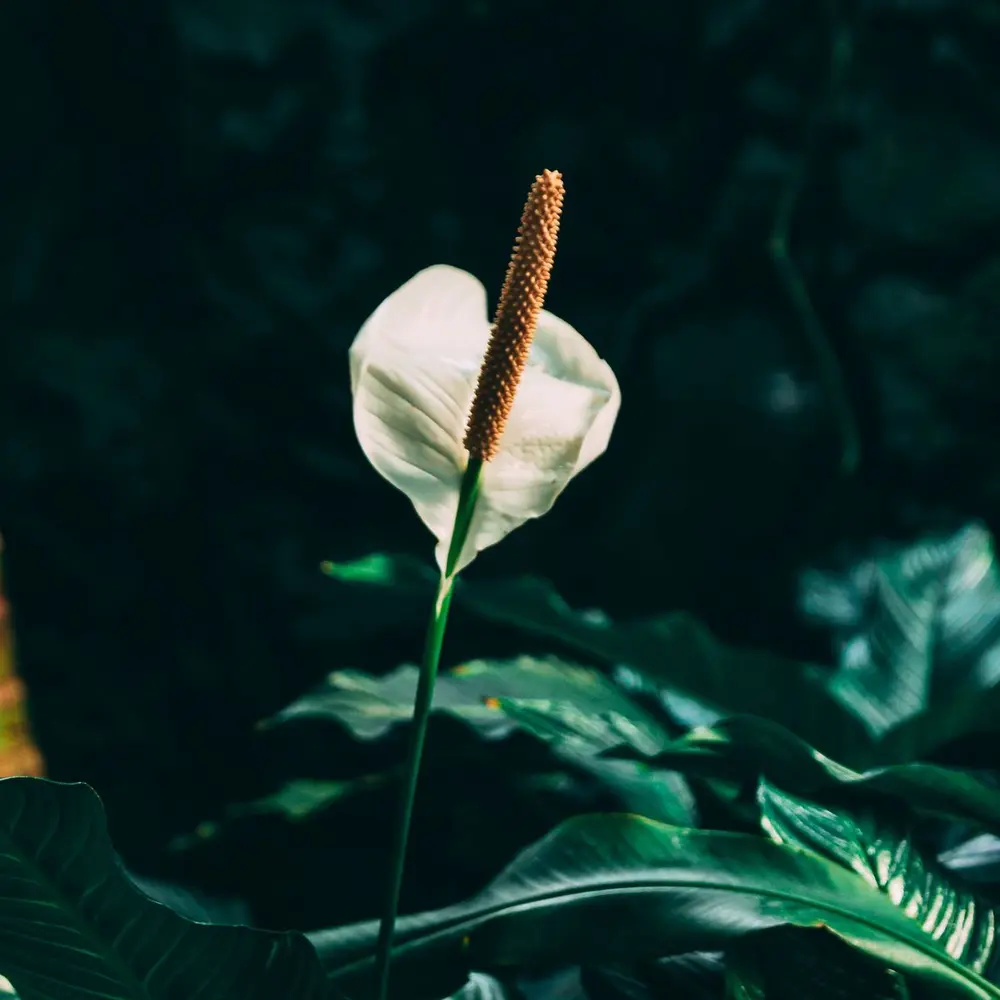
The peace lily adapts to low light, but it needs medium light to flower. In a dark room, then, it grows into a lush green plant with few or no white blooms. If the flowers matter to you, keep it in the brightest part of the room, or give it time near a window now and then.
Most peace lilies grow 1 to 4 feet tall and wide, so a large one fills a floor spot in a dim corner and a small one sits on a nightstand or a dresser.
Don’t let it dry out. Keep the soil moist but not soggy, letting it dry only slightly between waterings. Its leaves droop when it is thirsty and stand back up after a drink, a useful signal in a room where the soil dries slowly and watering days are hard to predict.
The peace lily care guide covers getting one to bloom again and fixing brown tips.
The ASPCA lists the peace lily as toxic to cats and dogs.
10. Spider plant
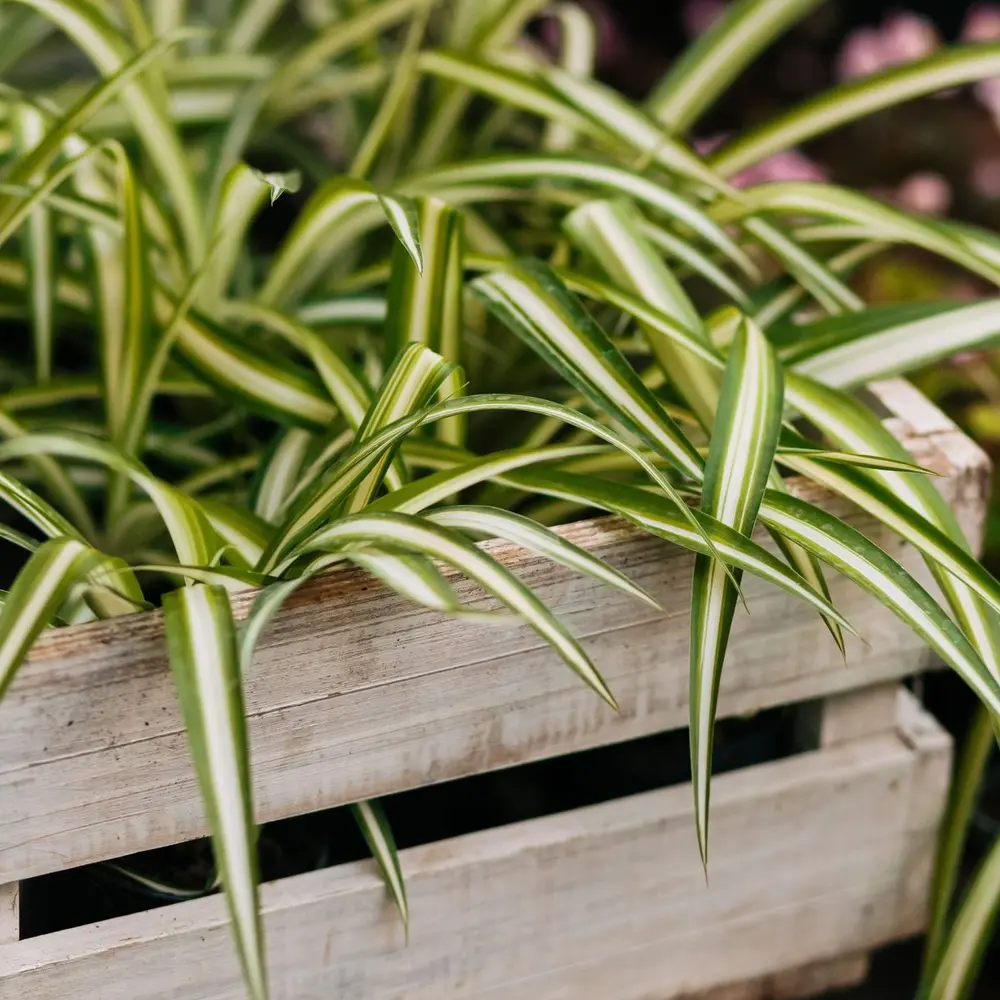
The spider plant prefers medium light but tolerates deep shade, and it can’t stand direct sun. It grows best in the medium range, so of the plants on this list it is the one most likely to slow down in a truly dark room.
Its arching, striped leaves look best up high, where the long stems and their small plantlets can hang down. In a hanging basket they trail 2 to 3 feet, so a basket hung near the window gives it the most light the room has.
Water when the top 1 to 2 inches of soil feel dry, and let it dry out briefly between waterings. In a dark room that takes longer, so check the soil before each watering.
If its leaves fade or its stripes turn solid green, the room is too dark for it. Move it closer to the window or under a grow light. The spider plant care guide covers its plantlets and brown tips.
The ASPCA lists the spider plant as non-toxic to cats and dogs.
Signs a dark room is too dark
A plant tells you when the light is too low. Watch for these, and act on them early:
- Long gaps between leaves. Stems stretch, with more bare stem between each leaf, reaching toward the light.
- Smaller new leaves. Each new leaf is smaller than the one before.
- Pale color. Without enough light a plant makes less of its green pigment, and leaves turn pale green, then yellow.
- Yellow lower leaves that drop. The oldest leaves go first.
- No growth at all. This can mean poor light, though it can also point to another problem, such as soggy soil.
Extra fertilizer, extra water or a bigger pot won’t make up for too little light. Without enough light a plant can’t make the energy it needs, and it slowly uses up what it has stored.
How to get more light into a dark room
Before you add a lamp, get all you can from the window you have.
- Clean the glass. Keeping windows clean and taking off window screens can let in up to 30 percent more light.
- Open the curtains. Curtains and sheers cut the light a great deal, and so do window films and tints. Pull them fully back during the day.
- Move the plant closer. Every step toward the window counts. Stay within 10 feet of it if you can.
- Use white surfaces. A white wall, a white shelf or a pale tray under the pot reflects light back onto the leaves.
- Don’t let plants shade each other. Space pots so each one gets its own share of the light.
How to add a grow light to a dark room
When the window can’t do it, a grow light can. It is the one way to grow plants in a room with no window, and it turns a dim corner into a usable spot.
- Pick a white light. LED and fluorescent lights are the common kinds. Lights sold as white or balanced suit most plants.
- Hang it close. Place foliage houseplants 12 to 24 inches from the light. An adjustable hanger lets you keep that distance as the plant grows, or raise a small plant on a stand.
- Set a timer. Where the room gets some daylight, give foliage plants 12 to 14 hours of light a day in total. A plant that gets no outdoor light at all needs 16 to 18 hours a day.
- Run it during the day. Lights work best on at the same time the window is light, not only in the evening.
- Keep it safe. Use a grounded plug and cord, since water and electricity meet around plants.
- Light tall plants from the side. A light above a kentia palm or a dracaena misses the lower leaves; a second light aimed from the side reaches them.
The bathroom plants for no sunlight guide shows how to light plants in a room with no window at all.
Plants for dark rooms at a glance
| Plant | Lowest light it takes | Water when | Cats and dogs (ASPCA) |
|---|---|---|---|
| Chinese evergreen | The least of all, under lights | The top of the soil has dried | Toxic |
| Cast iron plant | Full shade | The soil is dry a few inches down | Non-toxic |
| ZZ plant | Little or no daylight, with lamps | The mix has dried completely | Not on the list |
| Snake plant | Very low light | The soil has dried | Toxic |
| Kentia palm | Low light, slowly | Summer: often; winter: when dry | Non-toxic |
| Lucky bamboo | Deep shade | Keep moist, or change its water | Toxic (ribbon plant) |
| ‘Janet Craig’ dracaena | Low light | The surface is dry to the touch | Toxic |
| Heartleaf philodendron | Low light, under room lights | Keep evenly moist, not soggy | Toxic |
| Peace lily | Low light, without flowers | Keep moist; never let it dry out | Toxic |
| Spider plant | Deep shade, slowly | The top of the soil feels dry | Non-toxic |
Not sure which of these fits your room? The plant finder matches houseplants to your light, your space and your pets.
Frequently asked questions
Can a plant grow in a room with no windows?
Not on room light alone. Without enough light a plant uses up its stored energy and slowly declines, however well you water it. Give it a grow light on a timer and keep it on for most of the day, and pick a plant from this list, such as a ZZ plant or a Chinese evergreen.
What is the best plant for a very dark room?
The Chinese evergreen and the cast iron plant take the least light of the plants on this list. The ZZ plant and the snake plant come close behind. All four grow faster with more light, so place them as near the window as the room allows.
How do I know if my room is too dark for plants?
Measure the light with a light meter that reads foot-candles, or watch the plant. Long, thin stems, small new leaves, pale color and yellow lower leaves that drop all mean it gets too little light. A plant that shows these signs even after you move it closer to the window needs a grow light.
Which plants for dark rooms are safe for cats and dogs?
Of the plants on this list, the ASPCA lists the cast iron plant, the kentia palm and the spider plant as non-toxic to cats and dogs. It lists the other plants as toxic, except the ZZ plant, which isn't on its list, so treat it as unsafe.
Do plants in dark rooms need less water?
Yes. With less light a plant grows more slowly and uses less water, so the soil stays wet longer. Feel the soil before every watering instead of watering on a set day, and empty the saucer after watering.
Save it for later
Pin it to a board so it's there when you need it.
Save to Pinterest(opens in a new tab)Keep reading
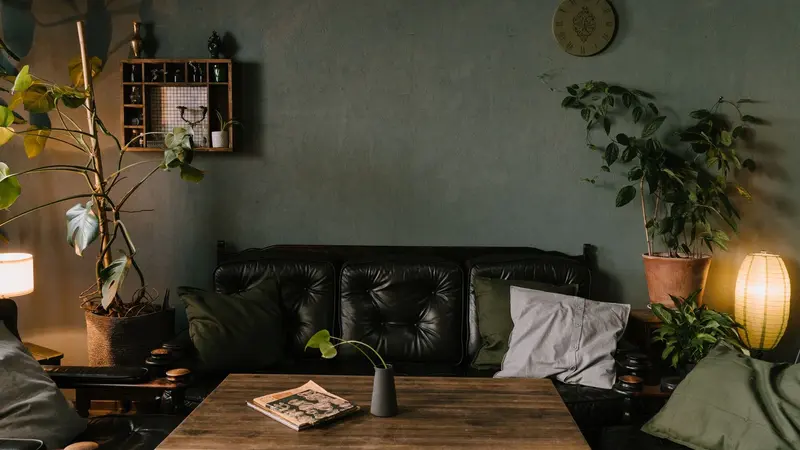
Low lightPlant list
15 low light plants that grow away from the window
Houseplants for a north window, a dim hallway or a corner across the room: what low light means, where each plant fits and how to water it with less light.
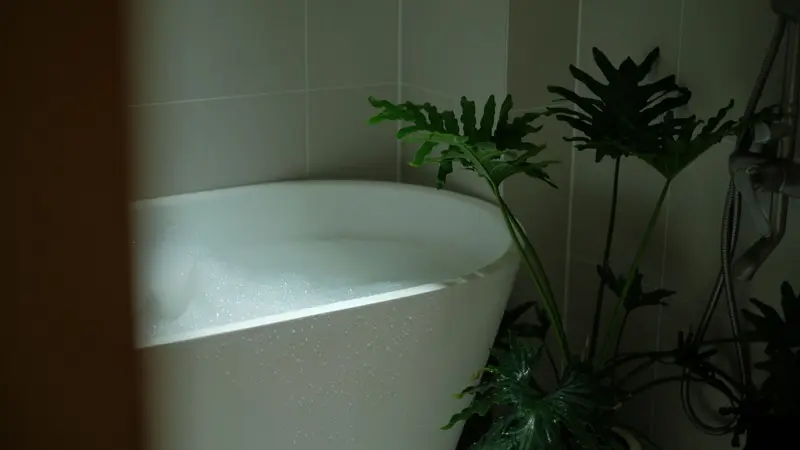
Plant list
12 bathroom plants for no sunlight and steamy air
Plants for a bathroom with no window: how to light them with a grow light on a timer, and twelve houseplants that grow under lamp light and handle the humidity.
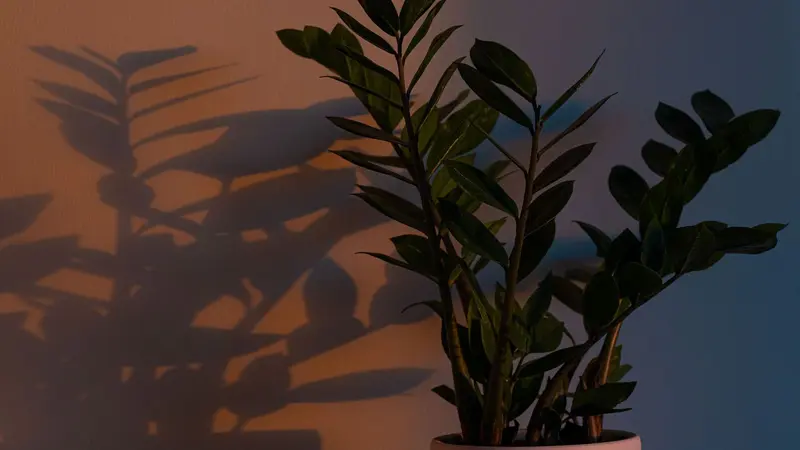
Care guide
ZZ plant care guide for dim corners and dry spells
How to care for a ZZ plant indoors: low light, rare watering, a coarse mix, repotting its rhizomes, propagation and what yellow or brown leaves mean.
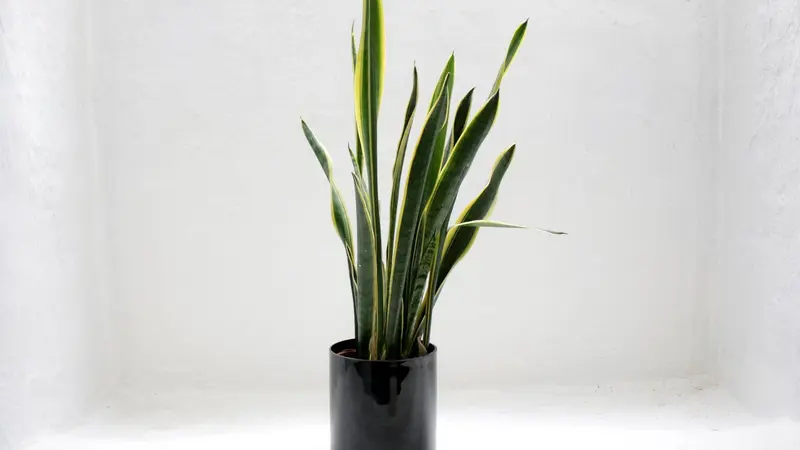
Care guide
Snake plant care guide for light, water and soil
How to care for a snake plant indoors: the light it likes, how often to water, the right soil and pot, repotting, propagation and the problems to watch for.
Try a free tool
Watering Schedule Maker
Pick your plants and the days you check the soil to get a weekly schedule with the right test for each plant.