Watering Schedule Maker
Pick your plants and the days you check the soil to get a weekly schedule with the right test for each plant.
Published
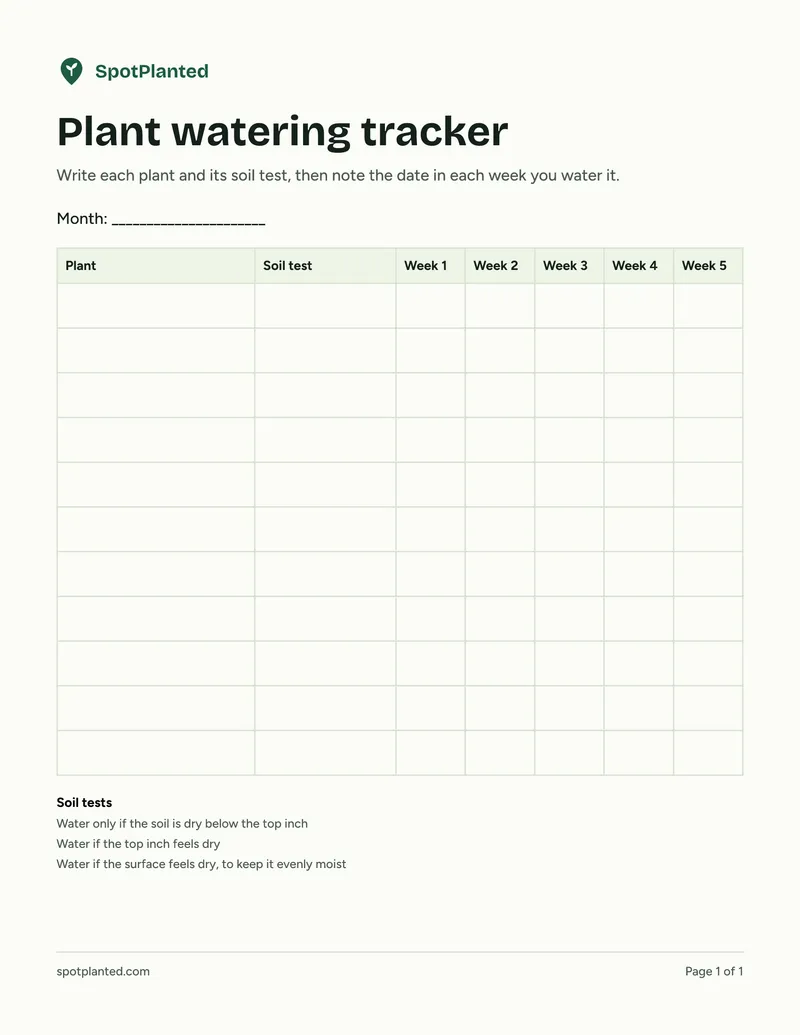
This plant watering tracker is one printable page for a month of watering: 11 rows for your plants, a column for each plant's soil test and 5 week columns to write the dates you water. After a month you can see at a glance which plants drink often and which can wait.
PDF1 pageUS LetterFree to print at home
A plant can get two dates in one week, or none at all for several weeks. Both are normal, because each plant uses water at its own pace.
Every houseplant follows one of three watering rules. Push a finger into the potting mix, about 1 inch down, and compare what you feel with the plant's test.
The watering schedule maker shows which test fits each common houseplant, and it can set the days you check the soil.
The tracker works best with set check days. Feeling the soil a few times a week is enough to learn how fast each plant dries, so pick two or three days you can keep.
Spread the days across the week, such as a weekday evening and a weekend morning. Checking at about the same time each day makes the dates easier to compare.
On each check day, walk past every plant on the sheet in the same order. The order on the sheet becomes a route through your home, and no plant gets skipped.
A tick tells you a plant was watered; a date tells you when. With dates on the sheet, the gap between waterings shows up on its own.
That gap is the plant's rhythm in your home. It depends on the light, the warmth, the pot and the time of year, which is why no fixed watering day suits every plant.
Once you know a plant's rhythm, you can spot trouble early. A plant that suddenly needs water twice as often may have outgrown its pot, and one whose soil stays wet for weeks may need a brighter spot.
At the end of the month, look across each row. The pattern tells you more than any single date.
A sudden change in the dates is worth a closer look. The tracker shows the change early, often before the leaves do.
Note any change you make, such as a new spot or a bigger pot, in the margin beside the plant. The next month's dates will show whether it helped.
Most houseplants need water less often in fall and winter, when the days are short and growth slows. Keep the old sheets, and you will see the gaps between dates grow as the season turns.
In spring, as growth picks up, the gaps shrink again. The soil test stays the same all year; only the time the soil takes to pass it changes.
The margins have room for the other things you do for each plant. A short note next to its row keeps the whole story of the month in one place.
The tracker prints on one US Letter page at full size. Print a new sheet each month and keep it near your watering can, with a pen clipped to it.
Keep the filled sheets together in a folder or a binder. A year of sheets shows how each plant's needs change from season to season.
If you have more plants than rows, print two sheets for the month. Group the plants by room or by soil test, so one walk around the house covers each sheet.
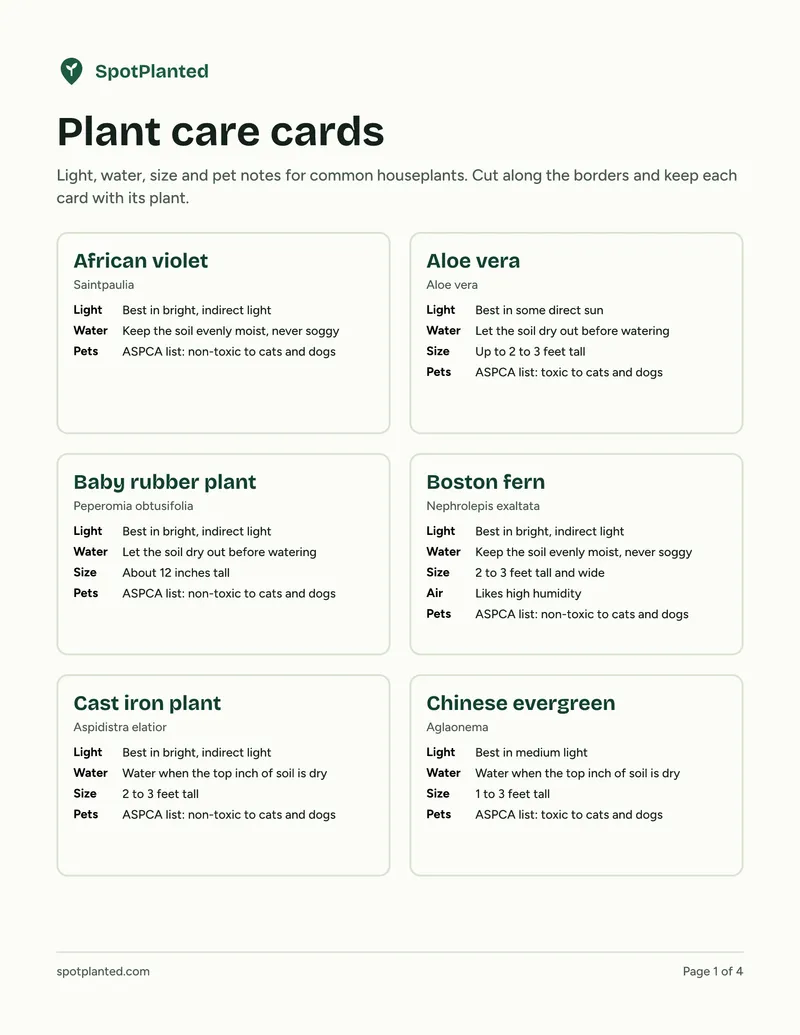
The free plant printables work as a set: care cards for each plant, a tracker for watering and checklists for the seasons.
Write each plant and its soil test down the left side. On every check day, run the test and write the date in that week's box only for the plants you water.
Dates show the rhythm of each plant. After a month you can see which plants drink every few days and which go weeks between waterings.
The key at the bottom of the sheet lists the three tests. The Watering Schedule Maker shows which one fits each common houseplant.
Yes, print one sheet a month. Keeping the old sheets shows how watering changes from summer to winter.

Pin it to a board so it's there when you need it.
Save to Pinterest(opens in a new tab)Pick your plants and the days you check the soil to get a weekly schedule with the right test for each plant.
Free PDF
One card per houseplant with its light, watering rule, size and ASPCA pet note, six to a page.